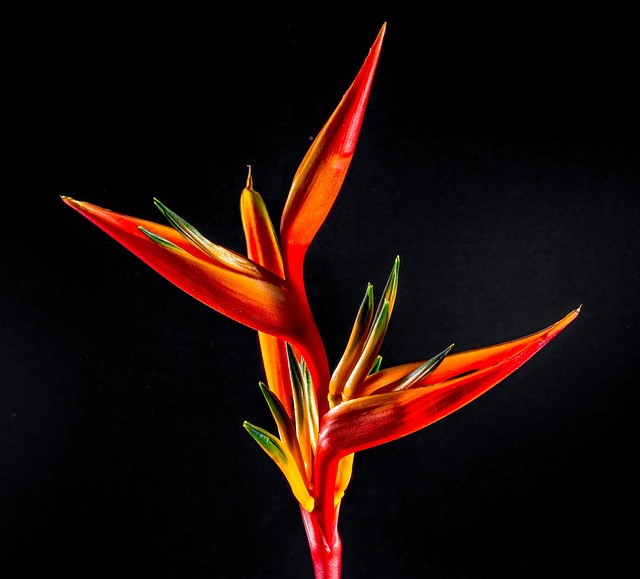
bird of paradise
Strelitzia reginae
Comprehensive care and diagnosis guide for the Bird Of Paradise. Based on 22 verified community insights.
Care Requirements
At a Glance
Detailed care profile is currently being compiled by the Plant Grail swarm.
Start Here
Most Common Problems
Based on 22 analyzed cases — these are the issues you're most likely to encounter
Why does my Bird Of Paradise have curling leaves?
Underwatering causes Bird of Paradise leaves to curl inward as a physiological...
What are these brown spots on my Bird Of Paradise?
Spider mite infestation (Tetranychus urticae) causes brown stippling spots on...
Why are my Bird Of Paradise leaves turning yellow?
Nutrient deficiency (nitrogen or magnesium) causes sudden yellowing of newer...
Why does my Bird Of Paradise have sunburn?
Direct sun exposure without acclimation causes photothermal leaf scorch on Bird...
Why does my Bird Of Paradise have root rot?
Root rot in Bird of Paradise develops from prolonged overwatering or poor...
Verified Data
All Diagnoses
Complete analysis of 22 cases for this variety. Select an entry to expand rescue protocols.
Other Problems (11)
Pests (1)
Propagation (1)
Symptoms (3)
Watering Issues (1)
Common Questions
Frequently Asked Questions
Why does my bird of paradise have Curling leaves?
Cause: Underwatering causes Bird of Paradise leaves to curl inward as a physiological adaptation to conserve moisture. The plant's extensive rhizomatous root system requires thorough saturation to mimic natural deep watering in arid savanna environments. Surface soil moisture can be deceptive—roots 2+ inches deep may remain dry despite damp topsoil.
Solution: 1. Test soil moisture by inserting finger 2 inches deep—if dry, water immediately
Prevention: Water when top 2 inches of soil feel dry; provide deep soaking by placing nursery pot in a deep dish filled to brim for 1 hour to ensure full root saturation via capillary action.
90% confidence · View full protocol →
Why does my bird of paradise have Brown spots?
Cause: Spider mite infestation (Tetranychus urticae) causes brown stippling spots on Bird of Paradise leaves. The microscopic arachnids extract chlorophyll via rasping mouthparts, creating thousands of tiny feeding punctures that appear as mobile brown dots and progress to bronzing. Low indoor humidity (<50% RH) accelerates population explosions.
Solution: 1. Inspect leaf undersides with magnifying glass for fine silk webbing, eggs, or moving mites
Prevention: Maintain 50-70% humidity year-round; quarantine new plants 2 weeks; conduct monthly underside inspections with 10x loupe.
92% confidence · View full protocol →
Why does my bird of paradise have Yellow leaves?
Cause: Nutrient deficiency (nitrogen or magnesium) causes sudden yellowing of newer leaves on Bird of Paradise. The plant's slow growth rate (2-3 leaves annually) leads to nutrient prioritization toward mature foliage; emerging growth suffers when mobile nutrients are remobilized from newer to older leaves during deficiency stress.
Solution: 1. Apply balanced all-purpose fertilizer (10-10-10 NPK) at half strength
Prevention: Implement monthly fertilization with balanced NPK during active growth (spring-fall); maintain 60-70% humidity and consistent bright indirect light to support nutrient uptake.
87% confidence · View full protocol →
Why does my bird of paradise have Sunburn?
Cause: Direct sun exposure without acclimation causes photothermal leaf scorch on Bird of Paradise. Indoor plants adapted to diffuse light lack protective cuticle thickness and efficient photoprotective pigments, leading to irreversible cellular damage when exposed to PAR >1000 µmol/m²/s in direct afternoon sun.
Solution: 1. Immediately relocate plant to bright indirect light or shade to halt further damage
Prevention: Gradually acclimate over 7-14 days starting with 1-2 hours morning sun, increasing weekly; maintain soil moisture and 50-70% humidity during transition.
90% confidence · View full protocol →
Why does my bird of paradise have Root rot?
Cause: Root rot in Bird of Paradise develops from prolonged overwatering or poor drainage creating anaerobic soil conditions. Fungal pathogens like Pythium and Fusarium colonize oxygen-deprived rhizomes, causing necrotic tissue that appears black, mushy, and emits foul odor. The plant's fibrous root system is highly susceptible to rot when waterlogged.
Solution: 1. Gently remove plant from pot and rinse roots under lukewarm water to expose all tissue
Prevention: Water only when top 2-3 inches of soil are dry; use pots with drainage holes and empty saucers promptly; maintain gritty, aerated soil mixes with 30%+ perlite/orchid bark.
90% confidence · View full protocol →