
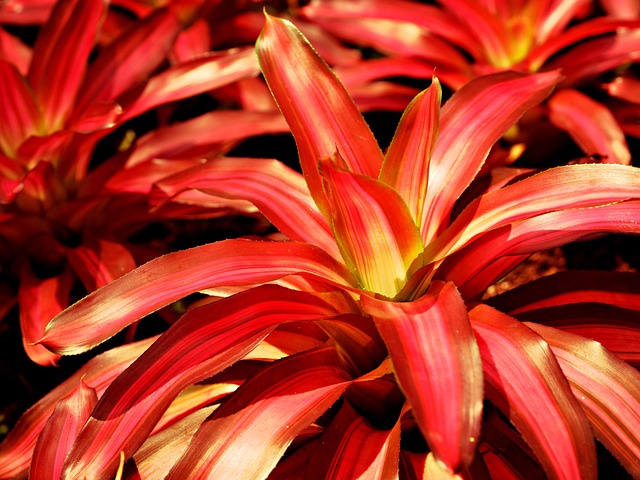
bromeliad
Bromeliaceae (family)
Evidence-based care guide for Bromeliad (Bromeliaceae (family)). Covers disease treatment, pest control and watering. Our analysis draws from 15 verified community cases with an average confidence score of 86%. Each protocol is synthesized from real rescue outcomes, not generic advice.
Care Essentials
Get to Know Your Bromeliad
The #1 killer? Overwatering. Let the soil dry between waterings and your Bromeliad will thrive.
Light
bright indirect
Prefers bright, indirect light. Keep out of harsh direct afternoon sun — it can scorch the leaves.
💡 Grow lights: Thrives under artificial grow lights (LED or fluorescent, 10-12 hours/day). A great option if your space lacks natural light.
Watering
every 7-10 days
Water when the top 1-2 inches of soil feel dry. Adjust with the seasons — less in winter, more in summer.
Humidity & Temperature
Appreciates some humidity but adapts to average home conditions. Brown tips in winter? Your air might be too dry — a light misting helps.
Standard room temperature (60-80°F / 15-27°C) is perfect. Avoid cold drafts and sudden temperature swings.
Soil
Needs well-draining soil — add perlite or orchid bark to a standard potting mix. Good drainage is critical to prevent root rot.
Care Requirements
At a Glance
Care Profile in Development
While our detailed care profile is being compiled, you can find specific care guidance in the 7 care-related diagnoses below — including watering schedules, light requirements, and propagation methods from real-world cases.
Start Here
Most Common Problems
Based on 15 analyzed cases — these are the issues you're most likely to encounter
Don't see your symptom? Search all 15 topics below, or run the Diagnostic.
Bromeliad: Senescence
Bromeliads are monocarpic; the mother rosette naturally dies after its single...
How often should I water my Bromeliad?
Epiphytic bromeliads rely on their central 'tank' for hydration. Curling or...
Why does my Bromeliad have sunburn?
Direct midday sun causes bleached or crispy brown necrotic patches on...
Monthly Cup Flushing Protocol: How to Use for Bromeliad
The monthly cup-flushing protocol mimics tropical rainforest deluge cycles...
What disease does my Bromeliad have?
Fungal infection (Rust) characterized by brown necrotic spots surrounded by...
Which of the 7 Killers
is threatening your plants?
We analyzed 1,616 documented plant deaths to identify the 7 causes behind 78% of all losses. Answer 5 questions — we'll tell you exactly which ones apply to your setup.
Skip the quiz — get The 7 Killers course ($19) →Question 1 of 5
How do you decide when to water your plants?
Question 2 of 5
Where do most of your plants live?
Question 3 of 5
What's your home environment like?
Question 4 of 5
Have you lost a plant in the last 6 months?
Question 5 of 5
How often do you check your plants for pests?
Your diagnosis is ready
We've identified your top 2 risk killers. Enter your email to see the full breakdown and your personalized rescue protocol.
Your plants are most at risk from:

The 7 Killers mini-course covers every one of these in depth — mechanism, rescue protocol, prevention. 1,616 cases. 7 lessons. $19.
Get The 7 Killers — $19 →Get the Plant Mortality Checklist
The 7 killers behind 78% of houseplant deaths — and the exact fix for each. Free PDF based on 1,616 documented cases.
Your checklist is ready!
We also sent it to your inbox. Check your email for the full download.
Open the ChecklistFree. No spam. Unsubscribe anytime.
Verified Data
All Diagnoses
15 topics consolidated from 15 documented cases. Expand any topic to see all protocols.
Diseases (3 topics · 3 cases)
What disease does my Bromeliad have?
Fungal infection (Rust) characterized by brown necrotic spots surrounded by distinct yellow halos
88%
What disease does my Bromeliad have?
Fungal infection (Rust) characterized by brown necrotic spots surrounded by distinct yellow halos
Cause
Fungal infection (Rust) characterized by brown necrotic spots surrounded by distinct yellow halos. Triggered by high humidity and stagnant air.
Solutions
- Prune and discard infected leaves using sterilized tools.
- Treat remaining foliage with a copper-based fungicide every 14 days.
- Improve air circulation with a fan.
Prevention
Maintain humidity between 50-70% with active ventilation. Avoid getting water on the leaves.
How often should I water my Bromeliad?
Bromeliads are epiphytic plants adapted to tropical canopy conditions where rainwater collects in the central leaf rosette (tank)
88%
How often should I water my Bromeliad?
Bromeliads are epiphytic plants adapted to tropical canopy conditions where rainwater collects in the central leaf rosette (tank)
Cause
Bromeliads are epiphytic plants adapted to tropical canopy conditions where rainwater collects in the central leaf rosette (tank). In natural habitats, heavy rainfall flushes the tank regularly, preventing stagnation. Indoors, this natural flushing mechanism is absent—evaporation is slower and airflow is reduced. When water remains in the central cup for extended periods without flushing, anaerobic bacteria and fungal pathogens proliferate, causing 'heart rot' that begins at the crown and spreads inward, appearing as wilting central leaves and producing a foul odor.
Solutions
- Immediately empty all water from the central crown/tank
- Flush the cup with diluted hydrogen peroxide (1:10 ratio) or fresh clean water to disinfect and remove debris
- Inspect and gently remove any softened, blackened central tissue with sterile tweezers or scissors
- Repot in well-draining epiphytic mix (orchid bark, perlite) if rot extends to roots
- Resume base-only watering for 1-2 weeks to allow drying; mist leaves instead of filling cup
- Provide bright indirect light and increased air circulation (small fan) to speed evaporation
Prevention
For indoor bromeliads, empty the central cup completely and allow it to dry between fillings; flush the cup monthly with fresh water to remove accumulated organic debris; ensure bright indirect light (2000-4000 lux) and 40-60% humidity with air circulation to promote evaporation.
Monthly Cup Flushing Protocol: How to Use for Bromeliad
The monthly cup-flushing protocol mimics tropical rainforest deluge cycles where heavy rainfall naturally cleanses the central tank of accumulated organic debris, dead insects, and bacterial biofilm
89%
Monthly Cup Flushing Protocol: How to Use for Bromeliad
The monthly cup-flushing protocol mimics tropical rainforest deluge cycles where heavy rainfall naturally cleanses the central tank of accumulated organic debris, dead insects, and bacterial biofilm
Cause
The monthly cup-flushing protocol mimics tropical rainforest deluge cycles where heavy rainfall naturally cleanses the central tank of accumulated organic debris, dead insects, and bacterial biofilm. Without this periodic flushing indoors, organic matter decomposes in the cup creating anaerobic conditions and releasing hydrogen sulfide gas (foul odor). This natural cycle also prevents mosquito breeding in standing water—a common concern with bromeliads kept outdoors in humid climates.
Solutions
- Monthly deep flush: Empty cup completely and discard all old water
- Rinse cup interior with fresh water, gently wiping away any visible debris or biofilm
- For thorough cleaning: Use diluted hydrogen peroxide (1:10) monthly to prevent bacterial colonization
- Refill with fresh filtered/rainwater to 1-2 cm depth
- Check that water flows freely when poured—ensure no blockages in leaf axils
Prevention
Establish monthly calendar reminder to completely flush the central cup; empty all water, rinse cup interior with fresh clean water (or 1:10 hydrogen peroxide solution for disinfection), then refill with fresh water; ensure cup drains freely and does not hold water in pockets; maintain air circulation around plant to promote healthy evaporation between fillings.
Pests (2 topics · 2 cases)
Bromeliad: Cup Stagnation
Standing water in the central cup for more than 7-10 days breeds anaerobic bacteria, fungal pathogens, and mosquito larvae in indoor conditions
82%
Bromeliad: Cup Stagnation
Standing water in the central cup for more than 7-10 days breeds anaerobic bacteria, fungal pathogens, and mosquito larvae in indoor conditions
Cause
Standing water in the central cup for more than 7-10 days breeds anaerobic bacteria, fungal pathogens, and mosquito larvae in indoor conditions. Unlike natural rainforest environments where rain flushes the cup daily, indoor bromeliads lack natural water exchange, leading to stagnant conditions that cause vascular rot from the crown down.
Solutions
- Empty central cup completely every 7 days minimum
- Rinse cup with fresh water to dislodge debris and bacteria
- Refill to 1/3 full with fresh distilled/rainwater
- In high humidity (>60%), extend to biweekly flushing but monitor for algae
- If rot detected (soft brown base, foul odor): stop cup watering 48 hours, treat base with hydrogen peroxide, resume with 2x/week fresh fills
Prevention
Flush cup weekly without fail. Ensure 12+ hours daily air circulation with fan. Never add fertilizer directly to cup—dilute and apply to soil only. Avoid positioning under AC vents that cause rapid evaporation/fill cycles.
What pests are on my Bromeliad?
Sap-sucking armored scale insects appearing as raised, waxy brown spots that can be physically scraped off
85%
What pests are on my Bromeliad?
Sap-sucking armored scale insects appearing as raised, waxy brown spots that can be physically scraped off
Cause
Sap-sucking armored scale insects appearing as raised, waxy brown spots that can be physically scraped off.
Solutions
- Isolate the plant immediately.
- Scrape off visible scales using a soft toothbrush or fingernail.
- Wipe leaves with 70% isopropyl alcohol on a cotton swab.
- Apply neem oil or insecticidal soap weekly for 4 weeks.
Prevention
Quarantine new plants for 2-4 weeks. Improve air circulation and inspect leaf axils monthly.
Watering Issues (5 topics · 5 cases)
How often should I water my Bromeliad?
Bromeliads are epiphytic tank bromeliads that evolved to capture rainwater in their central leaf rosette (tank/cup) rather than absorbing water primarily through roots
87%
How often should I water my Bromeliad?
Bromeliads are epiphytic tank bromeliads that evolved to capture rainwater in their central leaf rosette (tank/cup) rather than absorbing water primarily through roots
Cause
Bromeliads are epiphytic tank bromeliads that evolved to capture rainwater in their central leaf rosette (tank/cup) rather than absorbing water primarily through roots. The leaf trichomes absorb 90% of water and nutrients directly from the cup. Indoor growers often underwater by treating them like terrestrial plants, or overwater soil while neglecting the cup entirely.
Solutions
- Fill central cup to 1/4-1/3 full with room-temperature water every 3-7 days
- Use distilled, rain, or filtered water—avoid tap water with minerals/chlorine
- Mist leaves daily if indoor humidity is below 50%
- Soil should be lightly moistened only when top 1-2 inches are dry; prioritize cup filling
- Provide bright indirect light (2000-4000 lux) to support metabolic water uptake
Prevention
Maintain 50-70% humidity via pebble tray or humidifier. Never allow central cup to remain completely dry for more than 7 days. Use well-draining epiphytic mix (orchid bark + perlite) to prevent root confusion.
How often should I water my Bromeliad?
Hard tap water contains calcium, magnesium, and chlorine that accumulate in the central cup and leaf trichomes over time
78%
How often should I water my Bromeliad?
Hard tap water contains calcium, magnesium, and chlorine that accumulate in the central cup and leaf trichomes over time
Cause
Hard tap water contains calcium, magnesium, and chlorine that accumulate in the central cup and leaf trichomes over time. These mineral deposits block the foliar absorption pathways and create white crusts that prevent proper nutrient uptake. Chlorine and fluoride in municipal water also damage the sensitive leaf tissue adapted to pure rainwater.
Solutions
- Use only distilled water, collected rainwater, or filtered reverse-osmosis water for cup filling
- If tap water is only option: let sit 24 hours to off-gas chlorine, or boil and cool
- Flush cup thoroughly weekly to prevent mineral precipitation
- Wipe visible white mineral deposits from leaf bases with damp cloth monthly
- Alternate water sources: aquarium water (nitrogen-rich, dechlorinated) or melted snow
Prevention
Avoid all tap water for tank bromeliads. Install rainwater collection or use distilled water exclusively. If mineral buildup occurs, flush with distilled water 3x over one week to dissolve deposits.
How often should I water my Bromeliad?
Epiphytic bromeliads rely on their central 'tank' for hydration
92%
How often should I water my Bromeliad?
Epiphytic bromeliads rely on their central 'tank' for hydration
Cause
Epiphytic bromeliads rely on their central 'tank' for hydration. Curling or browning leaves often result from watering the soil exclusively.
Solutions
- Keep the central cup 1/4 to 1/3 full of distilled, rain, or filtered water.
- Flush and replace tank water every 2-4 weeks.
- Water the substrate only when it is nearly dry.
Prevention
Use low-mineral water to avoid tip burn. Maintain a regular tank-flushing schedule.
Is my Bromeliad overwatered?
Bromeliads evolved as epiphytes in tropical rainforests where their root systems serve primarily as anchoring structures attaching to tree bark, not as water-absorption organs
85%
Is my Bromeliad overwatered?
Bromeliads evolved as epiphytes in tropical rainforests where their root systems serve primarily as anchoring structures attaching to tree bark, not as water-absorption organs
Cause
Bromeliads evolved as epiphytes in tropical rainforests where their root systems serve primarily as anchoring structures attaching to tree bark, not as water-absorption organs. The central leaf cup (tank) evolved as the primary water and nutrient reservoir. When owners water the soil instead of the cup—or overwater soil thinking they're helping—they create waterlogged conditions around the anchor roots, which lack the metabolic adaptations for sustained moisture uptake. This triggers anaerobic bacterial growth and root decay that compromises the plant's stability.
Solutions
- Shift watering method: Fill the central leaf cup with water, not the soil
- Allow soil to dry completely between waterings—check with finger test 2 inches deep
- Use epiphytic potting mix: 50% orchid bark, 30% perlite, 20% coarse sphagnum moss
- Empty any drainage tray within 30 minutes of watering to prevent root suffocation
- Monitor cup water: Empty and refill every 5-7 days rather than simply topping off
Prevention
Water primarily via the central cup (tank) 1-2 times per week; only water soil when it becomes completely dry (typically every 1-2 weeks); use well-draining epiphytic mix (orchid bark, perlite, coarse sphagnum) rather than standard potting soil; never allow pot to sit in standing water.
How often should I water my Bromeliad?
Bromeliad leaves possess specialized trichome structures adapted for nutrient absorption from tank water, but these same structures are sensitive to mineral salt accumulation
86%
How often should I water my Bromeliad?
Bromeliad leaves possess specialized trichome structures adapted for nutrient absorption from tank water, but these same structures are sensitive to mineral salt accumulation
Cause
Bromeliad leaves possess specialized trichome structures adapted for nutrient absorption from tank water, but these same structures are sensitive to mineral salt accumulation. Hard tap water containing calcium, magnesium, and chlorine leaves white crusty deposits on leaf surfaces that block trichome function and create osmotic stress. Over time, mineral buildup reduces the plant's ability to absorb nutrients from the cup, leading to pale new growth and reduced vigor even when watering appears consistent.
Solutions
- Switch water source immediately: use filtered, distilled, or rainwater for all watering
- Flush cup thoroughly: empty completely and rinse with clean water to remove mineral deposits
- Wipe visible white deposits from leaf surfaces with damp cloth
- If tap water required: let stand 24 hours in open container before using; never use softened water (sodium content harmful)
- Monitor new growth: healthier color should appear within 3-4 weeks of water quality improvement
Prevention
Use filtered, distilled, or collected rainwater exclusively for both cup and soil watering; if tap water is the only option, allow it to sit uncovered for 24 hours to off-gas chlorine; flush the cup weekly to prevent mineral precipitation; maintain 50-70% humidity to reduce overall water requirements.
Environment (1 topics · 1 cases)
Why does my Bromeliad have sunburn?
Direct midday sun causes bleached or crispy brown necrotic patches on thin-leaved species
90%
Why does my Bromeliad have sunburn?
Direct midday sun causes bleached or crispy brown necrotic patches on thin-leaved species
Cause
Direct midday sun causes bleached or crispy brown necrotic patches on thin-leaved species. Foliar trichomes are adapted for filtered forest light.
Solutions
- Relocate the plant to bright indirect light.
- Trim severely scorched leaves for aesthetics.
- Increase humidity to aid recovery.
Prevention
Acclimate gradually to higher light. Use 30-50% shade cloth if moving outdoors.
Care Methods (1 topics · 1 cases)
Central Cup Function And Care: Bromeliad Guide
The bromeliad central cup serves multiple evolutionary functions: it collects and stores rainwater in the canopy where roots cannot reach ground water; it creates a microhabitat that attracts insects whose waste provides nitrogen; and it enables nutrient uptake through specialized leaf trichomes (scales) when water contains dissolved organic matter
87%
Central Cup Function And Care: Bromeliad Guide
The bromeliad central cup serves multiple evolutionary functions: it collects and stores rainwater in the canopy where roots cannot reach ground water; it creates a microhabitat that attracts insects whose waste provides nitrogen; and it enables nutrient uptake through specialized leaf trichomes (scales) when water contains dissolved organic matter
Cause
The bromeliad central cup serves multiple evolutionary functions: it collects and stores rainwater in the canopy where roots cannot reach ground water; it creates a microhabitat that attracts insects whose waste provides nitrogen; and it enables nutrient uptake through specialized leaf trichomes (scales) when water contains dissolved organic matter. Indoors, owners often underutilize this tank or allow it to stagnate, missing the plant's primary hydration pathway while creating rot conditions through neglect or overfilling without flushing.
Solutions
- Fill central cup to 1-2 cm depth with room-temperature water
- Flush completely every 7-14 days: empty old water, rinse cup with fresh water, refill
- Use filtered, distilled, or rainwater—avoid hard tap water that leaves mineral deposits
- Add a few drops of liquid fertilizer to cup monthly during growing season (diluted to 1/4 strength)
- Ensure cup dries partially between fillings—never maintain constant full saturation without flushing cycles
Prevention
Maintain 1-2 cm of water in the central cup consistently; flush the cup completely every 7-14 days to remove accumulated debris and prevent bacterial growth; use room-temperature filtered or rainwater to avoid mineral buildup on trichomes; ensure adequate air circulation to promote healthy evaporation cycles.
Biology & Advanced (1 topics · 1 cases)
Bromeliad: Senescence
Bromeliads are monocarpic; the mother rosette naturally dies after its single bloom cycle to redirect energy toward producing basal offsets (pups)
95%
Bromeliad: Senescence
Bromeliads are monocarpic; the mother rosette naturally dies after its single bloom cycle to redirect energy toward producing basal offsets (pups)
Cause
Bromeliads are monocarpic; the mother rosette naturally dies after its single bloom cycle to redirect energy toward producing basal offsets (pups).
Solutions
- Cut the faded flower stalk at its base with sterile shears.
- Leave the mother plant intact to continue feeding emerging pups.
- Separate pups once they reach 1/3 to 1/2 the size of the mother plant and have visible roots.
- Pot pups in a well-draining epiphytic mix.
Prevention
Natural lifecycle; support pup vigor with high humidity (60%+) and bright indirect light.
Other Topics (2 topics · 2 cases)
Bromeliad: Cup Drainage Confusion
New bromeliad owners often mistake normal cup percolation for a leak
75%
Bromeliad: Cup Drainage Confusion
New bromeliad owners often mistake normal cup percolation for a leak
Cause
New bromeliad owners often mistake normal cup percolation for a leak. Water poured into the central tank of potted bromeliads slowly drains through leaf axils into the potting medium—this is normal delayed drainage, not a defect. True tank leaks show immediate gushing from split leaves or damaged tissue. Understanding this distinction prevents unnecessary repotting or plant return.
Solutions
- Observe drainage pattern: Slow seepage over 5-30 minutes = normal percolation; immediate gush = damaged cup
- If percolation concerns you: add sphagnum moss to cup base to slow drainage, or mount plant epiphytically
- For true leaks from split leaves: reduce cup water level to 1/4 full, propagate healthy offsets
- When repotting: check for well-formed rosette cup; immature plants drain faster until cup develops
Prevention
Select mature plants with tight, well-formed rosette cups. Use epiphytic mounting (wood/bark) instead of pots to eliminate percolation confusion entirely. Understand that some water reaching roots via percolation is beneficial in potted culture.
Bromeliad: Tank Flushing
Indoor bromeliads lack the periodic heavy rainfall events that naturally flush debris, dead insects, and bacterial buildup from their cups in native habitats
77%
Bromeliad: Tank Flushing
Indoor bromeliads lack the periodic heavy rainfall events that naturally flush debris, dead insects, and bacterial buildup from their cups in native habitats
Cause
Indoor bromeliads lack the periodic heavy rainfall events that naturally flush debris, dead insects, and bacterial buildup from their cups in native habitats. Without monthly deep flushing, organic matter accumulates in the tank, creating anaerobic conditions and nutrient imbalances that lead to crown rot and poor growth.
Solutions
- Monthly 'shower' treatment: Take plant to shower or sink, drench entire plant including cup for 5-10 minutes
- Shake plant gently to remove excess water—do not towel dry
- Empty cup completely after shower, then refill with fresh distilled water to 1/3
- For large collections: use garden hose with shower nozzle on mist setting
- This mimics natural rainfall: cleans trichomes, flushes debris, oxygenates cup water
Prevention
Schedule monthly deep flush on calendar. Mark plant care tags with 'monthly shower' reminder. Combine with monthly fertilizing (diluted orchid fertilizer applied to soil only after flush). Ensure excellent air circulation for 24 hours post-shower to prevent fungal issues.
Common Questions
Frequently Asked Questions
Why does my bromeliad have Senescence?
Cause: Bromeliads are monocarpic; the mother rosette naturally dies after its single bloom cycle to redirect energy toward producing basal offsets (pups).
Solution: Cut the faded flower stalk at its base with sterile shears.
Prevention: Natural lifecycle; support pup vigor with high humidity (60%+) and bright indirect light.
95% confidence · View full protocol →
Why does my bromeliad have Improper watering?
Cause: Epiphytic bromeliads rely on their central 'tank' for hydration. Curling or browning leaves often result from watering the soil exclusively.
Solution: Keep the central cup 1/4 to 1/3 full of distilled, rain, or filtered water.
Prevention: Use low-mineral water to avoid tip burn. Maintain a regular tank-flushing schedule.
92% confidence · View full protocol →
Why does my bromeliad have Sunburn?
Cause: Direct midday sun causes bleached or crispy brown necrotic patches on thin-leaved species. Foliar trichomes are adapted for filtered forest light.
Solution: Relocate the plant to bright indirect light.
Prevention: Acclimate gradually to higher light. Use 30-50% shade cloth if moving outdoors.
90% confidence · View full protocol →
Why does my bromeliad have Monthly cup flushing protocol?
Cause: The monthly cup-flushing protocol mimics tropical rainforest deluge cycles where heavy rainfall naturally cleanses the central tank of accumulated organic debris, dead insects, and bacterial biofilm. Without this periodic flushing indoors, organic matter decomposes in the cup creating anaerobic conditions and releasing hydrogen sulfide gas (foul odor). This natural cycle also prevents mosquito breeding in standing water—a common concern with bromeliads kept outdoors in humid climates.
Solution: Monthly deep flush: Empty cup completely and discard all old water
Prevention: Establish monthly calendar reminder to completely flush the central cup; empty all water, rinse cup interior with fresh clean water (or 1:10 hydrogen peroxide solution for disinfection), then refill with fresh water; ensure cup drains freely and does not hold water in pockets; maintain air circulation around plant to promote healthy evaporation between fillings.
89% confidence · View full protocol →
Why does my bromeliad have Fungal rust?
Cause: Fungal infection (Rust) characterized by brown necrotic spots surrounded by distinct yellow halos. Triggered by high humidity and stagnant air.
Solution: Prune and discard infected leaves using sterilized tools.
Prevention: Maintain humidity between 50-70% with active ventilation. Avoid getting water on the leaves.
88% confidence · View full protocol →
Common Questions
Frequently Asked About Bromeliad
What problems can Bromeliad get?
Our database contains 15 documented Bromeliad cases covering 15 distinct topics, including diseases, pest identification, environmental stress, propagation, and advanced care protocols — each with verified solutions.
Structured Learning
Ready to Go Deeper?
Explore our Mastery Packs for structured, video-based learning with step-by-step protocols from 20,000+ analyzed plant cases.
Browse All Courses →