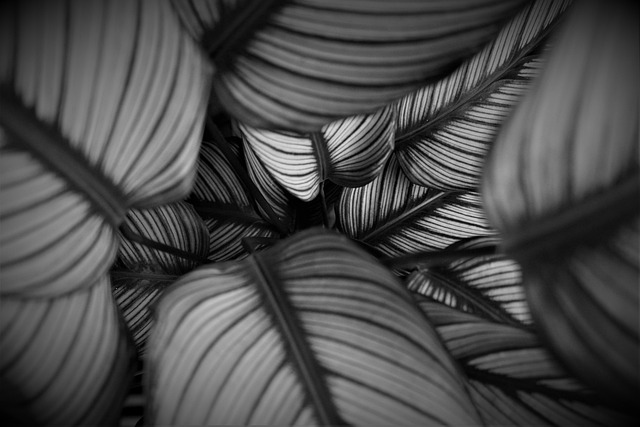
calathea orbifolia
Goeppertia orbifolia
Comprehensive care and diagnosis guide for the Calathea Orbifolia. Based on 10 verified community insights.
Care Requirements
At a Glance
Detailed care profile is currently being compiled by the Plant Grail swarm.
Start Here
Most Common Problems
Based on 10 analyzed cases — these are the issues you're most likely to encounter
Does my Calathea Orbifolia need more humidity?
Calathea Orbifolia (Goeppertia orbifolia) evolved in Bolivian tropical...
Why does my Calathea Orbifolia have care guide?
Calathea Orbifolia exhibits extreme sensitivity to water chemistry due to its...
Why does my Calathea Orbifolia have common problems?
Calathea Orbifolia develops shallow, fine fibrous root systems adapted to...
Why does my Calathea Orbifolia have light needs?
Calathea Orbifolia thrives as an understory plant in its native Bolivian...
Why do my Calathea Orbifolia leaves have brown tips?
Calathea orbifolia leaves exhibit edge browning primarily due to water quality...
Verified Data
All Diagnoses
Complete analysis of 10 cases for this variety. Select an entry to expand rescue protocols.
Diseases (1)
Environment (1)
Other Problems (2)
Symptoms (1)
Common Questions
Frequently Asked Questions
Why does my calathea orbifolia have Humidity requirements?
Cause: Calathea Orbifolia (Goeppertia orbifolia) evolved in Bolivian tropical understories where ambient humidity remains 70-90% year-round. The plant's large, thin leaves with high stomatal density transpire rapidly in dry air, causing cellular dehydration within 24-48 hours. Unlike succulent plants that store water, Calatheas lack water retention adaptations and depend entirely on environmental humidity to maintain turgor pressure in leaf cells. When humidity drops below 50%, leaf margins lose moisture faster than the vascular system can replenish, resulting in crispy, brown edges that cannot be reversed.
Solution: Install humidifier within 3 feet of plant set to maintain 60-80% humidity continuously; target 70% for optimal growth
Prevention: Maintain humidity above 60% year-round using automated humidistat-controlled humidifiers. Avoid placement near heating vents, air conditioners, or drafty windows where humidity fluctuates. Monitor with digital hygrometer placed at plant level.
88% confidence · View full protocol →
Why does my calathea orbifolia have Care guide?
Cause: Calathea Orbifolia exhibits extreme sensitivity to water chemistry due to its evolution in rainforest environments with pure precipitation. Tap water contains fluoride, chlorine, and dissolved mineral salts (calcium, magnesium) that accumulate in leaf tissue, causing cellular toxicity and marginal necrosis. The plant's fibrous root system lacks the filtering capacity to exclude these compounds, leading to salt buildup in leaf margins that manifests as brown, crispy edges. This sensitivity often overrides other care factors—even perfect humidity and light cannot compensate for poor water quality.
Solution: Switch to distilled, filtered, or rainwater exclusively for all watering; never use tap water
Prevention: Use only purified water sources year-round. Install reverse osmosis system or collect rainwater for plant care. Test water with TDS meter—keep total dissolved solids below 50 ppm for optimal results.
91% confidence · View full protocol →
Why does my calathea orbifolia have Common problems?
Cause: Calathea Orbifolia develops shallow, fine fibrous root systems adapted to rapidly draining forest floor leaf litter. When placed in oversized pots, the root mass cannot absorb moisture from the excess soil volume, creating chronically saturated conditions that promote anaerobic bacterial growth and root rot. The plant's reduced root-to-soil ratio mimics overwatering symptoms—yellowing, drooping, and stunted growth—even when watering frequency is appropriate. This is particularly common with nursery plants sold in decorative pots too large for their root development.
Solution: Select pots with diameter 1-2 inches smaller than foliage spread to match root absorption capacity
Prevention: Match pot size to root ball at every stage. Choose containers where roots fill 70-80% of soil volume. Avoid decorative cache pots without drainage. Monitor soil moisture 3 inches deep—water only when dry at this depth.
89% confidence · View full protocol →
Why does my calathea orbifolia have Light needs?
Cause: Calathea Orbifolia thrives as an understory plant in its native Bolivian forests, receiving filtered light through canopy gaps. Scientific studies (PMID 29494547) confirm Calathea species have low light saturation points (600 μmol photons·m⁻²·s⁻¹ PPFD) with photosynthetic rates declining at higher intensities. However, insufficient light (below 100 μmol·m⁻²·s⁻¹) triggers etiolation—leggy growth with small, pale leaves and loss of striking silver-striped variegation. The paradox: this shade plant requires brighter light than typically assumed to maintain its characteristic leaf patterns and compact form.
Solution: Position 3-5 feet from east-facing windows for optimal morning light without afternoon intensity
Prevention: Acclimate new plants to light over 7-10 days gradually. Rotate plant monthly for even exposure. Use light meter app to maintain 1500-3000 lux consistently. Avoid sudden light changes that trigger leaf drop.
90% confidence · View full protocol →
Why does my calathea orbifolia have Brown tips?
Cause: Calathea orbifolia leaves exhibit edge browning primarily due to water quality sensitivity rather than low humidity alone. The plant's epidermal cells accumulate fluoride, chlorine, and mineral salts from tap water, disrupting cellular osmotic balance and causing localized necrosis at leaf margins. Even filtered tap water (Brita-style) often retains fluoride and dissolved solids that trigger tip burn. The nyctinastic movement (prayer folding) is suppressed during water stress but returns once water quality improves.
Solution: Switch to distilled, rainwater, or aquarium water immediately—filtered tap water retains fluoride and salts that cause tip burn
Prevention: Use only distilled, rainwater, reverse osmosis (RO), or aquarium water (dechlorinated) for all watering. Avoid filtered municipal water. Flush soil quarterly with distilled water to leach accumulated salts. Maintain soil pH between 6.0-6.5 to optimize nutrient uptake and minimize salt precipitation.
91% confidence · View full protocol →