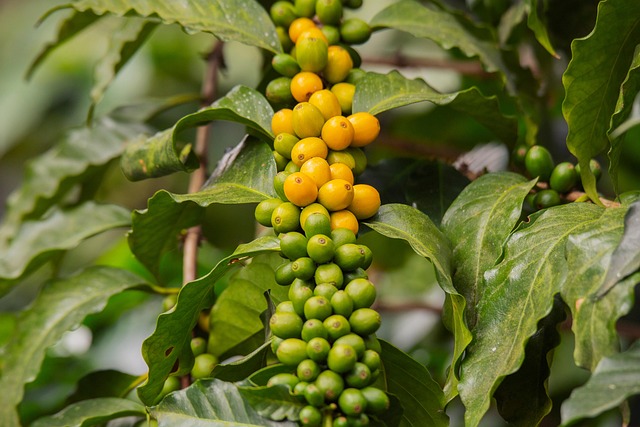
coffee plant
Coffea arabica
Comprehensive care and diagnosis guide for the Coffee Plant. Based on 2 verified community insights.
Care Requirements
At a Glance
Detailed care profile is currently being compiled by the Plant Grail swarm.
Start Here
Most Common Problems
Based on 2 analyzed cases — these are the issues you're most likely to encounter
Why does my Coffee Plant have crispy leaves?
Primarily transpiration stress from low humidity (<50% RH). Secondary causes...
Why does my Coffee Plant have no new growth?
Coffee plants exhibit strong apical dominance, resulting in a single, tall,...
Verified Data
All Diagnoses
Complete analysis of 2 cases for this variety. Select an entry to expand rescue protocols.
Common Questions
Frequently Asked Questions
Why does my coffee plant have Crispy leaves?
Cause: Primarily transpiration stress from low humidity (<50% RH). Secondary causes include fluoride toxicity from tap water building up in leaf tips, and root competition from multiple plants sharing a single nursery pot. Flexible branches indicate viability despite leaf loss.
Solution: Switch to distilled, reverse osmosis, or rainwater to eliminate fluoride/chlorine salts.
Prevention: Maintain 60%+ humidity via a dedicated micro-humidifier or clustering with high-transpiration plants like ferns. Use a hygrometer to confirm leaf-level humidity, not just room-level.
82% confidence · View full protocol →
Why does my coffee plant have No new growth?
Cause: Coffee plants exhibit strong apical dominance, resulting in a single, tall, leggy stem with no lateral branching. Indoors, growth often stalls due to root competition in multi-seedling pots or phosphorus deficiency (indicated by reddish new leaves). To flower, they require a 'rainy season' trigger and high-intensity light that typical indoor settings lack.
Solution: To trigger bushiness: 'Top' the plant by cutting the main stem above a healthy node. This breaks apical dominance and forces lateral branches where flowers/beans will eventually form.
Prevention: Separate nursery 'clumps' into single pots early to prevent nutrient competition. Use deep pots to accommodate the vertical root structure. Maintain 12-14 hours of full-spectrum light to prevent winter stalling.
76% confidence · View full protocol →