Leaf Drop on fiddle-leaf-fig
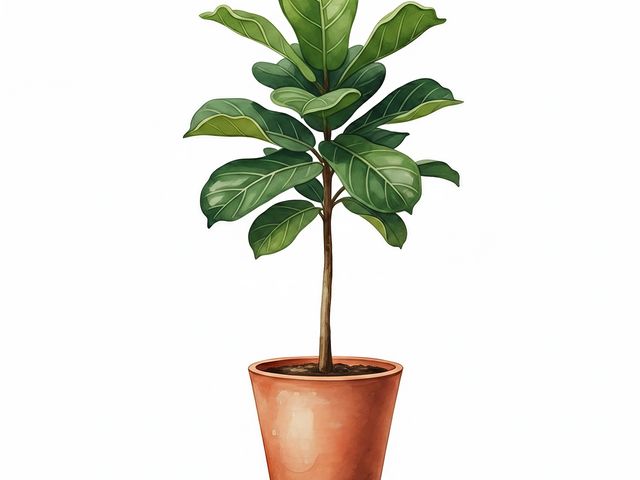
What's Happening
Ficus lyrata exhibits rapid leaf abscission as a survival response to environmental stress. TRANSPLANT/ACQUISITION SHOCK: Root disturbance triggers ethylene-mediated abscission, typically affecting 7-10 lower leaves within 24-72 hours of environmental change. LIGHT STRESS: Insufficient light (<1000 lux) causes etiolation and carbohydrate reallocation—plant sheds lower leaves to support new growth. WATER STRESS PARADOX: Both overwatering (root rot) and underwatering produce similar leaf drop symptoms through different mechanisms. SEASONAL RESPONSE: Winter photoperiod reduction triggers semi-dormancy with natural lower leaf senescence. Key diagnostic: assess timing relative to recent moves, check soil moisture, inspect roots if suspected rot.
Alternative causes:
- • Fiddle Leaf Fig (Ficus lyrata) leaf drop is primarily caused by inconsistent watering or overwatering leading to root rot, transplant shock from recent repotting or relocation, insufficient light causing slow water utilization, or environmental stress from drafts and temperature fluctuations. The plant's large leaves require substantial energy and water support from the root system.
How to Fix It
- 1
1. TIMELINE ASSESSMENT: Determine if leaf drop coincides with recent acquisition, repotting, or environmental move—transplant shock is self-limiting over 2-4 weeks
- 2
2. SOIL INSPECTION: Check moisture with finger 2-3 inches deep; soggy soil indicates overwatering/root rot requiring immediate intervention
- 3
3. ROOT CHECK: If suspected rot, gently unpot and inspect—healthy roots are firm/white; rotting roots are mushy/black/foul-smelling
- 4
4. ENVIRONMENT AUDIT: Confirm bright indirect light, stable temps 65-75°F, humidity 40-60%, no drafts from AC/heating vents
- 5
5. STABILIZE & WAIT: Once conditions are optimal, maintain consistency and wait 2-4 weeks for new growth emergence
- 6
6. PRUNE STRATEGICALLY: Remove completely yellowed/dropped leaves to reduce pathogen load and redirect energy to recovery
How to Prevent It
Acclimate new plants gradually over 1-2 weeks; quarantine for 14 days in stable environment. Maintain bright indirect light (2000-5000 lux) year-round; supplement with grow lights in winter. Use consistent moisture checks rather than calendar watering. Maintain stable 65-75°F temperatures and 40-60% humidity. Avoid multiple simultaneous changes.
Related Problems
Same Problem on Other Plants
Go Deeper
This is covered in-depth in the fiddle-leaf-fig Mastery Pack — structured modules with video walkthroughs, advanced protocols, and rescue timelines.
Get the Mastery Pack — $37 →