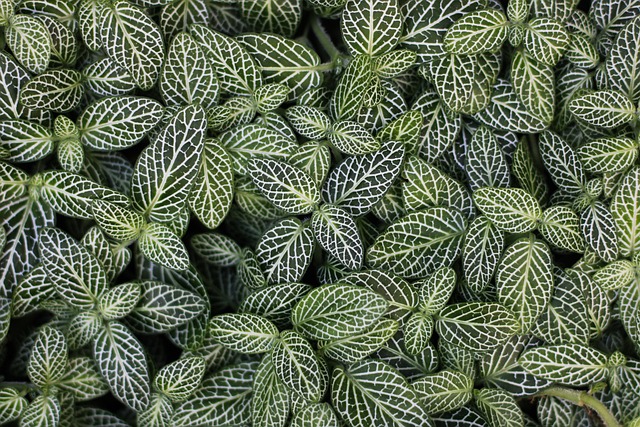
fittonia
Fittonia albivenis
Evidence-based care guide for Fittonia (Fittonia albivenis). Covers disease treatment, symptom diagnosis and watering. Our analysis draws from 9 verified community cases with an average confidence score of 84%. Each protocol is synthesized from real rescue outcomes, not generic advice.
Care Essentials
Get to Know Your Fittonia
Watch the humidity — a little extra moisture in the air goes a long way with this plant.
Light
bright indirect
Wants bright, indirect light — sensitive to both extremes. Too much direct sun causes burns, too little causes stretching.
💡 Grow lights: Thrives under artificial grow lights (LED or fluorescent, 10-12 hours/day). A great option if your space lacks natural light.
Watering
every 7-10 days
Water when the top 1-2 inches of soil feel dry. Adjust with the seasons — less in winter, more in summer.
Humidity & Temperature
Loves higher humidity (60%+). If your air is dry, group it with other plants, use a pebble tray, or run a humidifier nearby.
Prefers moderate temperatures (60-80°F). Keep away from radiators and intense afternoon sun windows.
Soil
Needs well-draining soil — add perlite or orchid bark to a standard potting mix. Good drainage is critical to prevent root rot.
Care Requirements
At a Glance
Care Profile in Development
While our detailed care profile is being compiled, you can find specific care guidance in the 1 care-related diagnoses below — including watering schedules, light requirements, and propagation methods from real-world cases.
Start Here
Most Common Problems
Based on 9 analyzed cases — these are the issues you're most likely to encounter
Don't see your symptom? Search all 9 topics below, or run the Diagnostic.
Fittonia: Acute Thirst Low
Rapid turgor loss in thin leaves due to acute thirst, low humidity (<50% RH),...
Fittonia: Crispy Leaves
Desiccation of leaf margins due to low ambient humidity (<50% RH) or direct...
Why is my Fittonia growing leggy?
Internode elongation due to insufficient light (Etiolation) or natural creeper...
Why are my Fittonia leaves curling?
Physiological response to excessive transpiration. Leaves curl inward to...
Why does my Fittonia have root rot?
Pathogenic decay of hair-fine roots caused by anaerobic soil conditions. Often...
Which of the 7 Killers
is threatening your plants?
We analyzed 1,616 documented plant deaths to identify the 7 causes behind 78% of all losses. Answer 5 questions — we'll tell you exactly which ones apply to your setup.
Skip the quiz — get The 7 Killers course ($19) →Question 1 of 5
How do you decide when to water your plants?
Question 2 of 5
Where do most of your plants live?
Question 3 of 5
What's your home environment like?
Question 4 of 5
Have you lost a plant in the last 6 months?
Question 5 of 5
How often do you check your plants for pests?
Your diagnosis is ready
We've identified your top 2 risk killers. Enter your email to see the full breakdown and your personalized rescue protocol.
Your plants are most at risk from:

The 7 Killers mini-course covers every one of these in depth — mechanism, rescue protocol, prevention. 1,616 cases. 7 lessons. $19.
Get The 7 Killers — $19 →Get the Plant Mortality Checklist
The 7 killers behind 78% of houseplant deaths — and the exact fix for each. Free PDF based on 1,616 documented cases.
Your checklist is ready!
We also sent it to your inbox. Check your email for the full download.
Open the ChecklistFree. No spam. Unsubscribe anytime.
Verified Data
All Diagnoses
9 topics consolidated from 9 documented cases. Expand any topic to see all protocols.
Symptoms (1 topics · 1 cases)
Why are my Fittonia leaves turning yellow?
Yellow leaves on Fittonia are often environmental stress signals rather than simple overwatering
78%
Why are my Fittonia leaves turning yellow?
Yellow leaves on Fittonia are often environmental stress signals rather than simple overwatering
Cause
Yellow leaves on Fittonia are often environmental stress signals rather than simple overwatering. 1) Humidity Deprivation: Long-term low humidity causes lower leaves to yellow and abscise (drop) as the plant sacrifices older foliage to maintain upper hydration. 2) Natural Senescence: Occasional yellowing of the oldest bottom leaves is normal aging. 3) Nutrient Deficiency: Pale green or yellowing new growth indicates a lack of micronutrients or nitrogen, often due to high-growth cycles in small pots. 4) Soil Compaction: Dense, old soil prevents root aeration (hypoxia), leading to chlorosis even if moisture is present.
Solutions
- Increase humidity immediately to 60-80% using a humidifier or terrarium to stop further yellowing.
- Apply diluted balanced fertilizer (1/4 strength) every 4 weeks during the growing season if growth is pale.
- Ensure soil is light and well-aerated; repot annually in a mix with 30-40% perlite.
- Use filtered water or let tap water sit for 24 hours to dissipate chlorine, which can irritate fine Fittonia roots.
- Prune yellowed leaves at the base to improve aesthetics and airflow.
Prevention
Use a hygrometer to ensure RH stays above 60%. Don't wait for the plant to 'faint' before watering—maintain consistent moisture. Fertilize sparingly but regularly in spring and summer.
Diseases (2 topics · 2 cases)
What disease does my Fittonia have?
High humidity and still air in Fittonia setups (especially terrariums) provide a perfect breeding ground for mold and algae
80%
What disease does my Fittonia have?
High humidity and still air in Fittonia setups (especially terrariums) provide a perfect breeding ground for mold and algae
Cause
High humidity and still air in Fittonia setups (especially terrariums) provide a perfect breeding ground for mold and algae. 1) Surface Mold: Harmless saprophytic fungi decomposing organic matter in soil. 2) Stem Mold: Occurs when water droplets sit on stems in low-airflow spots, leading to fuzzy white growth. 3) Glass Algae: Green film on terrarium walls from excessive light exposure in a wet environment. 4) Bioactive Imbalance: Absence of clean-up crew (springtails) allows mold to thrive unchecked.
Solutions
- Increase Airflow: Open terrarium lids for 15-30 minutes daily or add a small computer fan to the enclosure.
- Add Springtails: These tiny invertebrates are the 'holy grail' for Fittonia terrariums; they eat mold and decaying matter before it spreads.
- Spot Treat: Gently wipe mold from stems with a Q-tip dipped in 3% hydrogen peroxide.
- Reduce Light: If algae is growing on glass, move the terrarium further from the window or reduce grow light hours.
Prevention
Always use a drainage layer (leca/stones) in terrariums. Avoid direct contact between Fittonia leaves and glass walls. Use sterile potting media when starting a new setup.
Why does my Fittonia have root rot?
Pathogenic decay of hair-fine roots caused by anaerobic soil conditions
84%
Why does my Fittonia have root rot?
Pathogenic decay of hair-fine roots caused by anaerobic soil conditions
Cause
Pathogenic decay of hair-fine roots caused by anaerobic soil conditions. Often triggered by soil compaction or overwatering during a "faint" episode when the real need was humidity.
Solutions
- Root Rinse: Gently remove the plant from the pot and wash all soil off the roots. Healthy roots are firm and white; rotten roots are brown, slimy, and foul-smelling.
- H2O2 Soak: Dip roots in a diluted 3% hydrogen peroxide solution (1 part H2O2 to 4 parts water) for 10 minutes to kill bacteria and oxygenate the root zone.
- Threading: When repotting, do not lump the roots. Spread and "thread" them downward into a fresh, loose mix (50% perlite).
- Humidity Recovery: Place the recovering plant in a high-humidity cloche or sealed clear bag for 10 days to allow roots to re-establish without transpiration stress.
Prevention
Never water a Fittonia that is already damp, even if it is drooping�check humidity first. Use transparent nursery pots to monitor root health and moisture levels visually.
Pests (1 topics · 1 cases)
What pests are on my Fittonia?
Fittonias are targeted by sap-sucking pests, especially when stressed by low humidity
82%
What pests are on my Fittonia?
Fittonias are targeted by sap-sucking pests, especially when stressed by low humidity
Cause
Fittonias are targeted by sap-sucking pests, especially when stressed by low humidity. 1) Scale: Appear as hard, flat, brown/tan bumps on the leaf undersides or stems; often mistaken for leaf damage. 2) Spider Mites: Microscopic arachnids that thrive in dry air, causing stippling (tiny yellow dots) and fine webbing. 3) Mealybugs: Cottony white masses in leaf axils. Fittonias are particularly sensitive to these pests because their thin leaves have little defense against piercing-sucking mouthparts.
Solutions
- Isolate the plant immediately to prevent spread.
- For Scale: Gently scrape off hard bumps with a fingernail or toothbrush dipped in 70% alcohol.
- For Mites/Mealybugs: Apply insecticidal soap or neem oil spray, ensuring total coverage of leaf undersides.
- Increase humidity to 70%+; most tropical pests (especially spider mites) struggle to reproduce in high-RH environments.
- Note: Avoid harsh chemical pesticides as Fittonia foliage can be sensitive to chemical burn.
Prevention
Keep humidity high and consistent. Inspect leaf undersides weekly. Quarantine all new plants for 14 days. Wipe leaves monthly with a damp cloth to remove dust and early pest crawlers.
Watering Issues (1 topics · 1 cases)
Is my Fittonia overwatered?
Fittonias are often overwatered because their dramatic wilting is misdiagnosed as 'thirsty soil' when it is actually a 'thirsty air' signal
84%
Is my Fittonia overwatered?
Fittonias are often overwatered because their dramatic wilting is misdiagnosed as 'thirsty soil' when it is actually a 'thirsty air' signal
Cause
Fittonias are often overwatered because their dramatic wilting is misdiagnosed as 'thirsty soil' when it is actually a 'thirsty air' signal. 1) Root Rot: Occurs when soil remains saturated, depriving the fine root system of oxygen. 2) Compaction: Repotting into heavy soil or using a pot without drainage holes leads to anaerobic conditions. 3) Misting-Induced Rot: Repeatedly misting leaves in low-airflow environments causes foliar rot, which mimics overwatering-induced leaf drop.
Solutions
- Check roots: If the plant is wilting but the soil is wet, unpot and look for dark, mushy roots. Trim them and repot in an airy aroid mix.
- Stop misting: Upgrade to a humidifier or cloche to provide 70%+ RH without wetting the foliage.
- Use a moisture-wicking system: Self-watering pots or wicks work well for Fittonias to maintain 'moist but not soggy' levels without human error.
- Aerate: Poke holes in the soil with a chopstick to allow oxygen to reach the roots if the soil is compacted.
Prevention
Never let Fittonia sit in standing water in a saucer. Use a mix of 50% peat/coco coir and 50% perlite for maximum drainage. Only size up the pot when roots have completely filled the current one.
Growth & Structure (1 topics · 1 cases)
Why is my Fittonia growing leggy?
Internode elongation due to insufficient light (Etiolation) or natural creeper habit
87%
Why is my Fittonia growing leggy?
Internode elongation due to insufficient light (Etiolation) or natural creeper habit
Cause
Internode elongation due to insufficient light (Etiolation) or natural creeper habit. Fittonias naturally spread horizontally after reaching 3-6 inches in height.
Solutions
- Pinching: Pinch off the growing tips (newest leaf sets) with your fingernails. This breaks apical dominance and forces lateral branching for a bushier plant.
- Chop and Prop: For very leggy stems, cut them into 3-inch sections and root them in water or moist perlite under a clear plastic bag to maintain 90% humidity.
- Light Check: Move to a spot with bright indirect light (e.g., 2 feet from an East window). Avoid direct sun which scorches thin leaves.
- Inflorescence: If you see a tall, weird spike, it is a flower. Prune it to redirect energy back into foliage.
Prevention
Rotate the plant 90 degrees weekly to prevent one-sided stretching. Pinch tips monthly during the growing season. Maintain high humidity to support the dense foliage created by pinching.
Other Topics (3 topics · 3 cases)
Fittonia: Acute Thirst Low
Rapid turgor loss in thin leaves due to acute thirst, low humidity (<50% RH), or transplant shock
87%
Fittonia: Acute Thirst Low
Rapid turgor loss in thin leaves due to acute thirst, low humidity (<50% RH), or transplant shock
Cause
Rapid turgor loss in thin leaves due to acute thirst, low humidity (<50% RH), or transplant shock. Fittonias are dramatic indicators of moisture stress.
Solutions
- Thirst Check: If the soil is dry, water thoroughly (preferably bottom-water). The plant should perk up within 2-4 hours.
- Humidity Hospital: If the plant remains droopy despite wet soil, place a clear plastic bag or glass cloche over it for 48 hours to trap 90% humidity. This usually resets the plant.
- Root Sensitivity: Avoid detangling roots during repotting; Fittonia roots are hair-fine and break easily, causing prolonged shock.
- Temperature: Keep above 65�F and away from AC vents. Sudden cold causes total petiole collapse.
Prevention
Maintain consistent 60-80% humidity. Fittonias are ideal for terrariums where humidity remains stable. Never let the soil go bone-dry; water when the top 0.5 inch is dry.
Fittonia: Crispy Leaves
Desiccation of leaf margins due to low ambient humidity (<50% RH) or direct sunlight scorch
87%
Fittonia: Crispy Leaves
Desiccation of leaf margins due to low ambient humidity (<50% RH) or direct sunlight scorch
Cause
Desiccation of leaf margins due to low ambient humidity (<50% RH) or direct sunlight scorch. Fittonias have high transpiration rates and thin cuticles, making them vulnerable to dry air.
Solutions
- Humidifier: Move the plant near a humidifier targeting 60-70% RH. Pebble trays are often insufficient for Fittonias.
- Terrarium Mode: Place the plant in a glass terrarium or under a large jar to maintain high localized humidity (80%+). This is the best long-term solution for Nerve Plants.
- Water Quality: Use distilled or rainwater if your tap water is hard; mineral salts can accumulate at leaf edges and cause burn.
- Pruning: Snip off fully crispy leaves at the stem base. This encourages the plant to prioritize new, healthy growth.
- Sun Protection: Move away from direct sun. Bright indirect light (e.g., North window) is ideal.
Prevention
Monitor RH with a hygrometer; never let it dip below 50%. Group with other thirsty tropicals. Avoid misting in rooms with poor airflow as it can lead to fungal spots.
Why are my Fittonia leaves curling?
Physiological response to excessive transpiration
87%
Why are my Fittonia leaves curling?
Physiological response to excessive transpiration
Cause
Physiological response to excessive transpiration. Leaves curl inward to conserve moisture when ambient humidity is <50% or when light intensity is too high for this understory species.
Solutions
- Humidity Baseline: Maintain at least 60% RH. If leaves are curled but the soil is wet, the issue is definitely atmospheric; a humidifier is mandatory.
- Light Gradient: Fittonias prefer medium indirect light. If leaves curl and look bleached, move them 2 feet further from the light source.
- Water Temperature: Always use room-temperature water. Cold tap water can cause root shock and subsequent leaf curling.
- Stop Excessive Misting: Over-misting can lead to mineral buildup on leaves, clogging stomata and causing distortion. Use a humidifier instead.
Prevention
Use a pebble tray only as a supplement to a humidifier. Monitor for temperature drops below 65�F. Consistent environment is the key to preventing the Nerve Plant Curl.
Common Questions
Frequently Asked Questions
Why does my fittonia have Acute thirst low?
Cause: Rapid turgor loss in thin leaves due to acute thirst, low humidity (<50% RH), or transplant shock. Fittonias are dramatic indicators of moisture stress.
Solution: Thirst Check: If the soil is dry, water thoroughly (preferably bottom-water). The plant should perk up within 2-4 hours.
Prevention: Maintain consistent 60-80% humidity. Fittonias are ideal for terrariums where humidity remains stable. Never let the soil go bone-dry; water when the top 0.5 inch is dry.
87% confidence · View full protocol →
Why does my fittonia have Crispy leaves?
Cause: Desiccation of leaf margins due to low ambient humidity (<50% RH) or direct sunlight scorch. Fittonias have high transpiration rates and thin cuticles, making them vulnerable to dry air.
Solution: Humidifier: Move the plant near a humidifier targeting 60-70% RH. Pebble trays are often insufficient for Fittonias.
Prevention: Monitor RH with a hygrometer; never let it dip below 50%. Group with other thirsty tropicals. Avoid misting in rooms with poor airflow as it can lead to fungal spots.
87% confidence · View full protocol →
Why does my fittonia have Leggy growth?
Cause: Internode elongation due to insufficient light (Etiolation) or natural creeper habit. Fittonias naturally spread horizontally after reaching 3-6 inches in height.
Solution: Pinching: Pinch off the growing tips (newest leaf sets) with your fingernails. This breaks apical dominance and forces lateral branching for a bushier plant.
Prevention: Rotate the plant 90 degrees weekly to prevent one-sided stretching. Pinch tips monthly during the growing season. Maintain high humidity to support the dense foliage created by pinching.
87% confidence · View full protocol →
Why does my fittonia have Curling leaves?
Cause: Physiological response to excessive transpiration. Leaves curl inward to conserve moisture when ambient humidity is <50% or when light intensity is too high for this understory species.
Solution: Humidity Baseline: Maintain at least 60% RH. If leaves are curled but the soil is wet, the issue is definitely atmospheric; a humidifier is mandatory.
Prevention: Use a pebble tray only as a supplement to a humidifier. Monitor for temperature drops below 65�F. Consistent environment is the key to preventing the Nerve Plant Curl.
87% confidence · View full protocol →
Why does my fittonia have Root rot?
Cause: Pathogenic decay of hair-fine roots caused by anaerobic soil conditions. Often triggered by soil compaction or overwatering during a "faint" episode when the real need was humidity.
Solution: Root Rinse: Gently remove the plant from the pot and wash all soil off the roots. Healthy roots are firm and white; rotten roots are brown, slimy, and foul-smelling.
Prevention: Never water a Fittonia that is already damp, even if it is drooping�check humidity first. Use transparent nursery pots to monitor root health and moisture levels visually.
84% confidence · View full protocol →
Common Questions
Frequently Asked About Fittonia
What problems can Fittonia get?
Our database contains 9 documented Fittonia cases covering 9 distinct topics, including diseases, pest identification, environmental stress, propagation, and advanced care protocols — each with verified solutions.
Structured Learning
Ready to Go Deeper?
Explore our Mastery Packs for structured, video-based learning with step-by-step protocols from 20,000+ analyzed plant cases.
Browse All Courses →