
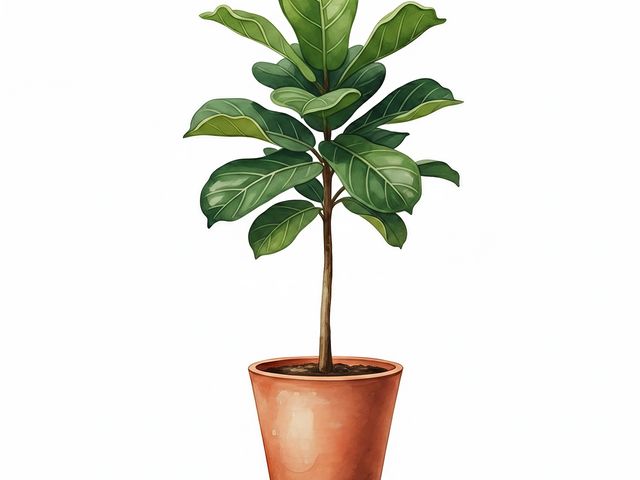
fruiting indoor
Various species
Evidence-based care guide for Fruiting Indoor (Various species). Covers lighting. Our analysis draws from 4 verified community cases with an average confidence score of 62%. Each protocol is synthesized from real rescue outcomes, not generic advice.
Care Essentials
Get to Know Your Fruiting Indoor
Light is everything for this plant. Get the placement right and everything else falls into place.
Light
bright indirect
Wants bright, indirect light — sensitive to both extremes. Too much direct sun causes burns, too little causes stretching.
💡 Grow lights: Thrives under artificial grow lights (LED or fluorescent, 10-12 hours/day). A great option if your space lacks natural light.
Watering
every 7-10 days
Water when the top 1-2 inches of soil feel dry. Adjust with the seasons — less in winter, more in summer.
Humidity & Temperature
Appreciates some humidity but adapts to average home conditions. Brown tips in winter? Your air might be too dry — a light misting helps.
Standard room temperature (60-80°F / 15-27°C) is perfect. Avoid cold drafts and sudden temperature swings.
Soil
Standard well-draining potting mix works well. Add perlite for extra drainage if you tend to overwater.
Care Requirements
At a Glance
Start Here
Most Common Problems
Based on 4 analyzed cases — these are the issues you're most likely to encounter
Don't see your symptom? Search all 3 topics below, or run the Diagnostic.
How much light does my Fruiting Indoor need?
Failing to fruit indoors is most often due to insufficient light intensity...
Fruiting Indoor: Acclimation Stress
Moving indoor fruiting trees to a balcony exposes them to harsh desiccation...
Fruiting Indoor: Ventilation
In multi-shelf vertical setups, plants often suffer from poor circulation and...
Which of the 7 Killers
is threatening your plants?
We analyzed 1,616 documented plant deaths to identify the 7 causes behind 78% of all losses. Answer 5 questions — we'll tell you exactly which ones apply to your setup.
Skip the quiz — get The 7 Killers course ($19) →Question 1 of 5
How do you decide when to water your plants?
Question 2 of 5
Where do most of your plants live?
Question 3 of 5
What's your home environment like?
Question 4 of 5
Have you lost a plant in the last 6 months?
Question 5 of 5
How often do you check your plants for pests?
Your diagnosis is ready
We've identified your top 2 risk killers. Enter your email to see the full breakdown and your personalized rescue protocol.
Your plants are most at risk from:

The 7 Killers mini-course covers every one of these in depth — mechanism, rescue protocol, prevention. 1,616 cases. 7 lessons. $19.
Get The 7 Killers — $19 →Get the Plant Mortality Checklist
The 7 killers behind 78% of houseplant deaths — and the exact fix for each. Free PDF based on 1,616 documented cases.
Your checklist is ready!
We also sent it to your inbox. Check your email for the full download.
Open the ChecklistFree. No spam. Unsubscribe anytime.
Verified Data
All Diagnoses
3 topics consolidated from 4 documented cases. Expand any topic to see all protocols.
Other Topics (3 topics · 4 cases)
Fruiting Indoor: Acclimation Stress
Moving indoor fruiting trees to a balcony exposes them to harsh desiccation from wind and high-intensity direct sun
57%
Fruiting Indoor: Acclimation Stress
Moving indoor fruiting trees to a balcony exposes them to harsh desiccation from wind and high-intensity direct sun
Cause
Moving indoor fruiting trees to a balcony exposes them to harsh desiccation from wind and high-intensity direct sun. Without gradual acclimation, plants suffer from sunburn, rapid leaf drop, and petal blast. Wind also increases evaporation rates, often outpacing indoor-sized root systems uptake capacity.
Solutions
- Implement vertical layering: place sun-hardy plants on top to shade tender varieties below.
- Acclimate over 1-2 weeks: start with 1 hour of morning sun, increasing daily.
- Use humidity domes or cloches during the first week to reduce transpiration shock.
- Group plants closely to support each other against wind and create a shared humid microclimate.
- Apply pine bark mulch to preserve soil moisture in hot balcony environments.
Prevention
Assess balcony microclimate sun hours and wind severity before placement. Secure light pots to prevent tipping in wind storms. Install automated weather sensors for wind and heat alerts.
How much light does my Fruiting Indoor need?
Failing to fruit indoors is most often due to insufficient light intensity (PPFD) and duration (DLI)
2 protocols
69–78%
How much light does my Fruiting Indoor need?
Failing to fruit indoors is most often due to insufficient light intensity (PPFD) and duration (DLI)
Protocol 1: low light · 78% confidence
Cause
Failing to fruit indoors is most often due to insufficient light intensity (PPFD) and duration (DLI). General houseplants survive at 50-200 �mol/m�/s, but fruiting trees require 500-1000 �mol/m�/s to trigger bloom and set fruit. Distance from light source is critical due to the inverse square law.
Solutions
- Target a Daily Light Integral (DLI) of 15-25 mol/m�/day for citrus and dwarf fruit trees.
- Calculate needed light: PPFD � photoperiod seconds / 1,000,000.
- Position full-spectrum LED panels 12-24 inches directly above the canopy; adjust weekly as plants grow.
- Run lights for 12-16 hours daily, mimicking equatorial day lengths for non-deciduous tropicals.
Prevention
Map indoor light levels using a PAR meter app (e.g., Photone) before committing to fruiting species. Install timers for consistency. Use reflective grow tent walls or white boards to reclaim scattered light.
Protocol 2: low light · 69% confidence
Cause
Indoor fruiting plants in dark apartments suffer from stalled growth due to photon deficiency. Many users fear that powerful grow lights will burn plants or consume excessive power, leading them to use inadequate low-wattage fixtures.
Solutions
- Select high-wattage (10-20W+) full-spectrum household LED globes (4000K-6500K) for supplemental light; they are cost-effective and mimic daylight.
- Position lights close to foliage (8-12 inches) as modern LEDs produce minimal heat compared to incandescent or HID bulbs.
- Supplement natural window light by 4-6 hours to achieve total photoperiods of 14+ hours.
- Ensure 500-2000 foot-candles at the canopy level using a cheap lux meter for verification.
Prevention
Map lux levels at different times of day to identify exact photon deserts in the home. Use adjustable lamps for precise positioning. Group plants to leverage reflected light from multiple sources.
Fruiting Indoor: Ventilation
In multi-shelf vertical setups, plants often suffer from poor circulation and stagnant air pockets, leading to high localized humidity and fungal outbreaks (e
45%
Fruiting Indoor: Ventilation
In multi-shelf vertical setups, plants often suffer from poor circulation and stagnant air pockets, leading to high localized humidity and fungal outbreaks (e
Cause
In multi-shelf vertical setups, plants often suffer from poor circulation and stagnant air pockets, leading to high localized humidity and fungal outbreaks (e.g., powdery mildew). Vertical stratification creates heat and moisture gradients that standard room fans cannot penetrate.
Solutions
- Install dedicated inline or clip-on fans for EVERY shelf to ensure laminar airflow across the canopy.
- Automate fans via smart plugs to run 24/7 or cycle based on humidity thresholds (>70% triggers fan).
- Position plants with enough spacing for 360-degree air movement.
- Acclimate plants gradually when moving between shelf levels with different microclimates.
Prevention
Avoid over-crowding shelves. Monitor shelf-specific temp/humidity (VPD) using distributed sensors. Target a Vapor Pressure Deficit (VPD) of 0.8-1.2 kPa for optimal transpiration.
Common Questions
Frequently Asked Questions
Why does my fruiting indoor have Low light?
Cause: Failing to fruit indoors is most often due to insufficient light intensity (PPFD) and duration (DLI). General houseplants survive at 50-200 �mol/m�/s, but fruiting trees require 500-1000 �mol/m�/s to trigger bloom and set fruit. Distance from light source is critical due to the inverse square law.
Solution: Target a Daily Light Integral (DLI) of 15-25 mol/m�/day for citrus and dwarf fruit trees.
Prevention: Map indoor light levels using a PAR meter app (e.g., Photone) before committing to fruiting species. Install timers for consistency. Use reflective grow tent walls or white boards to reclaim scattered light.
78% confidence · View full protocol →
Why does my fruiting indoor have Acclimation stress?
Cause: Moving indoor fruiting trees to a balcony exposes them to harsh desiccation from wind and high-intensity direct sun. Without gradual acclimation, plants suffer from sunburn, rapid leaf drop, and petal blast. Wind also increases evaporation rates, often outpacing indoor-sized root systems uptake capacity.
Solution: Implement vertical layering: place sun-hardy plants on top to shade tender varieties below.
Prevention: Assess balcony microclimate sun hours and wind severity before placement. Secure light pots to prevent tipping in wind storms. Install automated weather sensors for wind and heat alerts.
57% confidence · View full protocol →
Why does my fruiting indoor have Ventilation?
Cause: In multi-shelf vertical setups, plants often suffer from poor circulation and stagnant air pockets, leading to high localized humidity and fungal outbreaks (e.g., powdery mildew). Vertical stratification creates heat and moisture gradients that standard room fans cannot penetrate.
Solution: Install dedicated inline or clip-on fans for EVERY shelf to ensure laminar airflow across the canopy.
Prevention: Avoid over-crowding shelves. Monitor shelf-specific temp/humidity (VPD) using distributed sensors. Target a Vapor Pressure Deficit (VPD) of 0.8-1.2 kPa for optimal transpiration.
45% confidence · View full protocol →
Common Questions
Frequently Asked About Fruiting Indoor
What problems can Fruiting Indoor get?
Our database contains 4 documented Fruiting Indoor cases covering 3 distinct topics, including diseases, pest identification, environmental stress, propagation, and advanced care protocols — each with verified solutions.
Structured Learning
Ready to Go Deeper?
Explore our Mastery Packs for structured, video-based learning with step-by-step protocols from 20,000+ analyzed plant cases.
Browse All Courses →