hoya
Hoya spp.
Also known as: Wax Plant
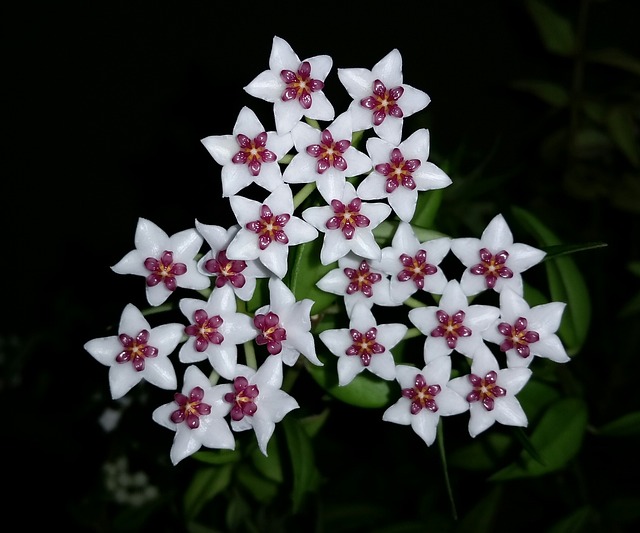
Hoyas, affectionately known as wax plants, are beloved for their thick, waxy leaves and stunning star-shaped flower clusters that drip with nectar. Native to tropical Asia and Australia, these epiphytic vines have adapted to climb trees and cling to bark in their natural habitat. Their succulent-like leaves store water, making them surprisingly forgiving of occasional neglect, while their compact growth habit makes them perfect for small spaces and hanging baskets.
Care Essentials
Get to Know Your Hoya
The #1 killer? Overwatering. Let the soil dry between waterings and your Hoya will thrive.
Light
bright indirect
Thrives in bright, indirect light. Some morning sun is tolerated. Too little light reduces flowering.
💡 Grow lights: Thrives under artificial grow lights (LED or fluorescent, 10-12 hours/day). A great option if your space lacks natural light.
Watering
every 7-14 days
Water every 7-14 days. Look for: leaves become soft and slightly wrinkled. soil should dry completely between waterings.
Humidity & Temperature
Prefers 40-60% humidity. Average home humidity usually works fine, but give it a boost in winter when heating dries the air.
Comfortable between 60-80°F. Keep away from cold drafts and heating vents.
Soil
Well-draining orchid or succulent mix with added perlite and bark.
Care Requirements
At a Glance
bright indirect
Thrives in bright, indirect light. Some morning sun is tolerated. Too little light reduces flowering.
Water every 7-14 days
Leaves become soft and slightly wrinkled. Soil should dry completely between waterings.
40-60% Humidity
Ideal temperature: 60-80F
Well-draining orchid or succulent mix with added perlite and bark.
Growth rate: slow to moderate
The #1 Mistake
Watering issues account for 24% of Hoya problems in our database (9 of 37 documented cases). Most failures trace back to watering on a schedule rather than checking soil moisture.
Expert Advice
Tips & Tricks
Never remove the spent flower stalks (peduncles) – Hoyas bloom repeatedly from the same spurs, and cutting them off eliminates future flowers.
Use a orchid bark-based potting mix with excellent drainage; Hoyas are epiphytes and hate sitting in wet soil.
For maximum blooms, provide bright indirect light and a slight temperature drop at night (10-15°F difference).
Water thoroughly only when the soil is completely dry – the thick leaves will tell you when they're thirsty by becoming slightly soft.
Hoyas bloom more readily when slightly root-bound; only repot when roots are visibly circling the pot.
General Care Philosophy
"Treat your Hoya like the epiphytic climber it is: give it something to cling to, let it dry out completely between waterings, and resist the urge to repot frequently. The secret to those gorgeous porcelain flowers is patience, bright light, and leaving those bloom spurs alone."
Start Here
Most Common Problems
Based on 37 analyzed cases — these are the issues you're most likely to encounter
Don't see your symptom? Search all 31 topics below, or run the Diagnostic.
Why does my Hoya have root rot?
Hoya root rot presents in two distinct forms often confused by growers. Wet rot...
Why does my Hoya have mealybugs?
Mealybugs (Pseudococcidae) infest Hoyas through introduction via new plants,...
Does my Hoya need more humidity?
Hoyas are epiphytic succulents native to tropical forests where humidity ranges...
How do I propagate my Hoya?
Hoyas propagate easily from stem cuttings due to their succulent nature. Each...
Hoya: Pet Safe
All popular Hoya varieties (carnosa, pubicalyx, kerrii) are entirely non-toxic...
Which of the 7 Killers
is threatening your plants?
We analyzed 1,616 documented plant deaths to identify the 7 causes behind 78% of all losses. Answer 5 questions — we'll tell you exactly which ones apply to your setup.
Skip the quiz — get The 7 Killers course ($19) →Question 1 of 5
How do you decide when to water your plants?
Question 2 of 5
Where do most of your plants live?
Question 3 of 5
What's your home environment like?
Question 4 of 5
Have you lost a plant in the last 6 months?
Question 5 of 5
How often do you check your plants for pests?
Your diagnosis is ready
We've identified your top 2 risk killers. Enter your email to see the full breakdown and your personalized rescue protocol.
Your plants are most at risk from:

The 7 Killers mini-course covers every one of these in depth — mechanism, rescue protocol, prevention. 1,616 cases. 7 lessons. $19.
Get The 7 Killers — $19 →Get the Plant Mortality Checklist
The 7 killers behind 78% of houseplant deaths — and the exact fix for each. Free PDF based on 1,616 documented cases.
Your checklist is ready!
We also sent it to your inbox. Check your email for the full download.
Open the ChecklistFree. No spam. Unsubscribe anytime.
Verified Data
All Diagnoses
31 topics consolidated from 37 documented cases. Expand any topic to see all protocols.
Symptoms (3 topics · 3 cases)
What are these brown spots on my Hoya?
Yellowing leaves with black spots underneath on Hoya indicates edema from underwatering, contrary to common belief
87%
What are these brown spots on my Hoya?
Yellowing leaves with black spots underneath on Hoya indicates edema from underwatering, contrary to common belief
Cause
Yellowing leaves with black spots underneath on Hoya indicates edema from underwatering, contrary to common belief. Inconsistent moisture in fluctuating home climates causes cellular rupture from turgor imbalance. Epiphytic Hoyas require consistent moisture rather than full dry-out cycles common to desert succulents.
Solutions
- Assess soil mix - ensure epiphyte-friendly mix with chunky bark, perlite, and orchid mix
- Water when top 1-2 inches of soil is slightly dry, not fully desiccated
- Maintain consistent moisture without sogginess
- Target 50-70% humidity via humidifier or pebble tray
- Treat as orchid-like epiphyte prioritizing airflow and humidity over dry cycles
Prevention
Use well-draining epiphytic mix with 50% bark/perlite. Maintain 50-70% humidity with humidifier. Water based on home climate data - drier homes need more frequent watering. Track with soil moisture meter to avoid dry-out extremes.
Hoya: Leaf Spot
Fungal leaf spot on Hoya results from prolonged leaf wetness combined with poor air circulation
87%
Hoya: Leaf Spot
Fungal leaf spot on Hoya results from prolonged leaf wetness combined with poor air circulation
Cause
Fungal leaf spot on Hoya results from prolonged leaf wetness combined with poor air circulation. Spores germinate on moist leaf surfaces creating water-soaked lesions that expand into brown or black spots with yellow halos. High humidity without airflow creates ideal conditions for fungal pathogens.
Solutions
- Remove and destroy affected leaves to prevent spread
- Improve air circulation around plant with fan
- Avoid misting or wetting leaves
- Apply copper-based fungicide if spots continue spreading
- Repot in fresh soil if fungus persists in root zone
Prevention
Avoid wetting foliage when watering. Ensure good air circulation with fans. Space plants to allow airflow. Water in morning so leaves dry quickly. Remove fallen debris from soil surface.
Why are my Hoya leaves turning yellow?
Yellow leaves on Hoyas signal different issues depending on which leaves are affected and their texture
88%
Why are my Hoya leaves turning yellow?
Yellow leaves on Hoyas signal different issues depending on which leaves are affected and their texture
Cause
Yellow leaves on Hoyas signal different issues depending on which leaves are affected and their texture. Soft, mushy yellow leaves (especially new growth) indicate overwatering�the most common cause in winter when reduced light slows evaporation. Crispy yellow leaves suggest underwatering or low humidity. Yellowing of oldest leaves only is natural aging as the plant redirects nutrients to new growth. Uniform yellowing with dark green veins indicates nutrient deficiency (often nitrogen or iron). Sudden yellowing after repotting indicates transplant shock.
Solutions
- Identify the pattern: New growth yellowing and mushy = overwatering; oldest leaves only = natural; all leaves with green veins = nutrient deficiency; sudden after repotting = shock
- For overwatering: Allow soil to dry completely; ensure pot has drainage; consider repotting in airier mix if soil stays wet too long; reduce watering frequency by 50% in winter
- For underwatering/low humidity: Increase watering frequency; boost humidity to 50-70%; trim crispy yellow leaves to redirect energy
- For nutrient deficiency: Apply balanced liquid fertilizer at 1/4 strength every 2-4 weeks during growing season; ensure soil pH is 6.0-6.5 for optimal nutrient uptake
- For natural aging: Remove completely yellow leaves at the base; this is normal and not a health concern
- For transplant shock: Maintain stable conditions; avoid fertilizing for 4-6 weeks; do not water until top 2 inches of soil dry
Prevention
Use well-draining epiphytic mix and pots with drainage holes. Water only when soil is appropriately dry for the season�less in winter, more in active growth. Fertilize regularly but weakly (1/4 strength). Maintain consistent humidity above 50%. Acclimate gradually when repotting or moving plants.
Diseases (3 topics · 6 cases)
What disease does my Hoya have?
Fungal infections on Hoya manifest as soft spreading brown spots, lesions, or powdery mildew on leaves, often secondary to overwatering stress
86%
What disease does my Hoya have?
Fungal infections on Hoya manifest as soft spreading brown spots, lesions, or powdery mildew on leaves, often secondary to overwatering stress
Cause
Fungal infections on Hoya manifest as soft spreading brown spots, lesions, or powdery mildew on leaves, often secondary to overwatering stress. High humidity combined with poor air circulation creates ideal conditions for fungal pathogens. Soil surface fungus is usually harmless saprophytic fungi, but leaf fungus indicates active infection requiring intervention.
Solutions
- For soil surface fungus: scrape off if unsightly, improve air circulation - usually harmless
- For leaf fungus: isolate plant immediately
- Cut off infected leaves 3 inches below the spot or remove entire leaf at base
- Dust fresh cuts with cinnamon powder as natural antifungal barrier
- Apply copper-based fungicide or neem oil if infection spreads
- Repot in fresh gritty mix with excellent drainage
Prevention
Use well-draining soil with 50% perlite. Water only when soil is bone-dry. Ensure good air circulation. Avoid misting leaves. Keep humidity 40-50% max. Use terra cotta pots for better moisture wicking.
Why does my Hoya have root rot?
Hoya root rot presents in two distinct forms often confused by growers
4 protocols
90–93%
Why does my Hoya have root rot?
Hoya root rot presents in two distinct forms often confused by growers
Protocol 1: root rot · 93% confidence
Cause
Hoya root rot presents in two distinct forms often confused by growers. Wet rot (fungal/bacterial) results from overwatering, poor drainage, or moisture-retentive soil causing anaerobic conditions where pathogens proliferate. Dry rot (desiccation rot) occurs when Hoyas in small pots with dense root systems are left dry too long�roots desiccate and die, then the outer tissue rots when watered, leaving stringy, non-functional inner root cores. Both manifest as wrinkled, non-turgid leaves but require different interventions.
Solutions
- Remove plant from pot and gently rinse all roots to inspect thoroughly
- Identify rot type: Wet rot shows mushy, black/brown roots with foul odor; Dry rot shows stringy, hair-like roots with the thicker outer sheath sloughed off
- For wet rot: Trim all mushy, discolored roots with sterilized scissors until only firm, white tissue remains; treat with 3% hydrogen peroxide solution (1:2 with water) to kill remaining pathogens
- For dry rot: Trim dead stringy roots but preserve any thicker, firm core roots that remain viable; the plant can often reroot from stem nodes
- Repot in fresh, well-draining epiphytic mix: 4 parts orchid bark, 3 parts perlite, 2 parts potting soil, plus optional horticultural charcoal
- Use unglazed terracotta pots for breathability, especially for recovering plants
- For severely damaged plants, take 2-3 node stem cuttings and root in sphagnum moss under high humidity (70-80%) with a humidity dome
Prevention
Water Hoyas based on soil dryness and pot size rather than rigid schedules. For root-dense plants in small pots (under 4 inches), water when top 1-2 inches dry but do not allow full desiccation�typically 1-2 times per week in active growing conditions. Use clear orchid pots to monitor root health. Ensure soil mix contains 50%+ inorganic material (bark, perlite, pumice) for rapid drainage.
Protocol 2: hoya root rot · 91% confidence
Cause
Root rot in Hoyas is caused by overwatering, poor drainage, or moisture-retentive soil leading to anaerobic conditions. Hoyas have succulent epiphytic roots that rot quickly when waterlogged. Symptoms include yellowing leaves, wilting despite wet soil, and mushy, stringy roots with sloughed outer sheaths.
Solutions
- Remove plant from pot and rinse roots
- Trim all black, mushy, or stringy roots with sterilized shears
- Treat cut ends with hydrogen peroxide (1:2 dilution) or fungicide
- Repot in fresh, chunky well-draining mix
- Withhold water for 1-2 weeks to allow roots to heal
- If severe, propagate healthy stem cuttings instead
Prevention
Use fast-draining soil, pots with drainage holes, and water only when completely dry. Hoyas prefer being slightly root-bound. Check roots annually during repotting season.
Protocol 3: root rot · 91% confidence
Cause
Hoya roots feature a thick, protective white outer sheath that encases the delicate vascular stele. When roots remain waterlogged for 7-14 days in moisture-retentive soil or moss, anaerobic bacteria and oomycetes (Pythium spp.) break down this protective cortex. The sheath sloughs off, leaving thin, stringy, hair-like root remnants that cannot uptake water or nutrients. This differs from healthy fine aerial roots which remain sheathed and functional.
Solutions
- Unpot plant and rinse roots in lukewarm water to expose full root system
- Identify rotted roots: thin, desiccated, stringy texture with no white outer sheath
- Trim ALL rotted roots with sterilized scissors until only firm, white-sheathed roots remain
- Sterilize cut ends with 3% hydrogen peroxide (1:2 dilution with water) for 20 minutes
- Repot in well-draining mix: 50% perlite/pumice, 30% orchid bark, 20% coco coir
- Withhold water for 7-10 days post-repot to allow wound callusing
- Resume watering only when top 2-3 inches of mix are completely dry
Prevention
Use unglazed terracotta pots to wick excess moisture; maintain 50-70% humidity via pebble trays to reduce watering frequency; employ chunky inorganic mixes with >50% perlite/bark; water only when pot feels lightweight and top 2 inches are dry.
Protocol 4: root rot from dense soil · 90% confidence
Cause
Hoya are epiphytic succulents with roots adapted to air circulation. Dense potting soil retains too much moisture, creating anaerobic conditions that suffocate epiphytic roots. This leads to root rot that manifests as wrinkled leaves — confusing owners who then water MORE, accelerating the death cycle.
Solutions
- Unpot and inspect roots — trim any black/mushy roots
- Repot in 2/3 inorganic chunky mix (LECA, bark, perlite)
- Water only when top 2-3 inches are bone-dry
- Consider switching to semi-hydro or mounted culture
Prevention
Use chunky, well-draining epiphytic mix (50%+ perlite, orchid bark, charcoal). Water only when soil is completely dry. Use terracotta or clear orchid pots for faster drying.
Why is my Hoya's stem turning black?
Hoya stem rotting from the base up due to overwatering, causing leaves to desiccate and wrinkle
94%
Why is my Hoya's stem turning black?
Hoya stem rotting from the base up due to overwatering, causing leaves to desiccate and wrinkle
Cause
Hoya stem rotting from the base up due to overwatering, causing leaves to desiccate and wrinkle.
Solutions
- Cut the stem several inches above the rot until you see clean, green tissue leaking milky white sap.
- Remove the lower 1-2 sets of leaves to expose bare nodes.
- Dip the cut end in rooting hormone and place the nodes into a cup of lightly damp sphagnum moss.
- Enclose the entire cutting in a clear plastic bag to create a mini greenhouse, as wrinkled leaves need ambient humidity to rehydrate.
Prevention
Hoyas have highly sensitive, fine root systems; avoid dense soils and always let them dry out almost completely between waterings.
Pests (3 topics · 4 cases)
Why does my Hoya have mealybugs?
Mealybugs (Pseudococcidae) infest Hoyas through introduction via new plants, outdoor exposure, or spread from infected plants
2 protocols
89–92%
Why does my Hoya have mealybugs?
Mealybugs (Pseudococcidae) infest Hoyas through introduction via new plants, outdoor exposure, or spread from infected plants
Protocol 1: mealybugs · 92% confidence
Cause
Mealybugs (Pseudococcidae) infest Hoyas through introduction via new plants, outdoor exposure, or spread from infected plants. Their waxy exoskeletons and egg-filled ovisacs resist common treatments like soaps and Malathion. Hoya dense, waxy foliage and leaf axils provide ideal hiding spots for crawlers and adults. The 10-14 day life cycle means eggs hatch after initial treatment, causing reinfestation if not addressed comprehensively.
Solutions
- Isolate infected Hoya immediately to prevent spread to other plants
- Apply 70% isopropyl alcohol directly to visible mealybugs and ovisacs using a cotton swab or spray�alcohol dissolves the waxy coating on contact
- Treat the soil with systemic granules (imidacloprid) or diatomaceous earth to target soil-dwelling eggs and crawlers often missed by foliar sprays
- Repeat full treatment every 7 days for 3-4 weeks to break the life cycle
- Follow up with insecticidal soap or Captain Jack Deadbug Brew (spinosad-based) for residual protection
- Inspect daily with magnification, especially in leaf axils and under leaves where Hoya growth pattern hides pests
Prevention
Quarantine all new plants for 2-4 weeks with weekly inspections before introducing to your collection. Maintain 50-70% humidity and bright indirect light to keep Hoyas stress-free and less vulnerable. Avoid moving plants outdoors without hardening off. Consider monthly preventive neem oil sprays during high-risk seasons.
Protocol 2: mealybug infestation · 89% confidence
Cause
Mealybugs (Pseudococcidae) are soft-bodied sap-sucking insects that thrive in the sheltered microhabitats created by Hoya's waxy, succulent leaves and dense growth habit. Warm indoor temperatures (70-80°F) and moderate humidity accelerate reproduction. The 10-14 day life cycle means eggs in protected ovisacs and soil-dwelling crawlers often survive initial treatments, causing reinfestation. Mealybugs excrete honeydew, fostering sooty mold and attracting ants that protect the pests.
Solutions
- 1. Isolate the infested plant immediately to prevent crawler dispersal to nearby plants
- 2. Manual removal: dab visible mealybugs and ovisacs with 70% isopropyl alcohol on cotton swabs—alcohol dissolves the waxy coating and kills on contact
- 3. Systemic treatment: apply imidacloprid or bonide systemic granules to soil for root uptake (last resort for severe infestations)
- 4. Foliar spray: treat entire plant with neem oil or insecticidal soap every 5-7 days for 3-4 weeks to break the life cycle
- 5. Soil treatment: replace top 2 inches of soil or apply diatomaceous earth to soil surface to kill soil-stage crawlers
Prevention
Quarantine all new plants for 2-4 weeks with magnified inspection of leaf axils and undersides. Maintain 40-60% humidity with strong airflow via fans—mealybugs prefer stagnant conditions. Conduct weekly inspections with a 10x loupe. Avoid over-fertilizing with nitrogen, which produces tender growth attractive to pests.
Why does my Hoya have scale insects?
Scale insects appear as small brown or tan bumps attached to Hoya stems and leaves, feeding on plant sap
86%
Why does my Hoya have scale insects?
Scale insects appear as small brown or tan bumps attached to Hoya stems and leaves, feeding on plant sap
Cause
Scale insects appear as small brown or tan bumps attached to Hoya stems and leaves, feeding on plant sap. They secrete honeydew leading to sooty mold and can weaken plants significantly. Hard shell protects them from casual treatments, requiring targeted intervention to break lifecycle.
Solutions
- Scrape off visible scale manually with fingernail or soft brush
- Dab individual scales with 70% rubbing alcohol on cotton swab
- Apply insecticidal soap or horticultural oil thoroughly every 7-10 days for 4-6 weeks
- For heavy infestations: use systemic insecticide containing imidacloprid
- Remove severely infested leaves if necessary
Prevention
Inspect new plants thoroughly before introducing to collection. Check leaf joints and undersides regularly. Isolate affected plants immediately. Maintain plant health as stressed plants are more susceptible.
Why does my Hoya have spider mites?
Spider mites are tiny arachnids that thrive in hot, dry conditions and low humidity
87%
Why does my Hoya have spider mites?
Spider mites are tiny arachnids that thrive in hot, dry conditions and low humidity
Cause
Spider mites are tiny arachnids that thrive in hot, dry conditions and low humidity. They feed on Hoya leaf sap, causing stippling (tiny yellow dots), fine webbing on leaves and stems, and eventually leaf drop. They reproduce rapidly and spread to nearby plants. Unlike insects, they are not affected by regular insecticides.
Solutions
- Increase humidity immediately - spider mites hate moisture. Shower plant or mist heavily
- Isolate plant to prevent spread
- Spray leaves thoroughly with water to dislodge mites
- Apply neem oil, insecticidal soap, or miticide every 3-5 days for 2-3 weeks
- Trim heavily infested leaves
Prevention
Maintain 50-60% humidity. Wipe leaves regularly. Inspect new plants closely. Increase air circulation without creating drafts. Treat at first sign of stippling.
Watering Issues (2 topics · 2 cases)
How often should I water my Hoya?
Hoyas are succulent epiphytes with water-storing leaves and stems
92%
How often should I water my Hoya?
Hoyas are succulent epiphytes with water-storing leaves and stems
Cause
Hoyas are succulent epiphytes with water-storing leaves and stems. Overwatering is the #1 killer, causing root rot from anaerobic conditions. Underwatering causes leaves to wrinkle but is easily reversed. The 'soak and dry' method mimics their natural tropical dry seasons.
Solutions
- Water only when soil is completely dry (top 2-3 inches)
- Use the 'pot lift' method - water when pot feels light
- Watch for wrinkled/bendy leaves as the primary thirst indicator
- Water thoroughly until excess drains from bottom
- Bottom-water occasionally to ensure full soil saturation
- Reduce watering frequency by 50% in winter
Prevention
Always err on the side of underwatering. Hoyas recover quickly from drought but slowly from root rot. Use well-draining soil and pots with drainage holes to prevent waterlogging.
Is my Hoya underwatered?
Underwatered Hoya leaves become wrinkled, curling, or thin as the plant uses stored water reserves
88%
Is my Hoya underwatered?
Underwatered Hoya leaves become wrinkled, curling, or thin as the plant uses stored water reserves
Cause
Underwatered Hoya leaves become wrinkled, curling, or thin as the plant uses stored water reserves. Unlike overwatering (squishy mushy leaves), underwatered leaves feel dry, papery, and may curl inward. Hydrophobic soil can also prevent proper absorption even when watered, causing persistent dehydration.
Solutions
- Confirm diagnosis: underwatered leaves are dry/firm but thin; overwatered leaves are squishy
- Water thoroughly until water drains from bottom of pot
- For hydrophobic soil: bottom-water by placing pot in water for 20-30 minutes until soil fully absorbs
- Leaves should plump up within 24-48 hours after watering
- Remove any completely dried crispy leaves at the base
Prevention
Water when top 2-3 inches of soil are dry. Check more frequently in dry climates or winter with heating. Bottom-water occasionally to ensure full soil saturation. Use well-draining but not overly gritty soil that won't become hydrophobic.
Environment (3 topics · 4 cases)
Is my Hoya suffering from cold damage?
Hoyas are sensitive to temperatures below 50°F/10°C
87%
Is my Hoya suffering from cold damage?
Hoyas are sensitive to temperatures below 50°F/10°C
Cause
Hoyas are sensitive to temperatures below 50°F/10°C. Cold damage occurs from exposure to freezing temperatures, cold drafts, or sudden temperature drops near windows in winter. Symptoms include mushy softening leaves, browning, wilting, and cellular rupture. The plant's succulent tissue stores water which freezes and damages cell walls.
Solutions
- Bring plant away from cold source immediately
- Trim away all mushy damaged leaves at base with sterilized shears
- Inspect roots - if firm and white, plant will likely recover
- Repot in fresh dry well-draining mix if roots were frozen
- Place in warm 65-80°F bright indirect light location away from drafts
- Withhold water for 2-4 weeks to prevent root rot during recovery
Prevention
Monitor weather forecasts and bring plants indoors before first frost. Keep indoor temperatures above 50°F. Avoid placing near cold windows, air conditioning vents, or drafty doors during winter. Monitor temperature with thermometer near plants.
Does my Hoya need more humidity?
Hoyas are epiphytic succulents native to tropical forests where humidity ranges 60-80%
2 protocols
88–90%
Does my Hoya need more humidity?
Hoyas are epiphytic succulents native to tropical forests where humidity ranges 60-80%
Protocol 1: humidity · 90% confidence
Cause
Hoyas are epiphytic succulents native to tropical forests where humidity ranges 60-80%. Indoor environments below 50% relative humidity cause reduced stomatal opening, limiting photosynthesis and growth. Low humidity also increases transpiration stress, causing leaf wrinkling, stalled growth, and failure to produce new vines.
Solutions
- Measure current humidity with hygrometer
- Introduce humidifier or pebble tray setup ensuring good airflow to avoid mold
- Target 50-70% relative humidity for optimal growth
- Transition to brighter light to complement humidity increase
- Maintain temperatures 65-80°F avoiding drafts
Prevention
Maintain 50-70% humidity year-round. Use humidifiers or pebble trays in dry climates. Group plants to create microclimate. Avoid placing near heating vents or air conditioners.
Protocol 2: hoya humidity · 88% confidence
Cause
Hoyas are tropical epiphytes that prefer 40-60% humidity, though many tolerate lower levels. High humidity (70%+) benefits propagation and flowering but is not required for survival. CAM photosynthesis in many Hoyas enables them to tolerate drier air by closing stomata during the day.
Solutions
- Maintain 40-60% ambient humidity for most Hoyas
- Use humidifiers for high-humidity-loving species like H. linearis or H. serpens
- Group plants together to create microclimate
- Use pebble trays for passive humidity boost
- Provide 70%+ humidity for propagation and new cuttings
Prevention
Most common Hoyas (carnosa, pubicalyx, kerrii) tolerate household humidity down to 30%. Focus on proper watering and drainage rather than humidity alone. Misting does not significantly raise ambient humidity.
Why does my Hoya have sunburn?
Hoyas exhibit two distinct light-related responses often confused by growers
90%
Why does my Hoya have sunburn?
Hoyas exhibit two distinct light-related responses often confused by growers
Cause
Hoyas exhibit two distinct light-related responses often confused by growers. Sun stress (desired) occurs when high light triggers anthocyanin production, creating pink, red, or purple coloration that enhances aesthetic appeal without harming the plant. Sunburn (damaging) is phototoxicity from excessive direct light, causing dry, crispy, bleached, or necrotic patches. Hoyas with thick, waxy leaves (especially varieties like Sunrise, Krimson Queen, and Australis) are prone to both. Neem oil application before sun exposure dramatically increases burn risk.
Solutions
- Identify what you are seeing: Sun stress shows as even pink/red/purple coloration, often on newer growth or exposed leaf surfaces; sunburn shows as dry, tan/brown, crispy patches, often on leaf edges or centers
- For sunburn: Immediately move plant to bright indirect light; prune only severely damaged leaves that are fully crispy; maintain stable watering and 50-70% humidity to support recovery
- For intentional sun stressing: Gradually acclimate over 2-3 weeks; start with 1-2 hours of direct morning sun, slowly increasing; monitor for softening leaves which indicates too much too fast
- Avoid applying neem oil, insecticidal soaps, or other foliar treatments before sun exposure�oils amplify phototoxicity
- Use sheer curtains to filter intense afternoon sun while maintaining bright conditions
Prevention
Acclimate Hoyas gradually to increased light over 1-2 weeks. East-facing windows provide ideal morning sun for stress without burn risk. South/west windows require sheer curtains or 2-4 feet of distance. Grow lights should provide 2000-4000 lux at 12-16 inches. Never apply foliar treatments within 24 hours of direct sun exposure.
Propagation (1 topics · 2 cases)
How do I propagate my Hoya?
Hoyas propagate easily from stem cuttings due to their succulent nature
2 protocols
83–89%
How do I propagate my Hoya?
Hoyas propagate easily from stem cuttings due to their succulent nature
Protocol 1: hoya propagation · 89% confidence
Cause
Hoyas propagate easily from stem cuttings due to their succulent nature. Each node can produce roots and new growth. However, cuttings without nodes cannot produce new leaves - a common issue with single-leaf Hoya kerrii cuttings sold commercially.
Solutions
- Take 4-6 inch cuttings with 2-3 nodes minimum
- Root in water (change weekly), damp sphagnum moss, or perlite
- Provide high humidity (70%+) for unrooted cuttings
- Rooting occurs in 2-4 weeks under bright indirect light
- Transplant to soil once roots are 2-4 inches long
- For leafless stems: use high humidity dome, roots may take weeks to months
Prevention
Always ensure cuttings have nodes for new growth. Single leaves without nodes will root but never produce vines. Use rooting hormone on cut ends to speed establishment.
Protocol 2: water propagation · 83% confidence
Cause
Hoyas are epiphytic succulents with thick, waxy leaves and specialized root systems adapted to climbing tree bark in tropical forests. Their stems contain high concentrations of milky latex that seals wounds and inhibits bacterial infection, but this same latex can form a waterproof barrier that prevents water absorption during propagation. Hoyas root slowly (4-8 weeks) due to their succulent nature and low metabolic rate, making patience essential. The succulent stems store water and nutrients, allowing cuttings to survive extended periods without roots, but water propagation must balance moisture availability with the rot resistance these plants evolved.
Solutions
- Take 4-6 inch stem cuttings with minimum 2 nodes
- Allow cut end to callus for 24-48 hours on dry paper towel—latex will dry and seal wound
- Remove lower leaves to expose nodes but keep 2-3 upper leaves for photosynthesis
- Place callused end in 1-2 inches of room-temperature water
- Change water every 5-7 days—Hoyas tolerate less frequent changes than tropical vines
- Root development is slow: expect first roots at 3-4 weeks, substantial roots at 6-8 weeks
- Roots will be thick and white when healthy; thin, brown roots indicate rot
- Transition to extremely well-draining mix: 60% perlite/pumice, 30% orchid bark, 10% potting soil
- Hoyas prefer to be root-bound; transition to pot only 1 inch larger than root ball
- Allow soil to dry completely between waterings—established Hoyas are drought-tolerant
Prevention
Take stem cuttings with at least 2 nodes and allow the cut end to callus (dry and seal) for 24-48 hours before placing in water. This prevents the milky latex from continuously bleeding into water and creating a bacterial growth medium.
Care Methods (2 topics · 2 cases)
Hoya Care: Hoya Guide
Hoyas are epiphytic succulents in the Apocynaceae family with 350-450 species, adapted to growing on tree trunks in tropical environments
90%
Hoya Care: Hoya Guide
Hoyas are epiphytic succulents in the Apocynaceae family with 350-450 species, adapted to growing on tree trunks in tropical environments
Cause
Hoyas are epiphytic succulents in the Apocynaceae family with 350-450 species, adapted to growing on tree trunks in tropical environments. They feature thick, waxy leaves and succulent stems that store water, making them drought-tolerant CAM photosynthesis plants that prefer bright indirect light and well-draining conditions.
Solutions
- Provide bright indirect light (2000-5000 lux) or morning sun
- Use chunky, well-draining soil with 50%+ inorganic amendments
- Water only when soil is fully dry - leaves will wrinkle when thirsty
- Maintain 40-60% ambient humidity
- Fertilize lightly during growing season with diluted balanced fertilizer
- Allow plants to become slightly root-bound before repotting
Prevention
Match care to Hoya's epiphytic nature: mimic tree-growing conditions with excellent drainage, bright filtered light, and dry cycles between waterings. Most Hoyas prefer being slightly neglected rather than over-cared for.
Peduncle Care: Hoya Guide
Hoya peduncles are specialized flowering structures that emerge from leaf axils and produce umbellate flower clusters
88%
Peduncle Care: Hoya Guide
Hoya peduncles are specialized flowering structures that emerge from leaf axils and produce umbellate flower clusters
Cause
Hoya peduncles are specialized flowering structures that emerge from leaf axils and produce umbellate flower clusters. These structures are perennial—unlike most houseplants, Hoyas bloom repeatedly from the same peduncle for years. The primary issue is peduncle abortion, caused by environmental stress during bud development: temperature fluctuations, drafts, repotting, or changes in watering/light trigger hormonal responses that abort the inflorescence to conserve resources.
Solutions
- 1. Never remove old peduncles after flowering—they will rebloom from the same structure repeatedly
- 2. Once peduncles form, maintain absolute stability: do not move the plant, change pot, or alter light/water schedule
- 3. Maintain humidity at 50-60% during bud development; low humidity causes bud desiccation and drop
- 4. Provide consistent temperatures: avoid drafts, air conditioning vents, or heating sources near the plant
- 5. Support long peduncles with small stakes if they become heavy with developing buds to prevent breakage
Prevention
Position plants in permanent locations before peduncle formation. Use stable environmental controls—no sudden temperature changes. Keep humidity consistent with pebble trays or humidifiers. Mark peduncle locations with plant tags so you don't accidentally prune them. When repotting is necessary, do so only after flowering is complete and peduncles have senesced.
Other Topics (14 topics · 14 cases)
Why isn't my Hoya flowering?
Hoyas are photoperiod-sensitive plants requiring specific environmental cues to initiate flowering
87%
Why isn't my Hoya flowering?
Hoyas are photoperiod-sensitive plants requiring specific environmental cues to initiate flowering
Cause
Hoyas are photoperiod-sensitive plants requiring specific environmental cues to initiate flowering. In their native tropical habitats, seasonal variations in day length, temperature fluctuations (day/night differential of 10-15°F), and bright light (2000-4000 lux) trigger hormonal changes that stimulate peduncle formation. Indoor conditions often lack these cues—consistent temperatures, insufficient light intensity, and stable photoperiods prevent the stress signals needed for reproduction. Maturity is also required; most Hoyas need 2-3 years of vegetative growth before flowering capability.
Solutions
- 1. Provide bright indirect light: 2000-4000 lux for 12-14 hours daily; insufficient light is the primary blooming inhibitor
- 2. Create temperature differential: maintain 65-75°F days and 55-60°F nights (10-15°F swing) for 4-6 weeks to simulate seasonal change
- 3. Allow slight root-bound conditions: Hoyas bloom better when roots fill the pot—avoid frequent repotting
- 4. Fertilize appropriately: use high-phosphorus fertilizer (bloom booster) at half strength during spring/summer growing season
- 5. Maintain consistent care: avoid moving plants once peduncles appear—environmental changes cause bud drop
Prevention
Start with mature plants (2+ years old). Provide consistent bright light year-round. Use small pots that encourage root binding. Reduce nitrogen fertilization in favor of phosphorus during growing season. Maintain stable humidity (50-60%) and avoid drafts. Once peduncles form, never move the plant or change watering frequency.
Why are my Hoya leaves curling?
Hoya leaves curl inward to reduce surface area and conserve moisture when underwatered or in low humidity
85%
Why are my Hoya leaves curling?
Hoya leaves curl inward to reduce surface area and conserve moisture when underwatered or in low humidity
Cause
Hoya leaves curl inward to reduce surface area and conserve moisture when underwatered or in low humidity. Water-to-soil transplant shock can also cause temporary curling as water roots adapt to soil. Rootbound conditions limiting water uptake may also trigger curling as the plant attempts to minimize transpiration.
Solutions
- For underwatering: water thoroughly and increase humidity to 50-60%
- For transplant shock: keep soil consistently moist (not soggy) for 2-3 weeks
- For rootbound: repot into slightly larger container
- For light response: rotate plant weekly for even exposure
- Be patient - water-to-soil transitions can take 1-2 weeks for leaves to unfurl
Prevention
Maintain consistent watering schedules. Use humidifiers in dry climates. Minimize root disturbance during transplant. Repot before plants become severely rootbound. Monitor soil moisture regularly.
Hoya: Dropping Leaves
Leaf drop in Hoyas typically indicates acute stress rather than chronic issues
85%
Hoya: Dropping Leaves
Leaf drop in Hoyas typically indicates acute stress rather than chronic issues
Cause
Leaf drop in Hoyas typically indicates acute stress rather than chronic issues. Common triggers include: (1) Sudden temperature drops below 60�F (15�C) or cold drafts from windows/doors, (2) Severe underwatering causing emergency leaf abscission to conserve resources, (3) Root rot reaching critical stage where roots can no longer support foliage, (4) Pest infestations (spider mites, mealybugs) causing leaf desiccation, (5) Transplant shock from recent repotting, (6) Over-fertilization causing salt burn and root damage. Hoyas will sacrifice leaves to preserve the vine/stem when under extreme stress.
Solutions
- Immediately assess environment: Check for cold drafts, recent temperature changes, or heating/AC vents nearby. Move to stable 65-80�F location
- Check soil moisture: If bone dry, water thoroughly; if wet, unpot and inspect for root rot
- Inspect undersides of remaining leaves and stems with magnification for pests (webbing, cottony masses, tiny moving dots)
- If recent repotting: Maintain high humidity (60-70%), avoid direct sun, and do not fertilize for 4-6 weeks
- Remove dropped leaves promptly to prevent fungal growth and pest attraction
- If leaf drop continues, take stem cuttings with 2-3 nodes as insurance propagation�Hoyas root readily even from stressed plants
Prevention
Maintain stable temperatures year-round; avoid placing Hoyas near exterior doors, drafty windows, or HVAC vents. Water before leaves show extreme stress. Quarantine new plants. Use consistent, weak fertilization (1/4 strength) rather than sporadic heavy feeding. Acclimate gradually to any environmental changes.
Why isn't my Hoya flowering?
Hoyas bloom when mature (typically 2+ years old) with adequate light, consistent care, and slight stress from being root-bound
88%
Why isn't my Hoya flowering?
Hoyas bloom when mature (typically 2+ years old) with adequate light, consistent care, and slight stress from being root-bound
Cause
Hoyas bloom when mature (typically 2+ years old) with adequate light, consistent care, and slight stress from being root-bound. Flowers grow on peduncles (flower stalks) that should never be removed as they rebloom repeatedly. Hoya carnosa produces clusters of star-shaped, fragrant pink/white flowers.
Solutions
- Provide bright indirect light (critical for blooming)
- Allow plants to become slightly root-bound
- Maintain consistent care without frequent repotting
- Do not remove peduncles after flowering - they rebloom
- Increase phosphorus fertilizer during blooming season
- Provide 60%+ humidity to support flower development
Prevention
Immature Hoyas won't bloom regardless of care. Focus on providing bright light and consistent conditions. Patience is required - blooming can take 2-3 years from propagation.
How much light does my Hoya need?
Hoyas require bright indirect light (2000-5000 lux) for optimal growth and flowering
88%
How much light does my Hoya need?
Hoyas require bright indirect light (2000-5000 lux) for optimal growth and flowering
Cause
Hoyas require bright indirect light (2000-5000 lux) for optimal growth and flowering. Too little light causes etiolation (stretching), while direct sun can cause sunburn with crispy, bleached patches. However, many Hoyas develop desirable red or pink sun stress coloration under brighter light, which is healthy rather than damaging.
Solutions
- Provide bright indirect light from east or west-facing windows
- Use sheer curtains to filter harsh afternoon sun
- Acclimate gradually when moving to brighter locations
- Monitor for true sunburn (crispy, bleached patches) vs healthy sun stress (even color change)
- Use grow lights at 12-24 inches distance for 12-16 hours daily if natural light is insufficient
Prevention
Position Hoyas where they receive bright, diffused light. Variegated varieties need more light than green varieties to maintain coloration. Gradually acclimate plants over 1-2 weeks when changing light conditions.
What is the best soil mix for Hoya?
Hoyas require fast-draining, airy soil mixes that mimic their epiphytic tree-dwelling origins
90%
What is the best soil mix for Hoya?
Hoyas require fast-draining, airy soil mixes that mimic their epiphytic tree-dwelling origins
Cause
Hoyas require fast-draining, airy soil mixes that mimic their epiphytic tree-dwelling origins. Standard potting soil retains too much moisture, leading to root rot. The ideal mix provides aeration while retaining some moisture for the epiphytic root system.
Solutions
- Use chunky mix: 50% potting soil, 30% perlite/pumice, 20% orchid bark
- Or try: 2/3 coconut husk chips or LECA with 1/3 succulent soil
- Add coarse materials like charcoal or pumice for extra drainage
- Use terracotta pots for better moisture wicking
- Repot every 2-3 years into fresh mix
Prevention
Never use standard potting soil alone. The mix should dry within 3-5 days after watering. When repotting, choose pots only 1-2 inches larger than root ball to prevent excess moisture retention.
How much light does my Hoya need?
Hoyas are epiphytic succulents adapted to dappled, filtered light in tropical forest canopies
87%
How much light does my Hoya need?
Hoyas are epiphytic succulents adapted to dappled, filtered light in tropical forest canopies
Cause
Hoyas are epiphytic succulents adapted to dappled, filtered light in tropical forest canopies. Too little light (<1000 lux) causes etiolation—leggy, weak growth with elongated internodes and reduced leaf size. Too much direct light causes photoinhibition and cellular damage, resulting in bleached, crispy patches, particularly on variegated varieties lacking protective chlorophyll. Light stress disrupts photosynthetic efficiency and carbohydrate production needed for peduncle development.
Solutions
- 1. Assess current light using a lux meter app: ideal range is 2000-5000 lux for most Hoyas
- 2. For low-light conditions: supplement with full-spectrum LED grow lights (5000-6500K) positioned 12-24 inches above foliage
- 3. For direct sun exposure: move to bright indirect light immediately; filter harsh afternoon sun with sheer curtains
- 4. Acclimate gradually when increasing light: add 1 hour of exposure daily over 2 weeks to prevent shock
- 5. Rotate plants 90° weekly for even light distribution and prevent lopsided growth
Prevention
Position Hoyas in east-facing windows for gentle morning light, or 2-3 feet from south/west windows with filtration. Maintain 12-16 hour photoperiods using timers for supplemental lighting. South-facing windows require 40-60% shade cloth or distance from glass. Variegated varieties need more protection than green-leaf varieties.
Hoya: No New Growth
Hoyas are naturally slow-growing epiphytes that prioritize root establishment before foliage expansion
90%
Hoya: No New Growth
Hoyas are naturally slow-growing epiphytes that prioritize root establishment before foliage expansion
Cause
Hoyas are naturally slow-growing epiphytes that prioritize root establishment before foliage expansion. Stalled growth or lack of blooming typically stems from: (1) Insufficient light�Hoyas need bright indirect light (2000-5000 lux) or some direct morning sun to bloom; low light causes dormancy-like stasis, (2) Immaturity�most Hoyas will not bloom until 2-3 years old with established root systems, (3) Low humidity�indoor humidity below 50% slows metabolic processes in these tropical epiphytes, (4) Temperature stress�cold roots or temperatures below 65�F (18�C) inhibit growth hormones, (5) Pot-bound stress�Hoyas prefer being snug but extremely root-bound plants divert all energy to root survival.
Solutions
- Maximize light: Move to brightest indirect light available; east windows ideal, south/west with sheer curtains. Grow lights should run 12-16 hours at 2000-4000 lux
- Boost humidity to 50-70% using humidifiers, pebble trays, or grouping plants. Hoyas respond dramatically to humidity increases
- Warm the roots: Place pot on a seedling heat mat set to 70-75�F (21-24�C) to accelerate metabolic activity and nutrient uptake
- Use a humidity dome or enclosed propagation chamber for severely stalled plants�high humidity (70-80%) often triggers new growth
- Fertilize weakly with balanced liquid fertilizer (1/4 strength) at every watering during active growth periods
- For blooming specifically: Ensure 4-6 hours of bright light, maintain consistent care for 2+ years, and avoid moving the plant once peduncles (flower stalks) form�Hoyas bloom on old wood and aborted peduncles rarely rebloom
Prevention
Establish consistent tropical conditions from the start: Bright indirect light, 50-70% humidity, warm temperatures (65-80�F), and well-draining epiphytic mix. Use photo timelines to track growth�Hoyas typically grow 6-12 inches per year indoors. Do not rush blooming; focus on healthy vine development first.
Hoya: Pet Safe
All popular Hoya varieties (carnosa, pubicalyx, kerrii) are entirely non-toxic to cats and dogs
95%
Hoya: Pet Safe
All popular Hoya varieties (carnosa, pubicalyx, kerrii) are entirely non-toxic to cats and dogs
Cause
All popular Hoya varieties (carnosa, pubicalyx, kerrii) are entirely non-toxic to cats and dogs.
Solutions
- No medical intervention required if chewed.
Prevention
Train pets to leave trailing vines alone using positive reinforcement or bitter apple spray to protect the plant.
Hoya: Pot Too Small
Hoyas prefer being slightly rootbound and can thrive in pots that seem too small
88%
Hoya: Pot Too Small
Hoyas prefer being slightly rootbound and can thrive in pots that seem too small
Cause
Hoyas prefer being slightly rootbound and can thrive in pots that seem too small. When roots fill the pot completely, growth redirects to foliage and flowering rather than root expansion. Repotting too soon or into oversized pots causes plants to focus energy on root development, stalling visible growth.
Solutions
- Check if roots growing through drainage holes or circling pot
- If water runs straight through without soaking in, roots may be congested
- Repot into container only 1-2 inches larger in diameter
- Use fresh well-draining mix with 50% bark/perlite
- Wait 2-4 weeks for new growth after repotting
Prevention
Only repot when roots clearly circle the pot or grow through drainage holes. Choose pots only 1-2 inches larger than current root ball. Use well-draining epiphytic mix. Avoid unnecessary repotting - Hoyas enjoy being crowded.
Hoya: Terracotta Vs Plastic
Terracotta pots wick moisture away from soil through porous clay walls, causing faster drying ideal for epiphytic Hoyas that prefer quick-dry cycles
89%
Hoya: Terracotta Vs Plastic
Terracotta pots wick moisture away from soil through porous clay walls, causing faster drying ideal for epiphytic Hoyas that prefer quick-dry cycles
Cause
Terracotta pots wick moisture away from soil through porous clay walls, causing faster drying ideal for epiphytic Hoyas that prefer quick-dry cycles. Plastic pots retain moisture longer, suitable for dry environments or busy schedules but risk overwatering in humid conditions. Choice depends on home humidity, watering habits, and Hoya species.
Solutions
- For terracotta: Water more frequently as soil dries faster
- For plastic: Extend watering intervals and ensure excellent drainage mix
- Monitor soil moisture with finger test regardless of pot type
- Choose pot size appropriate for root ball - Hoyas prefer being slightly rootbound
- Use nursery pots inside decorative containers for flexibility
Prevention
Assess your environment and habits before choosing pot type. Use terracotta in humid climates or for chronic over-waterers. Use plastic in dry climates or for frequent travelers. Always ensure drainage holes regardless of material.
Hoya: Whiteflies
Whiteflies are small winged insects that feed on Hoya sap, causing yellowing, stunted growth, and honeydew secretion that leads to sooty mold
85%
Hoya: Whiteflies
Whiteflies are small winged insects that feed on Hoya sap, causing yellowing, stunted growth, and honeydew secretion that leads to sooty mold
Cause
Whiteflies are small winged insects that feed on Hoya sap, causing yellowing, stunted growth, and honeydew secretion that leads to sooty mold. They reproduce rapidly in warm indoor environments and can quickly infest collections. Heavy infestations weaken plants significantly.
Solutions
- Isolate infested plant immediately
- Spray leaves with strong water to dislodge whiteflies outdoors or in shower
- Apply insecticidal soap or neem oil every 5-7 days for 3-4 weeks
- Use yellow sticky traps to catch adults
- For severe infestations: use systemic insecticide granules in soil
Prevention
Quarantine new plants for 2-4 weeks. Use yellow sticky traps for early detection. Inspect undersides of leaves regularly. Maintain good air circulation. Avoid over-fertilizing which attracts sap-sucking pests.
Hoya: Wrinkled Leaves
Wrinkled, non-turgid leaves on Hoyas indicate the plant cannot uptake sufficient water to maintain leaf pressure
91%
Hoya: Wrinkled Leaves
Wrinkled, non-turgid leaves on Hoyas indicate the plant cannot uptake sufficient water to maintain leaf pressure
Cause
Wrinkled, non-turgid leaves on Hoyas indicate the plant cannot uptake sufficient water to maintain leaf pressure. This symptom has two primary causes with opposite solutions: (1) Dehydration from underwatering�roots are healthy but there is no water to absorb; or (2) Root dysfunction from rot�roots are damaged and cannot transport water even when present. Distinguishing between them is critical because treating underwatering with more water helps, while treating root rot with more water kills the plant faster.
Solutions
- First, check soil moisture: Insert finger 2-3 inches deep or use a moisture meter. If soil is dry and leaves are wrinkled, it is likely underwatering
- If soil is wet or recently watered but leaves remain wrinkled, suspect root rot and unpot to inspect roots immediately
- For underwatering: Water thoroughly until water drains from bottom; leaves should plump within 24-48 hours. Increase watering frequency�Hoyas in small pots often need water 1-2 times per week, not every 10+ days
- For root rot: Follow root rot protocol�trim damaged roots, treat with hydrogen peroxide, repot in fresh mix. Leaves will not plump until new roots establish (2-6 weeks)
- Monitor the bend test: Gently try to fold a leaf. Healthy Hoya leaves resist bending; dehydrated or rot-affected leaves fold easily and feel thin
Prevention
Establish consistent watering based on pot size and root density rather than rigid schedules. Use the pot weight method�lift the pot; light means water, heavy means wait. For Hoyas in pots under 4 inches with dense roots, water when top inch dries. In larger pots, allow top 2-3 inches to dry. Clear pots help visualize root health and moisture levels.
Hoya: Wrinkled Leaves Diagnosis
Wrinkled Hoya leaves indicate ROOT problems, not necessarily thirst
88%
Hoya: Wrinkled Leaves Diagnosis
Wrinkled Hoya leaves indicate ROOT problems, not necessarily thirst
Cause
Wrinkled Hoya leaves indicate ROOT problems, not necessarily thirst. The confusion stems from both overwatering and underwatering showing leaf wrinkles. Roots either rot from excess moisture (can't uptake water) or desiccate from prolonged drought — both result in leaves pulling from internal water stores.
Solutions
- Check soil moisture with finger before watering
- If soil wet + wrinkled leaves = root rot (overwatering)
- If soil dry + wrinkled leaves = underwatering
- Soak-and-dry: water thoroughly, then let dry completely
- Use clear pots to monitor root health visually
Prevention
Use finger test: insert finger 2 inches deep. If moist, wait. If dry, water thoroughly until runoff. Maintain consistent watering schedule adjusted for season.
Further Reading
Related Articles
Common Questions
Frequently Asked Questions
Why does my hoya have Root rot?
Cause: Hoya root rot presents in two distinct forms often confused by growers. Wet rot (fungal/bacterial) results from overwatering, poor drainage, or moisture-retentive soil causing anaerobic conditions where pathogens proliferate. Dry rot (desiccation rot) occurs when Hoyas in small pots with dense root systems are left dry too long�roots desiccate and die, then the outer tissue rots when watered, leaving stringy, non-functional inner root cores. Both manifest as wrinkled, non-turgid leaves but require different interventions.
Solution: Remove plant from pot and gently rinse all roots to inspect thoroughly
Prevention: Water Hoyas based on soil dryness and pot size rather than rigid schedules. For root-dense plants in small pots (under 4 inches), water when top 1-2 inches dry but do not allow full desiccation�typically 1-2 times per week in active growing conditions. Use clear orchid pots to monitor root health. Ensure soil mix contains 50%+ inorganic material (bark, perlite, pumice) for rapid drainage.
93% confidence · View full protocol →
Why does my hoya have Mealybugs?
Cause: Mealybugs (Pseudococcidae) infest Hoyas through introduction via new plants, outdoor exposure, or spread from infected plants. Their waxy exoskeletons and egg-filled ovisacs resist common treatments like soaps and Malathion. Hoya dense, waxy foliage and leaf axils provide ideal hiding spots for crawlers and adults. The 10-14 day life cycle means eggs hatch after initial treatment, causing reinfestation if not addressed comprehensively.
Solution: Isolate infected Hoya immediately to prevent spread to other plants
Prevention: Quarantine all new plants for 2-4 weeks with weekly inspections before introducing to your collection. Maintain 50-70% humidity and bright indirect light to keep Hoyas stress-free and less vulnerable. Avoid moving plants outdoors without hardening off. Consider monthly preventive neem oil sprays during high-risk seasons.
92% confidence · View full protocol →
Why does my hoya have Humidity?
Cause: Hoyas are epiphytic succulents native to tropical forests where humidity ranges 60-80%. Indoor environments below 50% relative humidity cause reduced stomatal opening, limiting photosynthesis and growth. Low humidity also increases transpiration stress, causing leaf wrinkling, stalled growth, and failure to produce new vines.
Solution: Measure current humidity with hygrometer
Prevention: Maintain 50-70% humidity year-round. Use humidifiers or pebble trays in dry climates. Group plants to create microclimate. Avoid placing near heating vents or air conditioners.
90% confidence · View full protocol →
Why does my hoya have Hoya propagation?
Cause: Hoyas propagate easily from stem cuttings due to their succulent nature. Each node can produce roots and new growth. However, cuttings without nodes cannot produce new leaves - a common issue with single-leaf Hoya kerrii cuttings sold commercially.
Solution: Take 4-6 inch cuttings with 2-3 nodes minimum
Prevention: Always ensure cuttings have nodes for new growth. Single leaves without nodes will root but never produce vines. Use rooting hormone on cut ends to speed establishment.
89% confidence · View full protocol →
Why does my hoya have Pet safe?
Cause: All popular Hoya varieties (carnosa, pubicalyx, kerrii) are entirely non-toxic to cats and dogs.
Solution: No medical intervention required if chewed.
Prevention: Train pets to leave trailing vines alone using positive reinforcement or bitter apple spray to protect the plant.
95% confidence · View full protocol →
Common Questions
Frequently Asked About Hoya
Are Hoya toxic to cats and dogs?
Hoya are considered non-toxic to cats and dogs, though ingestion may still cause mild stomach upset.
Can Hoya grow in water?
Yes. We have 1 documented protocol for water-based Hoya care, including propagation and long-term hydroponic transition.
How fast do Hoya grow?
Hoya have a slow to moderate growth rate under optimal indoor conditions. They can reach Trailing vines up to 6 ft indoors.
How do I propagate Hoya?
The primary propagation method for Hoya is stem cutting,water propagation. We have 2 documented propagation protocols covering success rates, failure points, and advanced techniques.
Are Hoya easy to care for?
Hoya are rated as "intermediate" difficulty. They require experienced care and attention to specific environmental conditions.
What problems can Hoya get?
Our database contains 37 documented Hoya cases covering 31 distinct topics, including diseases, pest identification, environmental stress, propagation, and advanced care protocols — each with verified solutions.
Structured Learning
Ready to Go Deeper?
Explore our Mastery Packs for structured, video-based learning with step-by-step protocols from 20,000+ analyzed plant cases.
Browse All Courses →