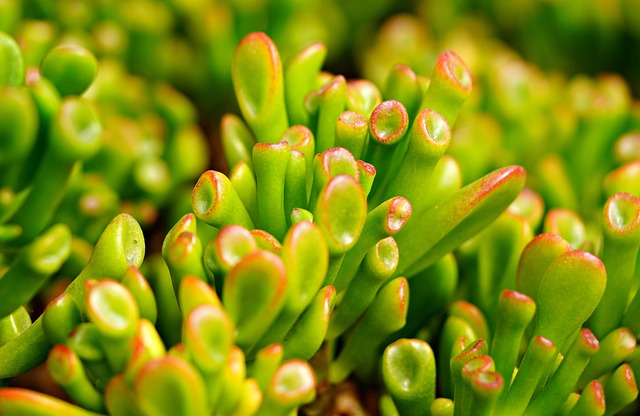
jade plant
Crassula ovata
Comprehensive care and diagnosis guide for the Jade Plant. Based on 40 verified community insights.
Care Requirements
At a Glance
Detailed care profile is currently being compiled by the Plant Grail swarm.
Start Here
Most Common Problems
Based on 40 analyzed cases — these are the issues you're most likely to encounter
Why does my Jade Plant have sunburn?
Jade plants (Crassula ovata) grown in low-light indoor conditions develop thin,...
What are these brown spots on my Jade Plant?
Edema in jade plants occurs when the succulent leaves absorb water faster than...
Why does my Jade Plant have etiolation?
Etiolation in jade plants is a phototropism response to insufficient light...
Why does my Jade Plant have loss of variegation?
Variegated jade plants (Crassula ovata 'Variegata') lose their cream and yellow...
Why does my Jade Plant have red leaf edges?
Red leaf margins and edges on jade plants indicate healthy sun stress...
Verified Data
All Diagnoses
Complete analysis of 40 cases for this variety. Select an entry to expand rescue protocols.
Diseases (3)
Other Problems (19)
Pests (3)
Propagation (5)
Symptoms (2)
Watering Issues (3)
Common Questions
Frequently Asked Questions
Why does my jade plant have Sunburn?
Cause: Jade plants (Crassula ovata) grown in low-light indoor conditions develop thin, delicate cuticles and reduced chlorophyll density. When abruptly exposed to direct sunlight (even 2-3 hours), the leaf cells cannot dissipate excess photon energy, triggering photooxidative damage. This appears as brown, crispy spots on leaf surfaces within 24-72 hours. The damage is permanent and occurs because the plant lacks photoprotective pigments that develop gradually under increasing light exposure.
Solution: Immediately relocate the plant to bright indirect light only
Prevention: Acclimate jade plants to direct sunlight over 14-21 days: start with 30 minutes of morning sun, increasing by 30 minutes every 3 days. Maintain bright indirect light (east-facing window) during the acclimation period. Never move shade-grown jades directly to south-facing windows or outdoor full sun without gradual transition.
91% confidence · View full protocol →
Why does my jade plant have Brown spots?
Cause: Edema in jade plants occurs when the succulent leaves absorb water faster than they can transpire it, causing cells to rupture and create corky brown spots. This is often triggered by inconsistent watering patterns (long dry periods followed by heavy watering), poor drainage, or high humidity combined with low light. Unlike sunburn which appears on exposed surfaces, edema spots appear randomly on leaf undersides and are slightly raised.
Solution: Allow soil to dry completely between waterings (typically 2-3 weeks)
Prevention: Water jade plants only when the top 2-3 inches of soil are completely dry. Use terracotta pots with drainage holes to wick excess moisture. Avoid misting or high-humidity environments. Maintain bright indirect light to promote steady transpiration and prevent water retention in leaves.
88% confidence · View full protocol →
Why does my jade plant have Etiolation?
Cause: Etiolation in jade plants is a phototropism response to insufficient light intensity (below 500-1000 lux). The plant stretches internodes and grows leggy, reaching toward light sources while producing smaller, weaker leaves. This is a survival mechanism that prioritizes light capture over structural integrity. Extended etiolation weakens the plant's ability to support its own weight and makes it susceptible to sunburn when eventually exposed to proper light.
Solution: Relocate to brighter location immediately - east or west-facing window with sheer curtain
Prevention: Provide 4-6 hours of bright indirect light daily (south or west-facing window). Use full-spectrum grow lights (2000-5000 lux) positioned 6-12 inches above the plant if natural light is inadequate. Rotate the plant weekly to ensure even growth and prevent one-sided stretching.
89% confidence · View full protocol →
Why does my jade plant have Loss of variegation?
Cause: Variegated jade plants (Crassula ovata 'Variegata') lose their cream and yellow markings when kept in low-light conditions. The variegated tissue contains minimal chlorophyll and cannot photosynthesize efficiently. In response to light deprivation, the plant prioritizes survival by reverting to all-green growth, which maximizes chlorophyll production and photosynthetic capacity. This is an irreversible loss of the variegation pattern.
Solution: Move to brightest available location immediately
Prevention: Maintain bright indirect light (2000-4000 lux) year-round for variegated varieties. Rotate plants monthly to ensure all sides receive adequate light. Use supplemental grow lights during winter months when natural light is reduced. Avoid placing variegated jades in north-facing windows or dim corners.
87% confidence · View full protocol →
Why does my jade plant have Red leaf edges?
Cause: Red leaf margins and edges on jade plants indicate healthy sun stress (anthocyanin production) rather than damage. This pigmentation acts as a natural sunscreen, protecting leaf cells from photoxidative stress when exposed to bright light (1500-3000 lux). Unlike brown crispy sunburn, red stress coloring is reversible and indicates optimal light levels for compact growth. The coloration typically appears on newer growth and intensifies with increased light exposure.
Solution: Distinguish stress from damage: Red/pink edges = healthy adaptation; brown crispy spots = sunburn requiring relocation
Prevention: Maintain consistent bright light exposure (2000-4000 lux) to encourage healthy stress coloring without crossing into burn territory. Gradually increase light over 2-3 weeks when moving plants to brighter locations. Monitor leaf texture - red color with firm leaves is healthy; red with soft or wrinkled leaves indicates other issues.
85% confidence · View full protocol →