
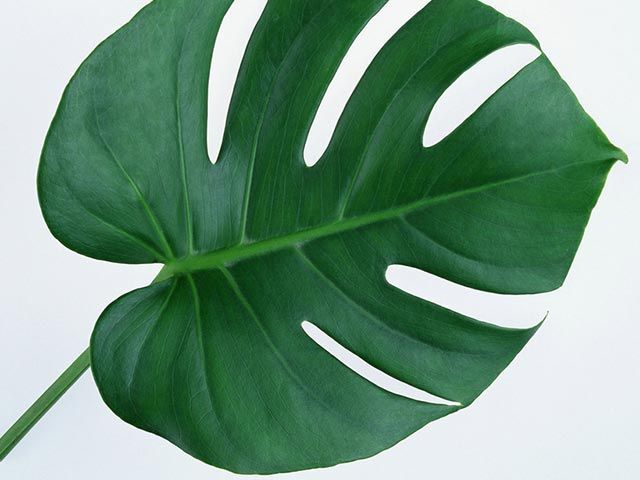
monstera
Also known as: Swiss Cheese Plant
Evidence-based care guide for Monstera (). Covers symptom diagnosis, pest control, propagation methods, watering and lighting. Our analysis draws from 15 verified community cases with an average confidence score of 81%. Each protocol is synthesized from real rescue outcomes, not generic advice.
Care Essentials
Get to Know Your Monstera
Keep an eye out for pests — regular leaf inspections catch problems early.
Light
medium to bright indirect
Tolerates lower light but grows best in medium to bright indirect light. Can get leggy without enough light.
💡 Grow lights: Thrives under artificial grow lights (LED or fluorescent, 10-12 hours/day). A great option if your space lacks natural light.
Watering
every 7-10 days
Water when the top 1-2 inches of soil feel dry. Adjust with the seasons — less in winter, more in summer.
Humidity & Temperature
Appreciates some humidity but adapts to average home conditions. Brown tips in winter? Your air might be too dry — a light misting helps.
Standard room temperature (60-80°F / 15-27°C) is perfect. Avoid cold drafts and sudden temperature swings.
Soil
Use a moisture-retentive potting mix with some peat or coco coir. Avoid overly chunky mixes that dry out too fast.
Care Requirements
At a Glance
Care Profile in Development
While our detailed care profile is being compiled, you can find specific care guidance in the 3 care-related diagnoses below — including watering schedules, light requirements, and propagation methods from real-world cases.
Start Here
Most Common Problems
Based on 15 analyzed cases — these are the issues you're most likely to encounter
Don't see your symptom? Search all 14 topics below, or run the Diagnostic.
How do I propagate my Monstera?
Monstera aerial roots possess suberized (waxy) cell walls that naturally...
How much light does my Monstera need?
Monstera deliciosa exhibits non-photochemical quenching (NPQ) as a...
Monstera: Natural Immunity
Plants have evolved a two-layer innate immune system over 450 million years:...
Monstera: Mycorrhizal Relationships
Mycorrhizal fungi form symbiotic relationships with approximately 90% of plant...
Why are my Monstera leaves turning yellow?
Monstera deliciosa exhibits shade-tolerant evergreen physiology that relies on...
Which of the 7 Killers
is threatening your plants?
We analyzed 1,616 documented plant deaths to identify the 7 causes behind 78% of all losses. Answer 5 questions — we'll tell you exactly which ones apply to your setup.
Skip the quiz — get The 7 Killers course ($19) →Question 1 of 5
How do you decide when to water your plants?
Question 2 of 5
Where do most of your plants live?
Question 3 of 5
What's your home environment like?
Question 4 of 5
Have you lost a plant in the last 6 months?
Question 5 of 5
How often do you check your plants for pests?
Your diagnosis is ready
We've identified your top 2 risk killers. Enter your email to see the full breakdown and your personalized rescue protocol.
Your plants are most at risk from:

The 7 Killers mini-course covers every one of these in depth — mechanism, rescue protocol, prevention. 1,616 cases. 7 lessons. $19.
Get The 7 Killers — $19 →Get the Plant Mortality Checklist
The 7 killers behind 78% of houseplant deaths — and the exact fix for each. Free PDF based on 1,616 documented cases.
Your checklist is ready!
We also sent it to your inbox. Check your email for the full download.
Open the ChecklistFree. No spam. Unsubscribe anytime.
Verified Data
All Diagnoses
14 topics consolidated from 15 documented cases. Expand any topic to see all protocols.
Symptoms (2 topics · 2 cases)
Monstera: Brown Leaf Edges
Monstera deliciosa aerial roots and suberized interfaces rely on wax molecules sorbed to suberin polymers to create transpiration barriers
87%
Monstera: Brown Leaf Edges
Monstera deliciosa aerial roots and suberized interfaces rely on wax molecules sorbed to suberin polymers to create transpiration barriers
Cause
Monstera deliciosa aerial roots and suberized interfaces rely on wax molecules sorbed to suberin polymers to create transpiration barriers. Standard household humidity (30-50%) is insufficient to maintain cuticular wax integrity, leading to increased transpiration water loss. When cuticular wax layers degrade due to dry conditions, water permeability increases nearly tenfold, causing chronic dehydration stress that manifests as brown crispy leaf edges and tip dieback. Unlike root rot from overwatering, this condition results from the plant's inability to retain moisture due to compromised cuticular barriers.
Solutions
- Increase ambient humidity to 60%+ using humidifier or pebble tray methods
- Mist aerial roots directly 2-3 times weekly to support cuticular wax function
- Relocate away from HVAC vents, radiators, or drafty windows
- Water more frequently during low-humidity periods (every 5-7 days vs. 10-14 days)
- Trim brown crispy edges with sterile scissors, following natural leaf shape
Prevention
Maintain 60-80% humidity year-round using humidifiers or pebble trays; avoid placing near heating/cooling vents that cause rapid moisture loss; group plants to create humidity microclimates; mist aerial roots directly rather than foliage to support suberized barrier function.
Why are my Monstera leaves turning yellow?
Monstera deliciosa exhibits shade-tolerant evergreen physiology that relies on non-photochemical quenching (NPQ) for photoprotection
88%
Why are my Monstera leaves turning yellow?
Monstera deliciosa exhibits shade-tolerant evergreen physiology that relies on non-photochemical quenching (NPQ) for photoprotection
Cause
Monstera deliciosa exhibits shade-tolerant evergreen physiology that relies on non-photochemical quenching (NPQ) for photoprotection. When exposed to rapid light intensity changes, the thylakoid membranes reorganize dramatically, reducing periodic order in granum structures. Unlike annual plants, Monstera maintains stable chlorophyll a/b ratios but must adjust PSII/PSI stoichiometry and antenna proteins. Sudden exposure to high light causes locked-in quenching centers from uncoupled LHCIIs, resulting in reduced photosynthetic efficiency and yellowing of mature leaves as the plant reallocates resources to photoprotective mechanisms.
Solutions
- Relocate to bright indirect light immediately if yellowing appears after light changes
- Avoid moving between drastically different light environments (e.g., dark corner to direct window)
- Maintain consistent light levels for 4-6 weeks to allow photosynthetic apparatus reorganization
- Increase humidity to 60-80% during acclimation period to support recovery
- Remove severely yellowed leaves to redirect energy to healthy tissue
Prevention
Acclimate Monstera gradually to light changes over 7-14 days; maintain bright indirect light (2000-5000 lux) avoiding direct sun exposure; ensure stable lighting conditions rather than frequent relocations; maintain 60%+ humidity to support photosynthetic recovery.
Pests (3 topics · 3 cases)
What pests are on my Monstera?
Integrated pest management for Monstera requires combining biological, cultural, and mechanical controls because single-method approaches fail against the diverse pest complex that exploits different plant vulnerabilities
70%
What pests are on my Monstera?
Integrated pest management for Monstera requires combining biological, cultural, and mechanical controls because single-method approaches fail against the diverse pest complex that exploits different plant vulnerabilities
Cause
Integrated pest management for Monstera requires combining biological, cultural, and mechanical controls because single-method approaches fail against the diverse pest complex that exploits different plant vulnerabilities
Solutions
- Introduce biological controls: predatory mites (Phytoseiulus persimilis) at 2:1 predator-to-prey ratio for spider mite outbreaks
- Apply cultural controls: raise humidity above 70% and increase air circulation to disrupt pest reproduction
- Use mechanical removal: wipe affected areas with 70% isopropyl alcohol on cotton swabs for localized mealybug clusters
- Deploy insecticidal soap (2% solution) on leaf undersides for soft-bodied pest control
- Rotate treatment modes monthly to prevent pest resistance development
Prevention
Establish bi-weekly inspection protocols using sticky traps and visual checks to detect pest populations before economic damage thresholds
What pests are on my Monstera?
Monstera deliciosa is moderately susceptible to common houseplant pests due to large leaf surface area, tropical understory origins, and soft stem tissue that create favorable habitat conditions for spider mites, mealybugs, and thrips
72%
What pests are on my Monstera?
Monstera deliciosa is moderately susceptible to common houseplant pests due to large leaf surface area, tropical understory origins, and soft stem tissue that create favorable habitat conditions for spider mites, mealybugs, and thrips
Cause
Monstera deliciosa is moderately susceptible to common houseplant pests due to large leaf surface area, tropical understory origins, and soft stem tissue that create favorable habitat conditions for spider mites, mealybugs, and thrips
Solutions
- Inspect leaf undersides and stem joints weekly using 10x magnification to catch early infestations
- Increase ambient humidity to 65-75% using humidifiers or pebble trays to deter spider mites
- Apply preventive neem oil treatment (1% solution) monthly to leaf undersides during active growth season
- Deploy yellow sticky traps at canopy level for early pest detection and population monitoring
Prevention
Maintain humidity above 60%, ensure proper air circulation with 2-3 feet spacing between plants, and implement 14-day quarantine for all new plant acquisitions
Why does my Monstera have thrips?
Thrips (Thysanoptera order) are tiny, slender insects that feed by rasping plant tissue and sucking sap, causing silvery stippling, distorted growth, and black fecal specks on leaves
82%
Why does my Monstera have thrips?
Thrips (Thysanoptera order) are tiny, slender insects that feed by rasping plant tissue and sucking sap, causing silvery stippling, distorted growth, and black fecal specks on leaves
Cause
Thrips (Thysanoptera order) are tiny, slender insects that feed by rasping plant tissue and sucking sap, causing silvery stippling, distorted growth, and black fecal specks on leaves. Unlike spider mites that cause fine stippling, thrips damage appears as larger silvery patches with black dots. They reproduce rapidly in warm, dry conditions and can transmit plant viruses. Thrips hide in flower buds, leaf axils, and soil surface debris.
Solutions
- Isolate affected plant immediately—thrips can fly short distances and spread rapidly
- Inspect and prune damaged leaves and spent flowers where thrips hide and breed
- Rinse plant with strong water spray to dislodge thrips from leaves and stems
- Apply insecticidal soap, neem oil, or spinosad spray thoroughly, covering all surfaces including leaf undersides and growing points. Repeat every 5-7 days for 3-4 weeks
- Use yellow or blue sticky traps near plants to capture adult thrips and monitor population decline
- For severe infestations: Apply systemic insecticide as soil drench for long-term protection
- Monitor new growth closely—thrips prefer tender shoots. Treat immediately if damage resumes
Prevention
Inspect new plants and cuttings thoroughly—thrips often hitchhike on flowers and buds. Remove and discard spent flowers promptly. Maintain moderate humidity (50-60%) to discourage thrips which prefer dry conditions. Use yellow or blue sticky traps to monitor adult populations. Quarantine new plants for 2-3 weeks away from collection.
Care Methods (4 topics · 5 cases)
How do I propagate my Monstera?
Monstera aerial roots possess suberized (waxy) cell walls that naturally protect against water loss and microbial infection, making them pre-adapted for aquatic environments
2 protocols
90–90%
How do I propagate my Monstera?
Monstera aerial roots possess suberized (waxy) cell walls that naturally protect against water loss and microbial infection, making them pre-adapted for aquatic environments
Protocol 1: aerial root water propagation · 90% confidence
Cause
Monstera aerial roots possess suberized (waxy) cell walls that naturally protect against water loss and microbial infection, making them pre-adapted for aquatic environments. Unlike stem cuttings that must develop callus before rooting, aerial roots already contain dormant root primordia with activated meristematic tissue. When submerged in water, these specialized roots transition from atmospheric absorption to aquatic nutrient uptake within 48-72 hours. The aerial root's spongy tissue (velamen radicum) absorbs water and dissolved nutrients directly, bypassing the 7-14 day callus phase required by standard stem cuttings.
Solutions
- Identify healthy aerial roots: firm, white/cream, minimum 2-3 inches length
- Take stem cutting with at least one aerial root and one node below the cut
- Remove any brown or dried portions of aerial root with sterile scissors
- Submerge aerial root completely in water while keeping stem node at water line
- Change water every 5-7 days—aerial roots are more resistant to bacterial issues than stem cuttings
- Expect water root development from aerial root within 3-7 days (faster than stem-only cuttings)
- Transition to soil when new roots plus aerial root total 3+ inches in length
- Note: Monstera transitions better than Pothos—aerial root acts as anchor during soil transition
Prevention
Select aerial roots that are firm, white/cream colored, and at least 2-3 inches long. Avoid brown, dried, or mushy aerial roots which indicate desiccation damage or rot that will fail in water.
Protocol 2: aerial root dehydration · 90% confidence
Cause
Monstera deliciosa has specialized suberized cell walls in aerial roots and tubers that form transpiration barriers. Unlike normal roots, aerial roots develop wax molecules sorbed to suberin polymer that create effective water loss barriers with permeances of 7.4 × 10^-10 to 4.2 × 10^-9 m·s^-1. This adaptation allows aerial roots to function in atmospheric conditions without desiccating.
Solutions
- Leave aerial roots exposed - do not bury or cut healthy ones
- Mist aerial roots weekly to support their atmospheric adaptation
- Provide moss pole for aerial roots to attach and develop suberized barriers
- Maintain 60-80% humidity for optimal aerial root function
- If aerial roots dry out: increase ambient humidity and mist regularly
Prevention
Allow aerial roots to remain exposed to air rather than burying them. Maintain humidity above 50% to support aerial root function. Avoid cutting healthy aerial roots as they provide transpiration regulation.
Monstera: Oxygen Requirements
Monstera's large stem cuttings (often 6-12 inches with multiple leaves) have high transpiration rates that deplete cutting reserves before roots develop
85%
Monstera: Oxygen Requirements
Monstera's large stem cuttings (often 6-12 inches with multiple leaves) have high transpiration rates that deplete cutting reserves before roots develop
Cause
Monstera's large stem cuttings (often 6-12 inches with multiple leaves) have high transpiration rates that deplete cutting reserves before roots develop. The thick, fleshy stems contain stored carbohydrates but limited vascular tissue for water transport. In low-oxygen water conditions (<4mg/L DO), cellular respiration switches to inefficient anaerobic pathways, producing ethanol and lactic acid that damage root primordia. Large cuttings require 40-60% more oxygen than small Pothos cuttings due to higher metabolic demand, making oxygen management critical for Monstera water propagation success.
Solutions
- Take cuttings 4-6 inches maximum to reduce metabolic oxygen demand
- Remove all but 1-2 leaves to minimize transpiration while maintaining photosynthesis
- Use wide-mouth vessels to maximize air-water surface area for oxygen exchange
- Change water every 3-4 days (more frequent than Pothos due to higher metabolic load)
- Consider adding air stone for continuous oxygenation if propagating multiple large cuttings
- Monitor for stem rot: soft, discolored stem base indicates oxygen deprivation—remove affected tissue immediately
- Maintain water temperature 68-75°F (20-24°C)—cold water holds more dissolved oxygen
- Position in bright indirect light but avoid direct sun which increases transpiration and water temperature
Prevention
Use smaller cuttings (6 inches max) with only 1-2 leaves to reduce transpiration load. Remove all but one leaf if necessary to balance photosynthesis with water loss during root development.
What pests are on my Monstera?
Monstera pest infestations primarily result from environmental stress conditions rather than plant weakness, with low humidity, poor air circulation, and introduction of contaminated plants being the dominant risk factors
68%
What pests are on my Monstera?
Monstera pest infestations primarily result from environmental stress conditions rather than plant weakness, with low humidity, poor air circulation, and introduction of contaminated plants being the dominant risk factors
Cause
Monstera pest infestations primarily result from environmental stress conditions rather than plant weakness, with low humidity, poor air circulation, and introduction of contaminated plants being the dominant risk factors
Solutions
- Monitor with hygrometers and maintain 60-80% relative humidity using humidifiers or pebble trays
- Space plants minimum 24 inches apart to promote air circulation and reduce pest migration
- Inspect all new plants with magnification before bringing indoors, examining leaf undersides and stem joints
- Install yellow sticky traps at plant canopy level for continuous pest monitoring
- Clean foliage monthly with damp microfiber cloth to remove dust that attracts pests and interferes with stomatal function
Prevention
Maintain consistent humidity between 60-80%, ensure adequate spacing for air movement, and implement strict quarantine protocols for new plant introductions
Monstera: Transition Shock
Monstera water roots form with specialized aerenchyma for aquatic environments but lack the robust structural tissue needed to penetrate dense soil
86%
Monstera: Transition Shock
Monstera water roots form with specialized aerenchyma for aquatic environments but lack the robust structural tissue needed to penetrate dense soil
Cause
Monstera water roots form with specialized aerenchyma for aquatic environments but lack the robust structural tissue needed to penetrate dense soil. The transition shock is exacerbated by Monstera's epiphytic nature—roots evolved to grip bark and absorb moisture from air rather than extract water from soil particles. When moved to soil, water-adapted roots experience mechanical shear damage during planting and cannot immediately absorb capillary water. This triggers a stress response that diverts energy from leaf production to root regeneration, causing the characteristic post-transplant growth stall lasting 2-4 weeks.
Solutions
- Transition timing: Wait for roots to reach 3+ inches with 2-3 lateral branches
- Prepare chunky aroid mix: 50% orchid bark, 30% perlite, 20% coco coir
- Plant with aerial root (if present) positioned vertically as anchor point
- Water roots require gentle handling—avoid forceful soil packing around roots
- Water thoroughly after planting to settle mix without compacting
- Enclose in humidity dome or plastic bag for 10-14 days to reduce transpiration stress
- Maintain 65-80% humidity during 2-4 week adaptation period
- Reduce light intensity slightly for first week to lower metabolic demand
- Expect 2-4 week growth stall; resume fertilizing only after new leaf emergence
Prevention
Transition when water roots reach 3+ inches with visible lateral branching. Use a chunky aroid mix (50% bark, 30% perlite, 20% coco coir) rather than standard potting soil to provide the epiphytic root structure Monstera expects.
Other Topics (5 topics · 5 cases)
How much light does my Monstera need?
Monstera deliciosa exhibits non-photochemical quenching (NPQ) as a photoprotective mechanism when exposed to high light intensities
92%
How much light does my Monstera need?
Monstera deliciosa exhibits non-photochemical quenching (NPQ) as a photoprotective mechanism when exposed to high light intensities
Cause
Monstera deliciosa exhibits non-photochemical quenching (NPQ) as a photoprotective mechanism when exposed to high light intensities. The plant develops giant grana with dozens of stacked thylakoids to manage excess light energy. When NPQ-inducing illumination occurs, the periodic order of granum thylakoid membranes decreases, enabling the plant to dissipate excess light energy as heat rather than damaging the photosynthetic apparatus.
Solutions
- Move plant to bright indirect light location immediately if showing stress signs
- Gradually acclimate by increasing light exposure 30 minutes daily over 2 weeks
- Maintain consistent light levels - avoid frequent relocation
- Provide humidity above 60% to support photoprotective recovery
- Rotate plant quarterly for even light distribution
Prevention
Position Monstera in bright indirect light (1500-3000 lux) to minimize photoprotective stress. Avoid direct sunlight exposure which triggers extreme NPQ responses. Acclimate plants gradually when moving to brighter locations over 7-14 days.
Monstera: Mycorrhizal Relationships
Mycorrhizal fungi form symbiotic relationships with approximately 90% of plant species, extending root surface area up to 1,000 times through fungal hyphae networks
90%
Monstera: Mycorrhizal Relationships
Mycorrhizal fungi form symbiotic relationships with approximately 90% of plant species, extending root surface area up to 1,000 times through fungal hyphae networks
Cause
Mycorrhizal fungi form symbiotic relationships with approximately 90% of plant species, extending root surface area up to 1,000 times through fungal hyphae networks.
Solutions
- Add mycorrhizal inoculant at repotting (one application lasts plant lifetime)
- Avoid hydrogen peroxide soil treatments that kill fungal networks
- Look for white wispy threads in healthy soil as indicator of mycorrhizae
Prevention
Avoid sterilizing soil with hydrogen peroxide or heat at repotting; use mycorrhizal inoculants when repotting; maintain soil biology by avoiding over-sterilization
Monstera: Natural Immunity
Plants have evolved a two-layer innate immune system over 450 million years: Pattern-Triggered Immunity (PTI) as first line defense using surface receptors to detect microbial patterns, and Effector-Triggered Immunity (ETI) as second line using intracellular NLR receptors to detect pathogen effectors
90%
Monstera: Natural Immunity
Plants have evolved a two-layer innate immune system over 450 million years: Pattern-Triggered Immunity (PTI) as first line defense using surface receptors to detect microbial patterns, and Effector-Triggered Immunity (ETI) as second line using intracellular NLR receptors to detect pathogen effectors
Cause
Plants have evolved a two-layer innate immune system over 450 million years: Pattern-Triggered Immunity (PTI) as first line defense using surface receptors to detect microbial patterns, and Effector-Triggered Immunity (ETI) as second line using intracellular NLR receptors to detect pathogen effectors
Solutions
- Ensure proper watering - let soil dry between waterings
- Provide adequate light for healthy photosynthesis
- Avoid physical damage to plant tissue
- Quarantine new plants to prevent pathogen introduction
Prevention
Support plant immunity by maintaining healthy growing conditions - avoid overwatering which weakens cell walls and compromises immune response
Monstera: Not Fenestrating
Monstera deliciosa exhibits heteroblastic development where leaf morphology changes dramatically with plant maturity and light exposure
75%
Monstera: Not Fenestrating
Monstera deliciosa exhibits heteroblastic development where leaf morphology changes dramatically with plant maturity and light exposure
Cause
Monstera deliciosa exhibits heteroblastic development where leaf morphology changes dramatically with plant maturity and light exposure. Juvenile plants produce solid, heart-shaped leaves without fenestrations (holes/splits). Fenestration development requires: (1) Plant maturity (typically 2-3 years or 8+ leaves), and (2) Adequate light intensity (2000+ lux for development). Plants in low-light conditions (<500 lux) may remain in juvenile leaf form indefinitely regardless of age, as insufficient light limits photosynthetic acclimation and energy allocation necessary for complex leaf development (PMID 35980499, 32931722).
Solutions
- Assess plant age: Plants under 2 years or with fewer than 6-8 leaves typically have solid leaves naturally—fenestrations develop with maturity
- Increase light exposure gradually: Move to bright indirect light (2000-5000 lux) over 7-10 days to avoid shock
- Provide climbing support: Install moss pole or trellis; vertical climbing triggers mature leaf morphology through node stabilization
- Maintain patience: Even with optimal conditions, expect 2-3 leaves after light increase before fenestrations appear (pre-formed leaves won't change)
- Consider supplemental lighting: If natural light is inadequate, add full-spectrum grow light 12-14 hours daily positioned 12-18 inches from plant
Prevention
Provide bright indirect light from the start; avoid keeping young Monsteras in dim corners. Install climbing support early to encourage mature growth habit. Expect first fenestrations on the 7th-10th leaf under optimal conditions.
Is my Monstera rootbound?
Monstera (Monstera deliciosa) develops root-bound conditions when the fibrous root system completely fills the pot, forcing roots to circle the container perimeter in search of expansion space
55%
Is my Monstera rootbound?
Monstera (Monstera deliciosa) develops root-bound conditions when the fibrous root system completely fills the pot, forcing roots to circle the container perimeter in search of expansion space
Cause
Monstera (Monstera deliciosa) develops root-bound conditions when the fibrous root system completely fills the pot, forcing roots to circle the container perimeter in search of expansion space. This occurs when aroids outgrow their containers—typically after 12-18 months in the same pot. The circling root pattern creates a dense mat that compresses soil, reducing oxygen availability and water penetration. As root mass increases, the plant redirects energy from leaf production to root exploration, causing visible growth stagnation.
Solutions
- Slide plant from pot and inspect root ball: circling roots visible along pot walls indicate root-bound condition
- Gently tease apart outer circling roots with fingers to break the circular pattern and encourage outward growth
- Repot into container 2-3 inches larger in diameter with fresh chunky aroid mix
- If root ball is severely bound: Use sterilized scissors to make 2-3 vertical slices through the outer root mat
- Water thoroughly after repotting and maintain 60-80% humidity to support root recovery
Prevention
Repot Monstera every 12-18 months or when roots emerge from drainage holes. Use clear nursery pots to visually monitor root fill. Never exceed 2-3 inch pot diameter increases to prevent oversized pot syndrome.
Further Reading
Related Articles
Common Questions
Frequently Asked Questions
Why does my monstera have Aerial root water propagation?
Cause: Monstera aerial roots possess suberized (waxy) cell walls that naturally protect against water loss and microbial infection, making them pre-adapted for aquatic environments. Unlike stem cuttings that must develop callus before rooting, aerial roots already contain dormant root primordia with activated meristematic tissue. When submerged in water, these specialized roots transition from atmospheric absorption to aquatic nutrient uptake within 48-72 hours. The aerial root's spongy tissue (velamen radicum) absorbs water and dissolved nutrients directly, bypassing the 7-14 day callus phase required by standard stem cuttings.
Solution: Identify healthy aerial roots: firm, white/cream, minimum 2-3 inches length
Prevention: Select aerial roots that are firm, white/cream colored, and at least 2-3 inches long. Avoid brown, dried, or mushy aerial roots which indicate desiccation damage or rot that will fail in water.
90% confidence · View full protocol →
Why does my monstera have Light stress high intensity?
Cause: Monstera deliciosa exhibits non-photochemical quenching (NPQ) as a photoprotective mechanism when exposed to high light intensities. The plant develops giant grana with dozens of stacked thylakoids to manage excess light energy. When NPQ-inducing illumination occurs, the periodic order of granum thylakoid membranes decreases, enabling the plant to dissipate excess light energy as heat rather than damaging the photosynthetic apparatus.
Solution: Move plant to bright indirect light location immediately if showing stress signs
Prevention: Position Monstera in bright indirect light (1500-3000 lux) to minimize photoprotective stress. Avoid direct sunlight exposure which triggers extreme NPQ responses. Acclimate plants gradually when moving to brighter locations over 7-14 days.
92% confidence · View full protocol →
Why does my monstera have Natural immunity?
Cause: Plants have evolved a two-layer innate immune system over 450 million years: Pattern-Triggered Immunity (PTI) as first line defense using surface receptors to detect microbial patterns, and Effector-Triggered Immunity (ETI) as second line using intracellular NLR receptors to detect pathogen effectors
Solution: Ensure proper watering - let soil dry between waterings
Prevention: Support plant immunity by maintaining healthy growing conditions - avoid overwatering which weakens cell walls and compromises immune response
90% confidence · View full protocol →
Why does my monstera have Mycorrhizal relationships?
Cause: Mycorrhizal fungi form symbiotic relationships with approximately 90% of plant species, extending root surface area up to 1,000 times through fungal hyphae networks.
Solution: Add mycorrhizal inoculant at repotting (one application lasts plant lifetime)
Prevention: Avoid sterilizing soil with hydrogen peroxide or heat at repotting; use mycorrhizal inoculants when repotting; maintain soil biology by avoiding over-sterilization
90% confidence · View full protocol →
Why does my monstera have Yellow leaves?
Cause: Monstera deliciosa exhibits shade-tolerant evergreen physiology that relies on non-photochemical quenching (NPQ) for photoprotection. When exposed to rapid light intensity changes, the thylakoid membranes reorganize dramatically, reducing periodic order in granum structures. Unlike annual plants, Monstera maintains stable chlorophyll a/b ratios but must adjust PSII/PSI stoichiometry and antenna proteins. Sudden exposure to high light causes locked-in quenching centers from uncoupled LHCIIs, resulting in reduced photosynthetic efficiency and yellowing of mature leaves as the plant reallocates resources to photoprotective mechanisms.
Solution: Relocate to bright indirect light immediately if yellowing appears after light changes
Prevention: Acclimate Monstera gradually to light changes over 7-14 days; maintain bright indirect light (2000-5000 lux) avoiding direct sun exposure; ensure stable lighting conditions rather than frequent relocations; maintain 60%+ humidity to support photosynthetic recovery.
88% confidence · View full protocol →
Common Questions
Frequently Asked About Monstera
Can Monstera grow in water?
Yes. We have 1 documented protocol for water-based Monstera care, including propagation and long-term hydroponic transition.
What problems can Monstera get?
Our database contains 15 documented Monstera cases covering 14 distinct topics, including diseases, pest identification, environmental stress, propagation, and advanced care protocols — each with verified solutions.
Structured Learning
Ready to Go Deeper?
Explore our Mastery Packs for structured, video-based learning with step-by-step protocols from 20,000+ analyzed plant cases.
Browse All Courses →