High Light Stress on monstera deliciosa
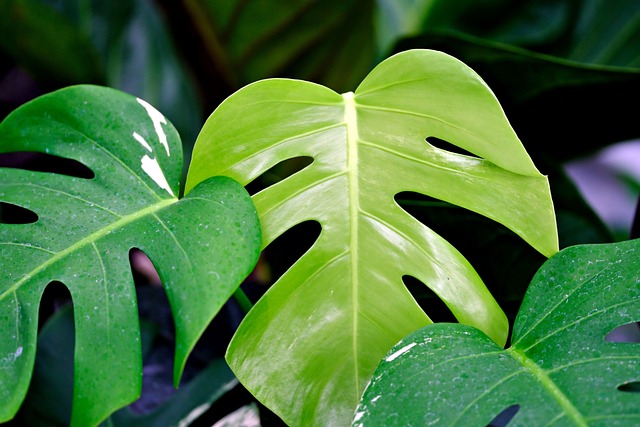
What's Happening
Monstera deliciosa exhibits high non-photochemical quenching (NPQ) capacity as a photoprotective mechanism. When exposed to light intensities exceeding 5000 lux, NPQ triggers ultrastructural changes in thylakoid membranes, causing decreased periodic order of granum membranes. This manifests as leaf bleaching, chlorosis, and cellular damage. Unlike annual plants, M. deliciosa maintains stable chlorophyll a/b ratios but cannot sustain long-term high light exposure.
How to Fix It
- 1
Move plant away from direct sunlight immediately
- 2
Filter intense light with sheer curtains or blinds
- 3
Monitor light levels with meter; maintain 2000-5000 lux maximum
- 4
Expect 4-6 weeks for recovery; new growth will show improvement first
- 5
Do not fertilize stressed plant until recovered
How to Prevent It
Provide bright indirect light only (2000-5000 lux maximum). Filter direct sun with sheer curtains. Gradually acclimate over 7-10 days if moving to brighter location.
Related Problems
Go Deeper
This is covered in-depth in the monstera deliciosa Mastery Pack — structured modules with video walkthroughs, advanced protocols, and rescue timelines.
Get the Mastery Pack — $37 →