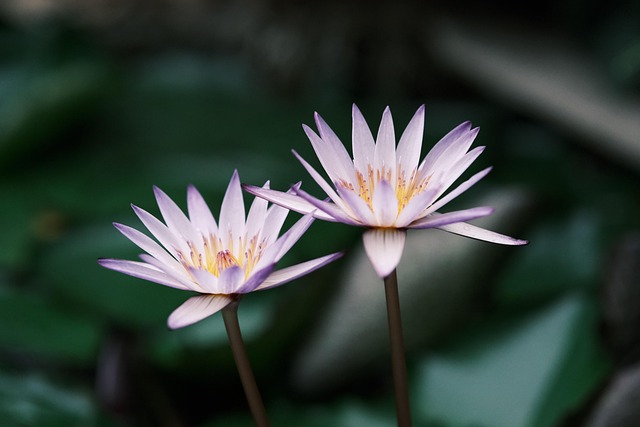
peace lily
Spathiphyllum wallisii
Comprehensive care and diagnosis guide for the Peace Lily. Based on 33 verified community insights.
Care Requirements
At a Glance
Detailed care profile is currently being compiled by the Plant Grail swarm.
Start Here
Most Common Problems
Based on 33 analyzed cases — these are the issues you're most likely to encounter
Why does my Peace Lily have root rot?
Peace lilies (Spathiphyllum spp.) develop root rot from persistent overwatering...
Why is my Peace Lily wilting?
Peace lily drooping operates on a U-shaped petiole hinge mechanism that...
Why does my Peace Lily have fluoride and chlorine sensitivity?
Peace lilies are hypersensitive to fluoride (F⁻) and chlorine (Cl₂) commonly...
Why are my Peace Lily leaves turning yellow?
Peace lilies naturally shed older leaves as they age, with each leaf having a...
Why are my Peace Lily leaves turning yellow?
Peace lilies develop yellow leaves from insufficient light intensity below 1000...
Verified Data
All Diagnoses
Complete analysis of 33 cases for this variety. Select an entry to expand rescue protocols.
Diseases (2)
Environment (4)
Other Problems (9)
Pests (5)
Symptoms (7)
Watering Issues (1)
Common Questions
Frequently Asked Questions
Why does my peace lily have Root rot from overwatering?
Cause: Peace lilies (Spathiphyllum spp.) develop root rot from persistent overwatering that creates anaerobic soil conditions below 2mg/L oxygen threshold. When soil remains saturated for 7+ days, Pythium and Fusarium fungi colonize the fibrous root system, turning healthy white roots into black, mushy tissue that loses structural integrity and water uptake capability. The plant's tropical understory origin makes it vulnerable to waterlogging despite its dramatic drooping signal that owners often misinterpret as thirst rather than rot.
Solution: Unpot the plant and gently rinse all soil from roots under lukewarm water to expose full root system
Prevention: Water only when top 1-2 inches of soil are completely dry to the touch. Use well-draining potting mix amended with 30% perlite. Ensure pots have drainage holes and are never left standing in saucer water. Maintain 60-80% humidity to reduce water stress between waterings. Bottom-water only when necessary to control soil saturation levels.
91% confidence · View full protocol →
Why does my peace lily have Drooping as watering signal?
Cause: Peace lily drooping operates on a U-shaped petiole hinge mechanism that activates at 35-40% water mass loss. Unlike other plants that wilt gradually, peace lilies evolved in tropical understory environments where dramatic drooping serves as an unmistakable visual signal to humans that water is needed. This petiole dehydration triggers rapid collapse within hours, but the mechanism is completely reversible—recovery typically occurs within 2-4 hours of thorough watering when roots are healthy. The dramatic response often causes overwatering panic, but drooping is the plant's natural communication system.
Solution: Check soil moisture 2-3cm deep using finger test or moisture meter before watering
Prevention: Check soil moisture before reacting to drooping—water only if top 1-2 inches are dry. Use finger test or moisture meter to distinguish between legitimate thirst and root rot masquerading as dehydration. Maintain consistent watering schedule adjusted for seasonal light levels. Avoid automated watering systems that can't read the drooping signal.
88% confidence · View full protocol →
Why does my peace lily have Fluoride and chlorine sensitivity?
Cause: Peace lilies are hypersensitive to fluoride (F⁻) and chlorine (Cl₂) commonly found in municipal tap water. These chemicals accumulate at leaf margins and tips over 2-4 weeks of regular watering, causing cellular necrosis that appears as brown, crispy edges and dead tissue. The toxicity threshold is reached when fluoride concentrations exceed 1 ppm or when chlorine gas isn't allowed to dissipate. Unlike nutrient deficiencies that cause uniform yellowing, chemical burn creates distinct marginal patterns. The damage is permanent on affected tissue but preventable on new growth.
Solution: Immediately switch to filtered, distilled, or rainwater for all future watering
Prevention: Switch to filtered, distilled, or rainwater for all peace lily watering. If using tap water, let it sit uncovered for 24 hours to allow chlorine evaporation, though fluoride won't dissipate. Alternatively, use water from a dehumidifier or air conditioner. Avoid water softener discharge which contains sodium. Maintain 60-70% humidity to reduce overall water requirements.
89% confidence · View full protocol →
Why does my peace lily have Yellow leaves from natural aging?
Cause: Peace lilies naturally shed older leaves as they age, with each leaf having a finite lifespan of 6-12 months. Yellowing that progresses from bottom leaves upward in a sequential pattern indicates natural senescence, not disease. The plant redirects nutrients from older leaves to support new growth at the crown. This process differs from pathological yellowing which affects multiple leaves simultaneously across the plant. Natural yellowing leaves will eventually dry and detach easily, whereas problematic yellowing leaves remain attached and show additional symptoms.
Solution: Identify pattern: Natural senescence affects ONLY the oldest, lowest leaf at a time
Prevention: Allow natural yellowing to complete—do not prematurely remove yellowing leaves as the plant is still extracting mobile nutrients. Maintain consistent care: bright indirect light (2000-5000 lux), 60-80% humidity, and appropriate watering. One or two yellow leaves per month on a mature plant is normal. Ensure adequate nutrition with quarterly diluted fertilization to support healthy new growth.
87% confidence · View full protocol →
Why does my peace lily have Yellow leaves from low light?
Cause: Peace lilies develop yellow leaves from insufficient light intensity below 1000 lux. Unlike direct sun damage which causes brown scorch marks, chronic low light triggers etiolation and chlorophyll breakdown. The plant sacrifices older leaves first to redirect limited energy to new growth. Leaves may also appear pale green rather than deep green. This differs from root rot yellowing which shows rapid progression and typically affects multiple leaves simultaneously.
Solution: Relocate to brighter location: East/west windows with sheer curtains, or 3-5 feet from south window
Prevention: Maintain bright indirect light of 2000-5000 lux measured at leaf level. Position 3-6 feet from east or west-facing windows, or use sheer curtains on south-facing windows. Rotate plant quarterly for even light exposure. Supplement with grow lights in winter or dim spaces (12-16 hours daily). Avoid direct sunlight which causes scorching.
85% confidence · View full protocol →