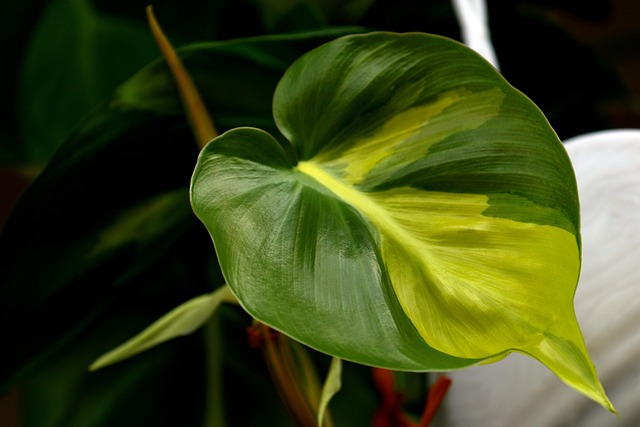
philodendron brasil
Philodendron hederaceum 'Brasil'
Comprehensive care and diagnosis guide for the Philodendron Brasil. Based on 11 verified community insights.
Care Requirements
At a Glance
Detailed care profile is currently being compiled by the Plant Grail swarm.
Go Deeper
Philodendron Rare Guide Pack
The complete protocol: advanced care, seasonal calendars, and rescue modules. Everything on this page, plus video walkthroughs.
Start Here
Most Common Problems
Based on 11 analyzed cases — these are the issues you're most likely to encounter
Why does my Philodendron Brasil have care requirements?
Philodendron Brasil (Philodendron hederaceum 'Brasil') requires tropical...
How do I propagate my Philodendron Brasil?
Philodendron Brasil propagates readily via stem cuttings containing at least...
Why does my Philodendron Brasil have light needs?
Philodendron Brasil evolved as a tropical understory climber, adapted to...
Why does my Philodendron Brasil have common problems?
Philodendron Brasil commonly suffers from three interconnected issues: (1) Root...
Why are my Philodendron Brasil leaves turning yellow?
Philodendron Brasil exhibits yellowing on lower leaves within 2-4 weeks...
Verified Data
All Diagnoses
Complete analysis of 11 cases for this variety. Select an entry to expand rescue protocols.
Diseases (1)
Other Problems (3)
Symptoms (2)
Common Questions
Frequently Asked Questions
Why does my philodendron brasil have Care requirements?
Cause: Philodendron Brasil (Philodendron hederaceum 'Brasil') requires tropical understory conditions: bright indirect light (100-200 µmol/m²/s or 2000-5000 lux), 60-80% humidity, and well-draining aroid mix (50% potting soil, 30% perlite, 20% orchid bark). The cultivar is a trailing/climbing variety with heart-shaped variegated leaves that revert to solid green in insufficient light. Root rot develops when soil remains wet for 7+ days due to anaerobic bacterial proliferation.
Solution: 1. Use well-draining aroid mix: 50% potting soil, 30% perlite, 20% orchid bark to maintain 20-30% air porosity
Prevention: Use terracotta pots with drainage holes; water only when top 2-3 inches of soil are dry (typically 7-14 days); maintain humidity via pebble trays or humidifiers; provide bright indirect light 10-12 hours daily; fertilize at 1/4 strength monthly during growing season.
88% confidence · View full protocol →
Why does my philodendron brasil have Propagation?
Cause: Philodendron Brasil propagates readily via stem cuttings containing at least one node (swollen bump with aerial root potential). The plant's vining growth habit produces nodes every 2-3 inches, making it ideal for propagation. Success rate is high (85%+) due to the species' natural adaptation to tropical understory conditions where stem fragments root readily in humid environments.
Solution: 1. Select healthy stem with 2-3 leaves and at least 1 visible node; nodes appear as swollen bumps on stem
Prevention: Take cuttings only from healthy parent plants; sterilize cutting tools with 70% isopropyl alcohol between cuts; avoid propagating during winter dormancy when root development slows.
85% confidence · View full protocol →
Why does my philodendron brasil have Light needs?
Cause: Philodendron Brasil evolved as a tropical understory climber, adapted to dappled sunlight filtering through forest canopy (50-200 µmol/m²/s PPFD). Insufficient light (below 100 PPFD) causes etiolation - leggy stems with small, widely-spaced leaves as the plant stretches toward light sources. Direct sunlight causes phototoxicity - crispy brown spots and leaf scorch due to lack of photoprotective adaptations for full sun exposure. The variegated 'Brasil' cultivar shows faster reversion to solid green in low light as the plant prioritizes chlorophyll production over variegation.
Solution: 1. Measure light with phone app or meter: Target 10,000-20,000 lux (100-200 PPFD) at plant canopy
Prevention: Position 3-5 feet from south/west-facing windows with sheer curtains; east-facing windows provide ideal light; maintain 12-14 hour photoperiod with grow lights in winter; use light meter apps to verify 10,000-20,000 lux at canopy level.
89% confidence · View full protocol →
Why does my philodendron brasil have Common problems?
Cause: Philodendron Brasil commonly suffers from three interconnected issues: (1) Root rot from overwatering - 7+ days of saturated soil creates anaerobic conditions promoting Pythium and bacterial pathogens, causing yellow lower leaves and mushy stems; (2) Thrips infestations - tiny pests (1-2mm) that attack new growth causing silvery stippling, often overlooked until damage is severe; (3) Sunburn/heat stress - direct sunlight causes phototoxicity with brown crispy spots, exacerbated by heat waves that accelerate transpiration. These issues often compound: overwatering weakens plants, making them susceptible to pests; heat stress accelerates water needs, leading to overcorrection.
Solution: 1. Root Rot: Unpot, trim black/mushy roots, repot in fresh chunky mix, water only when dry; use H2O2 soak (1:1 with water) for 20 minutes on remaining roots
Prevention: Water only when top 2-3 inches are dry; quarantine new plants 2-4 weeks; inspect weekly for pests with magnifier; maintain bright indirect light without direct sun exposure; avoid temperature extremes above 85°F (29°C).
90% confidence · View full protocol →
Why does my philodendron brasil have Yellow leaves from transplant shock?
Cause: Philodendron Brasil exhibits yellowing on lower leaves within 2-4 weeks post-purchase due to transplant shock and acclimation stress. The transition from nursery conditions (controlled humidity, lighting, and watering) to home environments triggers physiological adjustment. Unlike root rot which affects multiple leaves simultaneously and shows soggy soil, transplant shock yellowing typically affects only the oldest 1-2 leaves as the plant redirects energy to root establishment and new growth adaptation.
Solution: Inspect leaf undersides for pests using 10x magnification or phone macro lens to rule out secondary infestations
Prevention: Quarantine new plants for 14-21 days with weekly pest inspections; gradually acclimate to home light conditions over 7-10 days; avoid repotting for 4-6 weeks unless roots are severely circling; maintain stable 65-85°F temperatures and avoid placement near HVAC vents.
87% confidence · View full protocol →