Golden Pothos Care on pothos
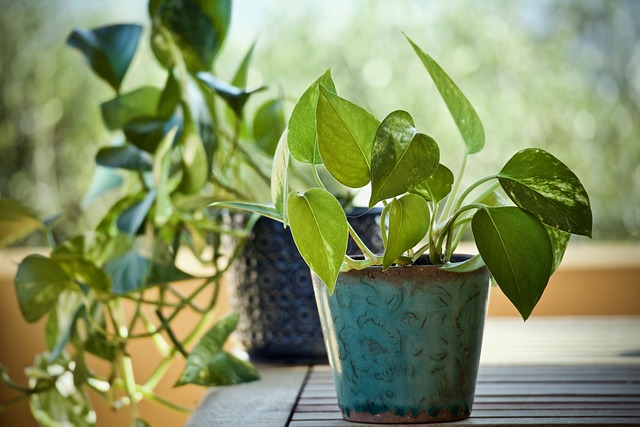
What's Happening
Golden Pothos (Epipremnum aureum 'Aureum') has the highest chlorophyll density of all variegated pothos varieties due to its predominantly golden-yellow variegation. While highly adaptable to low light, insufficient illumination (below 100 foot-candles) triggers rapid etiolation with 40-60% internode elongation compared to medium-light specimens. The variety's vigorous growth rate (2-3x faster than Marble Queen) requires 15-20% more nitrogen to maintain leaf color intensity and prevent chlorotic fading of golden sectors.
How to Fix It
- 1
Move to brighter location (east/west window with sheer curtain)
- 2
Prune leggy vines to 4-6 inch segments, root in water weekly
- 3
Increase fertilizer frequency to compensate for rapid growth
- 4
Provide climbing support (moss pole) to trigger larger leaf production
- 5
Maintain soil moisture: water when top 2 inches dry (7-10 day cycle)
How to Prevent It
Position in bright indirect light (200-400 foot-candles); rotate quarterly for even exposure; maintain 60-70% humidity to reduce metabolic stress in high-light conditions; fertilize every 14 days during active growth with balanced 10-10-10 at half strength.
Related Problems
Go Deeper
This is covered in-depth in the pothos Mastery Pack — structured modules with video walkthroughs, advanced protocols, and rescue timelines.
Get the Mastery Pack — $37 →