
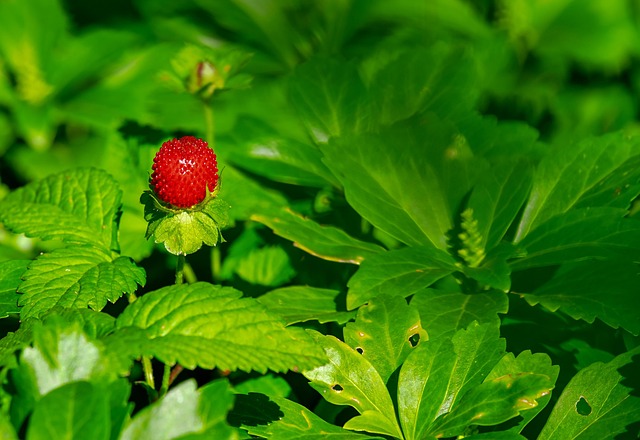
strawberry
Evidence-based care guide for Strawberry (). Covers disease treatment, pest control and care. Our analysis draws from 15 verified community cases with an average confidence score of 86%. Each protocol is synthesized from real rescue outcomes, not generic advice.
Care Essentials
Get to Know Your Strawberry
Keep an eye out for pests — regular leaf inspections catch problems early.
Light
medium to bright indirect
Most comfortable in medium to bright indirect light. Avoid prolonged direct sun exposure.
💡 Grow lights: Thrives under artificial grow lights (LED or fluorescent, 10-12 hours/day). A great option if your space lacks natural light.
Watering
every 10-14 days
Let the soil dry out significantly between waterings — this plant is very sensitive to overwatering. When in doubt, wait another day.
Humidity & Temperature
Appreciates some humidity but adapts to average home conditions. Brown tips in winter? Your air might be too dry — a light misting helps.
Standard room temperature (60-80°F / 15-27°C) is perfect. Avoid cold drafts and sudden temperature swings.
Soil
Standard well-draining potting mix works well. Add perlite for extra drainage if you tend to overwater.
Care Requirements
At a Glance
Care Profile in Development
While our detailed care profile is being compiled, you can find specific care guidance in the 0 care-related diagnoses below — including watering schedules, light requirements, and propagation methods from real-world cases.
Start Here
Most Common Problems
Based on 15 analyzed cases — these are the issues you're most likely to encounter
Don't see your symptom? Search all 10 topics below, or run the Diagnostic.
Strawberry: Crown Rot
Planting strawberries too deeply or allowing mulch to bury the crown traps...
Strawberry: Overwintering Pots
Strawberry roots in elevated containers lack the thermal mass of the ground. In...
Strawberry: Runners
June-bearing and some everbearing strawberries produce stolons (runners) to...
Is my Strawberry rootbound?
Strawberries have shallow but expansive root systems. In small or shallow...
Strawberry: Bird Protection
Birds easily spot ripening red strawberries from above, even on balconies, and...
Which of the 7 Killers
is threatening your plants?
We analyzed 1,616 documented plant deaths to identify the 7 causes behind 78% of all losses. Answer 5 questions — we'll tell you exactly which ones apply to your setup.
Skip the quiz — get The 7 Killers course ($19) →Question 1 of 5
How do you decide when to water your plants?
Question 2 of 5
Where do most of your plants live?
Question 3 of 5
What's your home environment like?
Question 4 of 5
Have you lost a plant in the last 6 months?
Question 5 of 5
How often do you check your plants for pests?
Your diagnosis is ready
We've identified your top 2 risk killers. Enter your email to see the full breakdown and your personalized rescue protocol.
Your plants are most at risk from:

The 7 Killers mini-course covers every one of these in depth — mechanism, rescue protocol, prevention. 1,616 cases. 7 lessons. $19.
Get The 7 Killers — $19 →Get the Plant Mortality Checklist
The 7 killers behind 78% of houseplant deaths — and the exact fix for each. Free PDF based on 1,616 documented cases.
Your checklist is ready!
We also sent it to your inbox. Check your email for the full download.
Open the ChecklistFree. No spam. Unsubscribe anytime.
Verified Data
All Diagnoses
10 topics consolidated from 15 documented cases. Expand any topic to see all protocols.
Diseases (2 topics · 4 cases)
Strawberry: Bird Protection
Birds easily spot ripening red strawberries from above, even on balconies, and can decimate a crop in hours just before the fruit is ready to pick
2 protocols
80–90%
Strawberry: Bird Protection
Birds easily spot ripening red strawberries from above, even on balconies, and can decimate a crop in hours just before the fruit is ready to pick
Protocol 1: bird protection · 90% confidence
Cause
Birds easily spot ripening red strawberries from above, even on balconies, and can decimate a crop in hours just before the fruit is ready to pick.
Solutions
- Create arches using dollar store hula hoops cut in half.
- Cover arches with deer netting rather than standard bird netting (bird netting often traps birds or has holes that are too large).
- Ensure netting is pinned tightly around the container rim so birds cannot walk underneath.
- Alternatively, paint small stones red and place them around the plants before berries ripen to 'train' birds that the red objects are inedible.
Prevention
Install netting structures before flowers set fruit to ensure no access points remain.
Protocol 2: bird protection · 80% confidence
Cause
Birds are highly attracted to the bright red color of ripe strawberries. Container plants on balconies or patios are often easily accessible targets.
Solutions
- Drape fine-mesh, UV-resistant netting (5/8 inch holes maximum) over the containers.
- Use a frame (bamboo stakes or wire hoops) to elevate the netting so birds cannot peck through it.
- Secure the edges of the netting tightly with clothespins or landscape staples to prevent birds from slipping underneath.
Prevention
Apply netting as soon as you plant or just before fruits turn red. Painted red stones placed early can sometimes decoy birds, but netting is the only 100% effective method.
Strawberry: Crown Rot
Planting strawberries too deeply or allowing mulch to bury the crown traps moisture against the growing point, encouraging fungal pathogens like Phytophthora
2 protocols
80–95%
Strawberry: Crown Rot
Planting strawberries too deeply or allowing mulch to bury the crown traps moisture against the growing point, encouraging fungal pathogens like Phytophthora
Protocol 1: crown rot · 95% confidence
Cause
Planting strawberries too deeply or allowing mulch to bury the crown traps moisture against the growing point, encouraging fungal pathogens like Phytophthora. The crown rots, and the entire plant collapses suddenly.
Solutions
- Immediately remove and discard any severely wilted plants to prevent spreading the fungus.
- For newly planted but struggling plants, gently lift them so the crown sits exactly at the soil surface.
- Clear any mulch, soil, or dead leaves away from the central crown.
Prevention
When planting, ensure the crown (the thick part where leaves meet roots) is completely above the soil line but roots are fully buried.
Protocol 2: crown rot · 80% confidence
Cause
Strawberry crowns (the thick part where leaves emerge from roots) are highly susceptible to rot if buried beneath the soil line or if potting mix stays perpetually soggy.
Solutions
- If recently planted, lift the plant slightly so the midpoint of the crown is level with the soil surface.
- If rotting has begun (mushy, brown crown), the plant cannot be saved and must be discarded.
- Hold back on watering and improve drainage immediately.
Prevention
Plant exactly at the correct depth—roots covered, crown exposed. Use well-draining potting mix. Do not use standard heavy garden soil in containers.
Pests (1 topics · 1 cases)
Why does my Strawberry have aphids?
Aphids cluster on the undersides of new strawberry leaves and stems, sucking sap and causing the leaves to pucker and distort
90%
Why does my Strawberry have aphids?
Aphids cluster on the undersides of new strawberry leaves and stems, sucking sap and causing the leaves to pucker and distort
Cause
Aphids cluster on the undersides of new strawberry leaves and stems, sucking sap and causing the leaves to pucker and distort. They secrete honeydew, which attracts ants and leads to sooty mold.
Solutions
- Blast the foliage with a strong stream of water from a hose to physically knock the aphids off.
- Spray the undersides of leaves with insecticidal soap or a dilute neem oil solution in the early evening.
- Control any ant populations in the container, as ants actively 'farm' and protect aphids.
Prevention
Avoid excess nitrogen fertilizer, which creates the flush of tender, sap-rich growth that aphids prefer.
Other Topics (7 topics · 10 cases)
Strawberry: Drying Out
Strawberries are thirsty plants, and container soil dries out significantly faster than ground soil, especially in terracotta pots or during hot summer days on a balcony
85%
Strawberry: Drying Out
Strawberries are thirsty plants, and container soil dries out significantly faster than ground soil, especially in terracotta pots or during hot summer days on a balcony
Cause
Strawberries are thirsty plants, and container soil dries out significantly faster than ground soil, especially in terracotta pots or during hot summer days on a balcony.
Solutions
- Water thoroughly until it drains from the bottom. If soil is hydrophobic, bottom-water by soaking the pot in a basin for 30 minutes.
- Move pots out of harsh afternoon sun during heatwaves.
Prevention
Use plastic or glazed pots instead of unglazed terracotta to retain moisture. Apply a light mulch of straw over the soil surface to slow evaporation. Consider self-watering containers.
Strawberry: Overwintering Pots
Strawberry roots in elevated containers lack the thermal mass of the ground
2 protocols
80–93%
Strawberry: Overwintering Pots
Strawberry roots in elevated containers lack the thermal mass of the ground
Protocol 1: overwintering pots · 93% confidence
Cause
Strawberry roots in elevated containers lack the thermal mass of the ground. In USDA zones 6 and below, hard freezes can kill the roots if left unprotected on an open balcony.
Solutions
- Move the pots to an unheated but sheltered garage or shed once they go dormant (after the first hard frost).
- If leaving outside, bury the pots in a box filled with dry leaves, straw, or mulch to insulate the roots.
- Water very sparingly (once a month) during winter just to keep the soil from becoming bone dry.
Prevention
Avoid heavily fertilizing in late fall, which prompts tender new growth that easily freezes.
Protocol 2: overwintering pots · 80% confidence
Cause
Container-grown strawberries have exposed roots that lack the insulation of ground soil. When temperatures drop significantly, the root ball can freeze solid, killing the plant.
Solutions
- Move pots into an unheated garage, shed, or cold cellar (below 45°F but frost-free) after a few light frosts induce dormancy.
- Alternatively, sink plastic pots into the ground so the rim is flush with the soil, then cover with a thick layer of straw or leaves.
- Water sparingly (1-3 times over winter) to prevent roots from completely desiccating.
Prevention
Group pots closely together against a sheltered wall. Avoid fertilizing in late fall, which pushes vulnerable new growth.
Strawberry: Powdery Mildew
High humidity, poor air circulation, and crowded leaves in containers create the perfect microclimate for powdery mildew fungi, appearing as white dusting on leaves
75%
Strawberry: Powdery Mildew
High humidity, poor air circulation, and crowded leaves in containers create the perfect microclimate for powdery mildew fungi, appearing as white dusting on leaves
Cause
High humidity, poor air circulation, and crowded leaves in containers create the perfect microclimate for powdery mildew fungi, appearing as white dusting on leaves.
Solutions
- Remove and dispose of heavily infected leaves.
- Improve airflow by spacing containers apart and thinning dense foliage.
- Apply neem oil or a potassium bicarbonate spray in the early morning or evening.
Prevention
Water at the base of the plant to keep foliage dry. Ensure pots are in a location with good breeze. Avoid overcrowding plants in a single pot.
Is my Strawberry rootbound?
Strawberries have shallow but expansive root systems
2 protocols
80–91%
Is my Strawberry rootbound?
Strawberries have shallow but expansive root systems
Protocol 1: root bound · 91% confidence
Cause
Strawberries have shallow but expansive root systems. In small or shallow balcony containers (under 6 inches deep), roots quickly circle the pot, causing the soil to become hydrophobic and stunting fruit development.
Solutions
- Unpot the plant and gently tease apart circling roots before transplanting.
- Upgrade to a container that is at least 8-10 inches deep.
- Use a potting mix with high moisture-retention (adding coir or vermiculite) to counteract the fast-drying nature of bound roots.
- Water by bottom-soaking if the current soil is repelling water.
Prevention
Avoid traditional small 'strawberry jars' which restrict root space; opt for long rectangular window boxes or 5-gallon buckets.
Protocol 2: root bound · 80% confidence
Cause
Strawberries have shallow root systems but spread rapidly. In small containers, overcrowding occurs when too many plants or unmanaged runners compete for limited nutrients and water, reducing fruit yield.
Solutions
- Carefully unpot and tease apart individual crowns.
- Repot with proper spacing (about 4 inches between crowns, or max 3-4 plants per square foot).
- Snip excess runners immediately.
Prevention
Use containers with a large surface area rather than deep pots. Fabric grow bags work excellently for air-pruning roots and preventing root rot.
Strawberry: Runners
June-bearing and some everbearing strawberries produce stolons (runners) to propagate
2 protocols
80–92%
Strawberry: Runners
June-bearing and some everbearing strawberries produce stolons (runners) to propagate
Protocol 1: runners · 92% confidence
Cause
June-bearing and some everbearing strawberries produce stolons (runners) to propagate. In small containers, allowing runners to grow drains the mother plant's energy, resulting in significantly lower fruit yields.
Solutions
- Inspect plants weekly and snip runners at their base with clean shears as soon as they appear.
- Redirect the plant's energy strictly into flower and fruit production.
- If propagation is desired, allow only 1-2 runners to root into small starter pots placed next to the main container, then sever the connection once rooted.
Prevention
Choose alpine or strictly day-neutral varieties if you want to avoid runner management entirely in containers.
Protocol 2: runners · 80% confidence
Cause
Strawberry plants naturally produce runners (stolons) to propagate. In containers with limited soil volume, these runners drain the plant's energy, diverting it from fruit production and causing rapid overcrowding.
Solutions
- Snip off runners close to the crown as soon as they appear during the growing and fruiting season.
- If propagating, pin a runner into a small adjacent pot of compost until it roots (4-6 weeks), then sever it from the mother plant.
Prevention
Choose perpetual (everbearing) or alpine varieties which tend to produce fewer runners compared to summer-fruiting (June-bearing) varieties.
Strawberry: Small Fruit
Producing tiny, hard, or misshapen fruit in containers is caused by three primary factors: lack of water during fruit swell, poor pollination (resulting in deformed 'cat-faced' berries), or nutrient depletion in the small soil volume
92%
Strawberry: Small Fruit
Producing tiny, hard, or misshapen fruit in containers is caused by three primary factors: lack of water during fruit swell, poor pollination (resulting in deformed 'cat-faced' berries), or nutrient depletion in the small soil volume
Cause
Producing tiny, hard, or misshapen fruit in containers is caused by three primary factors: lack of water during fruit swell, poor pollination (resulting in deformed 'cat-faced' berries), or nutrient depletion in the small soil volume.
Solutions
- Increase watering frequency during the fruit-setting stage; container soil must not dry out when berries are swelling.
- Apply a potassium/phosphorus-heavy liquid fertilizer (like a tomato feed) every 2 weeks once flowers appear.
- Ensure flowers are properly pollinated by gently brushing them if the balcony lacks wind or insects.
Prevention
Pinch off the first flush of flowers on newly planted strawberries to force the plant to build a stronger root system before fruiting.
What is the best soil mix for Strawberry?
In shallow containers or window boxes, heavy rain or watering splashes soil onto the ripening fruit
93%
What is the best soil mix for Strawberry?
In shallow containers or window boxes, heavy rain or watering splashes soil onto the ripening fruit
Cause
In shallow containers or window boxes, heavy rain or watering splashes soil onto the ripening fruit. This introduces soil-borne fungi like Botrytis (gray mold), causing the berries to rot before they ripen.
Solutions
- Remove any molded berries immediately to stop the spread of spores.
- Water strictly at the base of the plant using a drip line or narrow-spout can, keeping leaves and fruit dry.
- Apply a thick layer of pine needles or clean straw around the base to act as a barrier between fruit and soil.
Prevention
Use the 'spiller' method by planting strawberries at the very edge of the pot, allowing the fruiting trusses to hang over the side in mid-air.
Common Questions
Frequently Asked Questions
Why does my strawberry have Crown rot?
Cause: Planting strawberries too deeply or allowing mulch to bury the crown traps moisture against the growing point, encouraging fungal pathogens like Phytophthora. The crown rots, and the entire plant collapses suddenly.
Solution: Immediately remove and discard any severely wilted plants to prevent spreading the fungus.
Prevention: When planting, ensure the crown (the thick part where leaves meet roots) is completely above the soil line but roots are fully buried.
95% confidence · View full protocol →
Why does my strawberry have Overwintering pots?
Cause: Strawberry roots in elevated containers lack the thermal mass of the ground. In USDA zones 6 and below, hard freezes can kill the roots if left unprotected on an open balcony.
Solution: Move the pots to an unheated but sheltered garage or shed once they go dormant (after the first hard frost).
Prevention: Avoid heavily fertilizing in late fall, which prompts tender new growth that easily freezes.
93% confidence · View full protocol →
Why does my strawberry have Runners?
Cause: June-bearing and some everbearing strawberries produce stolons (runners) to propagate. In small containers, allowing runners to grow drains the mother plant's energy, resulting in significantly lower fruit yields.
Solution: Inspect plants weekly and snip runners at their base with clean shears as soon as they appear.
Prevention: Choose alpine or strictly day-neutral varieties if you want to avoid runner management entirely in containers.
92% confidence · View full protocol →
Why does my strawberry have Root bound?
Cause: Strawberries have shallow but expansive root systems. In small or shallow balcony containers (under 6 inches deep), roots quickly circle the pot, causing the soil to become hydrophobic and stunting fruit development.
Solution: Unpot the plant and gently tease apart circling roots before transplanting.
Prevention: Avoid traditional small 'strawberry jars' which restrict root space; opt for long rectangular window boxes or 5-gallon buckets.
91% confidence · View full protocol →
Why does my strawberry have Bird protection?
Cause: Birds easily spot ripening red strawberries from above, even on balconies, and can decimate a crop in hours just before the fruit is ready to pick.
Solution: Create arches using dollar store hula hoops cut in half.
Prevention: Install netting structures before flowers set fruit to ensure no access points remain.
90% confidence · View full protocol →
Common Questions
Frequently Asked About Strawberry
What problems can Strawberry get?
Our database contains 15 documented Strawberry cases covering 10 distinct topics, including diseases, pest identification, environmental stress, propagation, and advanced care protocols — each with verified solutions.
Structured Learning
Ready to Go Deeper?
Explore our Mastery Packs for structured, video-based learning with step-by-step protocols from 20,000+ analyzed plant cases.
Browse All Courses →