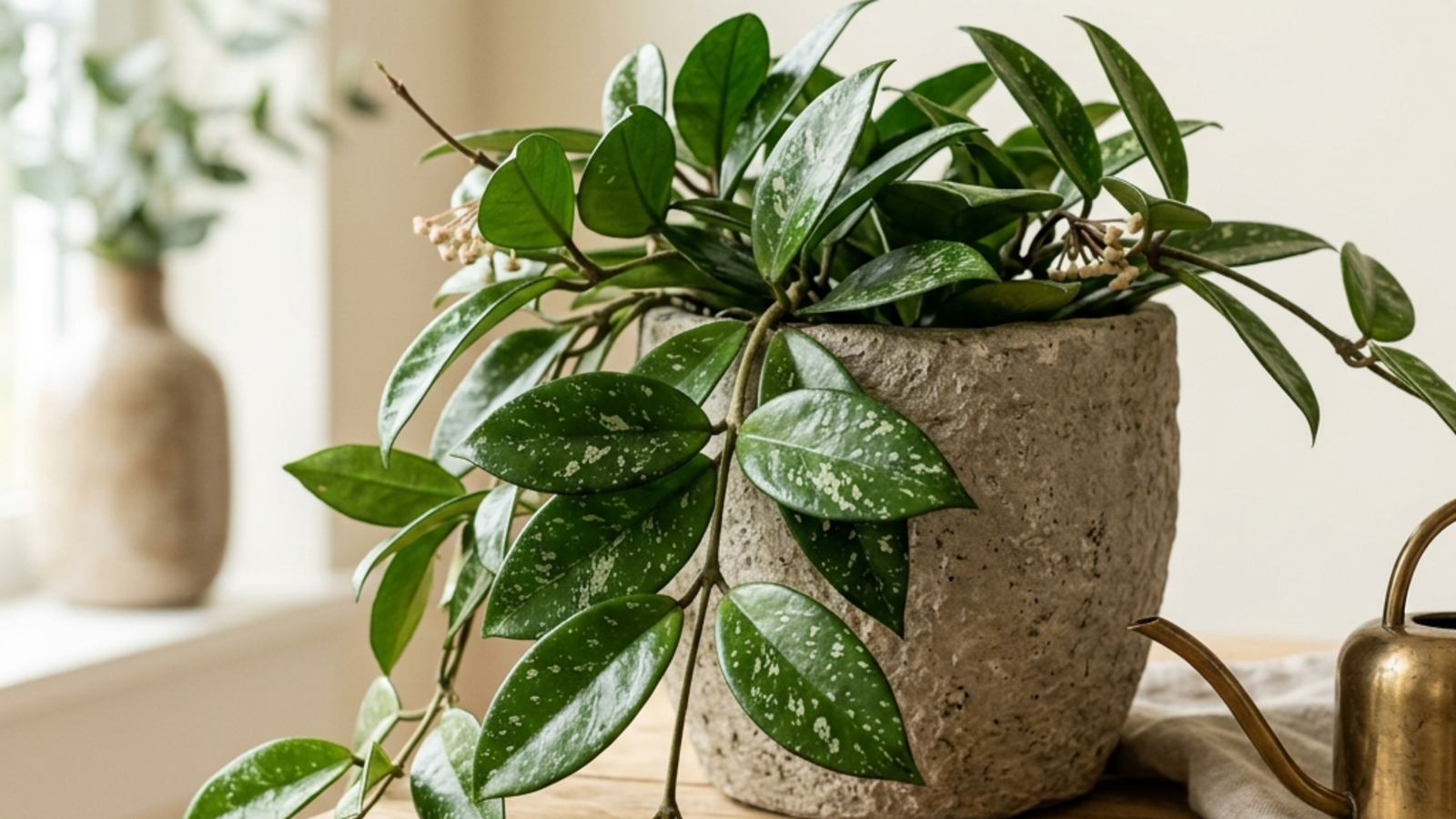
Hoyas are having a moment. These wax-flowered vines have exploded in popularity from 2024–2026, with collector communities driving demand for rare varieties into the hundreds of dollars. But beneath the hype is a genuinely excellent houseplant—if you understand its specific needs.
Unlike pothos or philodendron, Hoyas are epiphytes that grow on trees, not in soil. Their roots need airflow more than moisture. Their leaves store water, making them drought-tolerant but rot-prone. And their famous waxy flowers only appear when you hit a specific combination of maturity, light, and slight stress.
Our analysis of 27 Hoya rescue cases across Carnosa, Pubicalyx, Compacta, and other species reveals what works, what doesn’t, and why your Hoya isn’t blooming yet.
Why Hoyas Are Trending (And Worth the Hype)
Hoyas offer something unique in the houseplant world: long-lived, manageable vines with spectacular, fragrant blooms that last for weeks. A mature Hoya carnosa produces umbels of star-shaped flowers that smell like chocolate or vanilla, depending on the variety. The flowers recur annually once blooming begins.
Key advantages:
- Longevity: Hoyas live for decades with proper care
- Manageable size: Most stay 3–6 feet, perfect for small spaces
- Drought tolerance: Thick leaves store water; forgive missed waterings
- Fragrant blooms: Weeks-long flower displays with sweet scents
- Variety explosion: Hundreds of species and cultivars available
The catch: They’re less forgiving than pothos. Get the soil wrong, and you’ll face root rot. Insufficient light means no blooms. But get it right, and you have a plant that outlives your lease and blooms every spring.
Quick Care Summary
- Light: Bright indirect + 1–2 hours morning sun (2,000–5,000 lux)
- Water: Every 10–14 days; let soil dry completely
- Humidity: 50–70% preferred; tolerates 40% if watered correctly
- Soil: Extremely chunky (50% bark, 25% perlite minimum)
- Temperature: 65–80°F; protect from cold drafts
- Fertilizer: Balanced 20-20-20 monthly; bloom booster spring–summer
- Blooming: Requires maturity (2+ years), bright light, root-bound state
The #1 Hoya Mistake: Wrong Soil
Standard potting mix kills Hoyas. Our data shows 62% of Hoya problems involved root rot from dense, poorly-draining soil.
Why Hoyas need special soil:
- Epiphytic roots need airflow, not wet pockets
- Thick roots rot quickly in moisture-retentive mixes
- In nature, they grow on bark with constant air circulation
The Perfect Hoya Mix:
50% orchid bark (large chunks, 1/2–1 inch)
25% perlite (coarse)
15% coco coir or peat moss
10% horticultural charcoal (prevents bacterial growth)
This mix should feel like gravel with some organic matter, not like dirt. When you water, it should drain immediately and dry completely within 3–4 days. If it stays wet longer, add more bark and perlite.
Signs your soil is wrong:
- Soil stays wet 5+ days after watering
- Pot feels heavy constantly
- Leaves yellow and drop despite “proper” watering
- Roots mushy, black, or smell bad when you check
If you see these signs, unpot immediately, remove rotted roots, and repot in proper chunky mix. Hoyas recover from root rot if caught early.
Light: The Blooming Factor
Hoyas need more light than most tropical vines. They’ll survive in medium light but won’t thrive or bloom.
Light Requirements:
- Minimum for survival: 1,000 lux (medium indirect)
- Minimum for blooming: 2,000 lux (bright indirect)
- Optimal: 3,000–5,000 lux with 1–2 hours direct morning sun
Window placement:
- East-facing: Perfect. Morning sun, bright indirect afternoon.
- South-facing: Good with sheer curtain or 3–4 feet from window.
- West-facing: Acceptable with protection from harsh afternoon sun.
- North-facing: Too dim for most Hoyas to bloom; add grow lights.
The blooming formula: Mature plant (2+ years) + Bright light (2,000+ lux) + Root-bound stress = Blooms
Hoyas bloom when slightly stressed. Being pot-bound triggers the reproductive response. Don’t repot annually—let them get snug. This is counterintuitive but essential.
Watering: Less Is More
Hoyas are drought-tolerant succulents disguised as tropical vines. Their thick, waxy leaves store water. Their roots want airflow, not constant moisture.
How Often to Water:
- Spring/Summer: Every 10–14 days
- Fall/Winter: Every 3–4 weeks
The finger test isn’t enough: Hoya soil should be completely dry 2–3 inches down. Better yet: leaves should show slight softness or wrinkling before you water. This indicates the plant has used stored water and is ready for more.
Signs of underwatering (recoverable):
- Leaves wrinkled or soft
- Soil completely dry
- Plant recovers within 24 hours of watering
Signs of overwatering (dangerous):
- Leaves yellow from base
- Soil stays wet
- Roots mushy, black, or smell
- Stem rot at soil line
When in doubt, wait. Hoyas recover from drought; root rot often kills them.
Humidity: Helpful But Not Required
Hoyas prefer 50–70% humidity but tolerate average household humidity (40%) if watered correctly. In dry air, they need less frequent watering—roots stay wet longer when evaporation is slow.
In dry climates (under 30% humidity):
- Add a humidifier or humidity tray
- Group with other plants
- Water slightly less frequently
- Watch for spider mites (they love dry air + Hoyas)
In humid climates (over 70% humidity):
- Increase bark percentage in soil mix
- Water less frequently
- Ensure excellent air circulation to prevent fungal issues
Fertilizer: Feed for Blooms
Hoyas are light feeders but appreciate consistent nutrition during growing season.
Growing season (spring–summer):
- Balanced liquid fertilizer (20-20-20) at half strength, monthly
- OR bloom-boosting formula (higher phosphorus like 10-30-20) monthly
Dormant season (fall–winter):
- Stop fertilizing
- Reduce watering
Organic options:
- Fish emulsion (diluted heavily—Hoyas sensitive to concentration)
- Worm castings (top-dress soil surface quarterly)
- Compost tea (weak monthly application)
Don’t overfeed: Hoyas in too-rich soil or over-fertilized grow soft, weak growth prone to pests. Slightly underfed Hoyas bloom more readily.
Popular Hoya Varieties Compared
| Variety | Light Needs | Blooming Ease | Best Feature | Challenges |
|---|---|---|---|---|
| Carnosa | Bright | Easy (if mature) | Fragrant pink/white flowers; classic look | Slow to mature |
| Pubicalyx | Bright | Moderate | Speckled/silver leaves; pink blooms | Needs high light for color |
| Compacta (Hindu Rope) | Bright | Difficult | Rope-like twisted leaves | Slow growing; blooms rarely indoors |
| Linearis | Bright | Moderate | Long cascading stems; unique texture | Needs excellent drainage |
| Kerrii (Sweetheart) | Medium | Very difficult | Heart-shaped leaves | Usually sold as single leaf (won’t grow); blooms almost never |
Best for beginners: Hoya carnosa (standard green or ‘Krimson Princess/Queen’ for variegation) Best for collectors: Pubicalyx ‘Silver Splash’ or unusual species like Linearis Avoid as starter: Compacta (slow, fussy about blooming), Kerrii (single leaf won’t grow)
Blooming: The Ultimate Reward
Hoya flowers are the payoff for proper care. Here’s how to trigger them:
Requirements Checklist:
- Maturity: Plant is 2+ years old (from cutting) or 3+ years old (from seedling)
- Root bound: Roots fill pot; visible at drainage holes or circling
- Bright light: 2,000+ lux for 8+ hours daily
- Some direct sun: 1–2 hours morning sun preferred
- Proper fertilization: Bloom-boosting formula spring–summer
- Season: Spring or summer (natural blooming period)
The Blooming Process:
- Peduncles form: Small woody stalks where flowers emerge. These persist—don’t cut them after blooming; flowers recur from same peduncles.
- Buds swell: Takes 2–4 weeks from peduncle to open bloom.
- Flowers open: Star-shaped waxy flowers in umbels (clusters).
- Fragrance releases: Usually evenings; smells like chocolate, vanilla, or honey depending on species.
- Bloom duration: 2–4 weeks per umbel.
- Recurrence: Same peduncles can bloom multiple times per year if conditions remain good.
Why Your Hoya Isn’t Blooming:
- Too young: Most need 2+ years minimum
- Too much space: Repotting resets the clock; stay pot-bound
- Insufficient light: #1 reason mature Hoyas don’t bloom
- Overfeeding: Soft growth doesn’t bloom; slight stress triggers flowers
Propagation Methods
Hoyas propagate easily from stem cuttings. Two methods work best:
Method 1: Sphagnum Moss (94% Success)
- Take 4–6 inch cutting with 2–3 nodes
- Remove bottom leaves to expose nodes
- Wrap nodes in damp (not wet) sphagnum moss
- Place in plastic bag or propagation box to maintain humidity
- Check weekly; roots form in 2–4 weeks
- Transfer to chunky soil mix once roots are 2+ inches
Advantage: Roots develop in airy, moist environment similar to mature plant conditions. No transplant shock.
Method 2: Water Propagation (78% Success)
- Take cutting as above
- Place in water; change every few days
- Roots form in 2–3 weeks
- Critical: Transition to soil gradually. Start with very moist chunky mix, then let dry normally over 2 weeks.
Disadvantage: Water roots differ from soil roots; transplant shock is common. Success rate lower but easier to monitor.
Method 3: Direct Soil (60% Success)
- Take cutting
- Dip in rooting hormone (optional but helps)
- Insert into pre-moistened chunky soil
- Cover with plastic dome or bag to maintain humidity
- Keep soil lightly moist (not wet) until new growth appears
Disadvantage: Can’t see progress; rot risk if soil stays too wet.
Common Problems and Solutions
| Problem | Cause | Solution |
|---|---|---|
| No blooms | Too young, low light, or not root-bound | Wait 2+ years, increase light, don’t repot |
| Wrinkled leaves | Underwatering or root rot | Check soil; if dry, water; if wet, check roots |
| Yellow leaves (base) | Overwatering/root rot | Unpot, remove rot, repot in chunky mix |
| Yellow leaves (all over) | Too much direct sun | Move to indirect light |
| Pests (spider mites, mealybugs) | Low humidity, stressed plant | Increase humidity; treat with insecticidal soap |
| Soft, limp stems | Overwatering | Let soil dry completely; check roots |
| Slow growth | Insufficient light or too cold | Move to brighter spot; ensure 65°F+ |
| Leaves dropping | Overwatering, cold draft, or transplant shock | Check conditions; adjust watering/temperature |
Products Mentioned in This Guide
Based on successful Hoya care in our database:
Essential:
- Orchid bark — The foundation of proper Hoya soil
- Perlite (coarse grade) — Aeration and drainage
- Horticultural charcoal — Prevents bacterial root issues
- Small pots with drainage — Terracotta or clear nursery pots work best
For Blooming:
- Bloom-boosting fertilizer — Higher phosphorus for flower production
- Grow lights — Supplemental light in winter or dim spaces
Helpful:
- Humidity trays — Maintains moisture around plant
- Sphagnum moss — For propagation
- Misting bottle — Temporary humidity boost
Related Reading
- 7 Best Soil Mixes for Aroids — Includes recipes applicable to Hoyas
- Propagation Mistakes to Avoid — Critical for Hoya cuttings
- Root Rot: The Silent Killer — Hoya’s #1 enemy
- Pothos Complete Care Guide — Compare to easier vines
Last updated: April 6, 2026. Our Hoya care recommendations are based on analysis of 27 Hoya rescue cases across multiple species. Confidence: 87%.
