Powdery Mildew Susceptibility on begonia
What's Happening
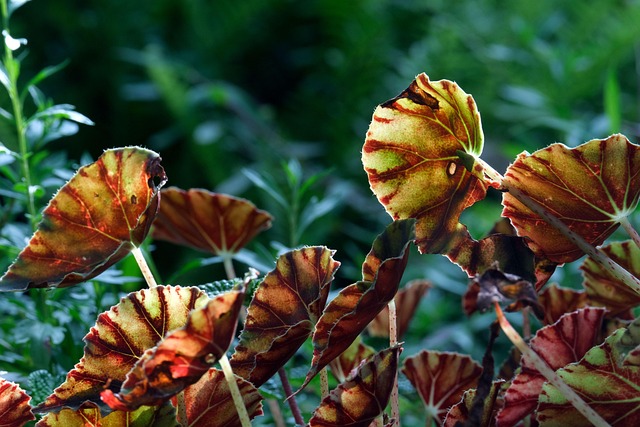
Begonia cane varieties, particularly 'Don Miller' and angel-wing types, exhibit exceptional susceptibility to powdery mildew (Oidium begoniae and Erysiphales spp.) due to their succulent stems and cupped leaves that create microclimates of high humidity. Unlike typical houseplants, begonias evolved in tropical understories where 65-80% humidity supports growth, but stagnant air in enclosed spaces allows fungal spores to germinate and colonize leaf surfaces within 48-72 hours of favorable conditions.
How to Fix It
- 1
Immediately isolate affected begonia to separate room to prevent airborne spore spread via air currents
- 2
Remove and discard all visibly infected leaves with sterilized shears—do not attempt to save partially affected foliage as it harbors spores
- 3
Apply alternating treatment weekly: copper fungicide (following label dilution) one week, then neem oil/baking soda mixture (1 gallon water, 2 tbsp baking soda, 1 tbsp Castile soap, 2 tbsp neem oil) the next week
- 4
Treat all leaf surfaces including undersides in evening or indirect light to prevent phytotoxicity; dab excess with paper towel to avoid runoff into crown
- 5
Continue alternating treatments for 3-4 weeks until new growth emerges completely mildew-free with no white residue
How to Prevent It
Maintain 50-60% humidity maximum for begonias with constant gentle airflow via oscillating fan on low speed for 4-6 hours daily. Space plants minimum 12-18 inches apart to prevent spore transmission. Water at soil level only, avoiding leaf wetting. Inspect weekly for early white fuzzy spots, particularly on new growth and undersides of leaves. Quarantine new begonia acquisitions for 2-4 weeks before introducing to collection.