
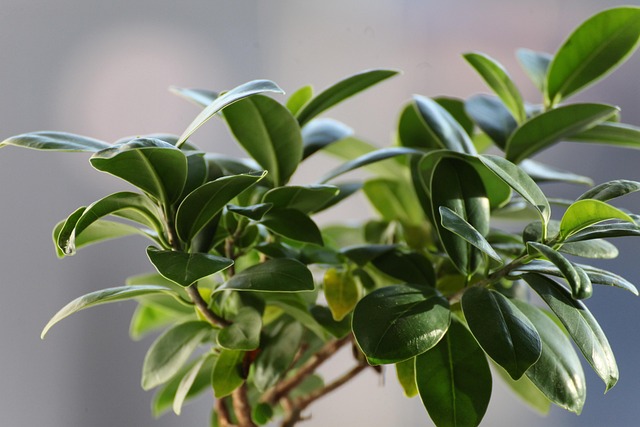
ficus
Ficus spp.
Evidence-based care guide for Ficus (Ficus spp.). Covers symptom diagnosis, disease treatment, pest control, propagation methods, watering and lighting. Our analysis draws from 18 verified community cases with an average confidence score of 85%. Each protocol is synthesized from real rescue outcomes, not generic advice.
Care Essentials
Get to Know Your Ficus
Light is everything for this plant. Get the placement right and everything else falls into place.
Light
bright indirect
Wants bright, indirect light — sensitive to both extremes. Too much direct sun causes burns, too little causes stretching.
💡 Grow lights: Thrives under artificial grow lights (LED or fluorescent, 10-12 hours/day). A great option if your space lacks natural light.
Watering
every 10-14 days
Let the soil dry out significantly between waterings — this plant is very sensitive to overwatering. When in doubt, wait another day.
Humidity & Temperature
Appreciates some humidity but adapts to average home conditions. Brown tips in winter? Your air might be too dry — a light misting helps.
Prefers moderate temperatures (60-80°F). Keep away from radiators and intense afternoon sun windows.
Soil
Use a moisture-retentive potting mix with some peat or coco coir. Avoid overly chunky mixes that dry out too fast.
Care Requirements
At a Glance
Care Profile in Development
While our detailed care profile is being compiled, you can find specific care guidance in the 4 care-related diagnoses below — including watering schedules, light requirements, and propagation methods from real-world cases.
Start Here
Most Common Problems
Based on 18 analyzed cases — these are the issues you're most likely to encounter
Don't see your symptom? Search all 16 topics below, or run the Diagnostic.
How should I fertilize my Ficus?
Chemical NPK fertilizers provide immediate nutrient availability with 100%...
Why does my Ficus have mealybugs?
Persistent mealybug infestations hiding in the tight crevices and leaf sheaths...
Why does my Ficus have root rot?
Root rot in Ficus develops when soil remains waterlogged, creating anaerobic...
Why are my Ficus leaves turning yellow?
Overwatering in Ficus species causes root oxygen deprivation and cellular...
How much light does my Ficus need?
While Ficus species tolerate lower light than many houseplants, insufficient...
Which of the 7 Killers
is threatening your plants?
We analyzed 1,616 documented plant deaths to identify the 7 causes behind 78% of all losses. Answer 5 questions — we'll tell you exactly which ones apply to your setup.
Skip the quiz — get The 7 Killers course ($19) →Question 1 of 5
How do you decide when to water your plants?
Question 2 of 5
Where do most of your plants live?
Question 3 of 5
What's your home environment like?
Question 4 of 5
Have you lost a plant in the last 6 months?
Question 5 of 5
How often do you check your plants for pests?
Your diagnosis is ready
We've identified your top 2 risk killers. Enter your email to see the full breakdown and your personalized rescue protocol.
Your plants are most at risk from:

The 7 Killers mini-course covers every one of these in depth — mechanism, rescue protocol, prevention. 1,616 cases. 7 lessons. $19.
Get The 7 Killers — $19 →Get the Plant Mortality Checklist
The 7 killers behind 78% of houseplant deaths — and the exact fix for each. Free PDF based on 1,616 documented cases.
Your checklist is ready!
We also sent it to your inbox. Check your email for the full download.
Open the ChecklistFree. No spam. Unsubscribe anytime.
Verified Data
All Diagnoses
16 topics consolidated from 18 documented cases. Expand any topic to see all protocols.
Symptoms (2 topics · 2 cases)
Ficus: Brown Leaves
Ficus species evolved in tropical climates with high ambient humidity
86%
Ficus: Brown Leaves
Ficus species evolved in tropical climates with high ambient humidity
Cause
Ficus species evolved in tropical climates with high ambient humidity. Indoor environments, especially with heating or air conditioning, often drop below 40% relative humidity, causing leaf edges to brown, curl, or drop as transpiration exceeds water uptake.
Solutions
- Place humidifier near plant or use pebble tray with water below pot level
- Group multiple plants together to create microclimate with higher humidity
- Mist foliage multiple times daily if humidity is severely low
- Move away from heating vents, AC units, or drafty areas
- Trim brown leaf edges for aesthetics - they will not revert to green
Prevention
Maintain 50-60% relative humidity using humidifiers, pebble trays, or grouping plants; misting provides temporary relief but requires multiple applications hourly for effectiveness.
Why are my Ficus leaves turning yellow?
Overwatering in Ficus species causes root oxygen deprivation and cellular stress, manifesting as yellowing leaves (chlorosis) as the plant cannibalizes nutrients from older foliage
88%
Why are my Ficus leaves turning yellow?
Overwatering in Ficus species causes root oxygen deprivation and cellular stress, manifesting as yellowing leaves (chlorosis) as the plant cannibalizes nutrients from older foliage
Cause
Overwatering in Ficus species causes root oxygen deprivation and cellular stress, manifesting as yellowing leaves (chlorosis) as the plant cannibalizes nutrients from older foliage. Low light conditions during winter dormancy exacerbate this by slowing transpiration and prolonging soil moisture.
Solutions
- Halt all watering immediately and allow soil to dry completely
- Check roots for rot - trim any black, mushy roots with sterilized shears
- Repot in fresh, well-draining aroid mix if root rot is present
- Move to brighter indirect light location to increase transpiration
- Resume watering only when soil is dry to touch 2-3 inches down
Prevention
Allow top 50-75% of soil to dry completely between waterings; reduce frequency to biweekly or monthly during fall/winter dormancy; use well-draining soil mix.
Diseases (1 topics · 1 cases)
Why does my Ficus have root rot?
Root rot in Ficus develops when soil remains waterlogged, creating anaerobic conditions that favor fungal pathogens like Fusarium and Pythium
90%
Why does my Ficus have root rot?
Root rot in Ficus develops when soil remains waterlogged, creating anaerobic conditions that favor fungal pathogens like Fusarium and Pythium
Cause
Root rot in Ficus develops when soil remains waterlogged, creating anaerobic conditions that favor fungal pathogens like Fusarium and Pythium. Ficus species have epiphytic ancestry requiring well-aerated root zones; compact or moisture-retentive soils lead to root asphyxiation and decay.
Solutions
- Gently remove plant from pot and rinse roots with water
- Trim all mushy, black, or foul-smelling roots with sterilized shears
- Soak remaining healthy roots in 3% hydrogen peroxide solution (1:4 dilution) for 10-30 minutes
- Repot in sterile, chunky mix with 50% potting soil, 30% perlite, 20% orchid bark
- Withhold water for 7-10 days after repotting to allow root callusing
Prevention
Use chunky, well-draining soil with 30-50% perlite or pumice; ensure pots have drainage holes; water only when top 50% of soil is dry; empty drainage saucers promptly.
Pests (2 topics · 2 cases)
Why does my Ficus have mealybugs?
Persistent mealybug infestations hiding in the tight crevices and leaf sheaths of Ficus plants, escaping topical sprays
95%
Why does my Ficus have mealybugs?
Persistent mealybug infestations hiding in the tight crevices and leaf sheaths of Ficus plants, escaping topical sprays
Cause
Persistent mealybug infestations hiding in the tight crevices and leaf sheaths of Ficus plants, escaping topical sprays.
Solutions
- Apply systemic granules (Imidacloprid) to the soil to turn the plant's sap toxic to sap-sucking insects.
- Since systemics take 1-2 weeks to reach the canopy of a large Ficus, immediately spot-treat visible mealybugs with a Q-tip dipped in 70% rubbing alcohol.
- Spray the foliage thoroughly with insecticidal soap to reduce the adult population.
- Continue normal watering to distribute the systemic chemical; mealybugs will die as they feed over the next month.
Prevention
Inspect the undersides of leaves and the junctions where stems meet the trunk during every watering.
What pests are on my Ficus?
Scale insects (Coccidae family) appear as immobile brown or white bumps attached to stems, leaf veins, and undersides
80%
What pests are on my Ficus?
Scale insects (Coccidae family) appear as immobile brown or white bumps attached to stems, leaf veins, and undersides
Cause
Scale insects (Coccidae family) appear as immobile brown or white bumps attached to stems, leaf veins, and undersides. These sap-sucking pests secrete a protective waxy covering that shields them from contact insecticides. Unlike mealybugs which have cottony coatings, scale forms hard shell-like coverings. Heavy infestations cause yellowing, leaf drop, and sooty mold from honeydew excretion. Scale spreads slowly but is difficult to eradicate once established on stems.
Solutions
- Confirm scale identification: Use fingernail or blunt knife to gently scrape—scale will detach as single unit; mealybugs will smudge
- For light infestations: Scrape off individual scale insects with fingernail, dull knife, or cotton pad soaked in 70% isopropyl alcohol
- For moderate infestations: Apply systemic insecticide (imidacloprid) as soil drench—chemical travels through plant tissue to kill feeding scale
- Apply horticultural oil or neem oil thoroughly, ensuring contact with all surfaces. Repeat every 10-14 days for 4-6 applications
- For severe infestations: Prune and discard heavily infested branches. Treat remaining plant aggressively
- Monitor for 6-8 weeks—scale has long life cycle and may require multiple treatment cycles
Prevention
Inspect new plants thoroughly, especially stems and leaf undersides. Maintain plant vigor with proper light and water—stressed plants are more susceptible. Prune dense growth to improve airflow and visibility for early detection. Apply preventive neem oil sprays monthly during growing season. Quarantine new plants for 2-3 weeks.
Watering Issues (1 topics · 1 cases)
How often should I water my Ficus?
Inconsistent watering schedules cause physiological stress in Ficus species, which prefer steady moisture levels
87%
How often should I water my Ficus?
Inconsistent watering schedules cause physiological stress in Ficus species, which prefer steady moisture levels
Cause
Inconsistent watering schedules cause physiological stress in Ficus species, which prefer steady moisture levels. Alternating between drought and saturation triggers abscission of older leaves as the plant struggles to regulate water uptake and maintain cellular turgor.
Solutions
- Check soil moisture at 2-3 inch depth before every watering
- Water thoroughly when soil is dry, ensuring complete saturation and drainage
- Remove yellowed leaves to redirect energy to healthy growth
- Stabilize environment with consistent light, temperature, and humidity
- Recovery typically takes 2-4 weeks with consistent care
Prevention
Establish a consistent watering routine based on soil moisture (finger test or moisture meter) rather than calendar dates; use self-watering pots for stability.
Propagation (1 topics · 1 cases)
How do I propagate my Ficus?
Water propagation of Ficus cuttings can develop bacterial or fungal rot when water is not changed frequently, creating anaerobic conditions
87%
How do I propagate my Ficus?
Water propagation of Ficus cuttings can develop bacterial or fungal rot when water is not changed frequently, creating anaerobic conditions
Cause
Water propagation of Ficus cuttings can develop bacterial or fungal rot when water is not changed frequently, creating anaerobic conditions. While Ficus roots slowly (4-8 weeks), stagnant water promotes pathogens that attack developing root initials.
Solutions
- Trim rotted bottom 1-2 cm above discoloration with sterile tools
- Allow cut end to callus in airy location for 24 hours
- Restart in fresh water with optional rooting hormone (IBA-based)
- Change water 2-3 times weekly to maintain oxygenation
- Transition to well-draining soil once roots are 1-2 inches long
Prevention
Change water every 3-5 days; use room-temperature filtered water; provide bright indirect light and 70-80% humidity; transition to soil once roots reach 1-2 inches.
Maintenance (3 topics · 5 cases)
How should I fertilize my Ficus?
Chemical NPK fertilizers provide immediate nutrient availability with 100% concentration achieving optimal vegetative growth (67cm height, 0
3 protocols
85–90%
How should I fertilize my Ficus?
Chemical NPK fertilizers provide immediate nutrient availability with 100% concentration achieving optimal vegetative growth (67cm height, 0
Protocol 1: fertilizer-comparison · 90% confidence
Cause
Chemical NPK fertilizers provide immediate nutrient availability with 100% concentration achieving optimal vegetative growth (67cm height, 0.79mm stem diameter, 19 leaves per transplant), while pure compost at 75% concentration without bio-fertilizer supplementation resulted in significantly reduced growth metrics (38cm height, 0.37mm diameter, 7 leaves)
Solutions
- Apply 100% recommended NPK chemical fertilizer (10g N, 8g P2O5, 6g K2O per transplant) for maximum vegetative growth
- For reduced chemical input while maintaining 95% growth efficacy, use 75% NPK + 25% compost combined with bio-fertilizers (Nitrobein, Phosphorene, Potassein)
- Avoid pure organic compost exceeding 50% of total fertilization without bio-fertilizer supplementation as it reduces growth parameters by 40-60%
Prevention
Test soil nutrient baseline before fertilization; for houseplants in containers, maintain NPK at full recommended dose or use 75% chemical NPK + 25% quality compost with bio-fertilizer inoculation to prevent nutrient deficiency stunting.
Protocol 2: bio-fertilizer-integration · 87% confidence
Cause
Chemical NPK dependency creates soil microbial imbalance and nutrient leaching in container environments; bio-fertilizers containing Azotobacter chroococcum (Nitrobein), Arbuscular mycorrhiza with silicate bacteria (Phosphorene), and Bacillus pasteurii (Potassein) establish symbiotic nitrogen fixation, phosphorus solubilization, and potassium mobilization pathways
Solutions
- Reduce chemical NPK by 25% and supplement with 25% compost plus bio-fertilizer cocktail (Nitrobein + Phosphorene + Potassein in equal amounts) to achieve statistically equivalent growth to 100% chemical NPK
- Inoculate bio-fertilizers at planting or during active root growth periods when soil temperature exceeds 18°C for optimal microbial activity
- Combine with 35% organic matter compost (C/N ratio 17.6, containing 1.5% N, 0.6% P, 1.32% K, 1012ppm Fe, 116ppm Mn, 28ppm Zn) to provide substrate for microbial proliferation
Prevention
Maintain soil pH between 6.0-7.5 for bio-fertilizer efficacy; avoid synthetic fungicides 2 weeks before and after bio-fertilizer application to prevent beneficial microbe suppression.
Protocol 3: manure-fertilizer-selection · 85% confidence
Cause
Manure type affects mineralization rate and nutrient release profile; sheep manure contains higher nitrogen concentration and faster decomposition compared to cattle manure, providing 10kg sheep manure + 100g N/plant produced superior fruit yield, fruit number per tree, fruit weight, length and diameter versus equal amounts of cow manure
Solutions
- Apply 10kg sheep manure + 100g nitrogen per plant for optimal reproductive growth (fruiting) and vegetative development in Ficus species
- Use cattle manure at equal rates (10kg/plant) when gradual nutrient release is preferred for maintenance fertilization rather than active growth phases
- Incorporate manure into top 15cm of soil profile 4-6 weeks before active growth period to allow initial mineralization and prevent nitrogen immobilization shock
Prevention
Ensure manure is fully composted (thermophilic composting >55°C for minimum 15 days) to eliminate pathogens and weed seeds; avoid fresh manure application which can cause ammonia toxicity and root burn in container plants.
How do I prune my Ficus?
Untrained Ficus develops asymmetric growth with uneven branch distribution; traditional bonsai pruning uses systematic alternating-side branch removal to establish balanced structure
82%
How do I prune my Ficus?
Untrained Ficus develops asymmetric growth with uneven branch distribution; traditional bonsai pruning uses systematic alternating-side branch removal to establish balanced structure
Cause
Untrained Ficus develops asymmetric growth with uneven branch distribution; traditional bonsai pruning uses systematic alternating-side branch removal to establish balanced structure
Solutions
- 1. Use bud clippers for bud removal, long-handled scissors for buds, short-handled scissors for leaves
- 2. Start from bottom trunk; label sides A and B alternately
- 3. Leave first branch on Side A, cut first on Side B; continue alternating pattern upward
- 4. Match pruning pattern to desired style—Formal Upright, Informal, or Cascade
Prevention
Begin pruning early for propagated plants; alternate-side pruning starting from bottom—retain first branch on Side A, remove first on Side B, continue alternating upward
When should I repot my Ficus?
Repotting shocks root systems; performing structural pruning immediately after repotting compounds stress and increases recovery time significantly
75%
When should I repot my Ficus?
Repotting shocks root systems; performing structural pruning immediately after repotting compounds stress and increases recovery time significantly
Cause
Repotting shocks root systems; performing structural pruning immediately after repotting compounds stress and increases recovery time significantly
Solutions
- 1. Prune and wire to desired shape BEFORE removing tree from pot
- 2. Prepare new pot with drainage layer of coarse soil at bottom, followed by looser finer soil
- 3. Leave small space at top for root coverage; do not bury trunk deeply
- 4. After repotting: water slowly until excess drains; place in shaded area to prevent rapid evaporation
- 5. Remove all training wire only after roots extend into soil and tree supports itself
Prevention
Complete all major pruning and wiring BEFORE repotting; allow 2-4 weeks after root work before initiating new training interventions
Other Topics (6 topics · 6 cases)
Ficus: Branch Management
Overgrown Ficus branches disrupt energy distribution and obscure structural lines; systematic removal of non-essential growth redirects resources to primary branches
78%
Ficus: Branch Management
Overgrown Ficus branches disrupt energy distribution and obscure structural lines; systematic removal of non-essential growth redirects resources to primary branches
Cause
Overgrown Ficus branches disrupt energy distribution and obscure structural lines; systematic removal of non-essential growth redirects resources to primary branches
Solutions
- 1. Use branch cutters for thick branches; bud clippers for small growth points
- 2. Remove branches that cross trunk line or grow toward pot interior
- 3. Eliminate competing leaders—retain single dominant apex for upright styles
- 4. Debudding: remove excess buds to prevent overcrowding; focus energy on selected shoots
- 5. Pinch new growth with fingers for evergreens/conifers to encourage fuller foliage
Prevention
Use proper tools for each growth type; remove crossing branches early before they thicken; pinch new growth regularly for density
Ficus: Dropping Leaves
Underwatering causes Ficus leaves to lose turgor pressure and drop as the plant redirects limited water resources to newer growth
85%
Ficus: Dropping Leaves
Underwatering causes Ficus leaves to lose turgor pressure and drop as the plant redirects limited water resources to newer growth
Cause
Underwatering causes Ficus leaves to lose turgor pressure and drop as the plant redirects limited water resources to newer growth. Ficus microcarpa 'Ginseng' and other varieties store water in their caudex and fibrous roots, but prolonged drought triggers leaf abscission to prevent desiccation.
Solutions
- Water thoroughly until excess drains from bottom of pot
- For severely dry soil: bottom-water by placing pot in water for 20-30 minutes
- Remove completely dried, crispy leaves at the base
- Leaves should regain turgor and plumpness within 24-48 hours
- Mist foliage or use humidifier to reduce future water loss
Prevention
Water when top 2-3 inches of soil becomes dry; maintain consistent moisture without waterlogging; increase humidity to 50-60% to reduce transpiration stress.
How much light does my Ficus need?
Ficus lyrata (fiddle leaf fig) and Ficus elastica (rubber plant) require bright indirect light (2000-5000 lux) for photosynthesis and healthy growth
85%
How much light does my Ficus need?
Ficus lyrata (fiddle leaf fig) and Ficus elastica (rubber plant) require bright indirect light (2000-5000 lux) for photosynthesis and healthy growth
Cause
Ficus lyrata (fiddle leaf fig) and Ficus elastica (rubber plant) require bright indirect light (2000-5000 lux) for photosynthesis and healthy growth. Direct sun can scorch leaves, while dim conditions cause leaf drop and weak growth.
Solutions
- Assess current light levels: leaves should be deep green and firm
- Move to location with bright indirect light (East or filtered West window)
- If leaves show bleaching or scorch: move back from direct sun immediately
- Rotate plant 90° weekly to prevent leaning and uneven growth
- Clean leaves monthly to maximize light absorption
Prevention
Position 3-5 feet from East or West-facing windows; use sheer curtains to diffuse intense afternoon sun; rotate weekly for even light distribution; maintain 12-14 hours of bright light daily.
How much light does my Ficus need?
While Ficus species tolerate lower light than many houseplants, insufficient light causes etiolation (stretching), weak growth, and gradual leaf drop
88%
How much light does my Ficus need?
While Ficus species tolerate lower light than many houseplants, insufficient light causes etiolation (stretching), weak growth, and gradual leaf drop
Cause
While Ficus species tolerate lower light than many houseplants, insufficient light causes etiolation (stretching), weak growth, and gradual leaf drop. Ficus lyrata (fiddle leaf fig) and Ficus elastica (rubber plant) particularly require bright conditions to maintain compact form and prevent leaf loss.
Solutions
- Move to brighter location with indirect light (avoid sudden direct sun exposure)
- If moving to brighter light: acclimate gradually over 1-2 weeks
- Rotate plant weekly to prevent leaning toward light source
- Remove etiolated or stretched growth if unsightly
- New growth should emerge more compact and sturdy within 2-4 weeks
Prevention
Place in bright indirect light (2000-5000 lux); East or West-facing windows are ideal; rotate plant 90° weekly for even exposure; supplement with grow lights in dim spaces.
Ficus: Shaping
Ficus proportions in container culture often diverge from natural form; proper styling requires visual harmony between trunk flow, branch angles, and root exposure
80%
Ficus: Shaping
Ficus proportions in container culture often diverge from natural form; proper styling requires visual harmony between trunk flow, branch angles, and root exposure
Cause
Ficus proportions in container culture often diverge from natural form; proper styling requires visual harmony between trunk flow, branch angles, and root exposure
Solutions
- 1. Define trunk style before branch work—Formal Upright (straight), Moyogi (flowing curves), or Shakan (slanted)
- 2. Match branch angles to trunk: straight trunk = angular branches, curved trunk = curved branches
- 3. Avoid inverse tapers (bulges in trunk center) by removing protrusions early
- 4. Aim for solid, outward-spreading surface roots (nebari) before subterranean growth for authentic aged appearance
Prevention
Establish trunk shape first—ensure flow between curves with first curve toward viewer, second curve away; branches must aesthetically extend trunk visual presentation
Training: Ficus Guide
Ficus branches resist manual shaping; copper/aluminum wiring applies controlled directional force to redirect growth trajectory without structural damage
85%
Training: Ficus Guide
Ficus branches resist manual shaping; copper/aluminum wiring applies controlled directional force to redirect growth trajectory without structural damage
Cause
Ficus branches resist manual shaping; copper/aluminum wiring applies controlled directional force to redirect growth trajectory without structural damage
Solutions
- 1. Select wire thickness ~1/3 of branch diameter; aluminum or copper preferred over steel to prevent rust
- 2. Anchor wire at branch base by pushing end into soil or around trunk
- 3. Coil at 45-degree angle around branch from base to tip; keep firm but not tight
- 4. For deciduous Ficus: maintain 8-10 months; for coniferous types: 5-6 months; check monthly and remove if cutting into bark
Prevention
Use wire approximately 1/3 the thickness of target branch; maintain 45-degree coil angle; remove and reapply wire periodically to prevent bark damage
Common Questions
Frequently Asked Questions
Why does my ficus have Fertilizer-comparison?
Cause: Chemical NPK fertilizers provide immediate nutrient availability with 100% concentration achieving optimal vegetative growth (67cm height, 0.79mm stem diameter, 19 leaves per transplant), while pure compost at 75% concentration without bio-fertilizer supplementation resulted in significantly reduced growth metrics (38cm height, 0.37mm diameter, 7 leaves)
Solution: Apply 100% recommended NPK chemical fertilizer (10g N, 8g P2O5, 6g K2O per transplant) for maximum vegetative growth
Prevention: Test soil nutrient baseline before fertilization; for houseplants in containers, maintain NPK at full recommended dose or use 75% chemical NPK + 25% quality compost with bio-fertilizer inoculation to prevent nutrient deficiency stunting.
90% confidence · View full protocol →
Why does my ficus have Mealybugs?
Cause: Persistent mealybug infestations hiding in the tight crevices and leaf sheaths of Ficus plants, escaping topical sprays.
Solution: Apply systemic granules (Imidacloprid) to the soil to turn the plant's sap toxic to sap-sucking insects.
Prevention: Inspect the undersides of leaves and the junctions where stems meet the trunk during every watering.
95% confidence · View full protocol →
Why does my ficus have Root rot?
Cause: Root rot in Ficus develops when soil remains waterlogged, creating anaerobic conditions that favor fungal pathogens like Fusarium and Pythium. Ficus species have epiphytic ancestry requiring well-aerated root zones; compact or moisture-retentive soils lead to root asphyxiation and decay.
Solution: Gently remove plant from pot and rinse roots with water
Prevention: Use chunky, well-draining soil with 30-50% perlite or pumice; ensure pots have drainage holes; water only when top 50% of soil is dry; empty drainage saucers promptly.
90% confidence · View full protocol →
Why does my ficus have Yellow leaves?
Cause: Overwatering in Ficus species causes root oxygen deprivation and cellular stress, manifesting as yellowing leaves (chlorosis) as the plant cannibalizes nutrients from older foliage. Low light conditions during winter dormancy exacerbate this by slowing transpiration and prolonging soil moisture.
Solution: Halt all watering immediately and allow soil to dry completely
Prevention: Allow top 50-75% of soil to dry completely between waterings; reduce frequency to biweekly or monthly during fall/winter dormancy; use well-draining soil mix.
88% confidence · View full protocol →
Why does my ficus have Low light?
Cause: While Ficus species tolerate lower light than many houseplants, insufficient light causes etiolation (stretching), weak growth, and gradual leaf drop. Ficus lyrata (fiddle leaf fig) and Ficus elastica (rubber plant) particularly require bright conditions to maintain compact form and prevent leaf loss.
Solution: Move to brighter location with indirect light (avoid sudden direct sun exposure)
Prevention: Place in bright indirect light (2000-5000 lux); East or West-facing windows are ideal; rotate plant 90° weekly for even exposure; supplement with grow lights in dim spaces.
88% confidence · View full protocol →
Common Questions
Frequently Asked About Ficus
Can Ficus grow in water?
Yes. We have 1 documented protocol for water-based Ficus care, including propagation and long-term hydroponic transition.
What problems can Ficus get?
Our database contains 18 documented Ficus cases covering 16 distinct topics, including diseases, pest identification, environmental stress, propagation, and advanced care protocols — each with verified solutions.
Structured Learning
Ready to Go Deeper?
Explore our Mastery Packs for structured, video-based learning with step-by-step protocols from 20,000+ analyzed plant cases.
Browse All Courses →