Fenestration Development on monstera deliciosa
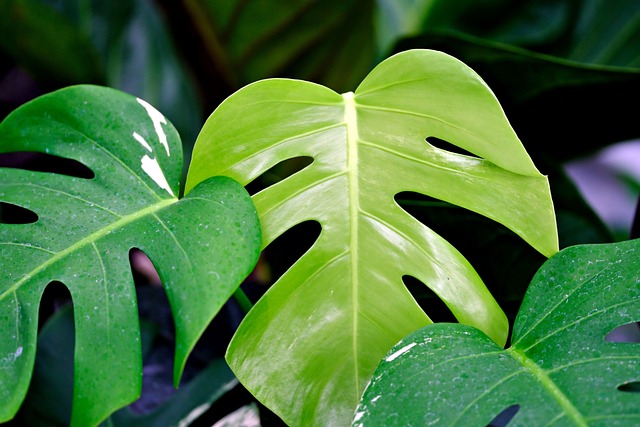
What's Happening
Leaf fenestrations (the iconic splits and holes) develop in Monstera deliciosa through a complex interplay of genetics, light intensity, and climbing support. In their native tropical canopy, Monsteras start as ground-dwelling seedlings with small, heart-shaped juvenile leaves. As they climb tree trunks toward brighter light, they undergo a dramatic metamorphosis: leaf size increases 10-20x, and fenestrations emerge to allow wind passage and maximize light capture in dense forest. Indoor Monsteras require intense indirect light (4000+ lux) and vertical climbing support (moss poles/trellises) to trigger this genetic transition. Low light or horizontal growth maintains juvenile leaf morphology indefinitely.
How to Fix It
- 1
Move to brighter location: East/west window with sheer curtain; south window 3-5 feet back
- 2
Install vertical support: Moss pole, coir pole, or rough-textured trellis for aerial roots to grip
- 3
Secure stem to support with plant ties; aerial roots will attach naturally within 2-4 weeks
- 4
Increase humidity to 70%+ to encourage aerial root development and attachment
- 5
Expect juvenile leaves for next 2-3 months; fenestrations appear on mature leaves 4-6 months later
How to Prevent It
Provide bright indirect light (4000-8000 lux) from south or west-facing windows. Install moss pole or climbing support when plant reaches 12-18 inches tall. Maintain 60-80% humidity to support aerial root attachment. Rotate plant quarterly for even light exposure. Allow 4-6 months for fenestration transition after providing climbing support.
Related Problems
Same Problem on Other Plants
Go Deeper
This is covered in-depth in the monstera deliciosa Mastery Pack — structured modules with video walkthroughs, advanced protocols, and rescue timelines.
Get the Mastery Pack — $37 →