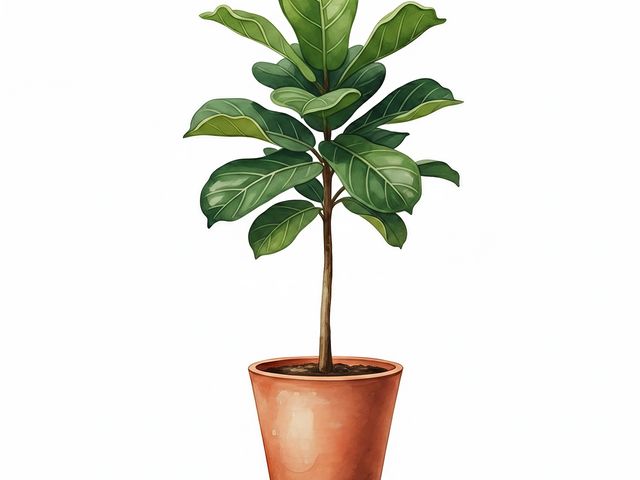
propagation
Comprehensive care and diagnosis guide for the Propagation. Based on 6 verified community insights.
Care Requirements
At a Glance
Detailed care profile is currently being compiled by the Plant Grail swarm.
Start Here
Most Common Problems
Based on 6 analyzed cases — these are the issues you're most likely to encounter
How do I propagate my Propagation?
Water propagation leverages aquatic root formation where developing...
How do I propagate my Propagation?
Soil propagation establishes roots directly in the plant's permanent growing...
How do I propagate my Propagation?
Sphagnum moss propagation creates an ideal microenvironment for adventitious...
How do I propagate my Propagation?
Perlite propagation provides exceptional aeration and drainage while...
Why does my Propagation have air layering?
Air layering induces root formation on stems while the cutting remains attached...
Verified Data
All Diagnoses
Complete analysis of 6 cases for this variety. Select an entry to expand rescue protocols.
Propagation (1)
Common Questions
Frequently Asked Questions
Why does my propagation have Water propagation?
Cause: Water propagation leverages aquatic root formation where developing adventitious roots access dissolved oxygen directly rather than extracting it from soil pore spaces. Root initiation occurs at nodal meristem tissue when auxin concentrations reach threshold levels, typically 7-21 days post-cutting depending on species temperature requirements and cutting maturity.
Solution: Select healthy cutting with 2-3 nodes minimum - remove lower leaves to prevent rot and submersion
Prevention: Transition to soil within 2-4 weeks of root emergence to prevent water-dependent root adaptation that causes transplant shock.
85% confidence · View full protocol →
Why does my propagation have Soil propagation?
Cause: Soil propagation establishes roots directly in the plant's permanent growing medium, eliminating transplant shock associated with media transitions. Root initiation requires consistent soil moisture (60-70% field capacity) without saturation, warm substrate temperatures (70-78°F), and adequate oxygen penetration through well-structured soil porosity.
Solution: Prepare cutting with clean 45° angle cut below node to maximize cambium exposure
Prevention: Maintain high humidity for 2-4 weeks until new growth indicates successful root establishment; avoid fertilizing until roots are established.
85% confidence · View full protocol →
Why does my propagation have Sphagnum moss propagation?
Cause: Sphagnum moss propagation creates an ideal microenvironment for adventitious root development by maintaining consistent moisture (70-85% water content) while providing superior gas exchange through its fibrous, porous structure. The moss's natural antimicrobial properties reduce pathogen risk, and its cation exchange capacity delivers gentle nutrient availability.
Solution: Soak sphagnum moss in water for 10 minutes; squeeze to damp-dry consistency (like wrung-out sponge)
Prevention: Do not over-moss - excessive moisture causes anaerobic conditions; ensure moss is damp but not dripping wet.
85% confidence · View full protocol →
Why does my propagation have Perlite propagation?
Cause: Perlite propagation provides exceptional aeration and drainage while maintaining consistent moisture at the cutting interface. The expanded volcanic glass particles create 40-60% air pore space, preventing anaerobic conditions that cause rot in succulent and semi-succulent species. Perlite's neutral pH and sterility eliminate pathogen contamination risks.
Solution: Fill container with coarse perlite (grade 3-6mm) to 2 inches below rim
Prevention: Use perlite alone for species prone to rot; do not mix with soil for propagation phase. Transplant once roots reach 2+ inches.
85% confidence · View full protocol →
Why does my propagation have Air layering?
Cause: Air layering induces root formation on stems while the cutting remains attached to the parent plant, maintaining full photosynthetic and nutrient support during the vulnerable rooting phase. The technique exploits the plant's natural response to wounding and darkness by girdling the stem and applying rooting medium, triggering auxin accumulation and cambium cell dedifferentiation at the wound site.
Solution: Select healthy stem with aerial roots present or potential nodal tissue
Prevention: Maintain moss moisture throughout process; check weekly and remoisten if dry. Remove plastic periodically to inspect for rot.
85% confidence · View full protocol →