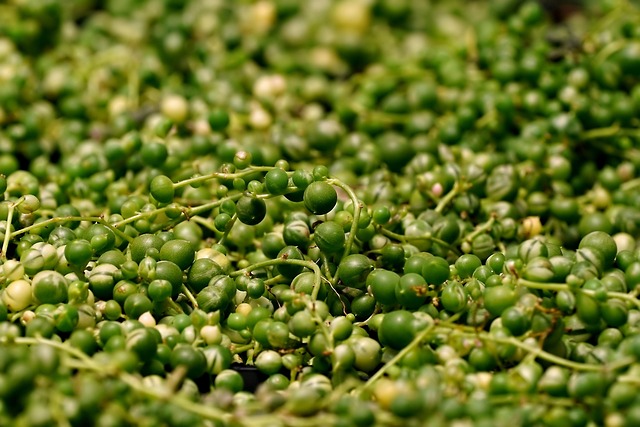
string of pearls
Curio rowleyanus
Comprehensive care and diagnosis guide for the String Of Pearls. Based on 32 verified community insights.
Care Requirements
At a Glance
Detailed care profile is currently being compiled by the Plant Grail swarm.
Start Here
Most Common Problems
Based on 32 analyzed cases — these are the issues you're most likely to encounter
Is my String Of Pearls overwatered?
Overwatering combined with insufficient light and poor drainage causes root rot...
Is my String Of Pearls underwatered?
Confusion between overwatering and underwatering symptoms leads to incorrect...
Why does my String Of Pearls have root rot?
Root rot in String of Pearls occurs when perpetually moist soil creates...
Why does my String Of Pearls have spider mites?
Two-spotted spider mites (Tetranychus urticae) exploit the String of Pearls'...
Why does my String Of Pearls have shriveling?
Irreversible shriveling occurs from prolonged underwatering after prior...
Verified Data
All Diagnoses
Complete analysis of 32 cases for this variety. Select an entry to expand rescue protocols.
Diseases (3)
Environment (2)
Other Problems (5)
Pests (6)
Propagation (3)
Watering Issues (8)
Common Questions
Frequently Asked Questions
Why does my string of pearls have Overwatering?
Cause: Overwatering combined with insufficient light and poor drainage causes root rot in String of Pearls. Senecio rowleyanus is a succulent with thin, water-storing leaves that rot rapidly when soil remains moist for extended periods, leading to anaerobic conditions and fungal infection.
Solution: 1. Remove plant from wet soil and air dry stems for 2-3 days in a warm, airy location
Prevention: Use well-draining cactus mix with 50% perlite/pumice in terracotta pots with drainage holes. Water only when top 2-3 inches of soil are bone-dry (every 2-3 weeks indoors). Maintain bright indirect light (2000-4000 foot-candles) to promote healthy transpiration.
85% confidence · View full protocol →
Why does my string of pearls have Underwatering?
Cause: Confusion between overwatering and underwatering symptoms leads to incorrect watering decisions. Shriveling pearls with closed epidermal windows (translucent tips that turn milky/opaque) indicate true dehydration, while shriveling without window closure signals root rot from overwatering preventing water uptake.
Solution: 1. Inspect epidermal windows: if opaque/milky, plant needs water - water deeply until draining
Prevention: Observe pearl texture before watering: firm but wrinkled with milky windows = needs water; soft/mushy with translucent windows = overwatered. Water only when windows close and pearls begin to wrinkle.
80% confidence · View full protocol →
Why does my string of pearls have Root rot?
Cause: Root rot in String of Pearls occurs when perpetually moist soil creates anaerobic conditions allowing Pythium, Fusarium, and other pathogens to colonize shallow, thin roots. Senecio rowleyanus stems (modified leaves) store water but rot rapidly in waterlogged conditions.
Solution: 1. Inspect stems and beads for firm, plump, non-mushy sections; discard any softened/rotted parts
Prevention: Source plants from reputable sellers with dry, airy displays. Use unglazed terracotta pots with drainage holes and 50-70% inorganic soil mix. Water only when top 2 inches are dry (every 2-3 weeks indoors).
90% confidence · View full protocol →
Why does my string of pearls have Spider mites?
Cause: Two-spotted spider mites (Tetranychus urticae) exploit the String of Pearls' (Senecio rowleyanus) preference for low-humidity conditions below 40% RH. The mite colony establishes itself in the pearl crevices where the waxy leaf coating provides protection and the trailing growth habit creates sheltered microhabitats. Dry indoor air typical of windowsill placement accelerates mite reproduction cycles.
Solution: Confirm identification: Place humidifier near plant for 24-48 hours to force mites to become active and visible; inspect with phone flashlight for moving red/orange specks
Prevention: Maintain ambient humidity between 40-50% using pebble trays or humidifiers rather than direct misting. Inspect new plants with a 10x loupe before introducing to collections. Space plants 1-2 feet apart to prevent silk-thread dispersal between specimens.
85% confidence · View full protocol →
Why does my string of pearls have Shriveling?
Cause: Irreversible shriveling occurs from prolonged underwatering after prior overwatering damage (edema scars visible as brown marks on leaves). Succulent leaves cannot recover from severe dehydration once tissue collapses permanently.
Solution: 1. Identify irreversible damage: pearls with brown scars or severely collapsed texture will not recover
Prevention: Maintain consistent 'soak and dry' cycle: water deeply when epidermal windows close and pearls just begin to wrinkle, then allow full dry-out. Avoid alternating between over and underwatering cycles.
80% confidence · View full protocol →