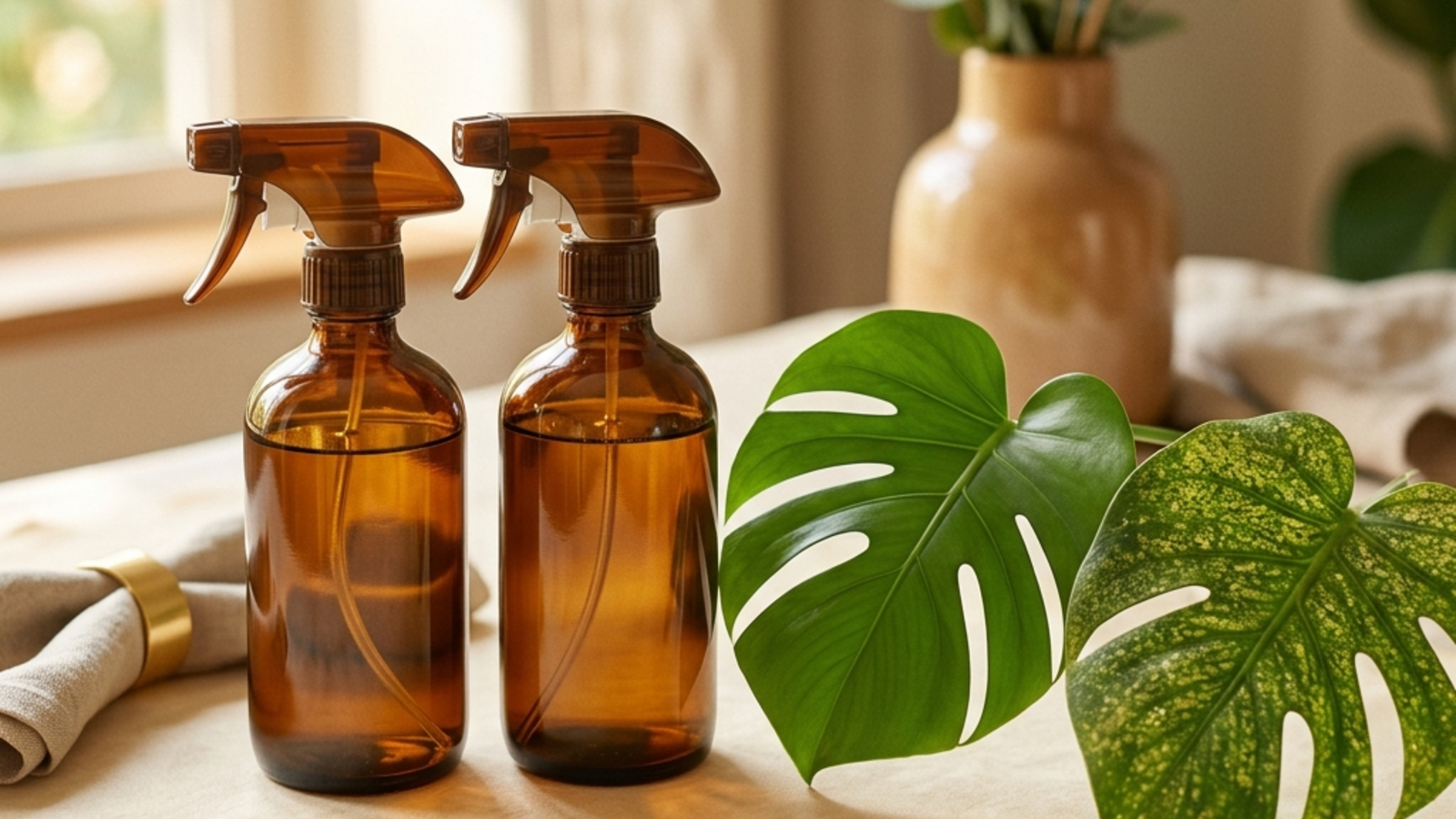
Neem oil and insecticidal soap are the two sprays most often suggested for houseplant pests. Both are on UC IPM’s list of less toxic insecticides, and both work only on the pests they touch. They kill in different ways, though, and they burn different plants. For neem on its own, see our neem oil guide. For the full treatment ladder, from washing to systemic products, see houseplant pest treatments.
Identify the pest first: the right spray depends on it, and on the label.
How each one works
Insecticidal soap. UConn Extension explains that insecticidal soaps are potassium salts of fatty acids. The fatty acids disrupt the structure and permeability of insect cell membranes. Cell contents leak out and the insect dies quickly. Soap works only on direct contact. UConn says there is no residual activity once the spray has dried, and it washes off leaves quickly.
Neem oil. Two different things are sold as neem. NPIC explains that neem oil comes from the seeds of the neem tree. Its most active component, azadirachtin, can be extracted; what remains is clarified hydrophobic neem oil.
- Clarified hydrophobic neem oil is the active ingredient in most ready-to-use neem sprays (UNH). UNH says it kills insects by suffocation, covering their bodies with oil that blocks their breathing openings. Maryland Extension lists neem-based horticultural oils as “clarified hydrophobic extract of neem oil,” without azadirachtin.
- Azadirachtin products work differently. NPIC says azadirachtin reduces feeding, repels insects and interferes with their hormones, making it harder for them to grow and lay eggs. UC IPM notes it has limited effectiveness but low toxicity to non-target organisms.
Read the active ingredient, not just the word “neem” on the front.
Side-by-side comparison
| Feature | Insecticidal soap | Neem oil (clarified hydrophobic) |
|---|---|---|
| Active ingredient | Potassium salts of fatty acids (UConn, NPIC) | Neem seed oil with azadirachtin removed (NPIC, UNH) |
| How it kills | Breaks down insect cell membranes (UConn) | Smothers by blocking breathing openings (UNH, Colorado State) |
| Residual activity | None once dry (UConn) | Very limited (Maryland) |
| Main targets | Aphids, whiteflies, mites, other soft-bodied insects (UC IPM) | Aphids, whiteflies, mealybugs, scale, spider mites, thrips (UC IPM, oils) |
| Weak against | Eggs and hard-bodied insects such as beetles (UConn) | Adult insects (UNH) |
| Disease use | Some labeled for powdery mildew (UConn) | Powdery mildew and rust (Colorado State); prevents, does not cure (UNH) |
| Heat limit | Do not treat stressed plants above 32 °C (90 °F) (UConn, UC IPM) | High injury risk above 29 °C (85 °F) (Maryland) |
| Other leaf injury risks | Hairy leaves, hard water, open flowers (NPIC, UConn) | Drought stress, recent transplants, blue-grey waxy leaves (Maryland, UNH) |
| People | Can irritate skin and eyes (NPIC) | Slightly irritating to eyes and skin (NPIC) |
| Pets | Very low toxicity (NPIC) | Adverse reactions in cats treated for fleas (NPIC) |
Which pests each one controls
Soap. UConn says soaps are most effective on soft-bodied pests, including aphids, mealybugs, thrips, scale crawlers, spider mites and whiteflies. NPIC notes that immature, flightless stages are more vulnerable than hard-shelled flying adults. Soap has less effect on eggs (UConn). Colorado State says soaps used as 1–3 percent dilute sprays help control many houseplant insects and spider mites.
Neem oil. UNH says neem oil is most effective against immature insects, and that adults often survive and keep feeding. It lists aphids, leafhoppers, mealybugs, thrips and whiteflies among pests commonly on neem labels. Colorado State says neem growth-disrupting materials are useful on developing whiteflies. As a horticultural oil, it covers scale insects and spider mites (UC IPM).
Neither is a leaf spray answer to fungus gnat larvae in the mix. UC IPM lists Bacillus thuringiensis subspecies israelensis (Bti) for those; see our peace lily fungus gnat guide. For pest-by-plant steps, see pothos mealybugs and pothos spider mites.
Leaf burn and heat
UConn lists yellow or brown spotting, burned tips and leaf scorch from soap. UNH says neem oil can burn foliage. The risk rises in similar conditions:
- Heat. UConn says not to treat plants stressed by heat above 32 °C (90 °F), humidity or drought. UC IPM gives the same 32 °C (90 °F) limit for oils. Maryland Extension is stricter for horticultural oils: high risk above 29 °C (85 °F).
- Slow or fast drying. UConn says soap works best when it dries slowly, so spray in the early morning or evening, never on a hot sunny afternoon. Maryland warns that oils can also injure plants when cloudy, humid conditions slow evaporation.
- Stressed plants. UConn names young transplants, unrooted cuttings and soft new growth. UNH says not to use neem oil on recent transplants or stressed plants. Maryland says to water a drought-stressed plant and let it rehydrate before spraying.
Indoors, move a plant off a sunny sill before spraying.
Plants that are sensitive to each
Soap. UConn lists houseplants that may be sensitive to soap: begonia, crown of thorns, delicate ferns, dieffenbachia, gardenia, jade plant, ornamental ivy, palms, poinsettia, schefflera, zebra plant and some succulents. Open flowers can also be damaged. NPIC adds that hairy leaves hold soap longer, so they burn more easily. UConn also warns that soap mixed with hard water is less effective and more likely to injure plants.
Neem and other oils. We found no extension list of oil-sensitive houseplants. Maryland Extension says oil removes the wax that gives blue- or grey-leaved plants their colour, so avoid spraying them.
Test first. UConn suggests spraying a small part of the plant and waiting at least 24 hours. See our jade plant care guide and begonia powdery mildew guide.
Never use dish soap instead. UConn says dishwashing soaps and detergents can damage plants by dissolving the waxy leaf cuticle.
Coverage and reapplication
Both sprays must hit the pest. UConn says to spray thoroughly, but not beyond the point of runoff, and to reach leaf undersides where pests hide. UC IPM says complete coverage is needed and a repeat application is sometimes necessary.
Soap leaves no residue and neem misses many adults, so one spray rarely ends an outbreak. Maryland Extension says repeat applications are usually needed to catch missed pests or later generations. Follow the label’s interval, and check for live pests before each repeat, as UConn suggests.
Can you combine them?
Only when a product label allows it. Colorado State says horticultural oils can be mixed with many other pesticides, but never with sulfur. It also says to use a houseplant pesticide only if your plant and your pest are on the label. A homemade mixture is not a labeled product. If one spray has not worked, test the other on a few leaves before switching.
Safety for people and pets
Soap. NPIC rates potassium salts of fatty acids as very low in toxicity by mouth and on skin. Large doses can cause stomach upset and vomiting in people, and the soap can irritate skin and eyes.
Neem oil. NPIC says neem oil can be slightly irritating to the eyes and skin, and azadirachtin can be very irritating to the skin and stomach. In other countries, neem oil has been used on cats for flea control. NPIC reports reactions including sluggishness, drooling, impaired movement, trembling, twitching and convulsions; some cats died, and most recovered within 1 to 5 days.
For both: spray away from pets and children, let leaves dry before returning the plant, and never apply either product to an animal. Both harm aquatic life (NPIC, UConn), so keep them out of ponds and aquariums. If a pet is exposed, call your vet.
Which should you choose?
- Aphids, whiteflies or spider mites on a tough-leaved plant: either; soap leaves no oily residue.
- Mealybugs or scale: neem oil or another horticultural oil, aimed at young stages.
- Powdery mildew as well as insects: a neem oil product labeled for both.
- Jade, begonia, palms, ferns or hairy-leaved plants: test carefully, or wash pests off instead.
- Pest not on either label: neither; ask your local extension office.
For identification, start with our spider mite guide.
References
- UC Statewide IPM Program: Less Toxic Insecticides
- National Pesticide Information Center, C. Bond, K. Buhl and D. Stone (2012): Neem Oil General Fact Sheet
- National Pesticide Information Center (2001): Potassium Salts of Fatty Acids, General Fact Sheet
- UConn Extension, L. Pundt: Insecticidal Soaps
- University of Maryland Extension: Pesticide Profile: Horticultural Oil
- UNH Extension: What should neem be used for on plants?
- Colorado State University Extension: Managing Houseplant Pests
- Colorado State University Extension: Insect Control: Horticultural Oils