Plant care articles
PlantGrail's articles are houseplant care guides: how to choose plants for your room, water them, pick a potting mix and work out what is wrong when leaves change. Most guides list the references they draw on.
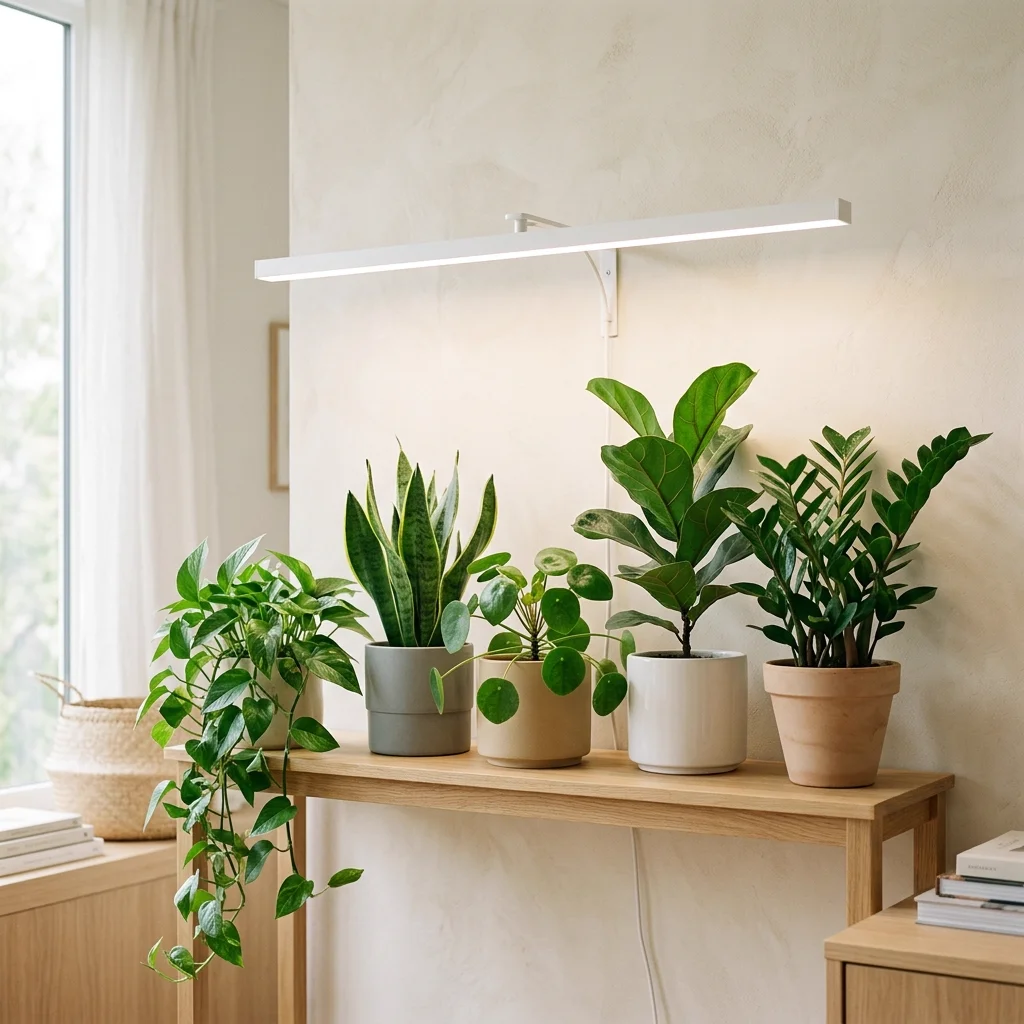
Which plant care article should I read?
It depends on what you need. For watering, potting mix and light, start with the everyday care guides. If a plant is declining, read Rescue and diagnosis. To choose between two plants, pots or treatments, read Comparisons. For one plant at a time, use the species care guides. Questions about lights, humidity and pots are under Equipment and environment.
Practical guides for everyday plant care
Start with your room and routine. These guides help you choose, water and troubleshoot your plants.
-
How to water houseplants: when to water, how much, and wet vs dry wilting
Check the mix before you water, soak and drain, adjust for pot, mix, season and water quality, and tell a thirsty wilt from a waterlogged one. From Virginia Tech, Clemson, Iowa State, Illinois and Maryland extension.
· Houseplant watering · 6references
-
Soil science for houseplants: how potting mix holds water and air
What peat, coir, bark, perlite, vermiculite and compost each do in a pot, why the bottom of the pot stays wettest, why gravel layers and garden soil fail, and how pH affects nutrients. From NC State, Iowa State, Maryland, Illinois and Virginia Tech extension.
· Potting mix · 7references
-
Watering houseplants while away: a plan and caretaker card
Prepare houseplants for a holiday by checking how each pot dries, testing any watering system before departure, and giving a caretaker clear instructions.
· Houseplant watering · 5references
-
African violet grow lights: LED vs fluorescent and a usable setup
Set up lighting for African violets with a timer, suitable coverage and adjustable height. Compare LED and fluorescent fixtures and recognize when to investigate too much or too little light.
· African violet · 5references
-
Houseplant edema: what blisters and corky spots can tell you
Check leaf blisters, corky spots and the root zone before treating a plant. Learn what supports an edema diagnosis, what suggests another problem, and how to adjust care.
· Edema · 4references
Comparisons
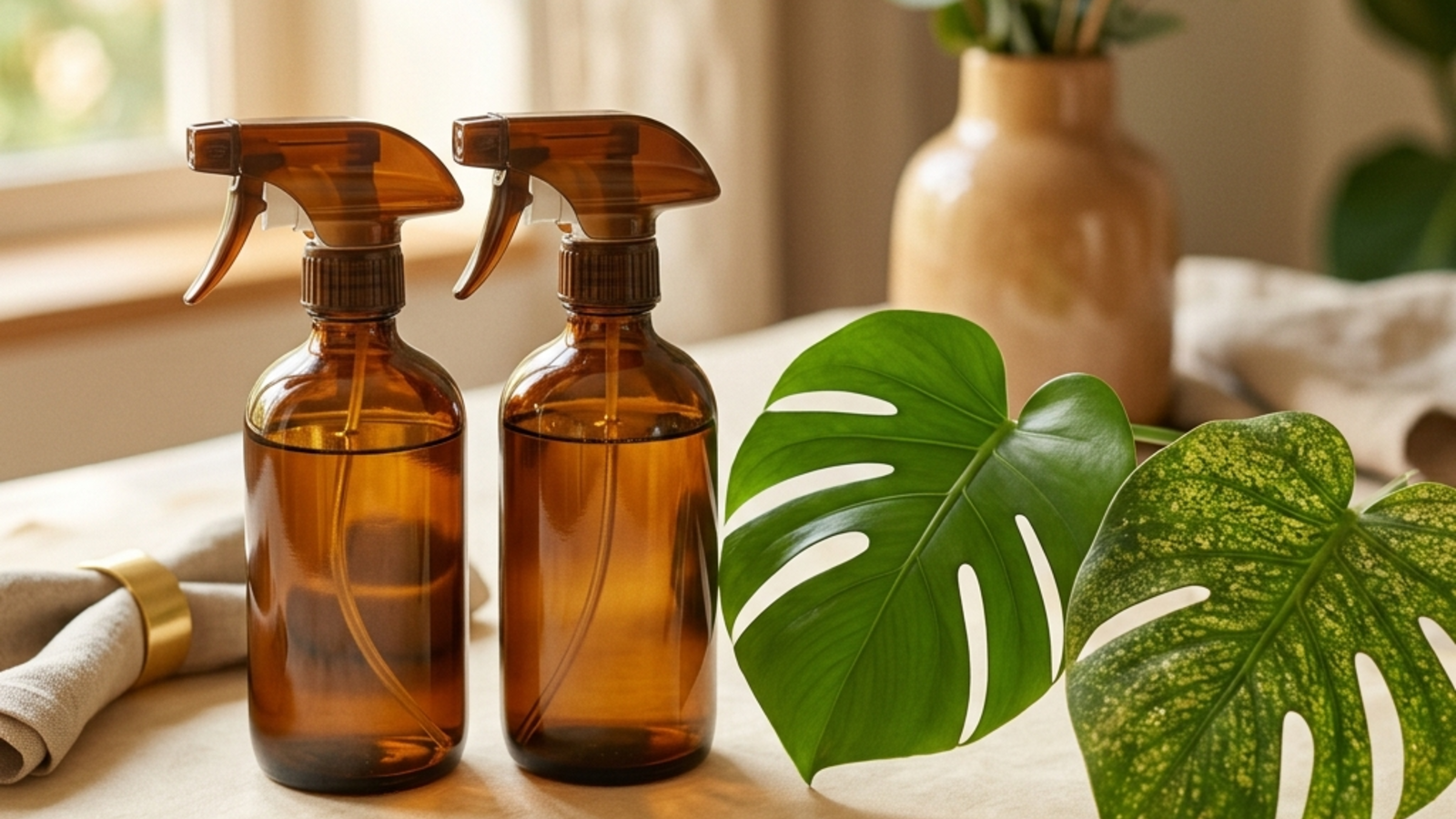
Two plants, pots, mixes or treatments side by side, with the references behind each difference.
-
Snake plant vs ZZ plant: how to tell them apart, and how their care differs
Snake plant (Dracaena trifasciata) and ZZ plant (Zamioculcas zamiifolia) are both drought-tolerant and low-light tolerant, but they differ in leaves, sun tolerance, winter watering, growth speed and pet toxicity. Comparison table from NC State, Iowa State, UF/IFAS, Penn State, the RHS and the ASPCA.
· Snake plant vs zz plant · 10references
-
Monstera deliciosa vs Monstera adansonii: how to tell them apart, and how their care differs
Monstera deliciosa grows into a large floor plant with split, holed leaves; Monstera adansonii is a smaller, denser vine with oval holes. Identification, size, light, watering, support and pet safety compared, from NC State, Penn State, Wisconsin, UF/IFAS and the ASPCA.
· Monstera deliciosa vs adansonii · 6references
-
Pothos vs philodendron: how to tell them apart, and how their care differs
Pothos (Epipremnum aureum) and heartleaf philodendron (Philodendron hederaceum) look alike. Check the leaf stalk, the papery stipules and the leaf texture to tell them apart, then adjust light and watering. Comparison table from NC State Extension and the ASPCA.
· Pothos vs philodendron · 7references
-
Terracotta vs plastic pots: drying, weight, salts and which plants suit each
Unglazed terracotta dries the potting mix faster, weighs more and shows salt crust; plastic holds moisture longer, weighs less and heats up in sun. How each difference works, and which houseplants suit which pot, from Virginia Tech, NC State, Nebraska, Colorado State, Penn State and Clemson Extension.
· Terracotta vs plastic pots · 12references
-
LECA vs soil for houseplants: water, air, nutrients, salts and which to choose
LECA (expanded clay balls) holds little water and no fertilizer, so a semi-hydro plant depends on a reservoir and a nutrient solution; potting mix holds water and nutrients itself. How each handles water, air, salts and root disease, and why the evidence for LECA houseplants is thin. From UF/IFAS, the UW Miller Library, the RHS, Virginia Tech, NC State and Maryland Extension.
· Leca vs soil · 7references
Rescue and diagnosis
Check symptoms, roots and growing conditions before choosing the next step for a declining plant.
-
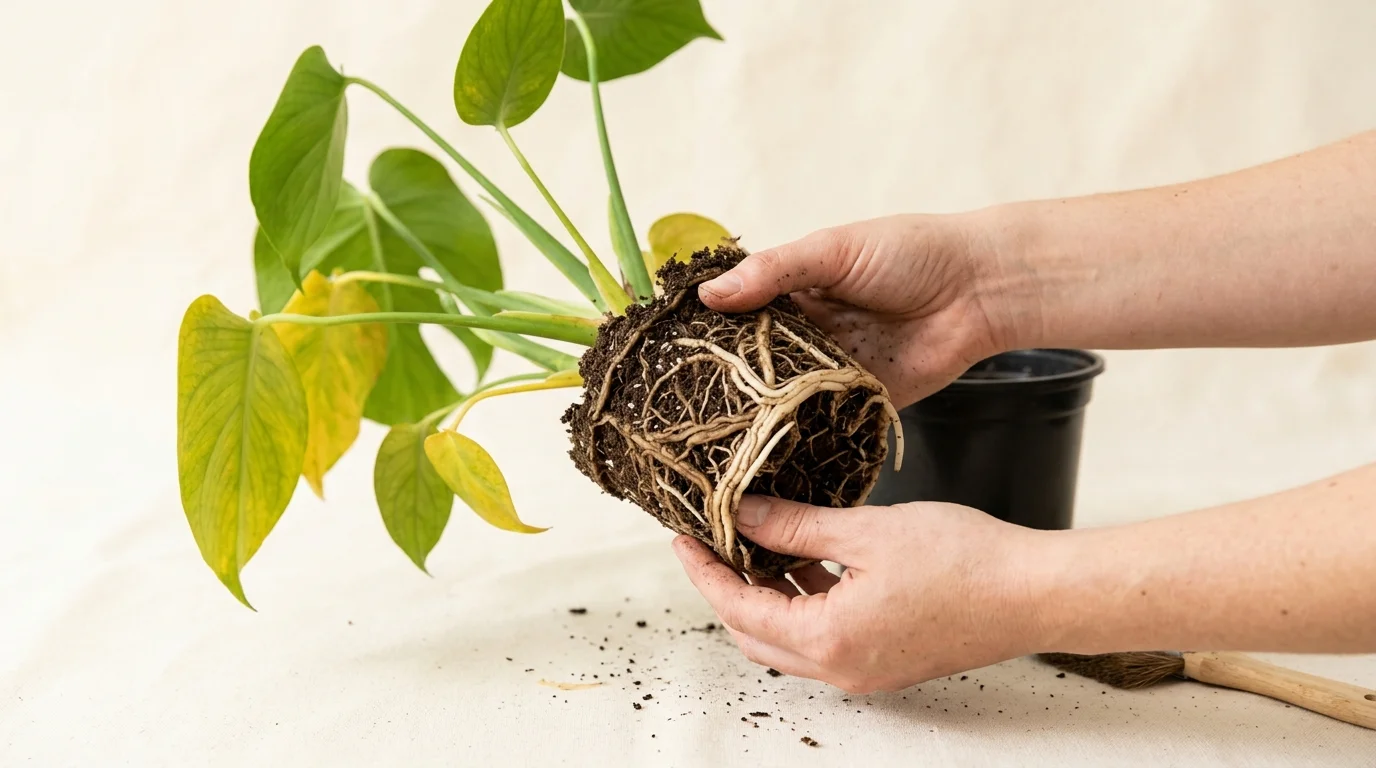
How to save a dying houseplant: check roots, water, light, pests and temperature
A triage order for a declining houseplant. Check the roots and mix, watering, light, pests and temperature, fix one cause at a time, then decide whether to nurse it, propagate a healthy piece or start again. From UC IPM, Maryland, Iowa State, Clemson and RHS guidance.
· Reviving a dying houseplant · 10references
-
Plant doctor flowchart: houseplant symptoms, likely causes and what to check
Start from what you see (wilting, yellow leaves, brown tips, spots, leaf drop, black stems or pests), narrow down the likely causes, and check the roots, mix and light in the right order. Based on Clemson, Maryland, UW–Madison and Iowa State extension guides.
· Houseplant symptom diagnosis · 10references
-
Houseplant pests: identify spider mites, mealybugs, scale and more, then treat from least toxic up
How to identify the seven most common houseplant pests (spider mites, mealybugs, scale, aphids, thrips, whiteflies and fungus gnats) and treat them in order, from washing and isolation to soaps, oils and labeled products. From UC IPM, Clemson, Colorado State and Penn State extension.
· Houseplant pest identification and treatment · 10references
Equipment and environment
Lighting, humidity, potting mix and containers for your plants and room.
-
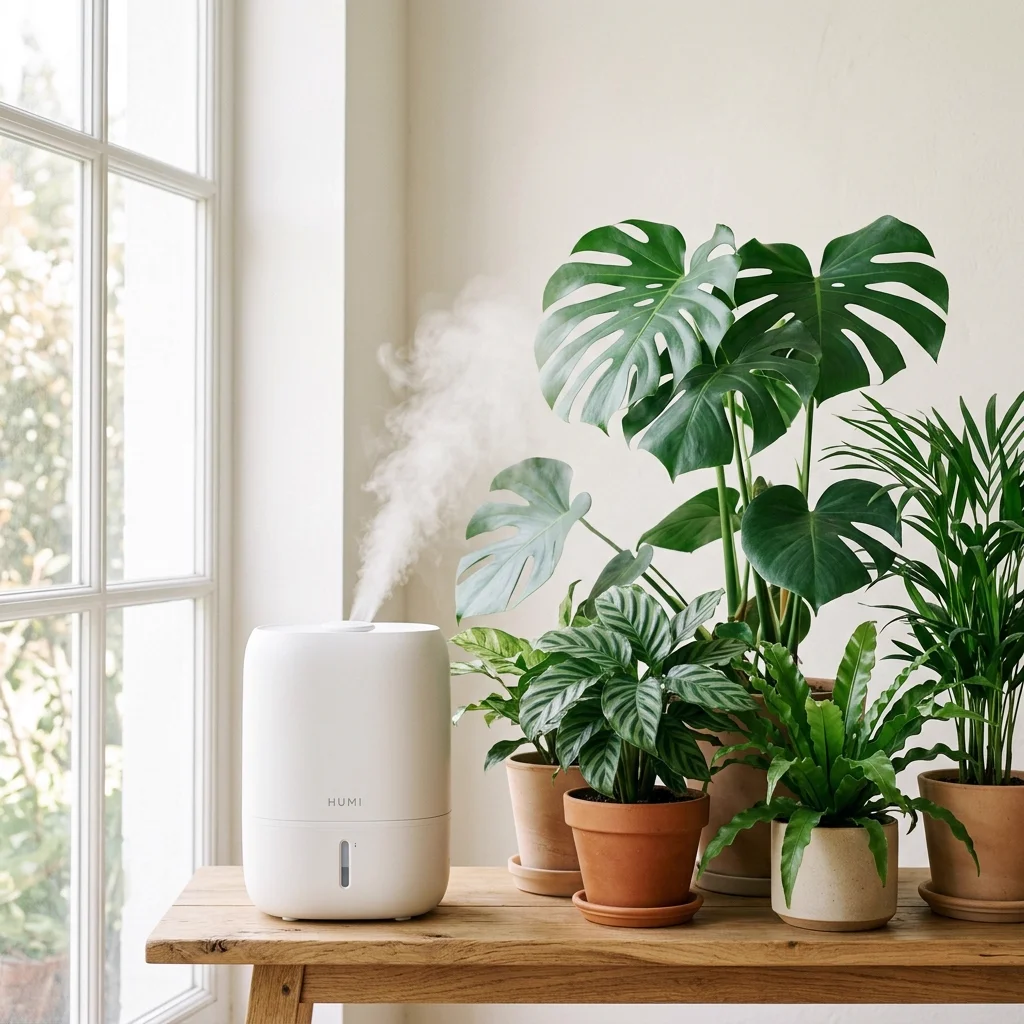
Grow lights for indoor plants compared: LED vs fluorescent vs incandescent vs HID
Compare indoor plant lights by spectrum, heat, efficiency and lifespan, then choose by how much light your plants need. Foot-candle targets, mounting distance and timer hours from University of Missouri and Illinois Extension.
· Grow lights · 2references
-
When to repot a houseplant: 8 signs to check, and how to repot step by step
Roots out of the drainage holes, wilting between waterings, mix that dries in a day: the signs that a houseplant needs a bigger pot, the signs that it does not, and how to choose the pot and repot without damage. From Illinois, Clemson, NC State, Penn State, Maryland and Virginia Tech Extension.
· Repotting houseplants · 8references
-
Houseplant light requirements: a chart of 45 indoor plants by low, medium and bright light
Light requirements for 45 common houseplants, what low, medium, bright and direct light mean in foot-candles and lux, and how far from each window direction to place them. From University of Illinois and Missouri Extension.
· Light requirements · 4references
Species care guides
Light, water, soil and common problems for one plant at a time.
-
Chinese evergreen care (Aglaonema): light, watering, cold damage and leaf problems
How to grow Chinese evergreen indoors: how dim a spot green and coloured cultivars accept, how to water without rotting the roots, why cold causes dark leaf patches, and whether it is safe for pets. From NC State, Clemson, UF/IFAS, Missouri and Illinois Extension and the ASPCA.
· Chinese evergreen · 11references
-
Money tree care (Pachira aquatica): light, watering, braided trunks and leaf drop
How to grow a money tree indoors: where to put it, how to water a swamp tree without rotting it, why leaves drop after a move, how to prune and propagate it, and what the ASPCA and NC State say about pets. From NC State, the RHS, NYBG and extension guides.
· Money tree · 9references
-
Anthurium crystallinum care: big velvet leaves, warmth, watering and leaf spot
How to grow Anthurium crystallinum (crystal anthurium) indoors, and how it differs from A. clarinervium: leaf size and space, warmth, humidity, watering, keeping the large velvet leaves clean and free of leaf spot, feeding, propagation and pet safety. From the RHS, NC State, UF/IFAS, Clemson and the ASPCA.
· Anthurium crystallinum · 7references
-
Anthurium clarinervium care: light, watering, humidity and an airy mix
How to grow Anthurium clarinervium, the velvet-leaf anthurium from Mexico, indoors: light and position, watering, an orchid-style mix, humidity, warmth, feeding, division and pet safety. Species advice from the RHS; genus advice from NC State, UF/IFAS and Clemson, labeled as such.
· Anthurium clarinervium · 6references
-
Alocasia Silver Dragon care (Alocasia baginda): light, watering, humidity and winter rest
How to grow Alocasia baginda Silver Dragon indoors: bright indirect light, watering by the top 5 cm of mix, a gritty compost, humidity, warmth, winter dormancy, dividing offsets, spider mites and pet safety. Genus guidance from NC State and the RHS, labeled as such.
· Alocasia silver dragon · 5references
-
Alocasia dormancy: winter rest, checking the corm and bringing it back into growth in spring
Why Alocasias drop leaves and rest in winter, how to tell dormancy from rot or cold damage, how to water and where to keep a resting plant or stored corm, and what to change in spring to bring it back into growth. From the RHS, NC State, Missouri Botanical Garden, Clemson and Maryland Extension.
· Alocasia dormancy · 7references
-
Calathea (Goeppertia) care: light, water quality, humidity and brown edges
How to keep calatheas, now mostly classified as Goeppertia, healthy indoors: why the name changed, how much light they need, which water to use, how humid to keep them, and what brown edges, curling or yellow leaves mean. From NC State, UF/IFAS, the RHS, Iowa State, UGA and the ASPCA.
· Calathea · 10references
-
Pilea care: Chinese money plant, aluminum plant and friendship plant
How to grow Pilea peperomioides indoors: light, watering, repotting, offsets and leaf problems, plus how aluminum plant and friendship plant differ. From NC State Extension, the RHS, University of Missouri and Illinois Extension, with ASPCA pet safety notes.
· Pilea peperomioides · 9references
-
Bird of paradise care indoors (Strelitzia reginae and S. nicolai): light, water, flowering and problems
How to grow orange and white bird of paradise indoors: how much sun, how to water and feed through the year, why it will not flower yet, split leaves, root rot and pet safety. From NC State, Clemson, UF IFAS, the RHS, Maryland Extension and the ASPCA.
· Bird of paradise · 9references
-
Alocasia care: watering, leaf loss, dormancy and corm checks
Keep an Alocasia in suitable light and warmth, check moisture before watering, and distinguish observations of slow growth, leaf loss and soft root or corm tissue before choosing a treatment.
· Alocasia · 5references
-
Fiddle-leaf fig care (Ficus lyrata): light, watering, leaf drop and brown spots
How to grow fiddle-leaf fig indoors: how bright its spot needs to be, how to water without drowning the roots, why leaves drop or brown, and when to repot. From NC State, University of Missouri, Illinois and Clemson Extension, with pet safety notes.
· Fiddle-leaf fig · 11references
-
Hoya care (Hoya carnosa and common wax plants): light, watering, flowering and problems
How to grow hoyas indoors: how much light they need to grow and to flower, how to water an epiphyte, which mix and pot to use, why you should never cut the flower spurs, and how to fix wrinkled or yellow leaves. From NC State, Clemson, the RHS, Missouri Extension and the ASPCA.
· Hoya · 7references
-
Spider plant care (Chlorophytum comosum): light, water, brown tips and babies
How to grow spider plant indoors: light, watering, feeding and repotting, why the leaf tips turn brown (fluoride, salts, dry soil), and why your plant makes no plantlets (day length). From NC State, UW–Madison, the RHS, University of Maine and the ASPCA.
· Spider plant · 8references
-
Boston fern care (Nephrolepis exaltata): light, watering, humidity and brown fronds
How to keep a Boston fern green indoors: the light it needs, how to keep the mix moist without rotting it, how to raise humidity, when to feed and divide it, and what brown leaflets or dots under the fronds mean. From NC State, Clemson, UF/IFAS, the RHS and the ASPCA.
· Boston fern · 8references
-
Jade plant care (Crassula ovata): sun, watering by season, soil, repotting and leaf drop
How to grow jade plant indoors: how much direct sun it needs, how watering changes between summer and winter, the soil mix that prevents root rot, and what wrinkled, dropping or spotted leaves mean. From NC State, Clemson HGIC and Missouri Extension.
· Jade plant · 6references
-
Cast iron plant care (Aspidistra elatior): low light, watering, repotting and leaf problems
How to grow cast iron plant indoors: how little light it tolerates, how to water a slow-growing clump, when to divide it, and what scorched, brown or fading leaves mean. From NC State, UF/IFAS, RHS and the ASPCA.
· Cast iron plant · 9references
-
African violet care (Streptocarpus ionanthus): light for reblooming, watering, potting and grooming
How to keep African violets blooming: window and grow-light placement, watering without leaf spots or crown rot, the right pot and mix, feeding, grooming suckers, and the pests to watch for. From NC State, Clemson, Purdue, Colorado State and the African Violet Society of America.
· African violet · 9references
-
ZZ plant care guide: rhizome watering, potting mix, repotting and propagation
How to grow a ZZ plant indoors: how much light it needs, why its rhizomes make overwatering the main risk, which mix and pot to use, how to propagate it, and why it is not pet safe. From NC State, UF/IFAS, Clemson, Iowa State and the RHS.
· Zz plant · 8references
-
Peace lily care (Spathiphyllum): light, watering, feeding, repotting and problems
How to grow a peace lily indoors: where to put it, how to tell a thirsty wilt from a wet-root wilt, how little to feed, when to repot, and what brown tips, yellow leaves and pests mean. From NC State, Clemson, UF/IFAS, Maryland Extension and the ASPCA.
· Peace lily · 7references
-
Snake plant care (Dracaena trifasciata): light, watering, repotting and root rot rescue
How to grow snake plant: the light it tolerates, how to water by checking the mix, when to repot or divide, and step-by-step checks for root and rhizome rot, including when leaf cuttings are the better rescue. From NC State, the RHS and Penn State.
· Snake plant · 8references
-
Philodendron care: light, watering and problems for climbing and self-heading types
How to grow philodendrons indoors, from heartleaf vines to self-heading types like tree philodendron: light, watering, mix, feeding, cuttings, yellow leaves and pet safety. From NC State, Clemson, UConn, Missouri and Illinois Extension, the RHS and the ASPCA.
· Philodendron · 10references
-
Indoor succulent care: light, watering, gritty mix, pots, winter rest and propagation
How to grow succulents and desert cacti indoors: how much light they need, the soak-and-dry watering cycle, a gritty mix and the right pot, the cool, dry winter rest, feeding, propagation from offsets, leaves and stems, and which common succulents are toxic to pets. From the RHS, Iowa State, Clemson, NC State, Missouri Extension and the ASPCA.
· Succulents · 12references
-
Pothos care (Epipremnum aureum): light, watering, pruning and common problems
How to grow pothos indoors: how much light each type needs, when to water, how to keep vines full, how to root cuttings, and what yellow leaves, brown patches and lost variegation mean. From NC State, Clemson, UW–Madison, UF/IFAS, Iowa State and Missouri Extension, with ASPCA pet safety.
· Pothos · 8references
-
Monstera deliciosa care: light, watering, support, repotting and problems
How to grow Monstera deliciosa (Swiss cheese plant) indoors: how much light it needs to make split leaves, when to water, which mix and pot to use, how to support it, feeding, propagation and pet safety. From NC State, Wisconsin, Penn State, UConn, the RHS and the ASPCA.
· Monstera deliciosa · 6references
More guides
Seasonal care, routines and other practical guides.
-
Common bromeliad problems and solutions: dying after flowering, brown tips, rot and pests
Why a bromeliad declines after it blooms, and how to tell normal ageing from crown rot, brown tips, scale, mealybugs, too much or too little light, salt build-up and cold damage. Checks and fixes from Clemson, UF/IFAS, NC State, UW–Madison and Colorado State Extension.
· Common bromeliad problems and solutions · 6references
-
Strelitzia reginae vs nicolai: orange vs white bird of paradise indoors
How to tell orange bird of paradise (Strelitzia reginae) from white bird of paradise (S. nicolai) by flower, leaf size and trunk, and how they differ indoors in light, size, flowering, watering, split leaves and pet safety. From NC State, Clemson, UF/IFAS, the RHS and the ASPCA.
· Strelitzia reginae vs nicolai · 6references
-
ZZ plant vs money tree: light, watering, size and pet safety compared
ZZ plant (Zamioculcas zamiifolia) stores water in rhizomes and tolerates dim rooms; money tree (Pachira aquatica) is a fast tree that wants brighter light and more humidity, and the ASPCA lists it as non-toxic. Side-by-side from NC State, UF/IFAS, Iowa State, Clemson, NYBG, the RHS and the ASPCA.
· Zz plant vs money tree · 9references
-
Chinese evergreen varieties: 18 types of Aglaonema compared, from Maria and Silver Bay to Siam Aurora
Eighteen Chinese evergreen (Aglaonema) species and cultivars compared by leaf pattern, size and light tolerance: A. commutatum and Maria, A. modestum, A. nitidum Curtisii, the UF/IFAS Bay series, and red and pink types such as Siam Aurora. From NC State Extension and UF/IFAS.
· Chinese evergreen · 7references
-
Alocasia varieties: 16 types of elephant ear compared, from Polly and Frydek to Black Velvet and Silver Dragon
Sixteen alocasia species and cultivars compared by leaf, size and light: Alocasia × amazonica Polly, Frydek, reginula Black Velvet, baginda Dragon Scale, Silver Dragon, zebrina, Stingray and the giant macrorrhizos. From NC State Extension, UF/IFAS and the RHS.
· Alocasia · 6references
-
Aloe types for indoors: 8 aloes compared, from aloe vera to tiger tooth, lace aloe and fan aloe
Eight aloes to grow indoors compared by leaf, size and light: aloe vera and its hybrids Delta Lights and Minnie Belle, Aloe arborescens, Aloe juvenna, lace aloe (now Aristaloe), partridge-breast aloe (now Gonialoe) and fan aloe (now Kumara). From NC State Extension, SANBI and the RHS.
· Aloe · 8references
-
Anthurium varieties: flowering and velvet-leaf types compared, from flamingo flower to clarinervium
Anthurium types compared: flowering anthuriums (A. andraeanum and the pigtail plant, A. scherzerianum, with cultivars) and foliage species such as A. clarinervium, A. crystallinum, A. veitchii and A. hookeri. Care differences from NC State Extension.
· Anthurium · 4references
-
Aphids on houseplants: identify them, clean off honeydew and sooty mould, and control them
How to recognise aphids on indoor plants (cornicles, cast skins, curled new growth), how fast they multiply, what honeydew and sooty mould mean, and a control ladder from rinsing and pruning to insecticidal soap, oil and labeled systemics. From UC IPM, Clemson, Colorado State, Iowa State, Penn State and RHS.
· Aphids on houseplants · 8references
-
Bathroom plants: 13 houseplants for humid, low-light bathrooms, and why light matters more than steam
Which houseplants suit a bathroom: ferns, nerve plant, prayer plant, calathea, aluminum plant, moth orchid, peace lily and more. Light in lux, water, size and ASPCA pet status, what bathroom humidity does and does not fix, and how to light a windowless bathroom.
· Bathroom plants · 22references
-
Bedroom plants: how to choose for your light, space and pets (13 options compared)
How to pick a bedroom plant by the light the room actually gets, the space on a nightstand or floor, and whether a cat or dog sleeps there. Thirteen houseplants compared by light in lux, water, size and ASPCA pet status, with care notes for cool or dim bedrooms.
· Bedroom plants · 20references
-
Calathea types: 11 prayer plant species compared, from orbifolia and peacock to rattlesnake, plus Stromanthe, Ctenanthe and Maranta
The calatheas sold as houseplants, now mostly Goeppertia: orbifolia, makoyana, lancifolia (insignis), roseopicta, zebrina, ornata, crocata and more, with the Stromanthe, Ctenanthe and Maranta look-alikes. Leaf patterns, sizes and care differences from NC State Extension and the RHS.
· Calathea · 14references
-
Dracaena varieties: 13 types compared, from corn plant and Janet Craig to dragon tree, lucky bamboo and snake plant
Thirteen dracaena species and cultivars compared by leaf, size and light: corn plant (Dracaena fragrans) with Massangeana, Janet Craig, Warneckii and Lemon Lime, the Madagascar dragon tree, Song of India, lucky bamboo, gold dust, queen of dracaenas and the snake plant. From NC State Extension and UF/IFAS.
· Dracaena · 11references
-
Fast-growing houseplants: 12 plants NC State rates as rapid growers, and what "fast" depends on
Houseplants with a rapid growth rate in the NC State Extension Plant Toolbox, including heartleaf philodendron, monstera, Chinese money plant, rubber plant, inch plant, grape ivy, hoya and Boston fern. Light in lux, water, size, ASPCA pet status, and why light, warmth and season decide how fast they grow.
· Fast-growing houseplants · 26references
-
Ficus varieties: 13 indoor ficus compared, from fiddle-leaf fig and rubber plant to weeping fig, Alii and ginseng ficus
Thirteen indoor ficus species and cultivars compared by leaf, size and light: fiddle-leaf fig (Ficus lyrata), rubber plant (F. elastica) with Burgundy, Robusta and Tineke, weeping fig (F. benjamina), Alii, creeping fig and Ficus microcarpa Ginseng. From NC State Extension and UF/IFAS.
· Ficus · 12references
-
Hanging plants for indoors: 11 trailing houseplants by light level, with watering tips for hanging pots
Indoor hanging and trailing plants sorted by the light they need: pothos, heartleaf philodendron, Boston fern, satin pothos, spider plant, tradescantia, peperomia, hoya, string of hearts, string of pearls and burro's tail. Light in lux, water, trailing length and ASPCA pet status.
· Indoor hanging plants · 23references
-
Houseplant nutrient deficiency signs: read old vs new leaves, then rule out roots, pH, salts and light
How nitrogen, phosphorus, potassium, magnesium, iron and calcium shortages show on houseplant leaves, why old or new leaves go first, and the checks to run before you feed. From NC State, Maryland, Clemson, Iowa State and RHS guidance.
· Houseplant nutrient deficiency · 11references
-
Houseplant sunburn and leaf scorch: what it looks like, why moved plants burn, and how to acclimate them
How to recognise sun scorch on houseplants, why plants burn after a move outdoors, to a brighter window or after root loss, how to acclimate them, and how to tell sunburn from salt burn and cold damage. From Maryland, Iowa State, Clemson, NC State, Colorado State and RHS guidance.
· Houseplant sunburn and leaf scorch · 13references
-
How to prune houseplants: when to cut, where to cut, pinching, leggy vines and plants not to cut back
When to prune houseplants, how to cut just above a node, pinching for bushier growth, cutting back leggy vines and overgrown stems, removing reverted and dead growth, keeping tools clean, and why palms should not be cut back. From NC State, Maryland, Arkansas, Clemson, Iowa State, Missouri Botanical Garden and RHS guidance.
· Pruning houseplants · 9references
-
Hoya varieties: 14 types of hoya compared, from carnosa and Krimson Queen to kerrii and bella
Fourteen hoya species and cultivars compared by leaf, flower, size and difficulty, including Hoya carnosa (Krimson Queen, Krimson Princess, Krinkle Kurl), H. kerrii, H. pubicalyx, H. australis, H. bella and H. lacunosa. From NC State Extension.
· Hoya · 9references
-
Indoor fern types: Boston, maidenhair, bird's nest, staghorn and 6 more compared, with care and pet safety
Ten ferns grown as houseplants, plus the asparagus fern look-alike, compared by light, water, humidity and difficulty: Boston fern, maidenhair, bird's nest, staghorn, rabbit's foot, button, holly, brake and blue star fern. Pet toxicity from the ASPCA.
· Ferns · 13references
-
Indoor palm types: parlor, bamboo, kentia, areca and lady palms compared, plus ponytail and sago
Seven indoor "palms" compared by leaf, size, light and pet safety: parlor palm, bamboo palm, kentia, areca and lady palm, plus ponytail palm and sago palm, which are not true palms. From NC State Extension, Clemson HGIC and the ASPCA.
· Palms · 15references
-
Kalanchoe varieties: 9 types of kalanchoe compared, and how to make the florist kalanchoe rebloom
Nine kalanchoe types compared, from the flowering florist kalanchoe (Kalanchoe blossfeldiana) to panda plant, paddle plant and mother of thousands, with size, light, the darkness schedule for reblooming, and pet toxicity. From NC State Extension and the ASPCA.
· Kalanchoe · 5references
-
Large indoor plants: 18 tall floor plants by light level, size indoors and pet safety
Eighteen large houseplants compared by how tall they grow indoors, the light they need and whether they are safe for cats and dogs: fiddle-leaf fig, rubber plant, bird of paradise, monstera, kentia and areca palms, ponytail palm, money tree, dracaenas and more.
· Large indoor plants · 20references
-
Leaf spot on houseplants: fungal or bacterial, and what is not a disease
How to tell fungal leaf spot from bacterial leaf spot on houseplants by halos, water-soaking, rings and vein-limited edges, how to rule out sunscald, edema, cold water and salts, why splashing water spreads it, and how to treat it by removing leaves, drying foliage and using copper or Bacillus products only as labeled. From Clemson, Maryland, UC IPM, UF/IFAS and Penn State.
· Fungal and bacterial leaf spot on houseplants · 10references
-
Mealybugs on houseplants: find them, check the roots, and treat from alcohol swab up
How to identify mealybugs and root mealybugs on indoor plants, which houseplants they favour, why the wax makes them hard to kill, and a control ladder from isolation and alcohol swabs to soap, oil and labeled systemics, plus when to discard. From UC IPM, Clemson, Colorado State, Maryland, Iowa State and RHS.
· Mealybugs on houseplants · 8references
-
Moving houseplants outdoors for summer: night temperatures, hardening off, wind, rain, pests and bringing them back in
When night temperatures are safe for houseplants outside, how to harden them off to sun over one to two weeks, where to put them out of wind and standing water, how watering and feeding change, and how to debug and re-acclimate them in autumn. From Iowa State, Clemson, NC State, Illinois and Maryland Extension.
· Moving houseplants outdoors for summer · 9references
-
Monstera types and varieties: deliciosa, Thai Constellation, Albo, adansonii, siltepecana and rarer species compared
Monstera types compared by leaf, size and light: Monstera deliciosa and its Albo, Borsigiana and Thai Constellation forms, M. adansonii, M. siltepecana, M. standleyana, M. dubia, M. obliqua and M. Peru. From NC State, RHS, Missouri, Penn State and UW–Madison Extension.
· Monstera deliciosa · 11references
-
Office plants: 13 plants that cope with fluorescent light, dry air and weekends alone
The best office plants by situation: windowless offices under fluorescent light, desks by a window, and floor spots in reception areas. Thirteen plants that extension horticulturists recommend for homes and offices, with light, watering and pet-safety notes.
· Office plants · 14references
-
Orchid types for beginners: 7 indoor orchids compared, from moth orchids to slipper, dancing lady and jewel orchids
Seven orchids to grow indoors compared by light, temperature and difficulty: Phalaenopsis, Paphiopedilum, Dendrobium, Oncidium, Cattleya, Cymbidium and the jewel orchid Ludisia. From NC State Extension, the American Orchid Society and Clemson HGIC.
· Orchid · 16references
-
Houseplant care in winter: light, watering less, feeding, humidity, cold windows and dormant plants
How to look after houseplants in winter: move them into brighter light, water less often, stop or cut back feeding, raise humidity near central heating, keep leaves off cold glass and out of drafts, check plants coming in from outdoors for pests, and leave dormant plants to rest. From NC State, Iowa State, Maryland, Illinois, Clemson and RHS guidance.
· Houseplant care in winter · 14references
-
Peperomia varieties: 15 types of peperomia compared, from baby rubber plant to string of turtles
Fifteen peperomia types compared by leaf, habit and size: upright (obtusifolia, caperata, argyreia, polybotrya, clusiifolia) and trailing (prostrata, rotundifolia, serpens), with care and ASPCA pet-safety status. From NC State Extension.
· Peperomia · 11references
-
Plants for south-facing windows: 10 houseplants for direct sun, and how to move them without scorch
Which houseplants suit a sunny south window: cacti, aloe, jade, echeveria, burro's tail, crown of thorns, ponytail palm, bird of paradise, citrus and croton. Light levels in lux, water, size and ASPCA pet status, plus how to acclimate plants to strong light.
· Plants for south-facing windows · 21references
-
Powdery mildew on houseplants: why it appears indoors and how to stop it
How to recognise powdery mildew on begonia, African violet, jade, kalanchoe and other houseplants, why it spreads in dry indoor air with poor airflow, and how to control it with removal, airflow and light before turning to labeled products, neem oil or potassium bicarbonate. From UC IPM, Iowa State, Missouri Botanical Garden, Clemson, Maryland and RHS.
· Powdery mildew on houseplants · 8references
-
Scale insects on houseplants: soft vs armored scale, honeydew, and how to treat them
How to recognise soft and armored scale on indoor plants, tell them from fern spores and other look-alikes, read the life cycle, and treat from scraping and rinsing to horticultural oil, soap and labeled systemics, plus when to discard. From UC IPM, Maryland, Clemson, Colorado State, Iowa State and RHS.
· Scale insects on houseplants · 8references
-
Snake plant varieties: 16 types compared, from Laurentii and Moonshine to cylindrica and whale fin
Sixteen snake plant varieties compared: 14 cultivars of Dracaena trifasciata (Laurentii, Moonshine, Hahnii, Black Gold, Twisted Sister and more), plus the cylindrical snake plant and whale fin. Leaf colour, size and care differences from NC State Extension.
· Snake plant · 6references
-
String of pearls vs string of bananas vs string of hearts: 5 trailing succulents compared, plus string of turtles and burro's tail
String of pearls, string of bananas, string of hearts, string of turtles and burro's tail compared by leaf, length, light, water and pet safety. From NC State Extension, UW–Madison Extension and the ASPCA.
· String of pearls · 9references
-
Terrarium plants: what grows in a closed terrarium, what needs an open one, and how to build it
The best terrarium plants for closed (humid) and open (dry) terrariums, from nerve plant, selaginella, creeping fig and miniature ferns to haworthia and echeveria, plus how to build, water and maintain a terrarium. From Penn State, Mississippi State, UVM and NC State Extension.
· Terrarium plants · 11references
-
Thrips on houseplants: identify silvery damage, use sticky cards, and break the soil-stage cycle
How to confirm thrips on indoor plants (silvery stippling, black frass, the white-paper test), western flower thrips and other species, why thrips are hard to control, how blue and yellow sticky cards help, and treatment from rinsing to soap, oil and spinosad. From UC IPM, Maryland, Colorado State, Clemson and RHS.
· Thrips on houseplants · 7references
-
Types of air plants: common Tillandsia species compared, and how to water each
Air plant types compared: Tillandsia ionantha and its cultivars, the giant air plant (T. xerographica), Spanish moss and ball moss, with light, soaking or misting schedules, and what happens after an air plant blooms. From NC State, UF/IFAS and Clemson Extension.
· Air plant · 6references
-
Tradescantia varieties: inch plant types compared, from zebrina and fluminensis to purple heart and white velvet
Tradescantia types compared by leaf, size, light and skin and pet safety: T. zebrina, T. fluminensis, purple heart (T. pallida), Moses-in-the-cradle (T. spathacea), white velvet (T. sillamontana) and the Callisia look-alike turtle vine. From NC State and UW–Madison Extension and the ASPCA.
· Tradescantia · 10references
-
Types of cactus for indoors: 9 desert and forest cacti compared, from pincushion and golden barrel to Christmas and Easter cactus
Nine cacti to grow indoors compared by form, size and light: desert cacti (Mammillaria, Opuntia, golden barrel, Gymnocalycium, Cereus) versus forest cacti (Christmas, Easter, Rhipsalis, Epiphyllum). From Clemson HGIC and NC State Extension.
· Cactus · 15references
-
Types of succulents for indoors: 10 succulent groups compared by light and size, from echeveria and haworthia to jade and string of pearls
Ten succulent groups to grow indoors, sorted by the light they need and how big they get: Echeveria, Crassula, Sedum, Aloe, Haworthia and Haworthiopsis, Gasteria, snake plant, Kalanchoe, Curio and Ceropegia. From NC State Extension and Iowa State Extension.
· Succulent · 21references
-
What is a money plant? Five different plants share the name, and how to tell them apart
"Money plant" can mean pothos (Epipremnum aureum), jade plant (Crassula ovata), money tree (Pachira aquatica), Chinese money plant (Pilea peperomioides) or the garden flower honesty (Lunaria annua). How to identify yours, and the care and pet safety of each.
· Money plant · 8references
-
Whiteflies on houseplants: identification, honeydew, sticky cards and control
How to confirm whiteflies on a houseplant, tell them from aphids, mealybugs and fungus gnats, read the honeydew and sooty mold they leave, and control them from washing and yellow sticky cards up to labeled soaps, oils and systemics. From UC IPM, Colorado State, Maryland, Clemson and RHS.
· Whiteflies on houseplants · 6references
-
Bringing a houseplant home: buying checks and a useful first-month plan
Inspect a new houseplant before buying, protect it on the trip home, keep it separate for observation and decide when watering, repotting or feeding is needed.
· New houseplant care · 5references
-
Houseplant comparisons: how to compare plants by light, water, size and pets
How to compare two houseplants before you buy: the light your spot gets (with the Illinois Extension light table), how each plant likes to be watered, how big it gets, and whether it is safe for pets. Then every PlantGrail comparison in one place, from snake plant vs ZZ plant to LED vs fluorescent grow lights.
· Houseplant comparisons · 7references
-
Fiddle-leaf fig watering: how often, dry peat that won't rewet, and what tap water really does
How to water Ficus lyrata: check the top 2 cm, water through, keep it just moist in winter, rewet a dried-out root ball, and flush salts. What the sources do and do not say about tap water, chlorine and fluoride.
· Fiddle-leaf fig watering · 12references
-
Monstera watering: is it thirsty, or is the mix staying wet?
How to water Monstera deliciosa: soak, let the top quarter to third of the mix dry, and tell a thirsty plant from one whose mix stays wet. From NC State, Virginia, Iowa State and Maryland extension.
· Monstera watering · 6references
-
ZZ plant watering: let the mix dry out, not the calendar decide
How often to water a ZZ plant (Zamioculcas zamiifolia), why its water-storing rhizomes make dry-downs safe, how to check the mix, and how to spot overwatering. From NC State, Clemson, Iowa State, Illinois and UF/IFAS extension.
· Zz plant watering · 7references
-
String of hearts watering: soak, let it dry, and ease off in winter
How to water Ceropegia woodii: a thorough soak, a full dry-down, less water during the winter rest, and how to tell thirst from a wet, rotting root zone. From NC State, Wisconsin and Iowa State extension and the RHS.
· String of hearts watering · 6references
-
Where to Put a Plant Humidifier: Placement and Room Size
Place and size a plant humidifier using room measurements, output, airflow, and hygrometer readings without soaking leaves, walls, or furniture.
· Plant humidifier placement · 3references
-
Plant Humidifier Cleaning, Water Choice, and White Dust
Clean a plant humidifier safely, choose water by humidifier type, prevent white dust, and know when moisture or tank buildup means stop.
· Plant humidifier cleaning · 3references
-
Tap Water for Houseplants: Chlorine, Fluoride, Hard Water, and Brown Tips
Learn when tap water is safe for houseplants, which plants may be sensitive, and how to test chlorine, fluoride, hard-water, and softener-salt explanations.
· Tap water for houseplants · 6references
-
Best Plant Community and Care-Tracking Apps in 2026
Compare plant community, watering-reminder, journal, and collection-tracking apps, including PlantGrail, by their actual jobs, limits, prices, and official features.
· Plant community and care tracking apps · 6references
-
Best Plant Identification Apps With Care Tips in 2026
Compare plant identification apps that also provide care tips, diagnosis, reminders, or guided checks, with clear limits for every recommendation.
· Plant identification apps with care tips · 7references
-
Bonsai Pruning Techniques: An Extension-Backed Beginner Guide
Learn the difference between bonsai maintenance and structural pruning, where to cut, when to stop, and how species and season change the plan.
· Bonsai pruning techniques · 4references
-
Croton Light Requirements: How Many Lux Does It Need Indoors?
Use a practical 5,000-10,000 lux starting range for indoor Croton, then adjust for duration, direct sun, acclimation, leaf color, and water use.
· Croton light requirements in lux · 4references
-
Grow Light Distance and Duration for Houseplants: A Setup Guide
Set grow-light height and timer length using fixture data, canopy measurements, Extension starting ranges, and plant response instead of one universal distance.
· Grow light distance and duration · 4references
-
Grow Lights for Monstera, Alocasia, and Pothos
Build one measured grow-light setup for Monstera, Alocasia, and Pothos by separating canopy height, light class, variegation, coverage, and acclimation.
· Grow lights for aroids · 6references
-
Grow Lights for Low-Light Apartments: A Room-by-Room Setup
Choose renter-friendly grow-light formats for dark apartments, shelves, corners, and single plants using coverage, glare, timers, power, and real plant needs.
· Grow lights for low light apartments · 5references
-
Best Free Plant Care Apps in 2026: What Is Actually Free?
See which plant apps are free, limited-free, or trial-led for identification, diagnosis, and reminders before starting a subscription.
· Free plant care apps · 4references
-
Best PictureThis Alternatives in 2026
Compare PictureThis alternatives for plant diagnosis, reminders, community, free identification, privacy, and focused plant health checks.
· PictureThis alternatives · 5references
-
Best Plant Diagnosis Apps in 2026: Free and Paid Compared
Compare free and paid plant diagnosis apps by photo workflow, treatment checks, account requirements, pricing, and limitations for sick houseplants.
· Plant diagnosis apps · 4references
-
Best Planta Alternatives for Diagnosis and Plant Care in 2026
Compare Planta alternatives for diagnosis, reminders, identification, community, environmental tools, pricing, and free access.
· Planta alternatives · 5references
-
Brown Spots on Houseplant Leaves: A Pattern-Based Diagnosis
Diagnose brown leaf spots by location, texture, halo, spread, moisture, pest evidence, and recent changes before cutting or spraying your plant.
· Brown spots on houseplant leaves · 4references
-
Edema in Houseplants: Identify the Bumps and Stop New Damage
Learn what plant edema looks like, how to distinguish it from pests and disease, why it happens, and which watering and environment changes stop new blisters.
· Plant edema · 4references
-
Houseplant fertilizer schedule: how often to feed, when to stop, and signs of too much
When and how often to fertilize houseplants, how to cut back in autumn and winter, how long to wait after repotting, and how to spot and flush salt buildup. From Illinois, Iowa State, Maryland and Clemson extension and the RHS.
· Houseplant fertilizer schedule · 11references
-
Houseplant Root Rot: Signs, Root Check, and Recovery Steps
Diagnose houseplant root rot using root and substrate evidence, distinguish it from drought stress, and follow a measured recovery protocol without false guarantees.
· Houseplant root rot · 4references
-
Mold on Houseplant Soil: Identify It Before You Treat It
Distinguish fuzzy soil mold from mineral crust, mycelium, fungus gnat conditions, and root rot, then correct the moisture and drainage problem safely.
· Mold on houseplant soil · 4references
-
Overwatered or Underwatered Plant? Use Soil and Root Evidence
Distinguish overwatering from underwatering using pot weight, root-zone moisture, root texture, leaf pattern, and recovery response instead of guessing from wilt.
· Overwatered or underwatered plant · 4references
-
PictureThis vs Planta vs PlantGrail: Features and Prices (2026)
Compare PictureThis, Planta, and PlantGrail - AI Plant Scanner on identification, diagnosis, reminders, free scans, trials, subscription prices, and privacy.
· PictureThis vs Planta vs PlantGrail · 3references
-
Potting soil vs compost for houseplants: can you use compost or garden soil?
Garden soil compacts in a pot, and compost works as one ingredient, not the whole mix. What extension services say about potting mix components, how much compost to add, and when to repot.
· Potting soil vs compost for houseplants · 10references
-
Spider Mites on Houseplants: Confirm Them and Break the Cycle
Identify spider mites by stippling, leaf-underside checks, and webbing, then isolate, wash, treat, and monitor houseplants without unsafe homemade sprays.
· Spider mites on houseplants · 4references
-
Why Houseplant Leaves Turn Yellow: A Decision Tree That Starts With Evidence
Diagnose yellow houseplant leaves by leaf age, soil moisture, root condition, pattern, light, pests, and recent care changes before watering or fertilizing.
· Yellow houseplant leaves · 3references
-
Why Houseplant Leaves Curl, Crisp, or Wrinkle: A Diagnostic Guide
Use leaf texture, soil moisture, pest evidence, and damage location to distinguish curling, crispy edges, and wrinkled leaves before changing care.
· Curling houseplant leaves · 3references
-
Boston fern soil keeps drying out? Check the roots, the mix and the spot
Why a Boston fern (Nephrolepis exaltata) dries out between waterings: a pot full of roots, peat mix that sheds water, a warm bright spot or a small porous pot. How to rewet it and keep it evenly moist without rot.
· Boston fern drying out · 6references
-
Aloe vera turning red or brown: sun stress, cold, drought or roots?
Why aloe vera leaves turn red, orange or brown: protective pigment in strong light, sunburn, cold, drought and root problems. How to tell harmless colour from damage and what to change, from WSU, Iowa State, Penn State, UF/IFAS, NC State and Arizona Extension.
· Aloe vera turning red · 9references
-
Peace lily not blooming? Light, plant age, feeding and why shop plants flower
Why a peace lily (Spathiphyllum) stops flowering: too little light, a young plant, overfeeding, and the growers' gibberellic acid treatment behind shop-bought blooms. What to check and change, from NC State, Clemson, UF/IFAS and Missouri Extension.
· Peace lily not blooming · 8references
-
Aloe arborescens vs aloe vera: how to tell them apart, size, frost and safety
Aloe arborescens (krantz or candelabra aloe) branches into a multi-headed shrub; aloe vera stays a low, clumping rosette. Identification, growth habit, cold tolerance, uses and pet toxicity compared, from SANBI, Chicago Botanic Garden, NC State, UF/IFAS, NCCIH and the ASPCA.
· Aloe arborescens vs aloe vera · 6references
-
Boston fern in the bathroom: what the humidity fixes and what it doesn't
Why extension services suggest a bathroom for a Boston fern (Nephrolepis exaltata), how to give it enough light there, how to water in a humid room, and when a bathroom is the wrong spot.
· Boston fern bathroom placement · 6references
-
Snake plant mushy at the base: rhizome rot, what to save and when to discard
A snake plant (Dracaena trifasciata) that is soft at the base or rhizome is rotting. How to confirm it, how to sort salvageable divisions and leaf cuttings from tissue to throw away, and how to stop it happening again. From Iowa State, the RHS, UF, University of Maryland, Wisconsin and NC State Extension.
· Snake plant rhizome rot · 9references
-
Aloe vera latex (aloin): how it differs from the gel, and why the FDA pulled aloe laxatives
What aloe latex and aloin are, how the yellow latex differs from the clear gel, what NIH, FDA and NTP sources say about its effects, and how to handle a houseplant aloe safely around people and pets.
· Aloe vera latex · 7references
-
Spider plant root rot: how to tell, what to cut and when to start again
How to recognise root rot in a spider plant (Chlorophytum comosum), tell it apart from brown tips and normal thick roots, trim and repot it, and save a plantlet if the crown is lost.
· Spider plant root rot · 7references
-
How often to water a snake plant: the real range, and why the mix decides
How often to water a snake plant (Dracaena trifasciata, formerly Sansevieria): the intervals NC State, Clemson, Iowa State, Penn State and the RHS give, why they differ, how to check the mix before watering, and how to read over- and underwatering signs.
· Snake plant watering · 8references
-
Rattlesnake plant brown edges and tips: dry air, water, salts or sun?
How to work out why a rattlesnake plant (Goeppertia insignis, formerly Calathea lancifolia) has brown leaf edges or tips, what to change first, and how to judge the fix on new leaves.
· Rattlesnake plant brown leaves · 8references
-
Cactus soft or wrinkled? How to tell rot from thirst, cold and stretching
A soft cactus and a wrinkled cactus need opposite fixes. How to tell rot from thirst, freeze damage, sunburn, low-light stretching and normal corking, and what to do for each. From Clemson, Iowa State, UF, Texas A&M, Arizona, NMSU and Virginia Extension.
· Cactus soft or wrinkled · 10references
-
Rex begonia leaf cuttings: leaf-vein, wedge and square cuttings step by step
How to propagate Rex begonias from a leaf by cutting the veins and pinning it flat, or by cutting it into wedges or squares, with the warmth, humidity and light the cuttings need, how to pot up the plantlets, and why leaf cuttings rot. From the RHS, Iowa State, NC State and Illinois Extension.
· Rex begonia propagation · 8references
-
Peace lily and air purification: what the NASA study measured for Spathiphyllum
The exact peace lily results from the 1989 NASA/ALCA chamber study (benzene, TCE, formaldehyde), what those numbers mean in a ventilated home, and how to grow the plant well and safely around pets.
· Peace lily air purification · 8references
-
Prayer plant care (Maranta leuconeura): yellow leaves, curling and brown tips
How to grow prayer plant indoors and fix its three common problems: yellow leaves, curling and brown tips. Light, watering, water quality, humidity, feeding, division and pet safety, from NC State, Illinois, Iowa State, UGA and Clemson Extension, the RHS and the ASPCA.
· Prayer plant · 10references
-
Acclimating tissue-culture plantlets: deflasking, humidity domes and hardening off, with anthurium as the example
Why plants grown in a lab flask are fragile, how to remove them from the culture medium, how long to keep them humid and shaded, how to harden them off to room air, and what to watch for. Based on University of Hawaii CTAHR anthurium guidance, UF/IFAS, NC State and PubMed research.
· Tissue culture plant acclimation · 9references
-
Pothos propagation step by step: rooting cuttings in water or mix, single nodes and layering
How to propagate pothos from stem cuttings in water or potting mix, from single-node cuttings, or by layering a vine into a second pot, with timing, potting up and fixes for cuttings that rot or wilt. From NC State, Clemson, Wisconsin, UF/IFAS, Iowa State and Missouri Botanical Garden.
· Pothos propagation · 9references
-
Air plant water: rainwater, tap, softened or distilled?
Which water to use for Tillandsia air plants, what extension sources say about hard, softened, distilled and chlorinated tap water, and why brown tips usually point to watering, not chlorine.
· Air plant water quality · 7references
-
Spider plant propagation: rooting plantlets, dividing the clump, and why a plant makes no babies
How spider plants make plantlets on their stolons, how to root them attached or detached, when to divide the clump instead, why some plants produce no plantlets (short days, feeding, pot size, cultivar), and how to pot up the young plants. From NC State, Wisconsin, Clemson, Iowa State and Illinois Extension.
· Spider plant propagation · 8references
-
Does a Monstera need a moss pole? Support, aerial roots and bigger leaves
Monstera deliciosa is a climber that needs support as it grows. What a moss pole does and does not do for leaf size and holes, how to set one up, and what to do with aerial roots.
· Monstera moss pole · 5references
-
Toxic houseplants for cats and dogs: what each one contains and the signs to watch for
Common houseplants the ASPCA lists as toxic to cats and dogs, grouped by toxic principle, with the clinical signs each entry lists. Includes why true lilies are an emergency for cats, from the ASPCA and US FDA.
· Toxic houseplants for pets · 25references
-
Houseplant humidity: measure your room and choose a practical response
Use a humidity log and leaf-damage checks before buying equipment. Compare placement, humidifier maintenance, water use and running cost without imposing a tropical target on the whole home.
· Houseplant humidity · 5references
-
Philodendron varieties: 13 types compared, from heartleaf and Brasil to Pink Princess and selloum
Thirteen philodendron varieties compared by growth habit, leaf colour, size indoors and light, including heartleaf, Brasil, Birkin, Pink Princess, Prince of Orange, selloum, Xanadu and Silver Sword. From NC State Extension.
· Philodendron · 8references
-
Low light houseplants: 12 plants for north windows and dim rooms, with pet safety
Twelve indoor plants that tolerate low light, from ZZ plant and cast iron plant to parlor palm, with where "low light" actually is, which are safe for cats and dogs, and what a windowless room needs.
· Low light plants · 15references
-
Best plant food for houseplants: how to choose a fertilizer by label and format
How to choose houseplant fertilizer or plant food. Read N-P-K, compare liquid, slow-release granules and spikes, synthetic vs organic, dilute correctly and avoid salt build-up.
· Houseplant fertilizer · 9references
-
Fungus gnats in houseplants: life cycle, drying the mix, sticky cards and Bti
How to confirm fungus gnats, why they breed in houseplant potting mix, and how to break the life cycle by drying the surface, trapping adults with yellow sticky cards and treating larvae with Bti. Includes what does not work, from UC IPM, Colorado State, Maryland, Iowa State and Clemson.
· Fungus gnats in houseplants · 7references
-
Choosing a plant-care app: identification, reminders and records
Choose a plant-care app for the task you need help with. A photo suggestion, a watering reminder and a care log solve different problems; none establishes a diagnosis by itself.
· 2references
-
Small indoor plants: 14 compact houseplants for desks and shelves, by light and pet safety
Fourteen small houseplants that stay under about 30 cm, from peperomias and haworthia to African violets and nerve plant, with mature size, light needs and ASPCA pet-toxicity status for each.
· Small indoor plants · 16references
-
Types of begonias: cane, rex, rhizomatous, tuberous, wax and Rieger compared, with care for each group
How to tell the six main begonia groups apart (cane including Begonia maculata, rex, rhizomatous, tuberous, wax and Rieger) and how light, water, humidity and winter care differ. From NC State Extension, the RHS and Clemson.
· Begonia · 11references
-
Philodendron vs rubber plant: how they differ in growth, light, watering and pet safety
Heartleaf philodendron (Philodendron hederaceum) is a fast trailing vine for low to medium light; rubber plant (Ficus elastica) is a woody indoor tree that wants bright, indirect light. Comparison table from NC State, Clemson, Iowa State, Missouri Extension and the ASPCA.
· Philodendron vs rubber plant · 11references
-
Philodendron vs snake plant: how two beginner houseplants differ in light, watering and growth
Heartleaf philodendron (Philodendron hederaceum) and snake plant (Dracaena trifasciata) both suit beginners and low light. The philodendron is a fast vine that likes even moisture; the snake plant is an upright succulent that must dry out. Comparison table from NC State, Clemson, Iowa State, Penn State, the RHS and the ASPCA.
· Philodendron vs snake plant · 10references
-
Calathea vs maranta: how to tell the two prayer plants apart, and how their care differs
Calathea (now mostly Goeppertia) and maranta (Maranta leuconeura) are both called prayer plant. Maranta is low and spreading; calatheas form upright clumps and need steadier humidity and water. Naming, identification and a care table from NC State, the RHS, UF/IFAS and the ASPCA.
· Calathea vs maranta · 11references
-
Dracaena vs Chinese evergreen: how to tell them apart, and how their care differs
Corn plant (Dracaena fragrans) and Chinese evergreen (Aglaonema) both take moderate indoor light, but they differ in height, leaf shape, cold tolerance, fluoride sensitivity and pet toxicity. Comparison table from NC State, Clemson, UF/IFAS, Missouri Extension and the ASPCA.
· Dracaena vs chinese evergreen · 9references
-
Peace lily vs snake plant: how they differ in light, watering, flowers and pet safety
Peace lily (Spathiphyllum) and snake plant (Dracaena trifasciata) both tolerate low light, but they need opposite watering: peace lily stays moist and wilts when dry, snake plant dries out and rots if kept wet. Comparison table from NC State, Clemson, Iowa State, Penn State, the RHS, Missouri Extension and the ASPCA.
· Peace lily vs snake plant · 10references
-
Spider plant vs pothos: how to tell them apart, and how their care differs
Spider plant (Chlorophytum comosum) and pothos (Epipremnum aureum) both trail from a shelf or hanging basket, but they differ in leaves, light, watering, propagation and pet safety. Side-by-side comparison from NC State, Wisconsin, Iowa State, Illinois, the RHS and the ASPCA.
· Spider plant vs pothos · 9references
-
Flowering houseplants: what makes 8 popular bloomers flower again
Light, day length and cool-night triggers for African violet, moth orchid, holiday cactus, kalanchoe, poinsettia, amaryllis, peace lily and anthurium, from extension sources, with which ones can flower through the year and ASPCA pet status.
· Flowering houseplants and rebloom · 26references
-
Pothos varieties: every common type compared, and the "pothos" that are not Epipremnum aureum
Golden, Marble Queen, Snow Queen, N'Joy, Pearls and Jade, Neon, Jade, Cebu Blue, Baltic Blue and satin pothos compared: leaf colour, which species each belongs to, and what changes in their care.
· Pothos · 4references
-
Do houseplants clean indoor air? What the 1989 NASA study tested and what later reviews found
The 19 plants in the 1989 NASA/ALCA chamber study, what was actually measured, why a 2020 review and the US EPA say potted plants do not measurably clean home air, and ASPCA pet status for each plant.
· Houseplants and indoor air quality · 20references
-
Begonias for hanging baskets: 8 trailing varieties, from tuberous and Boliviensis types to Dragon Wing
Eight begonias that trail or arch over a hanging basket, including trailing tuberous series, Begonia boliviensis, Bossa Nova, Funky Pink, Dragon Wing and B. sutherlandii, with light, watering and overwintering advice from extension sources.
· Begonia · 11references
-
Types of yucca plants: 9 species, which grow indoors, and how to tell them apart
Nine yucca species compared: the spineless yucca sold as a houseplant (Yucca gigantea, formerly Y. elephantipes) and the garden yuccas, with size, hardiness zones, leaf tips and pet toxicity from NC State Extension.
· Yucca · 9references
-
Pet-safe houseplants by light: plants the ASPCA lists as non-toxic to cats and dogs
Houseplants the ASPCA lists as non-toxic to both cats and dogs, sorted into low, medium and bright light using Illinois, Iowa State, Minnesota and NC State Extension and RHS guidance, plus look-alikes that are toxic.
· Pet-safe houseplants · 26references
-
Neem oil for houseplants: what it is, which pests it controls and how to use it safely
What neem oil products contain (clarified hydrophobic neem oil vs azadirachtin), which houseplant pests they control, how to follow the label, avoid leaf burn and heat damage, test a leaf first, and keep people and pets safe. From NPIC, UC IPM, Maryland, Colorado State and UNH extension.
· Neem oil for houseplants · 13references
-
7 easy indoor plants for beginners, matched to your light and pets
Seven forgiving houseplants sorted by the light your room actually gets, from a north window to a sunny sill, with watering notes and ASPCA pet-safety status for each. Based on Iowa State, University of Missouri, Illinois and NC State Extension guidance.
· Beginner houseplants · 14references
-
Monstera 'Thai Constellation' care and problems: light, watering, brown spots on the cream sections, yellow leaves and root rot
How to care for Monstera deliciosa 'Thai Constellation' and what to check when the cream sections turn brown, leaves yellow or roots rot after shipping, repotting or a move to LECA. From NC State, the RHS, Minnesota, Maryland, Clemson and Virginia Tech extension, and the ASPCA.
· Monstera thai constellation · 15references
-
Common houseplant care mistakes: 11 habits to change and what to do instead
Eleven common houseplant care mistakes, from watering on a schedule and gravel in the pot to misting for humidity and spraying before identifying a pest. Each fix comes from Iowa State, Maryland, Illinois, UW–Madison, UC IPM, Colorado State or RHS guidance.
· Common houseplant care mistakes · 10references
-
Houseplant propagation methods: stem, leaf and leaf-vein cuttings, division, offsets and layering
Which propagation method suits which houseplant, how each one works, whether to root in water or mix, and the light, warmth and humidity cuttings need. From Iowa State, NC State, Illinois Extension, the RHS and Missouri Botanical Garden.
· Houseplant propagation · 9references
-
Houseplant care calendar: what to change each season, from winter rest to bringing plants back indoors
A season-by-season houseplant care calendar for light, watering, feeding, repotting, pests and summer outdoors, built on checks rather than fixed watering dates. Northern Hemisphere months, with Southern Hemisphere equivalents.
· Seasonal houseplant care · 10references