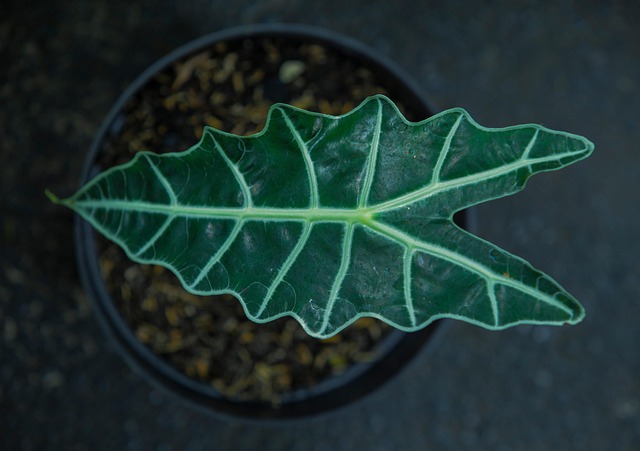
alocasia
Alocasia spp.
Comprehensive care and diagnosis guide for the Alocasia. Based on 29 verified community insights.
Care Requirements
At a Glance
Detailed care profile is currently being compiled by the Plant Grail swarm.
Start Here
Most Common Problems
Based on 29 analyzed cases — these are the issues you're most likely to encounter
Why does my Alocasia have root rot?
Alocasia corms (bulbous storage organs) can survive extreme root loss and...
Why does my Alocasia have seasonal dormancy?
Alocasia dormancy is frequently misdiagnosed as root rot, and vice versa. True...
Why does my Alocasia have black stems?
Black stems in Alocasia result from bacterial soft rot (primarily Erwinia spp....
Is my Alocasia overwatered?
Overwatering in Alocasia is fundamentally about watering frequency, not volume....
How do I propagate my Alocasia?
Alocasia root rot recovery success depends heavily on propagation medium...
Verified Data
All Diagnoses
Complete analysis of 29 cases for this variety. Select an entry to expand rescue protocols.
Diseases (1)
Environment (2)
Other Problems (13)
Pests (1)
Propagation (2)
Symptoms (5)
Common Questions
Frequently Asked Questions
Why does my alocasia have Root rot?
Cause: Alocasia corms (bulbous storage organs) can survive extreme root loss and regenerate through adventitious root formation, unlike fibrous-rooted plants. When root rot occurs, the corm stores sufficient carbohydrates and meristematic tissue to initiate new root primordia within 2-4 weeks under optimal conditions. This 'zombie' regeneration capability explains why Alocasias recover from 90% root loss that would kill other houseplants.
Solution: Remove all soil and gently rinse corm under lukewarm water to assess damage
Prevention: Maintain corm health by using chunky, well-draining aroid mix (40% bark, 30% perlite, 30% potting soil); water only when top 2 inches dry; ensure bright indirect light to support corm metabolism; inspect corms monthly by gently unpotting to check for firmness (healthy corms feel like firm potatoes).
92% confidence · View full protocol →
Why does my alocasia have Seasonal dormancy?
Cause: Alocasia dormancy is frequently misdiagnosed as root rot, and vice versa. True dormancy (triggered by temperatures below 60°F/15°C and reduced photoperiod) causes gradual leaf yellowing from oldest leaves, firm corm, and no foul odor. Root rot causes rapid leaf collapse across all ages, soft/mushy corm, and distinct sour/foul smell from anaerobic bacterial infection. The confusion leads to opposite treatments: dormancy requires patience; rot requires immediate intervention.
Solution: Diagnostic check: Gently unpot plant and inspect corm—firm and white/pale = dormancy; soft, mushy, black, foul-smelling = rot
Prevention: Understand your Alocasia species: tuberous types (amazonica, Polly) enter dormancy below 60°F; rhizomatous types (odora, zebrina) rarely fully defoliate. Maintain stable indoor temperatures above 65°F year-round to prevent dormancy triggers. Monitor for pre-dormancy signals: slowing growth, smaller new leaves.
91% confidence · View full protocol →
Why does my alocasia have Black stems?
Cause: Black stems in Alocasia result from bacterial soft rot (primarily Erwinia spp. or Pectobacterium) colonizing the corm crown and lower petiole tissue. This occurs when water pools at the base of stems during chronic overwatering, creating anaerobic conditions ideal for bacterial proliferation. Unlike fungal root rot which starts below soil, bacterial stem rot begins at the soil line where moisture accumulates and spreads downward into the corm.
Solution: Immediate action: Remove plant from soil and inspect stem bases—black, mushy tissue at soil line confirms bacterial rot
Prevention: Water at soil level only—never pour directly onto corm crown; ensure stem bases remain above soil line with corm partially exposed; use pots with drainage holes and well-draining mix; maintain 60-80% humidity via environmental methods rather than overhead misting that wets stems.
89% confidence · View full protocol →
Why does my alocasia have Overwatering?
Cause: Overwatering in Alocasia is fundamentally about watering frequency, not volume. These tropical aroids require oxygen exchange at their fibrous roots between waterings. When watered too frequently (before top 2 inches dry), soil remains saturated, creating anaerobic conditions where oxygen levels drop below 2mg/L. This suffocates roots and promotes anaerobic bacterial growth (Pythium, Erwinia) that breaks down root tissue. The plant's dramatic leaf droop often leads owners to water MORE, accelerating the rot cycle.
Solution: Confirm diagnosis: Insert finger 2 inches deep—moist/wet soil with drooping leaves = overwatering; dry soil = underwatering
Prevention: Use finger test or moisture meter: Water only when top 2 inches (5cm) of soil are completely dry to touch; in winter or low light, extend interval to 10-14 days; use well-draining aroid mix (40% bark, 30% perlite); ensure pots have drainage holes; avoid decorative cache pots without drainage.
90% confidence · View full protocol →
Why does my alocasia have Corm propagation methods?
Cause: Alocasia root rot recovery success depends heavily on propagation medium selection. Water propagation provides optimal oxygenation for new root formation but requires frequent changes to prevent bacterial growth. Perlite propagation maintains consistent moisture while providing aeration. Sphagnum moss offers excellent humidity retention but can harbor pathogens if not sterile. The wrong medium choice can cause recovery failure even with healthy corms.
Solution: Water propagation: Use clear glass container, change water every 2-3 days with room-temperature dechlorinated water, keep corm tip above waterline with roots submerged
Prevention: Select propagation medium based on environment: water for high-humidity homes with time for frequent changes; perlite for drier environments or busy schedules; sphagnum only if using sterile, new moss and maintaining high humidity around the container.
88% confidence · View full protocol →