PANEL 1411-P07 New finding: humidity ≠ brown tips in 96% of cases EVIDENCE Monstera fenestration linked to light hours, not age GRAIL 2,703 verified diagnoses and counting STUDY Overwatering confirmed as #1 killer across all species NEW Snake plant rot rescue protocol updated DATA 20,000+ raw cases analyzed across 216 species PANEL 1411-P07 New finding: humidity ≠ brown tips in 96% of cases EVIDENCE Monstera fenestration linked to light hours, not age GRAIL 2,703 verified diagnoses and counting STUDY Overwatering confirmed as #1 killer across all species NEW Snake plant rot rescue protocol updated DATA 20,000+ raw cases analyzed across 216 species
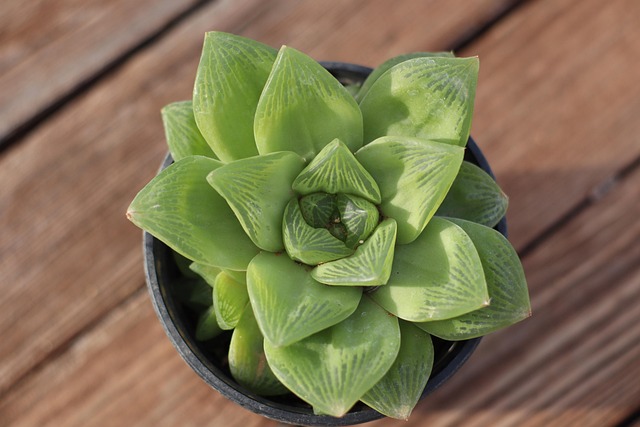
Haworthia — care guide and common problems
Haworthia

haworthia

Haworthia spp.

Evidence-based care guide for Haworthia (Haworthia spp.). Covers disease treatment, symptom diagnosis, watering and lighting. Our analysis draws from 8 verified community cases with an average confidence score of 86%. Each protocol is synthesized from real rescue outcomes, not generic advice.

8 diagnoses
Avg. confidence 86%

Care Essentials

Get to Know Your Haworthia

The #1 killer? Overwatering. Let the soil dry between waterings and your Haworthia will thrive.

Light

bright indirect

Wants bright, indirect light — sensitive to both extremes. Too much direct sun causes burns, too little causes stretching.

💡 Grow lights: Thrives under artificial grow lights (LED or fluorescent, 10-12 hours/day). A great option if your space lacks natural light.

Watering

every 10-14 days

Let the soil dry out significantly between waterings — this plant is very sensitive to overwatering. When in doubt, wait another day.

Humidity & Temperature

Appreciates some humidity but adapts to average home conditions. Brown tips in winter? Your air might be too dry — a light misting helps.

Prefers moderate temperatures (60-80°F). Keep away from radiators and intense afternoon sun windows.

Soil

Needs well-draining soil — add perlite or orchid bark to a standard potting mix. Good drainage is critical to prevent root rot.

Difficulty intermediate

Care Requirements

At a Glance

Care Profile in Development

While our detailed care profile is being compiled, you can find specific care guidance in the 4 care-related diagnoses below — including watering schedules, light requirements, and propagation methods from real-world cases.

Start Here

Most Common Problems

Based on 8 analyzed cases — these are the issues you're most likely to encounter

Don't see your symptom? Search all 7 topics below, or run the Diagnostic.

Free Diagnostic

Which of the 7 killers is threatening your plants? Take the 60-second quiz — we'll tell you exactly.

60 seconds · Free

Which of the 7 Killers
is threatening your plants?

We analyzed 1,616 documented plant deaths to identify the 7 causes behind 78% of all losses. Answer 5 questions — we'll tell you exactly which ones apply to your setup.

Skip the quiz — get The 7 Killers course ($19) →

Question 1 of 5

How do you decide when to water your plants?

Question 2 of 5

Where do most of your plants live?

Question 3 of 5

What's your home environment like?

Question 4 of 5

Have you lost a plant in the last 6 months?

Question 5 of 5

How often do you check your plants for pests?

🔬

Your diagnosis is ready

We've identified your top 2 risk killers. Enter your email to see the full breakdown and your personalized rescue protocol.

No spam. One-click unsubscribe anytime.

Your Plant Mortality Diagnosis

Your plants are most at risk from:

The 7 Killers: What 1,616 Dead Houseplants Taught Us — $19 mini-course

The 7 Killers mini-course covers every one of these in depth — mechanism, rescue protocol, prevention. 1,616 cases. 7 lessons. $19.

Get The 7 Killers — $19 →

Read the full mortality report (free) →

Get the Plant Mortality Checklist

The 7 killers behind 78% of houseplant deaths — and the exact fix for each. Free PDF based on 1,616 documented cases.

Free. No spam. Unsubscribe anytime.

Verified Data

All Diagnoses

7 topics consolidated from 8 documented cases. Expand any topic to see all protocols.

Symptoms (1 topics · 1 cases)

Why do my Haworthia leaves have brown tips?

Primarily light-induced stress

79%
Cause

Primarily light-induced stress. A brownish-red tint (sun tan) is a normal adaptation to bright indirect light. Dry, papery brown tips indicate true sun scorch from sudden exposure to direct afternoon sun. Because Haworthia have epidermal 'windows' to focus light, they are more sensitive to UV overload than other succulents. Browning can also result from root shedding, where the plant dehydrates from the tips inward.

Solutions
  • If browning is reddish and the plant is firm, it is likely benign 'sun stress'. No action needed unless green color is preferred (move 2ft from window).
  • If tips are dry and crispy, move the plant to a brighter indirect location (2500 lux) and avoid any direct sun for 14 days.
  • Check root health: if roots are shriveled/dry (root shedding), bottom-water sparingly every 14 days to encourage new root hair development.
  • Avoid brushing or touching leaf tips; they are fragile and brown easily from mechanical damage.
Prevention

Acclimate new plants over 14 days by increasing light by 1 hour daily. Use a 'winter growth' care cycle: increase water slightly in cooler months and reduce in summer (semi-dormancy) to prevent root loss.

Diseases (1 topics · 2 cases)

Why does my Haworthia have root rot?

Haworthia species possess shallow, fibrous root systems adapted to rocky, fast-draining habitats

2 protocols 87–89%

Protocol 1: overwatering root rot · 89% confidence

Cause

Haworthia species possess shallow, fibrous root systems adapted to rocky, fast-draining habitats. When overwatered, these roots rot rapidly in anaerobic soil conditions, often leaving the plant seemingly healthy above-ground while the root crown decays below. Unlike Echeveria, Haworthia can regenerate entirely new root systems from the basal stem meristem even after total root loss, making recovery possible from seemingly catastrophic rot.

Solutions
  • Inspect roots: Gently remove from pot and identify mushy/brown rot versus firm white healthy tissue
  • Aggressive pruning: Remove ALL rotted roots and any affected crown tissue with sterilized tools—Haworthia can recover from complete root removal if the stem core remains intact
  • Air dry: Place the plant on dry paper towel in bright indirect light with good airflow for 3-7 days to thoroughly callus all wounds
  • Repot shallow: Use gritty mix (60% perlite/pumice, 40% cactus soil) in a shallow pot that matches root ball size—excess soil retains unwanted moisture
  • Dry start: Do NOT water for 2 weeks post-repotting; wait for visible signs of thirst (slightly wrinkled leaves) before first watering
Prevention

Water only when leaves show visible wrinkling and begin to curl inward—this is Haworthia's natural thirst signal. Use shallow terracotta pots that dry quickly. Position in bright indirect light (2000-5000 lux) to accelerate evaporation. Reduce watering to monthly in winter when growth slows.

Protocol 2: root rot · 87% confidence

Cause

Primarily overwatering or lack of drainage holes. Haworthia have thick, contractile roots that thrive in gritty substrates. In stagnant, wet soil, they succumb to fungal rot. They may also 'yeet' (shed) their roots entirely due to extreme stress, including root girdling from retail synthetic netting.

Solutions
  • Remove plant and inspect roots. Firm white roots are healthy; brown mushy roots must be removed.
  • Use a sterile blade to excise all rot from the basal core until only healthy white tissue remains.
  • Allow the core to callus (dry) for 7-10 days in a bright, shaded spot with high airflow.
  • Repot in a highly gritty mix (50% pumice/perlite, 50% succulent soil) in a terracotta pot.
  • Wait 14 days before the first light watering to allow root nodes to activate.
Prevention

Adopt a strict 'soak and dry' method. Water only when the soil is 100% dry and the lower leaves feel slightly less firm. Remove any retail mesh or plastic cages from roots immediately after purchase.

Watering Issues (1 topics · 1 cases)

Is my Haworthia overwatered?

Succulents utilize Crassulacean Acid Metabolism (CAM) photosynthesis, opening stomata at night to minimize water loss

89%
Cause

Succulents utilize Crassulacean Acid Metabolism (CAM) photosynthesis, opening stomata at night to minimize water loss. During winter dormancy (triggered by photoperiod <10 hours and temperatures <65°F), metabolic rate drops 70-80%, eliminating water needs for growth. Continued summer watering frequency (every 2 weeks) during dormancy creates chronically moist soil that promotes Pythium and Fusarium proliferation. The plant's CAM-adapted physiology makes it 3-5x more vulnerable to root rot during dormancy than tropical plants with C3 metabolism.

Solutions
  • Establish season markers: When daylight drops below 10 hours or indoor temps consistently <65°F, transition to dormancy schedule
  • Summer schedule (active growth): Water every 2-3 weeks when soil is completely dry; succulents can utilize moderate moisture during growth
  • Winter schedule (dormancy): Extend to every 4-6 weeks minimum; soil should remain dry for extended periods
  • Spring transition: Gradually increase frequency over 3-4 weeks as photoperiod extends and new growth emerges
  • Use environmental cues: New compact central growth indicates active metabolism; stretched etiolated growth indicates insufficient light (not thirst)
Prevention

Never water on calendar autopilot. Test soil dryness 2-3 inches deep with wooden skewer or moisture meter—succulents tolerate drought stress far better than waterlogging during any season.

Growth & Structure (1 topics · 1 cases)

Why is my Haworthia becoming etiolated?

Insufficient light intensity (<1000 lux) for prolonged periods

81%
Cause

Insufficient light intensity (<1000 lux) for prolonged periods. While marketed as low-light plants, Haworthia require bright indirect light to maintain their tight rosette form. In dim conditions, the stem elongates (etiolates) to search for light, and leaves become pale and spaced out. The plant may also 'yeet' its roots to save energy if light is too low for photosynthesis.

Solutions
  • Gradual Light Increase: Move the plant 1 foot closer to a window every 3 days until it receives 2000-5000 lux of bright indirect light.
  • Support the Rosette: Use small pebbles or top-dressing to support a leaning or stretched stem until it stabilizes.
  • The 'Restart' Method: If etiolation is severe, wait for the plant to produce 'pups' (offsets) from the base. Once pups are 1 inch wide, detach and grow them in a high-light environment to start a new compact plant.
  • Rotation: Turn the pot 90 degrees every week to prevent the plant from leaning toward the light source.
Prevention

Place in an East-facing window for ideal morning sun. Use a light meter app to confirm your 'bright spot' is actually over 1000 lux. Avoid dark bookshelves or corners where no natural light reaches.

Other Topics (3 topics · 3 cases)

Haworthia: Drainage Requirements

Succulent root systems like those of Haworthia evolved for arid environments with infrequent rainfall and rapid soil drainage

89%
Cause

Succulent root systems like those of Haworthia evolved for arid environments with infrequent rainfall and rapid soil drainage. When placed in moisture-retentive containers (plastic/glazed ceramic) or oversized pots with excess soil volume, water perches at root zones creating anaerobic conditions. This promotes fungal proliferation (Leucocoprinus birnbaumii, Fusarium, Pythium) and root rot within 7-14 days of saturation.

Solutions
  • Switch to unglazed terracotta or clay pots which wick moisture through porous walls and dry 40% faster than plastic
  • Match pot size to root ball: roots should fill 60-80% of container volume; avoid oversized pots
  • Add 20% coarse sand or orchid bark to soil mix to maintain structural air pockets
  • Install small fan near plants to increase air circulation and deter surface mold
  • Drainage test: If water pools on surface or takes >30 seconds to exit holes, repot with grittier mix immediately
Prevention

Use shallow pots only 1-2 inches larger than root ball—succulents prioritize root filling over leaf expansion. Ensure 3-5 drainage holes minimum; elevate pots on feet to improve airflow beneath. Maintain ambient humidity below 50% to accelerate soil evaporation.

How much light does my Haworthia need?

Haworthia requires bright light for photosynthesis but lacks protective mechanisms against intense direct sun

84%
Cause

Haworthia requires bright light for photosynthesis but lacks protective mechanisms against intense direct sun. The white or translucent window tissue on leaf tips allows light penetration to inner cells. Insufficient light causes etiolation (stretching), pale color, and weak growth.

Solutions
  • Provide bright indirect light: East or north-facing windows ideal for Haworthia
  • Target 2000-4000 lux; avoid intense afternoon sun that damages leaf windows
  • If using grow lights: Maintain 12-18 inches distance; 12-14 hours daily
  • Signs of too much light: Reddish or brown leaf tips indicate sun stress
  • Signs of too little light: Leaves elongate and lose compact rosette form
Prevention

Acclimate plants gradually to brighter light over 7-10 days. Rotate pots quarter-turn weekly for balanced growth. Morning sun is acceptable; protect from harsh afternoon direct sun.

How much light does my Haworthia need?

Haworthia species are adapted to filtered light under shrubs and rocks in their native South African habitat

86%
Cause

Haworthia species are adapted to filtered light under shrubs and rocks in their native South African habitat. Their translucent 'window' leaf tips enable photosynthesis in low-light conditions, but direct sunlight causes photoinhibition, bleaching, and sunburn. Conversely, insufficient light causes etiolation (stretching) and loss of compact rosette form.

Solutions
  • 1. Position in bright indirect light or filtered sunlight - east-facing windows are ideal
  • 2. Avoid direct afternoon sun; use sheer curtains on south-facing windows to filter intense light
  • 3. If leaves turn brown or red, reduce light intensity immediately to prevent permanent damage
  • 4. If rosette spreads and leaves stand upright, increase light gradually to restore compact form
  • 5. The more transparent the 'window' on leaf tips, the more shade the plant requires
Prevention

Maintain 4-6 hours of bright indirect light daily; use grow lights (2000-5000 lux) if natural light is insufficient; rotate pots weekly for even growth; group with other shade-tolerant succulents; monitor for early signs of sunburn (browning at leaf tips) or etiolation (stretching)

Common Questions

Frequently Asked Questions

Why does my haworthia have Overwatering root rot?

Cause: Haworthia species possess shallow, fibrous root systems adapted to rocky, fast-draining habitats. When overwatered, these roots rot rapidly in anaerobic soil conditions, often leaving the plant seemingly healthy above-ground while the root crown decays below. Unlike Echeveria, Haworthia can regenerate entirely new root systems from the basal stem meristem even after total root loss, making recovery possible from seemingly catastrophic rot.

Solution: Inspect roots: Gently remove from pot and identify mushy/brown rot versus firm white healthy tissue

Prevention: Water only when leaves show visible wrinkling and begin to curl inward—this is Haworthia's natural thirst signal. Use shallow terracotta pots that dry quickly. Position in bright indirect light (2000-5000 lux) to accelerate evaporation. Reduce watering to monthly in winter when growth slows.

89% confidence · View full protocol →

Why does my haworthia have Drainage_requirements?

Cause: Succulent root systems like those of Haworthia evolved for arid environments with infrequent rainfall and rapid soil drainage. When placed in moisture-retentive containers (plastic/glazed ceramic) or oversized pots with excess soil volume, water perches at root zones creating anaerobic conditions. This promotes fungal proliferation (Leucocoprinus birnbaumii, Fusarium, Pythium) and root rot within 7-14 days of saturation.

Solution: Switch to unglazed terracotta or clay pots which wick moisture through porous walls and dry 40% faster than plastic

Prevention: Use shallow pots only 1-2 inches larger than root ball—succulents prioritize root filling over leaf expansion. Ensure 3-5 drainage holes minimum; elevate pots on feet to improve airflow beneath. Maintain ambient humidity below 50% to accelerate soil evaporation.

89% confidence · View full protocol →

Why does my haworthia have Overwatering?

Cause: Succulents utilize Crassulacean Acid Metabolism (CAM) photosynthesis, opening stomata at night to minimize water loss. During winter dormancy (triggered by photoperiod <10 hours and temperatures <65°F), metabolic rate drops 70-80%, eliminating water needs for growth. Continued summer watering frequency (every 2 weeks) during dormancy creates chronically moist soil that promotes Pythium and Fusarium proliferation. The plant's CAM-adapted physiology makes it 3-5x more vulnerable to root rot during dormancy than tropical plants with C3 metabolism.

Solution: Establish season markers: When daylight drops below 10 hours or indoor temps consistently <65°F, transition to dormancy schedule

Prevention: Never water on calendar autopilot. Test soil dryness 2-3 inches deep with wooden skewer or moisture meter—succulents tolerate drought stress far better than waterlogging during any season.

89% confidence · View full protocol →

Why does my haworthia have Light?

Cause: Haworthia species are adapted to filtered light under shrubs and rocks in their native South African habitat. Their translucent 'window' leaf tips enable photosynthesis in low-light conditions, but direct sunlight causes photoinhibition, bleaching, and sunburn. Conversely, insufficient light causes etiolation (stretching) and loss of compact rosette form.

Solution: 1. Position in bright indirect light or filtered sunlight - east-facing windows are ideal

Prevention: Maintain 4-6 hours of bright indirect light daily; use grow lights (2000-5000 lux) if natural light is insufficient; rotate pots weekly for even growth; group with other shade-tolerant succulents; monitor for early signs of sunburn (browning at leaf tips) or etiolation (stretching)

86% confidence · View full protocol →

Why does my haworthia have Insufficient light?

Cause: Haworthia requires bright light for photosynthesis but lacks protective mechanisms against intense direct sun. The white or translucent window tissue on leaf tips allows light penetration to inner cells. Insufficient light causes etiolation (stretching), pale color, and weak growth.

Solution: Provide bright indirect light: East or north-facing windows ideal for Haworthia

Prevention: Acclimate plants gradually to brighter light over 7-10 days. Rotate pots quarter-turn weekly for balanced growth. Morning sun is acceptable; protect from harsh afternoon direct sun.

84% confidence · View full protocol →

Common Questions

Frequently Asked About Haworthia

What problems can Haworthia get?

Our database contains 8 documented Haworthia cases covering 7 distinct topics, including diseases, pest identification, environmental stress, propagation, and advanced care protocols — each with verified solutions.

Structured Learning

Ready to Go Deeper?

Explore our Mastery Packs for structured, video-based learning with step-by-step protocols from 20,000+ analyzed plant cases.

Browse All Courses →