philodendron brasil
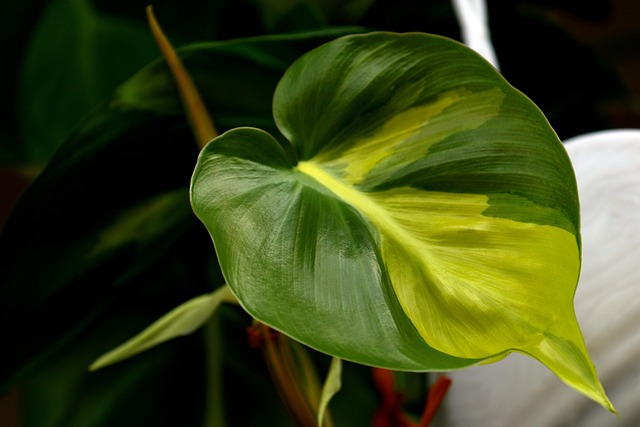
Philodendron hederaceum 'Brasil'
Evidence-based care guide for Philodendron Brasil (Philodendron hederaceum 'Brasil'). Covers symptom diagnosis, disease treatment, propagation methods and lighting. Our analysis draws from 11 verified community cases with an average confidence score of 87%. Each protocol is synthesized from real rescue outcomes, not generic advice.
Care Essentials
Get to Know Your Philodendron Brasil
Light is everything for this plant. Get the placement right and everything else falls into place.
Light
bright indirect
Wants bright, indirect light — sensitive to both extremes. Too much direct sun causes burns, too little causes stretching.
💡 Grow lights: Thrives under artificial grow lights (LED or fluorescent, 10-12 hours/day). A great option if your space lacks natural light.
Watering
every 7-10 days
Water when the top 1-2 inches of soil feel dry. Adjust with the seasons — less in winter, more in summer.
Humidity & Temperature
Loves higher humidity (60%+). If your air is dry, group it with other plants, use a pebble tray, or run a humidifier nearby.
Prefers moderate temperatures (60-80°F). Keep away from radiators and intense afternoon sun windows.
Soil
Needs well-draining soil — add perlite or orchid bark to a standard potting mix. Good drainage is critical to prevent root rot.
Care Requirements
At a Glance
Care Profile in Development
While our detailed care profile is being compiled, you can find specific care guidance in the 3 care-related diagnoses below — including watering schedules, light requirements, and propagation methods from real-world cases.
Go Deeper
Philodendron Rare Guide Pack
The complete protocol: advanced care, seasonal calendars, and rescue modules. Everything on this page, plus video walkthroughs.
Start Here
Most Common Problems
Based on 11 analyzed cases — these are the issues you're most likely to encounter
Don't see your symptom? Search all 9 topics below, or run the Diagnostic.
Why are my Philodendron Brasil leaves turning yellow?
Overwatering causing root oxygen deprivation, or insufficient light leading to...
Why is my Philodendron Brasil losing its variegation?
Philodendron Brasil occasionally produces fully yellow or albino-like leaves...
Philodendron Brasil: Common Problems
Philodendron Brasil commonly suffers from three interconnected issues: (1) Root...
How much light does my Philodendron Brasil need?
Philodendron Brasil evolved as a tropical understory climber, adapted to...
Why does my Philodendron Brasil have root rot?
LECA (Lightweight Expanded Clay Aggregate) transition shock causes 70% root...
Which of the 7 Killers
is threatening your plants?
We analyzed 1,616 documented plant deaths to identify the 7 causes behind 78% of all losses. Answer 5 questions — we'll tell you exactly which ones apply to your setup.
Skip the quiz — get The 7 Killers course ($19) →Question 1 of 5
How do you decide when to water your plants?
Question 2 of 5
Where do most of your plants live?
Question 3 of 5
What's your home environment like?
Question 4 of 5
Have you lost a plant in the last 6 months?
Question 5 of 5
How often do you check your plants for pests?
Your diagnosis is ready
We've identified your top 2 risk killers. Enter your email to see the full breakdown and your personalized rescue protocol.
Your plants are most at risk from:
The 7 Killers mini-course covers every one of these in depth — mechanism, rescue protocol, prevention. 1,616 cases. 7 lessons. $19.
Get The 7 Killers — $19 →Get the Plant Mortality Checklist
The 7 killers behind 78% of houseplant deaths — and the exact fix for each. Free PDF based on 1,616 documented cases.
Your checklist is ready!
We also sent it to your inbox. Check your email for the full download.
Open the ChecklistFree. No spam. Unsubscribe anytime.
Verified Data
All Diagnoses
9 topics consolidated from 11 documented cases. Expand any topic to see all protocols.
Symptoms (2 topics · 3 cases)
What are these brown spots on my Philodendron Brasil?
Philodendron Brasil develops brown spots when water droplets on leaves act as magnifying lenses under direct sunlight, causing localized photothermal burns
86%
What are these brown spots on my Philodendron Brasil?
Philodendron Brasil develops brown spots when water droplets on leaves act as magnifying lenses under direct sunlight, causing localized photothermal burns
Cause
Philodendron Brasil develops brown spots when water droplets on leaves act as magnifying lenses under direct sunlight, causing localized photothermal burns. The variegated yellow-green tissue is particularly vulnerable due to reduced chlorophyll content and photoprotection capacity. Unlike bacterial spots which spread systemically or edema which appears as water-soaked blisters, sunburn presents as dry, crispy brown patches typically on upper leaf surfaces exposed to light.
Solutions
- Relocate plant to bright indirect light only - never place in direct sun especially after watering
- Water only in morning hours to allow 4+ hours for leaf drying before peak light intensity
- Gently shake leaves after watering or pat dry with soft cloth to remove water droplets
- Trim affected brown areas with sterile scissors to improve aesthetics and prevent secondary infection
- Use sheer curtains or UV-filtering film on south/west windows if no alternative location available
Prevention
Avoid overhead watering that splashes foliage; bottom-water when possible; maintain morning-only watering schedule; position plants 3-5 feet from south/west windows; use humidity trays or humidifiers instead of misting for humidity needs.
Why are my Philodendron Brasil leaves turning yellow?
Overwatering causing root oxygen deprivation, or insufficient light leading to reduced chlorophyll production in variegated Philodendron hederaceum tissue
2 protocols
87–95%
Why are my Philodendron Brasil leaves turning yellow?
Overwatering causing root oxygen deprivation, or insufficient light leading to reduced chlorophyll production in variegated Philodendron hederaceum tissue
Protocol 1: yellow leaves · 95% confidence
Cause
Overwatering causing root oxygen deprivation, or insufficient light leading to reduced chlorophyll production in variegated Philodendron hederaceum tissue
Solutions
- Check soil moisture before watering
- Move to brighter indirect light if variegation is fading
- Remove yellow leaves at the node
- Ensure pot has drainage holes
- Water when top 1-2 inches of soil are dry
Prevention
Water when top inch of soil is dry; provide bright indirect light to maintain variegation; use well-draining aroid mix
Protocol 2: yellow leaves from transplant shock · 87% confidence
Cause
Philodendron Brasil exhibits yellowing on lower leaves within 2-4 weeks post-purchase due to transplant shock and acclimation stress. The transition from nursery conditions (controlled humidity, lighting, and watering) to home environments triggers physiological adjustment. Unlike root rot which affects multiple leaves simultaneously and shows soggy soil, transplant shock yellowing typically affects only the oldest 1-2 leaves as the plant redirects energy to root establishment and new growth adaptation.
Solutions
- Inspect leaf undersides for pests using 10x magnification or phone macro lens to rule out secondary infestations
- Maintain consistent bright indirect light (2000-5000 lux) and 60-80% humidity to support acclimation
- Allow top 2 inches of soil to dry between waterings - avoid overcompensating with extra water
- Trim yellow leaves at the base with sterilized scissors to redirect energy to healthy growth
- Withhold fertilizer for 4-6 weeks post-purchase to prevent root burn during establishment
Prevention
Quarantine new plants for 14-21 days with weekly pest inspections; gradually acclimate to home light conditions over 7-10 days; avoid repotting for 4-6 weeks unless roots are severely circling; maintain stable 65-85°F temperatures and avoid placement near HVAC vents.
Diseases (1 topics · 1 cases)
Why does my Philodendron Brasil have root rot?
LECA (Lightweight Expanded Clay Aggregate) transition shock causes 70% root mortality in Philodendron Brasil when soil roots suffocate without structural support
89%
Why does my Philodendron Brasil have root rot?
LECA (Lightweight Expanded Clay Aggregate) transition shock causes 70% root mortality in Philodendron Brasil when soil roots suffocate without structural support
Cause
LECA (Lightweight Expanded Clay Aggregate) transition shock causes 70% root mortality in Philodendron Brasil when soil roots suffocate without structural support. Fine, hair-like soil roots evolved for soil matrix anchorage cannot extract sufficient oxygen from water-filled LECA pores. Residual soil particles left on roots during transition create anaerobic micro-zones where Pythium and anaerobic bacteria proliferate, causing secondary rot. The plant's epiphytic nature requires active root oxygenation that un-aerated LECA fails to provide during the critical 2-4 week water root adaptation period.
Solutions
- Remove plant from LECA and gently rinse roots under lukewarm water to remove all clay debris and residual soil
- Sterilize pruning shears with 70% isopropyl alcohol, then excise ALL mushy, black, or translucent roots leaving only firm white/cream tissue
- Prepare hydrogen peroxide bath: Mix 3% H2O2 with water at 1:10 dilution (10ml peroxide per 100ml water)
- Submerge trimmed roots in H2O2 solution for 10-20 minutes to oxygenate tissue and kill surface pathogens
- Transfer to clean water propagation vessel; change water every 2-3 days to maintain oxygenation and prevent bacterial bloom
- Monitor for new white water roots emerging from nodes; this takes 1-4 weeks depending on environmental conditions
- Once water roots reach 2-4 inches with visible branching, transition to prepared LECA with pH-balanced nutrient solution
- Install air stone in reservoir for continuous oxygenation during the establishment phase
Prevention
Pre-soak and thoroughly rinse LECA to remove dust; maintain continuous aeration via air stone or passive reservoir cycling; never transition directly from soil—establish water roots first in clean water for 2-4 weeks; remove 100% of soil before LECA placement; maintain pH 5.5-6.5 and EC below 1.0 during transition; monitor with dissolved oxygen test strips weekly (target >6mg/L).
Propagation (1 topics · 1 cases)
How do I propagate my Philodendron Brasil?
Philodendron Brasil propagates readily via stem cuttings containing at least one node (swollen bump with aerial root potential)
85%
How do I propagate my Philodendron Brasil?
Philodendron Brasil propagates readily via stem cuttings containing at least one node (swollen bump with aerial root potential)
Cause
Philodendron Brasil propagates readily via stem cuttings containing at least one node (swollen bump with aerial root potential). The plant's vining growth habit produces nodes every 2-3 inches, making it ideal for propagation. Success rate is high (85%+) due to the species' natural adaptation to tropical understory conditions where stem fragments root readily in humid environments.
Solutions
- 1. Select healthy stem with 2-3 leaves and at least 1 visible node; nodes appear as swollen bumps on stem
- 2. Cut 1/4 inch below node using clean, sharp scissors or blade sterilized with alcohol
- 3. Remove bottom leaf to expose node; optionally trim remaining leaves by half to reduce transpiration
- 4. Root in water: Submerge node in room-temperature water, change weekly, roots emerge in 2-4 weeks
- 5. Root in soil: Plant node 1 inch deep in moist perlite/sphagnum mix; keep humid (plastic dome/bag) at 70-80°F
- 6. Transplant when roots reach 2-3 inches long into well-draining aroid mix
Prevention
Take cuttings only from healthy parent plants; sterilize cutting tools with 70% isopropyl alcohol between cuts; avoid propagating during winter dormancy when root development slows.
Care Methods (2 topics · 2 cases)
Brasil Care: Philodendron Brasil Guide
Philodendron hederaceum 'Brasil' is a naturally occurring cultivar with gold and green variegated heart-shaped leaves
87%
Brasil Care: Philodendron Brasil Guide
Philodendron hederaceum 'Brasil' is a naturally occurring cultivar with gold and green variegated heart-shaped leaves
Cause
Philodendron hederaceum 'Brasil' is a naturally occurring cultivar with gold and green variegated heart-shaped leaves. As a trailing/climbing variety in the Philodendron subgenus, it requires consistent moisture but is prone to root rot from waterlogged soil. The variegated tissue contains reduced chlorophyll, making it more sensitive to light stress and requiring brighter conditions than solid green varieties to maintain color contrast.
Solutions
- Check soil moisture with finger test—water only when top 2 inches are dry
- Repot if soil retains moisture more than 5-7 days using chunky aroid mix
- Position 3-5 feet from east/west windows with sheer curtain for filtered light
- Trim leggy vines at nodes to encourage bushier growth
- Propagate cuttings with 3-4 nodes in water or moist sphagnum moss
Prevention
Water when top 2 inches of soil are dry; use well-draining aroid mix (50% potting soil, 30% perlite, 20% bark); provide bright indirect light (3000-5000 lux) to preserve variegation; maintain 60-70% humidity.
Care Requirements: Philodendron Brasil Guide
Philodendron Brasil (Philodendron hederaceum 'Brasil') requires tropical understory conditions: bright indirect light (100-200 µmol/m²/s or 2000-5000 lux), 60-80% humidity, and well-draining aroid mix (50% potting soil, 30% perlite, 20% orchid bark)
88%
Care Requirements: Philodendron Brasil Guide
Philodendron Brasil (Philodendron hederaceum 'Brasil') requires tropical understory conditions: bright indirect light (100-200 µmol/m²/s or 2000-5000 lux), 60-80% humidity, and well-draining aroid mix (50% potting soil, 30% perlite, 20% orchid bark)
Cause
Philodendron Brasil (Philodendron hederaceum 'Brasil') requires tropical understory conditions: bright indirect light (100-200 µmol/m²/s or 2000-5000 lux), 60-80% humidity, and well-draining aroid mix (50% potting soil, 30% perlite, 20% orchid bark). The cultivar is a trailing/climbing variety with heart-shaped variegated leaves that revert to solid green in insufficient light. Root rot develops when soil remains wet for 7+ days due to anaerobic bacterial proliferation.
Solutions
- 1. Use well-draining aroid mix: 50% potting soil, 30% perlite, 20% orchid bark to maintain 20-30% air porosity
- 2. Water when top 2-3 inches are dry - insert finger to second knuckle or use moisture meter reading 3-4
- 3. Maintain 60-80% humidity via humidifier, pebble tray, or grouping plants; misting ineffective and can cause leaf spot
- 4. Provide bright indirect light: 3-5 feet from south/west windows with sheer curtain, or east-facing window
- 5. Fertilize monthly with balanced liquid fertilizer at 1/4 strength during spring/summer; withhold in winter
Prevention
Use terracotta pots with drainage holes; water only when top 2-3 inches of soil are dry (typically 7-14 days); maintain humidity via pebble trays or humidifiers; provide bright indirect light 10-12 hours daily; fertilize at 1/4 strength monthly during growing season.
Other Topics (3 topics · 4 cases)
Philodendron Brasil: Common Problems
Philodendron Brasil commonly suffers from three interconnected issues: (1) Root rot from overwatering - 7+ days of saturated soil creates anaerobic conditions promoting Pythium and bacterial pathogens, causing yellow lower leaves and mushy stems; (2) Thrips infestations - tiny pests (1-2mm) that attack new growth causing silvery stippling, often overlooked until damage is severe; (3) Sunburn/heat stress - direct sunlight causes phototoxicity with brown crispy spots, exacerbated by heat waves that accelerate transpiration
90%
Philodendron Brasil: Common Problems
Philodendron Brasil commonly suffers from three interconnected issues: (1) Root rot from overwatering - 7+ days of saturated soil creates anaerobic conditions promoting Pythium and bacterial pathogens, causing yellow lower leaves and mushy stems; (2) Thrips infestations - tiny pests (1-2mm) that attack new growth causing silvery stippling, often overlooked until damage is severe; (3) Sunburn/heat stress - direct sunlight causes phototoxicity with brown crispy spots, exacerbated by heat waves that accelerate transpiration
Cause
Philodendron Brasil commonly suffers from three interconnected issues: (1) Root rot from overwatering - 7+ days of saturated soil creates anaerobic conditions promoting Pythium and bacterial pathogens, causing yellow lower leaves and mushy stems; (2) Thrips infestations - tiny pests (1-2mm) that attack new growth causing silvery stippling, often overlooked until damage is severe; (3) Sunburn/heat stress - direct sunlight causes phototoxicity with brown crispy spots, exacerbated by heat waves that accelerate transpiration. These issues often compound: overwatering weakens plants, making them susceptible to pests; heat stress accelerates water needs, leading to overcorrection.
Solutions
- 1. Root Rot: Unpot, trim black/mushy roots, repot in fresh chunky mix, water only when dry; use H2O2 soak (1:1 with water) for 20 minutes on remaining roots
- 2. Thrips: Isolate plant immediately; spray insecticidal soap or neem oil every 5-7 days for 3 weeks; use sticky traps to monitor
- 3. Sunburn: Move to bright indirect light immediately; trim damaged leaves; increase humidity to 60-70% to aid recovery
- 4. Heat Stress: Relocate to cooler spot below 85°F; boost humidity via humidifier; water when soil is dry, not on schedule
- 5. Preventive Care: Use terracotta pots with drainage; implement dry-back watering cycle; maintain 60-80% humidity
Prevention
Water only when top 2-3 inches are dry; quarantine new plants 2-4 weeks; inspect weekly for pests with magnifier; maintain bright indirect light without direct sun exposure; avoid temperature extremes above 85°F (29°C).
How much light does my Philodendron Brasil need?
Philodendron Brasil evolved as a tropical understory climber, adapted to dappled sunlight filtering through forest canopy (50-200 µmol/m²/s PPFD)
89%
How much light does my Philodendron Brasil need?
Philodendron Brasil evolved as a tropical understory climber, adapted to dappled sunlight filtering through forest canopy (50-200 µmol/m²/s PPFD)
Cause
Philodendron Brasil evolved as a tropical understory climber, adapted to dappled sunlight filtering through forest canopy (50-200 µmol/m²/s PPFD). Insufficient light (below 100 PPFD) causes etiolation - leggy stems with small, widely-spaced leaves as the plant stretches toward light sources. Direct sunlight causes phototoxicity - crispy brown spots and leaf scorch due to lack of photoprotective adaptations for full sun exposure. The variegated 'Brasil' cultivar shows faster reversion to solid green in low light as the plant prioritizes chlorophyll production over variegation.
Solutions
- 1. Measure light with phone app or meter: Target 10,000-20,000 lux (100-200 PPFD) at plant canopy
- 2. Relocate to bright indirect light: 3-5 feet from south/west windows with sheer curtain, or east-facing window
- 3. For leggy plants: Cut back to 2-3 nodes from soil, propagate cuttings to create fuller plant
- 4. Acclimate gradually: Increase light exposure by 10-20% weekly to avoid shock in older plants
- 5. Supplement with grow lights: Position 12-18 inches above plant, 12-14 hours daily in winter months
Prevention
Position 3-5 feet from south/west-facing windows with sheer curtains; east-facing windows provide ideal light; maintain 12-14 hour photoperiod with grow lights in winter; use light meter apps to verify 10,000-20,000 lux at canopy level.
Why is my Philodendron Brasil losing its variegation?
Philodendron Brasil occasionally produces fully yellow or albino-like leaves when environmental conditions fluctuate dramatically (light changes, temperature swings, or repotting stress)
2 protocols
75–84%
Why is my Philodendron Brasil losing its variegation?
Philodendron Brasil occasionally produces fully yellow or albino-like leaves when environmental conditions fluctuate dramatically (light changes, temperature swings, or repotting stress)
Protocol 1: variegation instability · 84% confidence
Cause
Philodendron Brasil occasionally produces fully yellow or albino-like leaves when environmental conditions fluctuate dramatically (light changes, temperature swings, or repotting stress). Unlike stable variegated tissue which contains both green and yellow cells, these albino leaves contain no functional chlorophyll and cannot photosynthesize. The plant produces them as a stress response when variegation genes become unstable. These leaves are fragile, short-lived, and indicate the plant needs environmental stabilization rather than propagation.
Solutions
- Do not propagate albino cuttings - they lack chlorophyll and cannot survive independently
- Allow the albino leaf to remain attached until it naturally senesces (the plant will reabsorb nutrients)
- Increase bright indirect light (2000-5000 lux) to stabilize variegation patterns
- Maintain consistent 60-80% humidity and 65-85°F temperatures to reduce stress
- Monitor subsequent leaves: if albino production continues, prune back to the last stable variegated node to reset growth
Prevention
Maintain consistent environmental conditions year-round; avoid sudden light changes or temperature drops; acclimate gradually when moving plants; provide stable bright indirect light to support variegation stability.
Protocol 2: loss of variegation · 75% confidence
Cause
Insufficient light triggering reversion to all-green growth in variegated Philodendron hederaceum as plant maximizes chlorophyll production
Solutions
- Move to brighter indirect light location
- Prune all-green stems to encourage variegated growth
- Rotate plant weekly for even light exposure
- Supplement with grow light if natural light is insufficient
Prevention
Provide bright indirect light year-round; rotate plant regularly; avoid low-light corners
Common Questions
Frequently Asked Questions
Why does my philodendron brasil have Yellow leaves?
Cause: Overwatering causing root oxygen deprivation, or insufficient light leading to reduced chlorophyll production in variegated Philodendron hederaceum tissue
Solution: Check soil moisture before watering
Prevention: Water when top inch of soil is dry; provide bright indirect light to maintain variegation; use well-draining aroid mix
95% confidence · View full protocol →
Why does my philodendron brasil have Variegation instability?
Cause: Philodendron Brasil occasionally produces fully yellow or albino-like leaves when environmental conditions fluctuate dramatically (light changes, temperature swings, or repotting stress). Unlike stable variegated tissue which contains both green and yellow cells, these albino leaves contain no functional chlorophyll and cannot photosynthesize. The plant produces them as a stress response when variegation genes become unstable. These leaves are fragile, short-lived, and indicate the plant needs environmental stabilization rather than propagation.
Solution: Do not propagate albino cuttings - they lack chlorophyll and cannot survive independently
Prevention: Maintain consistent environmental conditions year-round; avoid sudden light changes or temperature drops; acclimate gradually when moving plants; provide stable bright indirect light to support variegation stability.
84% confidence · View full protocol →
Why does my philodendron brasil have Common problems?
Cause: Philodendron Brasil commonly suffers from three interconnected issues: (1) Root rot from overwatering - 7+ days of saturated soil creates anaerobic conditions promoting Pythium and bacterial pathogens, causing yellow lower leaves and mushy stems; (2) Thrips infestations - tiny pests (1-2mm) that attack new growth causing silvery stippling, often overlooked until damage is severe; (3) Sunburn/heat stress - direct sunlight causes phototoxicity with brown crispy spots, exacerbated by heat waves that accelerate transpiration. These issues often compound: overwatering weakens plants, making them susceptible to pests; heat stress accelerates water needs, leading to overcorrection.
Solution: 1. Root Rot: Unpot, trim black/mushy roots, repot in fresh chunky mix, water only when dry; use H2O2 soak (1:1 with water) for 20 minutes on remaining roots
Prevention: Water only when top 2-3 inches are dry; quarantine new plants 2-4 weeks; inspect weekly for pests with magnifier; maintain bright indirect light without direct sun exposure; avoid temperature extremes above 85°F (29°C).
90% confidence · View full protocol →
Why does my philodendron brasil have Light needs?
Cause: Philodendron Brasil evolved as a tropical understory climber, adapted to dappled sunlight filtering through forest canopy (50-200 µmol/m²/s PPFD). Insufficient light (below 100 PPFD) causes etiolation - leggy stems with small, widely-spaced leaves as the plant stretches toward light sources. Direct sunlight causes phototoxicity - crispy brown spots and leaf scorch due to lack of photoprotective adaptations for full sun exposure. The variegated 'Brasil' cultivar shows faster reversion to solid green in low light as the plant prioritizes chlorophyll production over variegation.
Solution: 1. Measure light with phone app or meter: Target 10,000-20,000 lux (100-200 PPFD) at plant canopy
Prevention: Position 3-5 feet from south/west-facing windows with sheer curtains; east-facing windows provide ideal light; maintain 12-14 hour photoperiod with grow lights in winter; use light meter apps to verify 10,000-20,000 lux at canopy level.
89% confidence · View full protocol →
Why does my philodendron brasil have Root rot?
Cause: LECA (Lightweight Expanded Clay Aggregate) transition shock causes 70% root mortality in Philodendron Brasil when soil roots suffocate without structural support. Fine, hair-like soil roots evolved for soil matrix anchorage cannot extract sufficient oxygen from water-filled LECA pores. Residual soil particles left on roots during transition create anaerobic micro-zones where Pythium and anaerobic bacteria proliferate, causing secondary rot. The plant's epiphytic nature requires active root oxygenation that un-aerated LECA fails to provide during the critical 2-4 week water root adaptation period.
Solution: Remove plant from LECA and gently rinse roots under lukewarm water to remove all clay debris and residual soil
Prevention: Pre-soak and thoroughly rinse LECA to remove dust; maintain continuous aeration via air stone or passive reservoir cycling; never transition directly from soil—establish water roots first in clean water for 2-4 weeks; remove 100% of soil before LECA placement; maintain pH 5.5-6.5 and EC below 1.0 during transition; monitor with dissolved oxygen test strips weekly (target >6mg/L).
89% confidence · View full protocol →
Common Questions
Frequently Asked About Philodendron Brasil
What problems can Philodendron Brasil get?
Our database contains 11 documented Philodendron Brasil cases covering 9 distinct topics, including diseases, pest identification, environmental stress, propagation, and advanced care protocols — each with verified solutions.
Master This Plant
Want the Complete Protocol?
Get the Philodendron Rare Guide Pack with video walkthroughs, seasonal calendars, and advanced rescue techniques not covered in the free guides.