PANEL 1411-P07 New finding: humidity ≠ brown tips in 96% of cases EVIDENCE Monstera fenestration linked to light hours, not age GRAIL 2,703 verified diagnoses and counting STUDY Overwatering confirmed as #1 killer across all species NEW Snake plant rot rescue protocol updated DATA 20,000+ raw cases analyzed across 216 species PANEL 1411-P07 New finding: humidity ≠ brown tips in 96% of cases EVIDENCE Monstera fenestration linked to light hours, not age GRAIL 2,703 verified diagnoses and counting STUDY Overwatering confirmed as #1 killer across all species NEW Snake plant rot rescue protocol updated DATA 20,000+ raw cases analyzed across 216 species
Tradescantia — care guide and common problems
Tradescantia

tradescantia

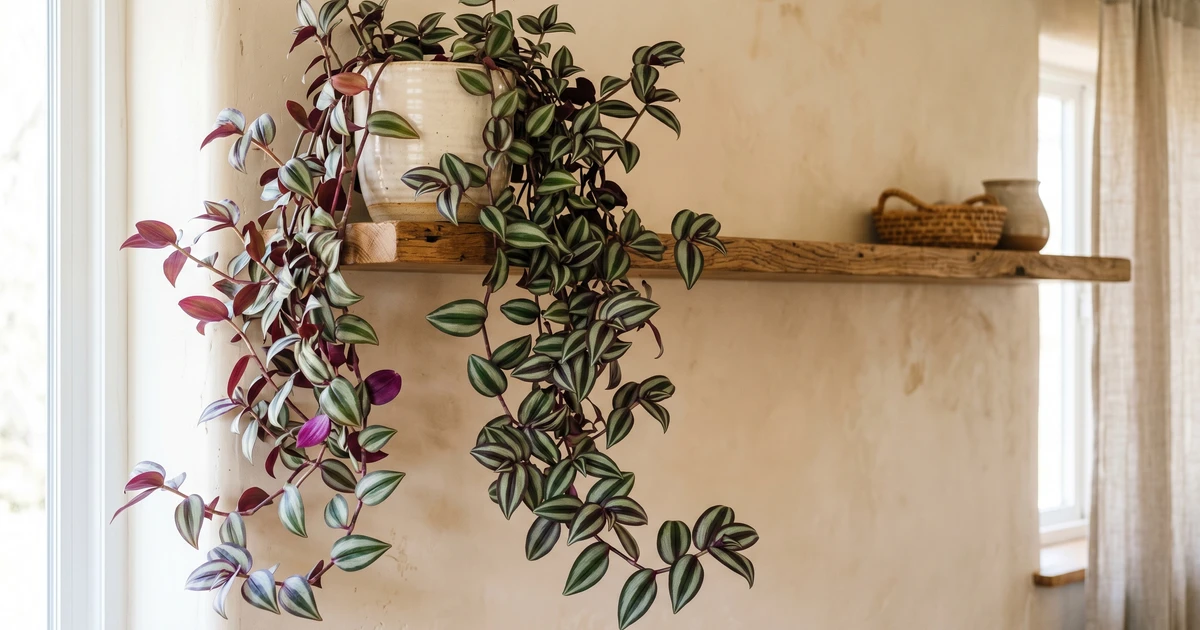
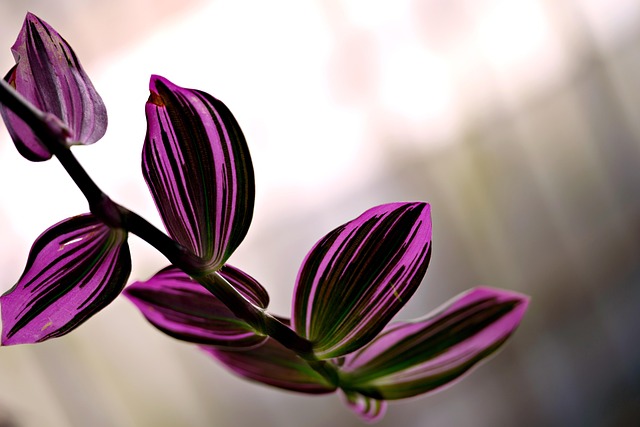
Tradescantia zebrina

Also known as: Wandering Dude, Inch Plant, Spiderwort

Evidence-based care guide for Tradescantia (Tradescantia zebrina). Covers symptom diagnosis, disease treatment and watering. Our analysis draws from 10 verified community cases with an average confidence score of 84%. Each protocol is synthesized from real rescue outcomes, not generic advice.

10 diagnoses
Avg. confidence 84%

Care Essentials

Get to Know Your Tradescantia

Light is everything for this plant. Get the placement right and everything else falls into place.

Light

bright indirect

Wants bright, indirect light — sensitive to both extremes. Too much direct sun causes burns, too little causes stretching.

💡 Grow lights: Thrives under artificial grow lights (LED or fluorescent, 10-12 hours/day). A great option if your space lacks natural light.

Watering

every 7-10 days

Water when the top 1-2 inches of soil feel dry. Adjust with the seasons — less in winter, more in summer.

Humidity & Temperature

Loves higher humidity (60%+). If your air is dry, group it with other plants, use a pebble tray, or run a humidifier nearby.

Prefers moderate temperatures (60-80°F). Keep away from radiators and intense afternoon sun windows.

Soil

Needs well-draining soil — add perlite or orchid bark to a standard potting mix. Good drainage is critical to prevent root rot.

Difficulty moderate

Care Requirements

At a Glance

Care Profile in Development

While our detailed care profile is being compiled, you can find specific care guidance in the 1 care-related diagnoses below — including watering schedules, light requirements, and propagation methods from real-world cases.

Start Here

Most Common Problems

Based on 10 analyzed cases — these are the issues you're most likely to encounter

Don't see your symptom? Search all 9 topics below, or run the Diagnostic.

Free Diagnostic

Which of the 7 killers is threatening your plants? Take the 60-second quiz — we'll tell you exactly.

60 seconds · Free

Which of the 7 Killers
is threatening your plants?

We analyzed 1,616 documented plant deaths to identify the 7 causes behind 78% of all losses. Answer 5 questions — we'll tell you exactly which ones apply to your setup.

Skip the quiz — get The 7 Killers course ($19) →

Question 1 of 5

How do you decide when to water your plants?

Question 2 of 5

Where do most of your plants live?

Question 3 of 5

What's your home environment like?

Question 4 of 5

Have you lost a plant in the last 6 months?

Question 5 of 5

How often do you check your plants for pests?

🔬

Your diagnosis is ready

We've identified your top 2 risk killers. Enter your email to see the full breakdown and your personalized rescue protocol.

No spam. One-click unsubscribe anytime.

Your Plant Mortality Diagnosis

Your plants are most at risk from:

The 7 Killers: What 1,616 Dead Houseplants Taught Us — $19 mini-course

The 7 Killers mini-course covers every one of these in depth — mechanism, rescue protocol, prevention. 1,616 cases. 7 lessons. $19.

Get The 7 Killers — $19 →

Read the full mortality report (free) →

Get the Plant Mortality Checklist

The 7 killers behind 78% of houseplant deaths — and the exact fix for each. Free PDF based on 1,616 documented cases.

Free. No spam. Unsubscribe anytime.

Verified Data

All Diagnoses

9 topics consolidated from 10 documented cases. Expand any topic to see all protocols.

Symptoms (3 topics · 4 cases)

What are these brown spots on my Tradescantia?

Misting or top-watering traps moisture on the thin leaves, allowing bacterial or fungal pathogens to invade

2 protocols 78–92%

Protocol 1: brown spots · 92% confidence

Cause

Misting or top-watering traps moisture on the thin leaves, allowing bacterial or fungal pathogens to invade. Spots often start as red/brown lesions on lower leaves.

Solutions
  • Stop all misting and foliar spraying.
  • Switch to bottom-watering exclusively.
  • Prune affected leaves and improve air circulation with a fan.
  • If spreading, apply a copper fungicide or neem oil.
Prevention

Maintain humidity (40-60%) via pebble trays. Keep foliage dry. Ensure bright indirect light for rapid drying.

Protocol 2: brown spots · 78% confidence

Cause

Physiological edema from inconsistent watering or high humidity causing cells to rupture. Manifests as small, raised, corky brown or translucent spots on leaf undersides and margins.

Solutions
  • Improve air circulation with a small fan.
  • Stabilize watering schedule; don't let the plant go from bone dry to soaking wet abruptly.
  • Lower ambient humidity if it exceeds 70% in stagnant conditions.
  • Do not mist; use bottom-watering to keep foliage dry.
Prevention

Use a moisture meter to ensure soil dries 50% between waterings. Maintain consistent temperature and airflow.

Why is my Tradescantia wilting?

Cellular dehydration and loss of turgor pressure in Tradescantia zebrina/pallida from insufficient watering or low humidity

75%
Cause

Cellular dehydration and loss of turgor pressure in Tradescantia zebrina/pallida from insufficient watering or low humidity

Solutions
  • Water thoroughly until water drains from bottom
  • Increase humidity with pebble tray or humidifier
  • Move away from direct heat or air conditioning vents
  • Mist leaves lightly in dry conditions
Prevention

Water when top inch of soil is dry; maintain humidity above 40%; avoid placing near heat sources

Why are my Tradescantia leaves turning yellow?

1) Natural aging of lower leaves

85%
Cause

1) Natural aging of lower leaves. 2) Chlorophyll breakdown from low light. 3) Variegation shifting to cream/yellow under high light (normal). 4) Early-stage root rot (if mushy).

Solutions
  • Check texture: firm leaves are likely aging/light issues; mushy are watering issues.
  • Move to bright indirect light to maintain green/purple saturation.
  • Prune yellowing base leaves to maintain aesthetic and encourage top growth.
  • Verify soil dryness before watering.
Prevention

Provide 12+ hours of bright indirect light. Avoid waterlogged soil. Rejuvenate by "Chop and Prop" if the base becomes too bald.

Diseases (1 topics · 1 cases)

Why does my Tradescantia have root rot?

Overwatering or stagnant water during propagation leading to bacterial/fungal decay

81%
Cause

Overwatering or stagnant water during propagation leading to bacterial/fungal decay. Manifests as basal rot (mushy, translucent stems) at the soil line.

Solutions
  • Unpot and inspect roots; trim blackened/mushy sections.
  • Chop and Prop: Take healthy top cuttings (4-6 inches) with at least one node.
  • Let cuttings callus for 1-2 hours before replanting in fresh, dry well-draining soil.
  • Switch to bottom-watering to prevent future basal rot.
Prevention

Use 50% perlite mix. Water only when top 1-2 inches of soil are bone dry. Ensure pot has drainage.

Watering Issues (1 topics · 1 cases)

How often should I water my Tradescantia?

Fluoride and chlorine in tap water cause brown, crispy tips and leaf margins over time

89%
Cause

Fluoride and chlorine in tap water cause brown, crispy tips and leaf margins over time.

Solutions
  • Switch to distilled water, rainwater, or filtered water
  • Allow tap water to sit for 24 hours to dissipate chlorine
  • Flush the soil periodically with distilled water to remove salt buildup
Prevention

Use high-quality water; monitor tip condition as a health indicator.

Growth & Structure (1 topics · 1 cases)

Why is my Tradescantia growing leggy?

Low light causes stretching, but apical dominance also makes vines thin at the top naturally

91%
Cause

Low light causes stretching, but apical dominance also makes vines thin at the top naturally. Trailing vines eventually lose leaves near the base.

Solutions
  • Move to bright indirect light (2000-5000 lux).
  • Perform regular 'Chop n Prop': Cut stems and poke them back into the top soil.
  • Prune vines to encourage lateral branching.
  • Rotate weekly for even light exposure.
Prevention

Provide 12+ hours of bright light. Avoid excessive nitrogen fertilizer. Prune every 2-3 months to maintain shape.

Other Topics (3 topics · 3 cases)

Why is my Tradescantia losing its variegation?

Reversion (turning green) stems from low light, while browning (scorch) stems from direct sun/grow light intensity

88%
Cause

Reversion (turning green) stems from low light, while browning (scorch) stems from direct sun/grow light intensity. Nanouk pink/white sections lack chlorophyll and are highly sensitive to burns.

Solutions
  • Provide bright indirect light; if reverting, increase light slightly.
  • Keep grow lights at least 12-18 inches away from foliage.
  • Maintain high humidity (60%+) to protect thin, variegated tissue.
  • Trim severely burnt leaves to reduce stress.
Prevention

East-facing windows are ideal. Use sheer curtains for south/west exposure. Acclimate slowly to new environments.

Tradescantia: Shipping Damage

Desiccation and leaf melting during dark, airtight transit

82%
Cause

Desiccation and leaf melting during dark, airtight transit. Cuttings often arrive wilted or with broken stems.

Solutions
  • Soak wilted stems in room-temperature water for 12 hours.
  • Trim any mushy, black stem bases to healthy green tissue.
  • Root in water or moist perlite inside a high-humidity bag or box.
  • Avoid direct light and fertilizer during the 2-week recovery phase.
Prevention

Order during mild weather (50-80�F). Use expedited shipping for delicate cultivars like Nanouk.

Tradescantia: Transplant Shock

Root desiccation after repotting, often due to the mistake of withholding water after transplanting to "let it dry out"

75%
Cause

Root desiccation after repotting, often due to the mistake of withholding water after transplanting to "let it dry out". Leads to leaf closure and wilting.

Solutions
  • Always water thoroughly immediately after repotting to settle soil.
  • If wilting, bottom-water for 15-20 minutes to rehydrate root zone.
  • Increase humidity (60%+) for the first week post-repot.
  • Avoid direct sun and fertilizer for 2 weeks while roots establish.
Prevention

Water 24 hours before repotting. Maintain even moisture (not sogginess) during the 10-day recovery window.

Common Questions

Frequently Asked Questions

Why does my tradescantia have Brown spots?

Cause: Misting or top-watering traps moisture on the thin leaves, allowing bacterial or fungal pathogens to invade. Spots often start as red/brown lesions on lower leaves.

Solution: Stop all misting and foliar spraying.

Prevention: Maintain humidity (40-60%) via pebble trays. Keep foliage dry. Ensure bright indirect light for rapid drying.

92% confidence · View full protocol →

Why does my tradescantia have Leggy growth?

Cause: Low light causes stretching, but apical dominance also makes vines thin at the top naturally. Trailing vines eventually lose leaves near the base.

Solution: Move to bright indirect light (2000-5000 lux).

Prevention: Provide 12+ hours of bright light. Avoid excessive nitrogen fertilizer. Prune every 2-3 months to maintain shape.

91% confidence · View full protocol →

Why does my tradescantia have Hard water?

Cause: Fluoride and chlorine in tap water cause brown, crispy tips and leaf margins over time.

Solution: Switch to distilled water, rainwater, or filtered water

Prevention: Use high-quality water; monitor tip condition as a health indicator.

89% confidence · View full protocol →

Why does my tradescantia have Loss of variegation?

Cause: Reversion (turning green) stems from low light, while browning (scorch) stems from direct sun/grow light intensity. Nanouk pink/white sections lack chlorophyll and are highly sensitive to burns.

Solution: Provide bright indirect light; if reverting, increase light slightly.

Prevention: East-facing windows are ideal. Use sheer curtains for south/west exposure. Acclimate slowly to new environments.

88% confidence · View full protocol →

Why does my tradescantia have Yellow leaves?

Cause: 1) Natural aging of lower leaves. 2) Chlorophyll breakdown from low light. 3) Variegation shifting to cream/yellow under high light (normal). 4) Early-stage root rot (if mushy).

Solution: Check texture: firm leaves are likely aging/light issues; mushy are watering issues.

Prevention: Provide 12+ hours of bright indirect light. Avoid waterlogged soil. Rejuvenate by "Chop and Prop" if the base becomes too bald.

85% confidence · View full protocol →

Common Questions

Frequently Asked About Tradescantia

What problems can Tradescantia get?

Our database contains 10 documented Tradescantia cases covering 9 distinct topics, including diseases, pest identification, environmental stress, propagation, and advanced care protocols — each with verified solutions.

Structured Learning

Ready to Go Deeper?

Explore our Mastery Packs for structured, video-based learning with step-by-step protocols from 20,000+ analyzed plant cases.

Browse All Courses →