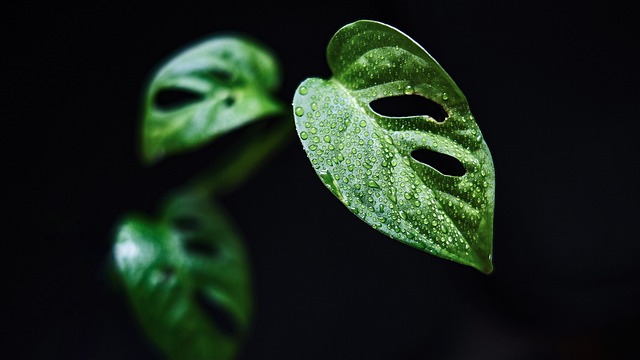
variegated monstera
Monstera deliciosa 'Albo Variegata'
Comprehensive care and diagnosis guide for the Variegated Monstera. Based on 10 verified community insights.
Care Requirements
At a Glance
Detailed care profile is currently being compiled by the Plant Grail swarm.
Start Here
Most Common Problems
Based on 10 analyzed cases — these are the issues you're most likely to encounter
Why does my Variegated Monstera have sunburn?
Variegated plant tissue contains reduced or zero chlorophyll, making it...
Why does my Variegated Monstera have reverting to green?
Chimeric variegation is an unstable mutation where chlorophyll-deficient cells...
Why does my Variegated Monstera have light requirements?
Variegated plants require MORE light than their all-green counterparts because...
How do I propagate my Variegated Monstera?
Propagation from variegated plants requires careful selection of cutting...
Why does my Variegated Monstera have care differences?
Variegated tissue lacks chlorophyll and protective pigments, making it more...
Verified Data
All Diagnoses
Complete analysis of 10 cases for this variety. Select an entry to expand rescue protocols.
Other Problems (4)
Propagation (1)
Common Questions
Frequently Asked Questions
Why does my variegated monstera have Sunburn on variegated tissue?
Cause: Variegated plant tissue contains reduced or zero chlorophyll, making it incapable of photosynthesis and photoprotection. When exposed to direct sunlight or intense grow lights, the white, cream, or pink cells suffer photooxidative damage without the protective mechanisms green tissue possesses. This appears as brown, crispy spots specifically on variegated areas. Scientific evidence from Dracaena fragrans studies shows that light green sectors can maintain oxygenic photosynthesis similar to normal tissue, but pigment-deficient (white/cream) sectors lack protective capacity.
Solution: Immediate relocation to bright INDIRECT light only - east-facing window with sheer curtain ideal
Prevention: Acclimate variegated plants to light over 7-10 days gradually; position 3-5 feet from south/west windows; use UV-filtering window film; maintain consistent 60%+ humidity year-round; avoid fertilizing stressed plants. Variegated plants paradoxically need MORE light than green varieties (to support reduced chlorophyll area) but must be INDIRECT and filtered.
90% confidence · View full protocol →
Why does my variegated monstera have Reverting to green?
Cause: Chimeric variegation is an unstable mutation where chlorophyll-deficient cells (pink, white, cream sectors) lack photosynthetic capability and UV protection. These cells are genetically weaker and prone to die-off and reversion to solid green under suboptimal light conditions. Green cells photosynthesize more efficiently and outcompete variegated sectors when light is insufficient. Scientific evidence from Ficus microcarpa and Clivia miniata var. variegata studies confirms that albino sectors lack stacked thylakoids and have negligible photosynthetic rates.
Solution: Gradually increase light exposure to bright indirect (avoid direct sun on variegated tissue). Use grow lights if natural light insufficient.
Prevention: Maintain bright indirect light (2000-5000 lux depending on species) to give variegated sectors competitive advantage. Use automated light sensors for consistency. Select propagation material only from highly variegated nodes. Maintain high humidity (60-80%) and stable temperatures (70-85°F) to minimize stress-induced reversion.
90% confidence · View full protocol →
Why does my variegated monstera have Light requirements?
Cause: Variegated plants require MORE light than their all-green counterparts because the white/pink/cream sectors contain zero or minimal chlorophyll and cannot photosynthesize. The plant must support both photosynthetic (green) and non-photosynthetic (variegated) tissue from the same root system. Scientific studies on Dracaena fragrans show that light green sectors can maintain oxygenic photosynthesis similar to normal tissue, but white/albino sectors lack photosynthetic capacity entirely. Low light causes the plant to prioritize green tissue growth, leading to reversion.
Solution: Measure light at plant location: Use phone light meter app or dedicated PAR meter
Prevention: Position variegated plants 2-4 feet from east-facing windows or 3-5 feet from south/west windows with sheer curtains. Use light meters to maintain 2000-8000 lux depending on species. Supplement with grow lights during winter months. Never place in dark corners where green varieties might survive.
88% confidence · View full protocol →
Why does my variegated monstera have Propagation?
Cause: Propagation from variegated plants requires careful selection of cutting material. Because variegation is often chimeric (a mix of genetically different cells), cuttings taken from all-green sections will produce entirely green offspring. Cuttings from balanced green/white sectors have the best chance of maintaining variegation. The genetic instability means even properly selected cuttings may produce varying degrees of variegation in offspring.
Solution: Select stems with balanced variegation: Look for green and white/pink sectors on the same stem
Prevention: Always select cuttings with visible variegation on the stem and at least one variegated leaf. Avoid taking cuttings from all-green sections even if they look healthy. Take multiple cuttings to increase odds of stable variegation in offspring.
87% confidence · View full protocol →
Why does my variegated monstera have Care differences?
Cause: Variegated tissue lacks chlorophyll and protective pigments, making it more susceptible to environmental stress than green tissue. White and pink sectors cannot regulate water loss effectively and are more prone to dehydration, mechanical damage, and browning. Scientific evidence shows that under excess excitation energy (high light + low humidity), variegated plants experience photooxidative stress that manifests as brown crispy edges on variegated sections while green sections remain healthy.
Solution: Increase ambient humidity: Run humidifier near plants, target 60-80% relative humidity
Prevention: Maintain 60-80% humidity year-round for tropical variegated plants. Use humidifiers rather than misting (water droplets can cause lens burn on variegated tissue). Group plants to create humidity microclimates. Avoid placing near heating/cooling vents that create dry air currents.
88% confidence · View full protocol →