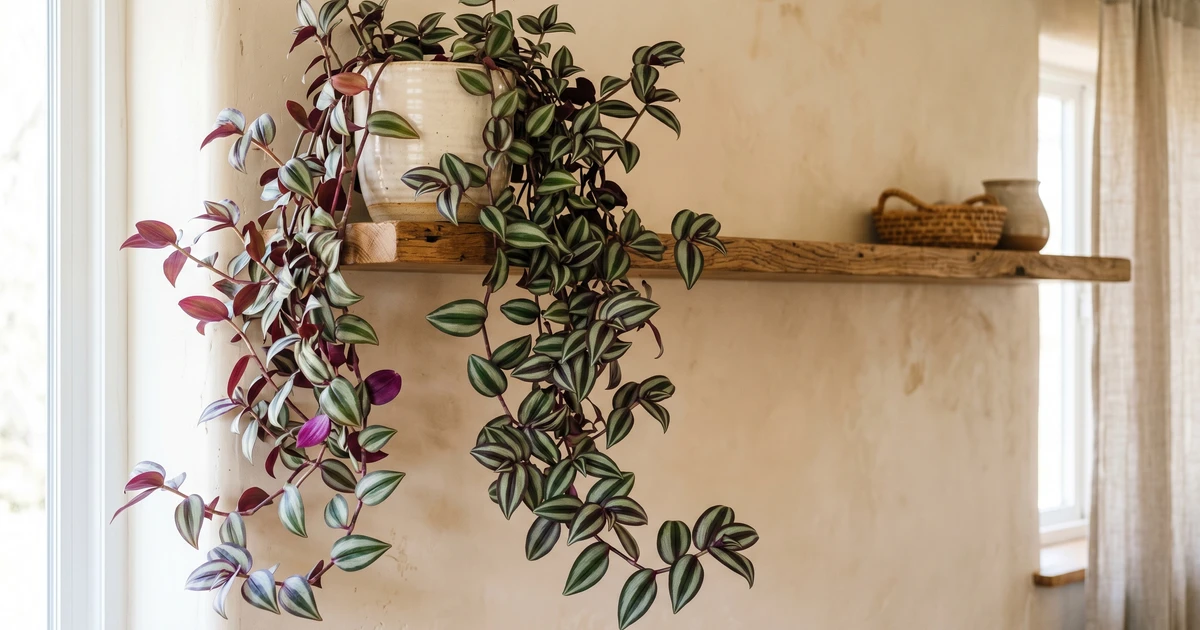
air plants
Evidence-based care guide for Air Plants (). Covers disease treatment, propagation methods, watering and care. Our analysis draws from 10 verified community cases with an average confidence score of 88%. Each protocol is synthesized from real rescue outcomes, not generic advice.
Care Essentials
Get to Know Your Air Plants
Watch the humidity — a little extra moisture in the air goes a long way with this plant.
Light
bright indirect
Prefers bright, indirect light. Keep out of harsh direct afternoon sun — it can scorch the leaves.
💡 Grow lights: Thrives under artificial grow lights (LED or fluorescent, 10-12 hours/day). A great option if your space lacks natural light.
Watering
every 5-7 days
Likes consistently moist (not soggy) soil. Water when the top inch feels dry. Don't let it dry out completely.
Humidity & Temperature
Loves higher humidity (60%+). If your air is dry, group it with other plants, use a pebble tray, or run a humidifier nearby.
Standard room temperature (60-80°F / 15-27°C) is perfect. Avoid cold drafts and sudden temperature swings.
Soil
Use a moisture-retentive potting mix with some peat or coco coir. Avoid overly chunky mixes that dry out too fast.
Care Requirements
At a Glance
Care Profile in Development
While our detailed care profile is being compiled, you can find specific care guidance in the 1 care-related diagnoses below — including watering schedules, light requirements, and propagation methods from real-world cases.
Start Here
Most Common Problems
Based on 10 analyzed cases — these are the issues you're most likely to encounter
Don't see your symptom? Search all 10 topics below, or run the Diagnostic.
Air Plants: Xeric Vs Mesic
Tillandsia species fall on a spectrum from xeric (dry-adapted) to mesic...
Why isn't my Air Plants flowering?
Tillandsia are monocarpic—each rosette produces flowers only once in its...
Air Plants: Crown Rot
Crown rot develops when water remains trapped between Tillandsia leaves for...
How do I propagate my Air Plants?
Tillandsia reproduce vegetatively through offsets (pups) that emerge from the...
How often should I water my Air Plants?
Tillandsia lack traditional root systems for water uptake, relying instead on...
Which of the 7 Killers
is threatening your plants?
We analyzed 1,616 documented plant deaths to identify the 7 causes behind 78% of all losses. Answer 5 questions — we'll tell you exactly which ones apply to your setup.
Skip the quiz — get The 7 Killers course ($19) →Question 1 of 5
How do you decide when to water your plants?
Question 2 of 5
Where do most of your plants live?
Question 3 of 5
What's your home environment like?
Question 4 of 5
Have you lost a plant in the last 6 months?
Question 5 of 5
How often do you check your plants for pests?
Your diagnosis is ready
We've identified your top 2 risk killers. Enter your email to see the full breakdown and your personalized rescue protocol.
Your plants are most at risk from:

The 7 Killers mini-course covers every one of these in depth — mechanism, rescue protocol, prevention. 1,616 cases. 7 lessons. $19.
Get The 7 Killers — $19 →Get the Plant Mortality Checklist
The 7 killers behind 78% of houseplant deaths — and the exact fix for each. Free PDF based on 1,616 documented cases.
Your checklist is ready!
We also sent it to your inbox. Check your email for the full download.
Open the ChecklistFree. No spam. Unsubscribe anytime.
Verified Data
All Diagnoses
10 topics consolidated from 10 documented cases. Expand any topic to see all protocols.
Diseases (1 topics · 1 cases)
Air Plants: Crown Rot
Crown rot develops when water remains trapped between Tillandsia leaves for extended periods (6+ hours), creating anaerobic conditions at the central growing point
90%
Air Plants: Crown Rot
Crown rot develops when water remains trapped between Tillandsia leaves for extended periods (6+ hours), creating anaerobic conditions at the central growing point
Cause
Crown rot develops when water remains trapped between Tillandsia leaves for extended periods (6+ hours), creating anaerobic conditions at the central growing point. Unlike traditional plants, Tillandsia lack woody stems—their growth center is a tight cluster of leaf bases vulnerable to bacterial infection. Pseudomonas cichorii and Erwinia species colonize the moist tissue, producing black, mushy decay that spreads rapidly through the meristematic tissue. This is irreversible once established.
Solutions
- Immediate action: Remove all affected (black/mushy) leaves with sterile scissors, cutting back to firm tissue
- Dry protocol: After soaking, shake plant vigorously 10-15 times to expel water from leaf axils
- Drying position: Place upside down on towel in bright, airy location for minimum 4 hours
- Air circulation: Use small fan on low setting to accelerate drying—never put away damp
- Severe cases: If crown is affected (central growth point black/mushy), plant cannot recover; focus on harvesting healthy pups
Prevention
Always dry plants completely within 4 hours of soaking. Never skip the shaking step—this removes 80% of trapped water. Mount plants in positions that allow gravity to pull water away from the crown.
Watering Issues (1 topics · 1 cases)
How often should I water my Air Plants?
Tillandsia lack traditional root systems for water uptake, relying instead on trichomes—specialized epidermal cells that absorb moisture and nutrients from air and water
88%
How often should I water my Air Plants?
Tillandsia lack traditional root systems for water uptake, relying instead on trichomes—specialized epidermal cells that absorb moisture and nutrients from air and water
Cause
Tillandsia lack traditional root systems for water uptake, relying instead on trichomes—specialized epidermal cells that absorb moisture and nutrients from air and water. Trichome density determines watering method effectiveness: dense trichomes (xeric types) absorb water rapidly via brief soaking; sparse trichomes (mesic types) benefit from extended soaking. Misting alone provides insufficient hydration for most indoor environments (humidity <50%), delivering only surface moisture that evaporates before cellular absorption completes.
Solutions
- Assess your type: Xeric (silver/gray, fuzzy) = 20-30 min soak weekly; Mesic (green, less fuzzy) = 1-2 hour soak weekly
- Shake vigorously after soaking to remove trapped water between leaves—this prevents rot at the crown
- Mist only as supplemental humidity between soaks, not as primary hydration
- Use room-temperature water (65-75°F); cold water shocks trichomes and reduces absorption efficiency
- Soak upside down to prevent water pooling in leaf axils where bacteria proliferate
Prevention
Establish consistent weekly soak schedule based on your home's humidity. Homes below 40% humidity require longer soaks (30-60 min); humid climates (60%+) may need only 15-20 min. Always dry plants upside down for 4+ hours post-soak.
Environment (1 topics · 1 cases)
Why does my Air Plants have sunburn?
Tillandsia evolved as canopy epiphytes, receiving bright but filtered light through forest canopies or scattered light in open arid environments
88%
Why does my Air Plants have sunburn?
Tillandsia evolved as canopy epiphytes, receiving bright but filtered light through forest canopies or scattered light in open arid environments
Cause
Tillandsia evolved as canopy epiphytes, receiving bright but filtered light through forest canopies or scattered light in open arid environments. Direct sun exposure—especially hot afternoon sun (12pm-4pm)—causes photoinhibition and oxidative damage to trichome cells. The damage appears as bleached, crispy brown patches on leaves, particularly affecting the outer edges and trichome-dense xeric species. Unlike mesic understory plants, Tillandsia lack protective anthocyanin pigments for UV defense.
Solutions
- Immediate relocation: Move to bright indirect light only (east-facing window with sheer curtain ideal)
- Recovery care: Increase humidity to 60-70% to support stressed tissue; maintain consistent watering
- Light acclimation: If moving to brighter location, increase exposure gradually over 2-3 weeks
- Damaged tissue: Trim severely damaged leaves with sterile scissors to prevent pest attraction
- Measurement: Use light meter—Tillandsia prefer 2000-5000 lux; avoid locations exceeding 8000 lux
Prevention
Position plants 3-5 feet from south/west windows or use sheer curtains. Xeric species tolerate more direct morning sun (before 10am) than mesic types. When using grow lights, maintain 12-18 inches distance.
Propagation (1 topics · 1 cases)
How do I propagate my Air Plants?
Tillandsia reproduce vegetatively through offsets (pups) that emerge from the mother plant's base after blooming
89%
How do I propagate my Air Plants?
Tillandsia reproduce vegetatively through offsets (pups) that emerge from the mother plant's base after blooming
Cause
Tillandsia reproduce vegetatively through offsets (pups) that emerge from the mother plant's base after blooming. These genetic clones develop adventitious roots and their own trichome systems while attached. Premature separation (before pups establish sufficient photosynthetic capacity and root primordia) results in stunted growth or death. The pup remains metabolically dependent on the mother plant for 4-8 months post-bloom while developing independence.
Solutions
- Timing: Separate only when pup reaches 1/3 to 1/2 mother plant's size AND shows established root nubs at base
- Technique: Hold mother plant firmly, gently twist pup counter-clockwise; natural separation point should release easily
- If resistant: Use sterilized blade to cut connecting tissue, leaving some stem on both plants
- Post-separation care: Mount pups separately in brighter light than mature plants to stimulate growth
- Water pups more frequently (2x weekly brief soaks) as their smaller trichome systems absorb less efficiently
Prevention
Never remove pups before they reach 1/3 mother size—this is the critical threshold for photosynthetic independence. Avoid fertilizing mother plant during pup development phase; excess nitrogen can inhibit offset formation.
Other Topics (6 topics · 6 cases)
Why isn't my Air Plants flowering?
Tillandsia are monocarpic—each rosette produces flowers only once in its lifetime, then gradually declines
90%
Why isn't my Air Plants flowering?
Tillandsia are monocarpic—each rosette produces flowers only once in its lifetime, then gradually declines
Cause
Tillandsia are monocarpic—each rosette produces flowers only once in its lifetime, then gradually declines. The bloom cycle consumes 60-80% of the plant's stored energy reserves over 3-6 months. During this phase, the plant redirects resources from vegetative growth to reproduction, making it vulnerable to dehydration and nutrient deficiency. The bloom spike emergence signals the beginning of the end for that individual rosette, though pups (offsets) will carry on the genetic line.
Solutions
- When bloom spike appears: Maintain consistent watering—dehydration during bloom aborts flowers and weakens the plant
- Avoid fertilizing during active flowering; high nitrogen disrupts reproductive hormone balance
- After flowers fade: Continue care for 2-4 months while the mother plant produces pups
- Wait for pups to reach 1/3 to 1/2 mother plant size before separation (typically 4-8 months post-bloom)
- Separation method: Gently twist pup at base; if resistant, use sterile blade to cut connecting tissue
Prevention
You cannot prevent the terminal bloom—it's genetically programmed. However, delaying blooming until the plant reaches maturity (full size for its species) ensures maximum pup production. High light and occasional stress (brief drying) can delay premature blooming in young plants.
Air Plants: Dehydration
Tillandsia store water in their leaves as a survival adaptation for periodic drought
88%
Air Plants: Dehydration
Tillandsia store water in their leaves as a survival adaptation for periodic drought
Cause
Tillandsia store water in their leaves as a survival adaptation for periodic drought. When water reserves deplete below critical thresholds (typically after 14+ days without hydration), the plant enters survival mode, curling leaves to reduce surface area and closing trichomes to prevent further moisture loss. Chronic dehydration causes permanent trichome damage and cellular collapse, visible as rolled, crispy leaf margins and dull coloration.
Solutions
- Early signs: Leaf curling inward, muted/gray color (losing silver appearance), slight leaf softness
- Advanced signs: Rolled leaf margins resembling tubes, brown crispy tips spreading down leaves, translucent spots
- Recovery soaking: Dehydrated plants need extended 2-4 hour soaks to rehydrate cells completely
- Gradual return: Don't increase watering frequency dramatically; stick to schedule but ensure thorough drying
- Irreversible damage: Severely desiccated tissue will not recover; trim brown sections and maintain optimal care for new growth
Prevention
Establish consistent weekly soak schedule regardless of plant appearance. Xeric types show dehydration slower than mesic types—check all plants weekly, not just visibly stressed ones.
How should I fertilize my Air Plants?
Tillandsia absorb nutrients through their trichomes from atmospheric deposits (dust, decaying matter, bird droppings) in nature
85%
How should I fertilize my Air Plants?
Tillandsia absorb nutrients through their trichomes from atmospheric deposits (dust, decaying matter, bird droppings) in nature
Cause
Tillandsia absorb nutrients through their trichomes from atmospheric deposits (dust, decaying matter, bird droppings) in nature. Indoor environments lack these natural nutrient sources, requiring supplementation. However, epiphytes evolved for low-nutrient conditions—high concentrations burn trichomes and root tissues. Nitrogen excess accelerates the bloom cycle prematurely, reducing pup production. Urea-based fertilizers are particularly damaging as they require soil bacteria to convert to usable forms.
Solutions
- Use epiphyte-specific fertilizer: 17-8-22 or similar balanced formula designed for bromeliads
- Dilution: Mix at 1/4 to 1/2 strength of label instructions—never full strength
- Frequency: Fertilize monthly during growing season (spring/summer), bi-monthly in fall/winter
- Application: Add to soak water, not misting—misting concentrates fertilizer on leaf tips causing burn
- Avoid urea: Use ammoniacal or nitrate nitrogen sources; urea requires soil bacteria unavailable to epiphytes
Prevention
Err on the side of under-fertilizing—Tillandsia tolerate nutrient deficiency better than excess. Yellowing leaves indicate nitrogen deficiency; brown crispy tips indicate fertilizer burn. Flush plants with plain water monthly to prevent salt buildup.
Air Plants: Mounting
Tillandsia require unobstructed airflow around their bases to prevent moisture buildup and bacterial growth
87%
Air Plants: Mounting
Tillandsia require unobstructed airflow around their bases to prevent moisture buildup and bacterial growth
Cause
Tillandsia require unobstructed airflow around their bases to prevent moisture buildup and bacterial growth. Traditional mounting materials like enclosed terrariums, deep containers, or moisture-retentive substrates (moss, soil) trap water against the plant's base, creating anaerobic conditions where Pseudomonas and Erwinia bacteria proliferate. The lack of air circulation delays drying time beyond the critical 4-hour window, leading to basal rot.
Solutions
- Select open mounting: Driftwood, wire frames, cork bark, or open ceramic holders that expose the base to air
- Avoid enclosed containers: Glass globes, sealed terrariums, and deep vessels trap moisture
- Mounting orientation: Position horizontally or upside down to prevent water pooling in leaf axils
- Secure attachment: Use fishing line, wire, or plant-safe glue—avoid copper wire which is toxic to bromeliads
- Provide 6+ inches clearance from walls/objects to ensure 360-degree airflow
Prevention
Never mount in enclosed spaces without ventilation holes. Check that mounting location receives air circulation from room traffic or fans. Avoid mounting in bathrooms with poor ventilation where humidity stays constantly elevated.
Air Plants: Temperature Sensitivity
Tillandsia evolved in tropical climates with stable temperatures (60-85°F)
87%
Air Plants: Temperature Sensitivity
Tillandsia evolved in tropical climates with stable temperatures (60-85°F)
Cause
Tillandsia evolved in tropical climates with stable temperatures (60-85°F). They lack cold hardiness mechanisms present in temperate plants—cellular membranes destabilize below 50°F, causing ice crystal formation and cell rupture. Conversely, temperatures above 90°F accelerate transpiration beyond trichome absorption capacity, causing rapid dehydration. Drafty windows in winter and heat vents in summer are common household culprits.
Solutions
- Minimum threshold: Never expose to temperatures below 45°F; damage occurs at cellular level even without visible frost
- Ideal range: Maintain 60-80°F year-round for optimal growth
- Draft protection: Keep 3+ feet from windows in winter; use thermal curtains on cold nights
- Heat stress: Move away from radiators, heat vents, and direct sun that raises leaf surface temperature
- Recovery from cold: Gradually warm to 65°F; remove damaged tissue; do not fertilize until new growth appears
Prevention
Monitor temperatures near mounting locations with thermometer. Remember: air near windows can be 15-20°F colder than room center in winter. Use space heater with caution—Tillandsia dry out rapidly in heated air.
Air Plants: Xeric Vs Mesic
Tillandsia species fall on a spectrum from xeric (dry-adapted) to mesic (moisture-adapted) based on native habitat
91%
Air Plants: Xeric Vs Mesic
Tillandsia species fall on a spectrum from xeric (dry-adapted) to mesic (moisture-adapted) based on native habitat
Cause
Tillandsia species fall on a spectrum from xeric (dry-adapted) to mesic (moisture-adapted) based on native habitat. Xeric species (T. xerographica, T. tectorum) evolved in arid, high-light environments with dense, reflective trichomes that rapidly absorb brief moisture events. Mesic species (T. bulbosa, T. butzii) originate from humid forests with sparse trichomes, requiring longer hydration periods and higher ambient humidity. Misidentifying your plant's type leads to chronic under or over-watering.
Solutions
- Identify your type: Xeric = silver/gray fuzzy appearance, stiff leaves, curled form; Mesic = green, smoother leaves, flatter form
- Xeric care: Bright direct light OK, 20-30 min soaks weekly, tolerate drying completely between waterings
- Mesic care: Bright indirect light only, 1-2 hour soaks weekly, mist between soaks, higher humidity (50-70%)
- Mixed collections: Group by type and water separately, or compromise with 45-min soaks for all
- Signs of wrong regimen: Xeric with black base = too wet; Mesic with crispy brown tips = too dry
Prevention
Research your specific species' origin habitat. When purchasing unlabeled plants, observe trichome density and leaf texture—this reveals the type. When in doubt, err toward xeric treatment; root rot kills faster than dehydration in Tillandsia.
Common Questions
Frequently Asked Questions
Why does my air plants have Xeric vs mesic?
Cause: Tillandsia species fall on a spectrum from xeric (dry-adapted) to mesic (moisture-adapted) based on native habitat. Xeric species (T. xerographica, T. tectorum) evolved in arid, high-light environments with dense, reflective trichomes that rapidly absorb brief moisture events. Mesic species (T. bulbosa, T. butzii) originate from humid forests with sparse trichomes, requiring longer hydration periods and higher ambient humidity. Misidentifying your plant's type leads to chronic under or over-watering.
Solution: Identify your type: Xeric = silver/gray fuzzy appearance, stiff leaves, curled form; Mesic = green, smoother leaves, flatter form
Prevention: Research your specific species' origin habitat. When purchasing unlabeled plants, observe trichome density and leaf texture—this reveals the type. When in doubt, err toward xeric treatment; root rot kills faster than dehydration in Tillandsia.
91% confidence · View full protocol →
Why does my air plants have Bloom cycle?
Cause: Tillandsia are monocarpic—each rosette produces flowers only once in its lifetime, then gradually declines. The bloom cycle consumes 60-80% of the plant's stored energy reserves over 3-6 months. During this phase, the plant redirects resources from vegetative growth to reproduction, making it vulnerable to dehydration and nutrient deficiency. The bloom spike emergence signals the beginning of the end for that individual rosette, though pups (offsets) will carry on the genetic line.
Solution: When bloom spike appears: Maintain consistent watering—dehydration during bloom aborts flowers and weakens the plant
Prevention: You cannot prevent the terminal bloom—it's genetically programmed. However, delaying blooming until the plant reaches maturity (full size for its species) ensures maximum pup production. High light and occasional stress (brief drying) can delay premature blooming in young plants.
90% confidence · View full protocol →
Why does my air plants have Crown rot?
Cause: Crown rot develops when water remains trapped between Tillandsia leaves for extended periods (6+ hours), creating anaerobic conditions at the central growing point. Unlike traditional plants, Tillandsia lack woody stems—their growth center is a tight cluster of leaf bases vulnerable to bacterial infection. Pseudomonas cichorii and Erwinia species colonize the moist tissue, producing black, mushy decay that spreads rapidly through the meristematic tissue. This is irreversible once established.
Solution: Immediate action: Remove all affected (black/mushy) leaves with sterile scissors, cutting back to firm tissue
Prevention: Always dry plants completely within 4 hours of soaking. Never skip the shaking step—this removes 80% of trapped water. Mount plants in positions that allow gravity to pull water away from the crown.
90% confidence · View full protocol →
Why does my air plants have Pup propagation?
Cause: Tillandsia reproduce vegetatively through offsets (pups) that emerge from the mother plant's base after blooming. These genetic clones develop adventitious roots and their own trichome systems while attached. Premature separation (before pups establish sufficient photosynthetic capacity and root primordia) results in stunted growth or death. The pup remains metabolically dependent on the mother plant for 4-8 months post-bloom while developing independence.
Solution: Timing: Separate only when pup reaches 1/3 to 1/2 mother plant's size AND shows established root nubs at base
Prevention: Never remove pups before they reach 1/3 mother size—this is the critical threshold for photosynthetic independence. Avoid fertilizing mother plant during pup development phase; excess nitrogen can inhibit offset formation.
89% confidence · View full protocol →
Why does my air plants have Watering methods?
Cause: Tillandsia lack traditional root systems for water uptake, relying instead on trichomes—specialized epidermal cells that absorb moisture and nutrients from air and water. Trichome density determines watering method effectiveness: dense trichomes (xeric types) absorb water rapidly via brief soaking; sparse trichomes (mesic types) benefit from extended soaking. Misting alone provides insufficient hydration for most indoor environments (humidity <50%), delivering only surface moisture that evaporates before cellular absorption completes.
Solution: Assess your type: Xeric (silver/gray, fuzzy) = 20-30 min soak weekly; Mesic (green, less fuzzy) = 1-2 hour soak weekly
Prevention: Establish consistent weekly soak schedule based on your home's humidity. Homes below 40% humidity require longer soaks (30-60 min); humid climates (60%+) may need only 15-20 min. Always dry plants upside down for 4+ hours post-soak.
88% confidence · View full protocol →
Common Questions
Frequently Asked About Air Plants
What problems can Air Plants get?
Our database contains 10 documented Air Plants cases covering 10 distinct topics, including diseases, pest identification, environmental stress, propagation, and advanced care protocols — each with verified solutions.
Structured Learning
Ready to Go Deeper?
Explore our Mastery Packs for structured, video-based learning with step-by-step protocols from 20,000+ analyzed plant cases.
Browse All Courses →