Monstera deliciosa
Monstera deliciosa
Also known as: monstera, Swiss cheese plant, split-leaf philodendron, Mexican breadfruit, ceriman
Monstera deliciosa, the Swiss cheese plant, is a climbing aroid native from Mexico to Panama that can reach 21 m (70 ft) in the wild but usually stays 1.8–2.4 m (6–8 ft) indoors. NC State Extension recommends moderate brightness without direct sun, high humidity and a sturdy support, and letting the top quarter to third of the soil dry before watering. It is toxic to cats and dogs.
Reference
Monstera deliciosa quick facts
- Botanical name
- Monstera deliciosa
- Family
- Araceae (arum family)
- Native to
- Mexico to Panama
- Light
- Moderate brightness without direct sun. Variegated cultivars such as 'Thai Constellation' need more light than green plants.
- Water
- Water thoroughly, then let the top quarter to one-third of the soil dry.
- Temperature and humidity
- 16–29 °C (60–85 °F) with high humidity.
- Support
- Needs sturdy support to keep the stems from breaking.
- Size
- Usually 1.8–2.4 m (6–8 ft) indoors.
- Propagation
- Stem cuttings or layering.
- Cats and dogs
- Toxic. Toxic to dogs and cats. The ASPCA lists insoluble calcium oxalates, causing oral irritation, drooling, vomiting and difficulty swallowing. Source: ASPCA
Monstera deliciosa guides
- Monstera deliciosa care: light, watering, support, repotting and problems
- Monstera watering: is it thirsty, or is the mix staying wet?
- Does a Monstera need a moss pole? Support, aerial roots and bigger leaves
- Monstera deliciosa vs Monstera adansonii: how to tell them apart, and how their care differs
Care Essentials
Get to Know Your Monstera Deliciosa
A climbing aroid native from Mexico to Panama. Give it a sturdy support and bright light without direct sun.
Light
bright indirect
Requires bright, indirect light to develop fenestrations. Avoid harsh direct sun.
💡 Grow lights: Thrives under artificial grow lights (LED or fluorescent, 10-12 hours/day). A great option if your space lacks natural light.
Watering
weekly
Water weekly. Look for: drooping leaves, top 2 inches of soil feel dry.
Humidity & Temperature
Prefers 50-80% humidity. Average home humidity usually works fine, but give it a boost in winter when heating dries the air.
Comfortable between 65-85°F. Keep away from cold drafts and heating vents.
Soil
Well-draining aroid mix with perlite, orchid bark, and worm castings.
Common problems
Common Monstera deliciosa problems, answered
Monstera Leaves Without Holes: Age, Light or Support?
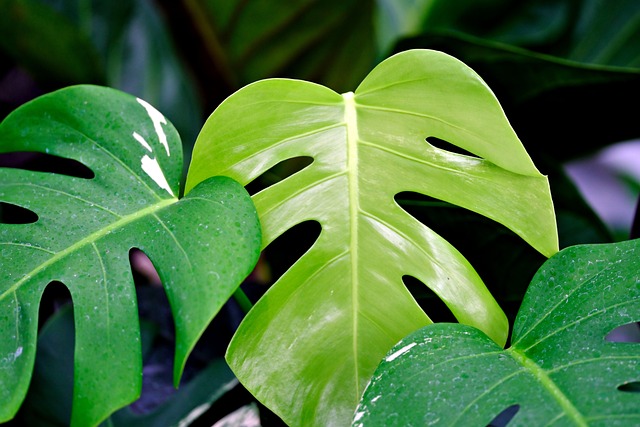
Solid Monstera deliciosa leaves usually mean the plant is still producing juvenile leaves, or it is not getting enough light to make mature ones. Only mature leaves develop holes, and they form while the leaf grows.
Mold on Monstera Soil: Identify It Before Repotting
White or gray surface growth is usually saprophytic fungus encouraged by persistently moist potting mix. It is different from mineral crust, algae, perlite, and root rot.
Monstera Transplant Shock: Diagnose Wilt After Repotting
Temporary wilt, yellowing, or leaf loss after repotting can result from disturbed roots, but persistently wet media, soft roots, a buried growing point, or worsening stem decay indicates a potting or root-health problem.
Leggy Monstera: Fix the Light, Add Support, Then Prune
A leggy Monstera, with long bare stem between small leaves, is usually short of light. Heavy feeding can add to it, and a vine with nothing to climb sprawls and leans. Existing stretched stem will not tighten up, but new growth will once light and support improve.
Monstera Slow Growth: Season, Light, Roots or Feeding?
Monstera deliciosa is a fast grower in good conditions, so a long stall usually means something is limiting it: winter, too little light, cold, a pot kept too dry or too wet, a root system that is cramped or rotting, or no feeding. Work through them in that order.
Monstera Yellow Leaves: Wet Roots, Thirst, Light or Age?
Yellow leaves on a Monstera most often trace back to the root zone: mix that stays wet, or a pot left to dry out for too long. Too little light, too little fertilizer, sun or cold injury and sap-feeding pests also cause yellowing. One old lower leaf on an otherwise healthy plant is normal shedding.
Monstera Brown Spots: Dry Air, Sunburn, Leaf Spot or Rot?
Brown spots on a Monstera fall into three groups: dry, crisp edges from low humidity, dry mix or salts; bleached-then-brown patches from sun burn; and spreading spots from a leaf disease or rotting roots. Where the spot sits, its texture and whether it grows tell them apart.
Monstera Root Rot: How to Confirm It and What to Cut
Monstera root rot shows as wilting or yellowing even though the mix is wet, with brown or black, soft roots that pull apart. It follows mix that stays wet too long. Plants with some firm roots can be cut back and repotted; plants with few left are better restarted from a healthy stem cutting with a node.
Monstera Root Oxygen: Why Wet, Dense Mix Suffocates Roots
Monstera roots need air in the potting mix as well as water. When mix stays saturated or packed tight, water fills the pore spaces, roots run short of oxygen, stop growing and can die, and the plant wilts or yellows even though the pot is wet.
How to Prevent Thrips on Monstera Deliciosa (and Spot Them Early)
Thrips feed on Monstera's leathery leaves and leave silvery, scarred or pitted patches with tiny dark droppings. The RHS lists Monstera among hosts of banded palm thrips, which are active all year indoors. Prevention rests on quarantine, regular leaf checks and wiping, and avoiding soft, over-fed growth.
Monstera Sunburn: What It Looks Like and How to Fix It
Monstera sunburn shows as pale, bleached or yellow-white patches on the leaves facing the light, which later turn brown and brittle. It usually follows a jump in light: a move outdoors, to a sunnier window, or a seasonal change that brings direct sun onto the leaves.
Gnats on Monstera: Dry the Mix and Break the Cycle
Small dark flies that run across a Monstera's potting mix or hover just above it point to fungus gnats. They breed in mix that stays damp. The adults are a nuisance; large numbers of larvae can feed on roots.
Scale on Monstera Deliciosa: Find It, Scrape It, Treat It
Immobile tan, brown or white bumps along the veins, on the leaf undersides or on the leaf stalks of a Monstera deliciosa are scale insects. Brown soft scale leaves sticky honeydew; fern scale leaves no honeydew but shows as white flecks of male scales as numbers rise.
Monstera Deliciosa Propagation: Aerial Root Cuttings in Water
Monstera deliciosa propagates from stem cuttings that include a node, ideally with an aerial root attached. Cut just below an aerial root, stand the node in water or bury it in mix, and pot it up while the new roots are still short.
Further Reading
Related Articles
Common Questions
Frequently Asked About Monstera deliciosa
Is Monstera deliciosa toxic to cats and dogs?
Toxic to dogs and cats. The ASPCA lists insoluble calcium oxalates, causing oral irritation, drooling, vomiting and difficulty swallowing.
Can Monstera deliciosa grow in water?
Yes. We have 2 documented protocols for water-based Monstera deliciosa care, including propagation and long-term hydroponic transition.
How fast does Monstera deliciosa grow?
Monstera deliciosa has a fast growth rate indoors. It can reach 6-10 ft indoors.
How do I propagate Monstera deliciosa?
Propagate Monstera deliciosa by stem cutting or air layering. We have 9 documented propagation protocols covering methods, common problems, and care techniques.
Is Monstera deliciosa easy to care for?
Monstera deliciosa is rated "beginner" difficulty. It is a good choice for beginners.
Get the Plant Mortality Checklist
Check moisture, roots and recent care changes before choosing a treatment. A practical checklist to keep.
Your checklist is ready!
We also sent it to your inbox. Check your email for the full download.
Open the ChecklistFree. No spam. Unsubscribe anytime.
Master This Plant
Want the Complete Protocol?
Get the Monstera Mastery Pack with video walkthroughs, seasonal calendars, and advanced rescue techniques not covered in the free guides.