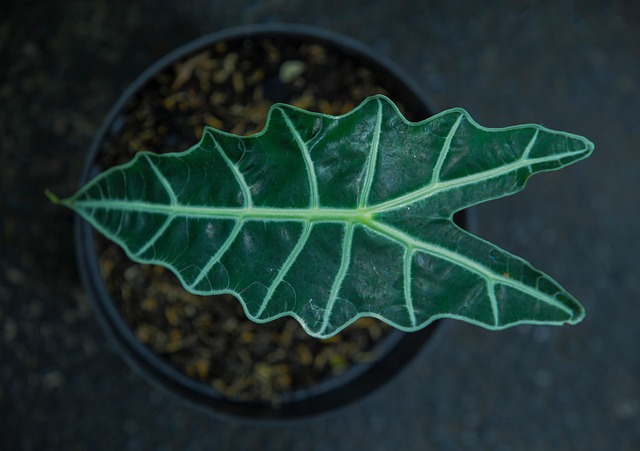
alocasia dragon scale
Alocasia baginda 'Dragon Scale'
Comprehensive care and diagnosis guide for the Alocasia Dragon Scale. Based on 5 verified community insights.
Care Requirements
At a Glance
Detailed care profile is currently being compiled by the Plant Grail swarm.
Start Here
Most Common Problems
Based on 5 analyzed cases — these are the issues you're most likely to encounter
Why are my Alocasia Dragon Scale leaves turning yellow?
Alocasia Dragon Scale (Alocasia baginda 'Dragon Scale') exhibits natural leaf...
Why does my Alocasia Dragon Scale have dormancy?
Alocasia Dragon Scale enters dormancy (a survival mechanism for tuberous...
Why does my Alocasia Dragon Scale have root rot?
Root rot in Alocasia Dragon Scale develops when the epiphytic root system...
Why are my Alocasia Dragon Scale leaves turning yellow?
Alocasia baginda 'Dragon Scale' exhibits programmed basal senescence where the...
Why does my Alocasia Dragon Scale have root rot?
Alocasia baginda 'Dragon Scale' can recover from advanced root rot through...
Verified Data
All Diagnoses
Complete analysis of 5 cases for this variety. Select an entry to expand rescue protocols.
Common Questions
Frequently Asked Questions
Why does my alocasia dragon scale have Yellow leaves - natural senescence vs root rot?
Cause: Alocasia Dragon Scale (Alocasia baginda 'Dragon Scale') exhibits natural leaf senescence where older, outermost leaves yellow and die to redirect energy to new growth. This monopodial growth pattern is normal aroid behavior, not a sign of disease or root rot. The plant maintains only 4-6 leaves at a time via this energy reallocation system.
Solution: Identify if yellowing affects only the oldest, outermost leaves—this confirms natural senescence, not root rot
Prevention: Maintain consistent care conditions: 60-80% humidity via pebble trays or humidifiers, bright indirect light (2000-5000 lux), and allow top 2 inches of soil to dry between waterings. Expect and accept that older leaves will naturally senesce when new growth emerges.
91% confidence · View full protocol →
Why does my alocasia dragon scale have Dormancy?
Cause: Alocasia Dragon Scale enters dormancy (a survival mechanism for tuberous aroids) when exposed to reduced light, colder temperatures, or environmental stress. The plant redirects energy to its underground bulb/corm for storage, causing rapid yellowing of all leaves. This distinguishes from root rot by the sudden uniform yellowing and the presence of a plump, healthy bulb when inspected.
Solution: Inspect roots and bulb immediately: gently unpot and check for firm, white roots and plump bulb (signs of dormancy) vs black, mushy roots (signs of rot)
Prevention: Maintain stable growing conditions year-round: consistent bright indirect light (use grow lights in winter), temperatures 65-75°F (18-24°C), and 60-70% humidity. Avoid sudden environmental changes that trigger dormancy responses.
89% confidence · View full protocol →
Why does my alocasia dragon scale have Root rot?
Cause: Root rot in Alocasia Dragon Scale develops when the epiphytic root system remains in waterlogged, poorly aerated soil for extended periods. The chunky, bark-based soil mix typical for aroids breaks down over time, creating anaerobic conditions that promote Pythium and Fusarium pathogens. This is distinct from natural senescence—root rot causes rapid yellowing of multiple leaves simultaneously, not just the oldest leaf.
Solution: Unpot immediately and gently rinse all soil from roots to assess damage
Prevention: Use a chunky, well-draining aroid mix (50% bark/perlite, 30% peat/coco, 20% pumice). Ensure pot has drainage holes. Water only when top 2-3 inches of soil are dry. Maintain 60-80% humidity with good airflow to mimic epiphytic conditions.
88% confidence · View full protocol →
Why does my alocasia dragon scale have Yellow leaves?
Cause: Alocasia baginda 'Dragon Scale' exhibits programmed basal senescence where the oldest (outermost) leaf yellows and dies to redirect energy to new apical growth—a normal physiological process for this monopodial aroid. However, multiple leaves yellowing rapidly or new growth discoloring indicates root rot from anaerobic soil conditions (Pythium/Fusarium pathogens). The key differentiator is pattern: single oldest leaf drop with concurrent new leaf emergence equals natural cycling; widespread or rapid yellowing with wet soil and foul odor signals pathological root decay.
Solution: Inspect yellowing pattern: Single oldest outer leaf with new central growth = natural senescence; multiple leaves or new growth affected = investigate further
Prevention: Water only when top 2-3 inches of soil are completely dry; use well-draining chunky aroid mix (50% bark/perlite, 30% peat, 20% pumice); maintain 60-80% humidity via pebble trays or humidifiers; provide bright indirect light to support healthy growth cycles; inspect roots monthly during active growing season.
90% confidence · View full protocol →
Why does my alocasia dragon scale have Root rot recovery protocol?
Cause: Alocasia baginda 'Dragon Scale' can recover from advanced root rot through rhizome propagation even when nearly all roots are lost, provided the central rhizome remains firm. The fleshy rhizome contains stored carbohydrates and meristematic tissue capable of regenerating new roots. Recovery fails when owners either give up prematurely or repot into oversized containers that recreate the anaerobic conditions that caused the original rot. The plant prioritizes root regeneration over leaf production during recovery, explaining the 2-3 month delay before visible new growth.
Solution: Assess rhizome viability: Gently squeeze the rhizome—firm tissue indicates recovery potential; mushy/squishy rhizome means propagation is unlikely
Prevention: Post-recovery: Always use pots only 1 inch larger than the rhizome; implement strict 'dry out' watering schedule using moisture meter; maintain 60-80% humidity without saturating soil; use chunky, well-aerated aroid mix with 50% drainage amendments; inspect roots quarterly by gently unpotting.
90% confidence · View full protocol →