
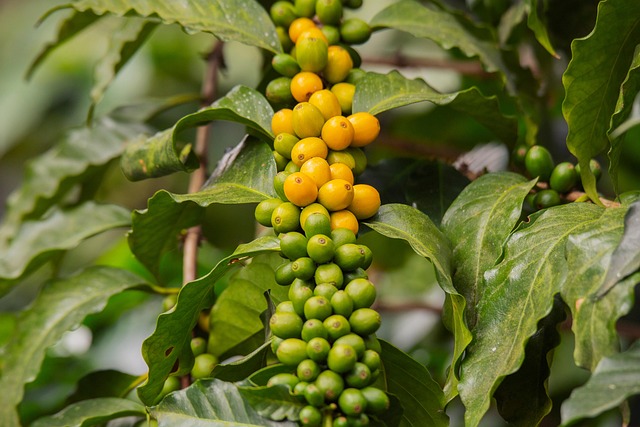
coffee plant
Coffea arabica
Evidence-based care guide for Coffee Plant (Coffea arabica). Covers symptom diagnosis. Our analysis draws from 3 verified community cases with an average confidence score of 79%. Each protocol is synthesized from real rescue outcomes, not generic advice.
Care Essentials
Get to Know Your Coffee Plant
Light is everything for this plant. Get the placement right and everything else falls into place.
Light
bright indirect
Wants bright, indirect light — sensitive to both extremes. Too much direct sun causes burns, too little causes stretching.
💡 Grow lights: Thrives under artificial grow lights (LED or fluorescent, 10-12 hours/day). A great option if your space lacks natural light.
Watering
every 7-10 days
Water when the top 1-2 inches of soil feel dry. Adjust with the seasons — less in winter, more in summer.
Humidity & Temperature
Loves higher humidity (60%+). If your air is dry, group it with other plants, use a pebble tray, or run a humidifier nearby.
Standard room temperature (60-80°F / 15-27°C) is perfect. Avoid cold drafts and sudden temperature swings.
Soil
Standard well-draining potting mix works well. Add perlite for extra drainage if you tend to overwater.
Care Requirements
At a Glance
Care Profile in Development
While our detailed care profile is being compiled, you can find specific care guidance in the 0 care-related diagnoses below — including watering schedules, light requirements, and propagation methods from real-world cases.
Start Here
Most Common Problems
Based on 3 analyzed cases — these are the issues you're most likely to encounter
Don't see your symptom? Search all 3 topics below, or run the Diagnostic.
Coffee Plant: Crispy Leaves
Primarily transpiration stress from low humidity (<50% RH). Secondary causes...
What are these brown spots on my Coffee Plant?
Usually environmental stress. Crispy edges/tips indicate low ambient humidity...
Coffee Plant: No New Growth
Coffee plants exhibit strong apical dominance, resulting in a single, tall,...
Which of the 7 Killers
is threatening your plants?
We analyzed 1,616 documented plant deaths to identify the 7 causes behind 78% of all losses. Answer 5 questions — we'll tell you exactly which ones apply to your setup.
Skip the quiz — get The 7 Killers course ($19) →Question 1 of 5
How do you decide when to water your plants?
Question 2 of 5
Where do most of your plants live?
Question 3 of 5
What's your home environment like?
Question 4 of 5
Have you lost a plant in the last 6 months?
Question 5 of 5
How often do you check your plants for pests?
Your diagnosis is ready
We've identified your top 2 risk killers. Enter your email to see the full breakdown and your personalized rescue protocol.
Your plants are most at risk from:
The 7 Killers mini-course covers every one of these in depth — mechanism, rescue protocol, prevention. 1,616 cases. 7 lessons. $19.
Get The 7 Killers — $19 →Get the Plant Mortality Checklist
The 7 killers behind 78% of houseplant deaths — and the exact fix for each. Free PDF based on 1,616 documented cases.
Your checklist is ready!
We also sent it to your inbox. Check your email for the full download.
Open the ChecklistFree. No spam. Unsubscribe anytime.
Verified Data
All Diagnoses
3 topics consolidated from 3 documented cases. Expand any topic to see all protocols.
Symptoms (1 topics · 1 cases)
What are these brown spots on my Coffee Plant?
Usually environmental stress
79%
What are these brown spots on my Coffee Plant?
Usually environmental stress
Cause
Usually environmental stress. Crispy edges/tips indicate low ambient humidity (<50% RH). Brown spots with yellow halos can indicate overwatering/root rot. Direct sunlight on unacclimated leaves causes bleached or brown patches. Seedlings naturally drop their round cotyledon leaves (natural senescence).
Solutions
- Maintain 60% humidity using a dedicated humidifier or a large pebble tray.
- Water deeply only when the top 1-2 inches of soil are dry; ensure the pot has drainage.
- Move to bright indirect light; avoid south-facing windows without a sheer curtain.
- Inspect leaf undersides for orange-yellow powdery pustules (Coffee Leaf Rust); if found, isolate and use a copper fungicide.
- Check roots if spots are soft and spreading; trim rot and repot in a fresh aroid-style mix.
Prevention
Avoid placing near radiators or AC vents. Group with other tropicals. Use distilled or rainwater if tap water is hard to prevent mineral burn on leaf margins.
Other Topics (2 topics · 2 cases)
Coffee Plant: Crispy Leaves
Primarily transpiration stress from low humidity (<50% RH)
82%
Coffee Plant: Crispy Leaves
Primarily transpiration stress from low humidity (<50% RH)
Cause
Primarily transpiration stress from low humidity (<50% RH). Secondary causes include fluoride toxicity from tap water building up in leaf tips, and root competition from multiple plants sharing a single nursery pot. Flexible branches indicate viability despite leaf loss.
Solutions
- Switch to distilled, reverse osmosis, or rainwater to eliminate fluoride/chlorine salts.
- If humidity is persistently low, create a 'humidity tent' using a clear plastic bag with small vent holes for 14 days to restart growth.
- Thin out multi-plant pots: Coffee plants are often sold as 6-10 seedlings in one pot. Separate them into individual containers to reduce moisture competition.
- Deeply saturate the soil once, then wait for the top 2 inches to dry. Avoid constant 'sips' of water.
Prevention
Maintain 60%+ humidity via a dedicated micro-humidifier or clustering with high-transpiration plants like ferns. Use a hygrometer to confirm leaf-level humidity, not just room-level.
Coffee Plant: No New Growth
Coffee plants exhibit strong apical dominance, resulting in a single, tall, leggy stem with no lateral branching
76%
Coffee Plant: No New Growth
Coffee plants exhibit strong apical dominance, resulting in a single, tall, leggy stem with no lateral branching
Cause
Coffee plants exhibit strong apical dominance, resulting in a single, tall, leggy stem with no lateral branching. Indoors, growth often stalls due to root competition in multi-seedling pots or phosphorus deficiency (indicated by reddish new leaves). To flower, they require a 'rainy season' trigger and high-intensity light that typical indoor settings lack.
Solutions
- To trigger bushiness: 'Top' the plant by cutting the main stem above a healthy node. This breaks apical dominance and forces lateral branches where flowers/beans will eventually form.
- Rainy Season Simulation: To trigger flowering in mature plants (3+ years), increase misting to 3x daily or give the plant a room-temperature shower every 3 days for two weeks.
- Check soil pH: Coffee prefers slightly acidic soil (6.0-6.5). If new growth is purple, apply a phosphorus-rich fertilizer and check for nutrient lockout.
- Hand Pollination: Use a fine paintbrush to transfer pollen between white flowers daily, as indoor environments lack natural pollinators.
Prevention
Separate nursery 'clumps' into single pots early to prevent nutrient competition. Use deep pots to accommodate the vertical root structure. Maintain 12-14 hours of full-spectrum light to prevent winter stalling.
Common Questions
Frequently Asked Questions
Why does my coffee plant have Crispy leaves?
Cause: Primarily transpiration stress from low humidity (<50% RH). Secondary causes include fluoride toxicity from tap water building up in leaf tips, and root competition from multiple plants sharing a single nursery pot. Flexible branches indicate viability despite leaf loss.
Solution: Switch to distilled, reverse osmosis, or rainwater to eliminate fluoride/chlorine salts.
Prevention: Maintain 60%+ humidity via a dedicated micro-humidifier or clustering with high-transpiration plants like ferns. Use a hygrometer to confirm leaf-level humidity, not just room-level.
82% confidence · View full protocol →
Why does my coffee plant have Brown spots?
Cause: Usually environmental stress. Crispy edges/tips indicate low ambient humidity (<50% RH). Brown spots with yellow halos can indicate overwatering/root rot. Direct sunlight on unacclimated leaves causes bleached or brown patches. Seedlings naturally drop their round cotyledon leaves (natural senescence).
Solution: Maintain 60% humidity using a dedicated humidifier or a large pebble tray.
Prevention: Avoid placing near radiators or AC vents. Group with other tropicals. Use distilled or rainwater if tap water is hard to prevent mineral burn on leaf margins.
79% confidence · View full protocol →
Why does my coffee plant have No new growth?
Cause: Coffee plants exhibit strong apical dominance, resulting in a single, tall, leggy stem with no lateral branching. Indoors, growth often stalls due to root competition in multi-seedling pots or phosphorus deficiency (indicated by reddish new leaves). To flower, they require a 'rainy season' trigger and high-intensity light that typical indoor settings lack.
Solution: To trigger bushiness: 'Top' the plant by cutting the main stem above a healthy node. This breaks apical dominance and forces lateral branches where flowers/beans will eventually form.
Prevention: Separate nursery 'clumps' into single pots early to prevent nutrient competition. Use deep pots to accommodate the vertical root structure. Maintain 12-14 hours of full-spectrum light to prevent winter stalling.
76% confidence · View full protocol →
Common Questions
Frequently Asked About Coffee Plant
What problems can Coffee Plant get?
Our database contains 3 documented Coffee Plant cases covering 3 distinct topics, including diseases, pest identification, environmental stress, propagation, and advanced care protocols — each with verified solutions.
Structured Learning
Ready to Go Deeper?
Explore our Mastery Packs for structured, video-based learning with step-by-step protocols from 20,000+ analyzed plant cases.
Browse All Courses →