
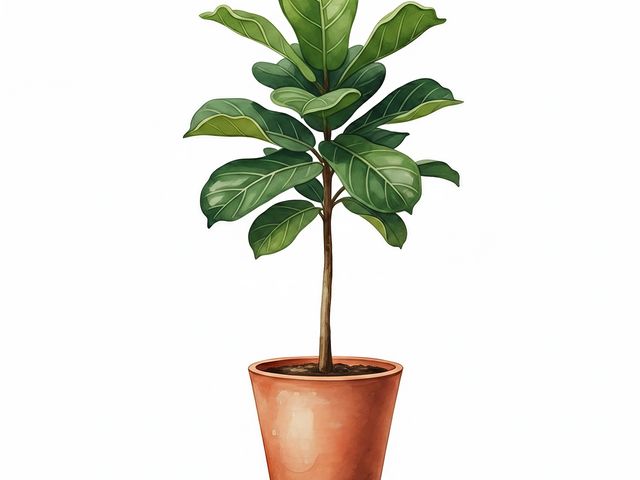
date palm
Evidence-based care guide for Date Palm (). Covers disease treatment and care. Our analysis draws from 16 verified community cases with an average confidence score of 83%. Each protocol is synthesized from real rescue outcomes, not generic advice.
Care Essentials
Get to Know Your Date Palm
The #1 killer? Overwatering. Let the soil dry between waterings and your Date Palm will thrive.
Light
medium to bright indirect
Most comfortable in medium to bright indirect light. Avoid prolonged direct sun exposure.
💡 Grow lights: Thrives under artificial grow lights (LED or fluorescent, 10-12 hours/day). A great option if your space lacks natural light.
Watering
every 10-14 days
Let the soil dry out significantly between waterings — this plant is very sensitive to overwatering. When in doubt, wait another day.
Humidity & Temperature
Not fussy about humidity. Handles average indoor conditions without issue.
Standard room temperature (60-80°F / 15-27°C) is perfect. Avoid cold drafts and sudden temperature swings.
Soil
Needs well-draining soil — add perlite or orchid bark to a standard potting mix. Good drainage is critical to prevent root rot.
Care Requirements
At a Glance
Care Profile in Development
While our detailed care profile is being compiled, you can find specific care guidance in the 1 care-related diagnoses below — including watering schedules, light requirements, and propagation methods from real-world cases.
Start Here
Most Common Problems
Based on 16 analyzed cases — these are the issues you're most likely to encounter
Don't see your symptom? Search all 14 topics below, or run the Diagnostic.
How should I fertilize my Date Palm?
Nano-nitrogen fertilizer significantly improves nutrient use efficiency in date...
Does my Date Palm have a nutrient deficiency?
Date palm requires balanced macro and micronutrients for optimal growth and...
General Care: Date Palm Guide
Date palm is a slow-growing tree requiring balanced nutrition for optimal...
Does my Date Palm have a nutrient deficiency?
Nitrogen is the most significant element determining appropriate growth for...
Date Palm: Fusarium Root Rot
Fusarium species (F. oxysporum, F. solani, F. moniliforme) are soil-borne...
Which of the 7 Killers
is threatening your plants?
We use Plant Grail problem records — root rot, mites, light, humidity — to rank which failures show up most. Answer 5 questions and we'll tell you which ones match your setup.
Skip the quiz — get The 7 Killers course ($19) →Question 1 of 5
How do you decide when to water your plants?
Question 2 of 5
Where do most of your plants live?
Question 3 of 5
What's your home environment like?
Question 4 of 5
Have you lost a plant in the last 6 months?
Question 5 of 5
How often do you check your plants for pests?
Your diagnosis is ready
We've identified your top 2 risk killers. Enter your email to see the full breakdown and your personalized rescue protocol.
Your plants are most at risk from:

The 7 Killers mini-course covers mechanism, rescue protocol, and prevention for the failure classes that show up most in Grail. 7 lessons. $19.
Get The 7 Killers — $19 →Get the Plant Mortality Checklist
Root rot is the largest named failure class in Plant Grail. Free PDF of the failure map and what to check first.
Your checklist is ready!
We also sent it to your inbox. Check your email for the full download.
Open the ChecklistFree. No spam. Unsubscribe anytime.
Verified Data
All Diagnoses
14 topics consolidated from 16 documented cases. Expand any topic to see all protocols.
Diseases (5 topics · 5 cases)
Date Palm: Botryodiplodia Root Rot
Botryodiplodia theobromae is a fungal pathogen causing root rot and stem canker in date palms; disease severity follows DS% = -11
82%
Date Palm: Botryodiplodia Root Rot
Botryodiplodia theobromae is a fungal pathogen causing root rot and stem canker in date palms; disease severity follows DS% = -11
Cause
Botryodiplodia theobromae is a fungal pathogen causing root rot and stem canker in date palms; disease severity follows DS% = -11.02 + 1.71*temp - 0.031*temp², peaking at approximately 27°C; produces cellulolytic enzymes that degrade vascular root tissue
Solutions
- 1. Prune infected fronds 6 inches below visible symptoms; sterilize pruning tools with 10% bleach between cuts
- 2. Apply preventive thyme oil nanoemulsion (2000ppm) as trunk spray monthly
- 3. Mulch with 4-inch layer of sterile date palm fiber to maintain even soil moisture
- 4. Apply biofertilizer containing Trichoderma harzianum at 5g per palm monthly
Prevention
Maintain clean cultivation by removing fallen date fruit and dead fronds; apply preventive Bordeaux mixture spray monthly during warm seasons; ensure proper drainage to prevent soil saturation
Date Palm: Fusarium Root Rot
Fusarium species (F
85%
Date Palm: Fusarium Root Rot
Fusarium species (F
Cause
Fusarium species (F. oxysporum, F. solani, F. moniliforme) are soil-borne fungal pathogens that produce cellulolytic and pectolytic enzymes breaking down root cell walls; disease severity increases non-linearly with temperature in the 20-35°C range, peaking around 30°C
Solutions
- 1. Withhold water for 3-5 days to stress the fungus; allow top 3 inches of soil to dry
- 2. Apply 3000ppm thyme or clove oil nanoemulsion as soil drench (500mL per 6-inch pot)
- 3. Add 10% biochar to potting mix to improve soil microbiome diversity
- 4. Monitor using reciprocal temperature model: disease severity % = 13.09 - 110.24/temperature_C; apply preventive spray when model predicts >8% severity
Prevention
Use sterile potting media; rotate fungicidal drenches with different modes of action; avoid temperature stress by keeping plants in the 22-27°C range; provide adequate spacing for air circulation
What disease does my Date Palm have?
Date palm root rot disease severity is driven by temperature stress interacting with multiple fungal pathogens (Fusarium, Botryodiplodia, Thielaviopsis, Rhizoctonia); each pathogen has a distinct temperature response curve; the predictive model DS% = a + b*temp + c*temp² enables early warning for integrated management
85%
What disease does my Date Palm have?
Date palm root rot disease severity is driven by temperature stress interacting with multiple fungal pathogens (Fusarium, Botryodiplodia, Thielaviopsis, Rhizoctonia); each pathogen has a distinct temperature response curve; the predictive model DS% = a + b*temp + c*temp² enables early warning for integrated management
Cause
Date palm root rot disease severity is driven by temperature stress interacting with multiple fungal pathogens (Fusarium, Botryodiplodia, Thielaviopsis, Rhizoctonia); each pathogen has a distinct temperature response curve; the predictive model DS% = a + b*temp + c*temp² enables early warning for integrated management
Solutions
- 1. Install soil temperature monitoring: log temperatures twice daily at 6-inch depth
- 2. Use predictive equation for target pathogen: DS% for Fusarium oxysporum = -8.13 + 1.21*temp - 0.020*temp²
- 3. When predicted DS% exceeds 8%: apply 3000ppm thyme oil nanoemulsion as trunk spray + biofertilizer drench
- 4. Document temperature-disease correlations seasonally; refine predictive model annually
Prevention
Monitor soil temperature with probe-based sensor; trigger preventive applications when 7-day forecast predicts sustained temperatures in the 25-32°C range; maintain consistent irrigation to avoid heat stress that predisposes palms to infection
Why does my Date Palm have root rot?
Date palm root rot disease severity (DS%) is temperature-dependent, with Fusarium oxysporum, F
82%
Why does my Date Palm have root rot?
Date palm root rot disease severity (DS%) is temperature-dependent, with Fusarium oxysporum, F
Cause
Date palm root rot disease severity (DS%) is temperature-dependent, with Fusarium oxysporum, F. moniliforme, F. solani, Botryodiplodia theobromae, Thielaviopsis paradoxa, and Rhizoctonia solani showing quadratic response to temperature — DS% = -8.13 + 1.21*temp - 0.02*temp² for F. oxysporum at Kharga Oasis.
Solutions
- 1. Use predictive equations (DS% = a + b*temp + c*temp²) to forecast disease severity by month
- 2. Apply fungicides preventively during high-temperature months (May-October) when DS% exceeds 9%
- 3. Integrate temperature monitoring with disease forecasting models for precision timing
- 4. Combine cultural practices, fungicides, and resistant varieties for integrated management
Prevention
Monitor monthly temperatures in date palm orchards. High temperatures above 30°C in summer months correlate with increased root rot severity. Use temperature-based predictive models to time fungicide applications.
Date Palm: Thielaviopsis Root Rot
Thielaviopsis paradoxa causes black root rot in date palms; disease severity follows DS% = -3
82%
Date Palm: Thielaviopsis Root Rot
Thielaviopsis paradoxa causes black root rot in date palms; disease severity follows DS% = -3
Cause
Thielaviopsis paradoxa causes black root rot in date palms; disease severity follows DS% = -3.64 + 1.17*temp - 0.022*temp², showing peak severity near 27°C; produces dark melaninized spores that persist in soil for extended periods
Solutions
- 1. Remove and destroy severely infected palms; do not compost infected root material
- 2. Apply 3000ppm thyme oil nanoemulsion as pre-planting root dip for 20 minutes
- 3. Improve soil drainage by amending with 20% coarse sand; raise planting beds 12 inches above grade
- 4. Monitor monthly using DS% equation; apply Trichoderma-based biofertilizer when predicted severity exceeds 10%
Prevention
Avoid overwatering especially in clay soils; ensure soil pH stays above 6.5 to reduce pathogen viability; apply preventive copper-based fungicide drench in spring when soil temperatures reach 20°C
Care Methods (1 topics · 1 cases)
General Care: Date Palm Guide
Date palm is a slow-growing tree requiring balanced nutrition for optimal productivity
88%
General Care: Date Palm Guide
Date palm is a slow-growing tree requiring balanced nutrition for optimal productivity
Cause
Date palm is a slow-growing tree requiring balanced nutrition for optimal productivity. NPK at 1200g, 200g, 1400g per plant maximizes yield. Organic compost improves seedling establishment and nutrient uptake through improved soil CEC and water holding capacity.
Solutions
- 1. Plant in full sun with sandy loam soil having good drainage
- 2. For mature palms: apply N at 1200g, P at 200g, K at 1400g per year in split doses
- 3. For seedlings: use 3:1 sand to plant remnant compost mixture with 0.5g/L kristalon monthly
- 4. Provide monthly irrigation during dry periods
- 5. Maintain low humidity environment to prevent fungal diseases
Prevention
Apply balanced NPK annually, use organic compost for seedlings, ensure full sun exposure and well-draining soil.
Maintenance (2 topics · 4 cases)
How should I fertilize my Date Palm?
Nano-nitrogen fertilizer significantly improves nutrient use efficiency in date palms compared to conventional ammonium nitrate forms
2 protocols
80–85%
How should I fertilize my Date Palm?
Nano-nitrogen fertilizer significantly improves nutrient use efficiency in date palms compared to conventional ammonium nitrate forms
Protocol 1: nano-fertilizer-efficiency · 85% confidence
Cause
Nano-nitrogen fertilizer significantly improves nutrient use efficiency in date palms compared to conventional ammonium nitrate forms. Research on Zaghloul date palms showed that nano-N at 60-80% of the recommended conventional dose produced equal or superior growth, yield, and fruit quality outcomes. Nano-form fertilizer particles (50% N content) have higher surface-area-to-volume ratio, enabling more efficient root absorption and leaf uptake compared to conventional granular forms. Foliar application of nano-N at 60% recommended dose via spraying produced the highest leaf area (2.26-2.31 m²) and leaf nitrogen content (1.98-2.02%) compared to soil application at the same dose. This is because nano particles penetrate leaf stomata and cell membranes more efficiently than dissolved conventional fertilizers.
Solutions
- 1. For date palms: apply nano-N fertilizer at 60% of the conventional recommended dose
- 2. Foliar spray method produces superior results for leaf area and nutrient content compared to soil application at the same dose
- 3. Soil surface application of nano-N is more cost-effective at the 60% dose level — reduces fertilizer cost by 40%
- 4. Apply nano-N in split doses: at growth start (March), after fruit set (May), and one month later
- 5. For best fruit quality: use nano-N at 60% recommended dose via soil application from economic perspective
- 6. Monitor leaf N content — target 1.85-2.02% leaf N for optimal Zaghloul date palm productivity
Prevention
Do not exceed 80% recommended dose with nano-N — beyond 60% dose level, increasing to 80% showed non-significant yield improvements. Always calibrate nano-N application to your specific palm age and local soil conditions.
Protocol 2: fertilizer-application · 80% confidence
Cause
Nano-form nitrogen fertilizer at 60% of recommended conventional dose produced optimal Zaghloul date palm growth and yield — nanoparticles regulate nutrient release, enhancing uptake efficiency compared to conventional ammonium nitrate
Solutions
- 1. Substitute conventional N with nano-N form at 60% of your standard dose
- 2. Apply via soil surface for vegetative growth traits; foliar spray acceptable for other applications
- 3. Reduce fertilizer costs by 40% while maintaining or improving yield
- 4. Split application: growth start (March), after fruit set (May), and again in June
Prevention
For date palms: apply nano-N at 60% of conventional recommended dose via soil surface. Lower doses (20-40%) were ineffective; 80% showed no additional benefit over 60%.
Does my Date Palm have a nutrient deficiency?
Date palm requires balanced macro and micronutrients for optimal growth and fruiting
2 protocols
80–85%
Does my Date Palm have a nutrient deficiency?
Date palm requires balanced macro and micronutrients for optimal growth and fruiting
Protocol 1: nutrient deficiency · 85% confidence
Cause
Date palm requires balanced macro and micronutrients for optimal growth and fruiting. Nitrogen drives vegetative growth and chlorophyll synthesis. Phosphorus supports root development and flowering. Potassium enhances fruit quality, sugar content, and stress tolerance. Micronutrients include iron, zinc, manganese, and boron which are especially important in calcareous soils.
Solutions
- 1. For juice yield: N at 1200g, P at 200g, K at 1400g per tree per year in split doses
- 2. For seedling growth: Use kristalon (19:19:19) at 0.5g/L monthly plus organic compost
- 3. For micronutrient deficiencies: Apply foliar sprays of iron, zinc, and manganese in early spring
- 4. For calcareous soils: Reduce soil pH with sulfur or use chelated micronutrients
- 5. Split N and K into 3 applications: September, then 30-day intervals
Prevention
Apply N at 1200g, P at 200g, K at 1400g per tree per year in split doses. Use organic compost for seedlings. Apply micronutrient foliar sprays in early spring for high pH soils.
Protocol 2: nutrient-deficiency · 80% confidence
Cause
Nitrogen is a primary nutrient driving physiological processes in palms — deficiency limits growth, but excess causes luxury consumption with diminishing returns. Split applications at growth start, fruit set, and mid-summer optimize uptake efficiency.
Solutions
- 1. Determine baseline: soil analysis and leaf N content via modified micro-Kjeldahl method
- 2. Adjust rate: 1000 g ammonium nitrate conventional = ~1200 g nano-N at 60% dose
- 3. Time applications: growth start (March 1), post-fruit set (May 1), and monthly through July
- 4. Method: soil surface application superior for vegetative growth; foliar acceptable as supplement
Prevention
Apply N in 3 split doses: March (growth start), May (post fruit set), June (mid-summer). For Zaghloul date palms, maintain leaf-to-bunch ratio at 8:1 (10 bunches per tree). Test leaf mineral content annually.
Other Topics (6 topics · 6 cases)
Does my Date Palm have a nutrient deficiency?
Iron deficiency (interveinal chlorosis) and zinc deficiency (small leaves, rosetting) are common in date palms grown in calcareous soils with pH 7
80%
Does my Date Palm have a nutrient deficiency?
Iron deficiency (interveinal chlorosis) and zinc deficiency (small leaves, rosetting) are common in date palms grown in calcareous soils with pH 7
Cause
Iron deficiency (interveinal chlorosis) and zinc deficiency (small leaves, rosetting) are common in date palms grown in calcareous soils with pH 7.5-8.5. High bicarbonate levels lock out iron, while zinc becomes insoluble. These deficiencies reduce photosynthesis and fruit quality.
Solutions
- 1. For iron deficiency: Apply Fe-EDDHA chelate at 5-10g per 100L water as foliar spray
- 2. For zinc deficiency: Apply Zn-EDTA at 3-5g per 100L water or zinc sulfate at 0.5% concentration
- 3. Timing: Apply in early spring (March) when temperatures are 20-25°C for best absorption
- 4. Repeat 2-3 times at 3-week intervals for severe deficiencies
- 5. For prevention: Incorporate micronutrients into NPK blend at 0.5-1% concentration
Prevention
Apply micronutrient foliar sprays in early spring before temperatures rise. Use chelated forms (Fe-EDDHA, Zn-EDTA) for better uptake in high pH soils. Apply 2-3 sprays at 3-week intervals.
Does my Date Palm have a nutrient deficiency?
Nanotechnology enables controlled release of nutrients from fertilizers, enhancing nutrient use efficiency and reducing required fertilizer doses
82%
Does my Date Palm have a nutrient deficiency?
Nanotechnology enables controlled release of nutrients from fertilizers, enhancing nutrient use efficiency and reducing required fertilizer doses
Cause
Nanotechnology enables controlled release of nutrients from fertilizers, enhancing nutrient use efficiency and reducing required fertilizer doses. Nano-N at 60% of recommended dose achieved comparable or better results than 100% conventional N.
Solutions
- 1. Use nano-N fertilizer (50% N content) instead of conventional ammonium nitrate (33.5% N)
- 2. Apply 60% of the conventional recommended dose: approximately 1200g nano-N per palm vs 3000g ammonium nitrate
- 3. Apply in three split doses: at growth start (March), after fruit set (May), and one month later (June)
- 4. For foliar spray: apply at same 60% dose rate in four equal splits starting March
- 5. Expect 15-20% yield increase compared to control with 40% less fertilizer input
Prevention
Apply nano-N at 60% of recommended dose via soil surface for economic efficiency. Foliar spray at 60% dose can be used for faster leaf absorption. Maximum response achieved at 80% dose with no significant additional benefit beyond 60%.
How should I fertilize my Date Palm?
Nano nitrogen fertilizers (50% N) at 20-40% of recommended dose achieve comparable or superior growth and productivity in date palms versus conventional ammonium nitrate at 100% dose, due to enhanced nutrient use efficiency from regulated nutrient release
78%
How should I fertilize my Date Palm?
Nano nitrogen fertilizers (50% N) at 20-40% of recommended dose achieve comparable or superior growth and productivity in date palms versus conventional ammonium nitrate at 100% dose, due to enhanced nutrient use efficiency from regulated nutrient release
Cause
Nano nitrogen fertilizers (50% N) at 20-40% of recommended dose achieve comparable or superior growth and productivity in date palms versus conventional ammonium nitrate at 100% dose, due to enhanced nutrient use efficiency from regulated nutrient release.
Solutions
- 1. Apply nano-N fertilizer at 400g/palm (40% of 1000g conventional dose)
- 2. For conventional: apply 3kg ammonium nitrate (33.5% N) per palm annually
- 3. Maintain 10 bunches/tree to keep leaf/bunch ratio at 8:1
- 4. Apply via soil application for nano-N formulations
- 5. Ensure palms in sandy loam soil with adequate drainage
Prevention
Apply nano-N at 40% of conventional dose (400g/palm vs 1000g/palm conventional) for equivalent or better results. Maintain leaf/bunch ratio at 8:1 (10 bunches/tree).
Does my Date Palm have a nutrient deficiency?
Nitrogen is the most significant element determining appropriate growth for crop productivity, acting in various metabolisms including chlorophyll synthesis and plant pigment production
85%
Does my Date Palm have a nutrient deficiency?
Nitrogen is the most significant element determining appropriate growth for crop productivity, acting in various metabolisms including chlorophyll synthesis and plant pigment production
Cause
Nitrogen is the most significant element determining appropriate growth for crop productivity, acting in various metabolisms including chlorophyll synthesis and plant pigment production. Phosphorus influences root development and flowering. Potassium enhances fruit quality and stress tolerance.
Solutions
- 1. Apply phosphorus (P) and potassium (K) as full dose at planting
- 2. Apply nitrogen (N) in three equal splits: at growth start (September), then every 30 days
- 3. For juice optimization: N at 1200g, P at 200g, K at 1400g per plant annually
- 4. For maximum goor (jaggary) yield: same NPK ratio produces highest brix reading
- 5. Use urea for N, triple super phosphate for P, muriate of potash for K
Prevention
Apply N at 1200g/plant, P at 200g/plant, and K at 1400g/plant for optimal date palm juice yield. Split N and K into three applications: first week of September, then 30-day intervals.
Date Palm: Poor Growth
Organic compost improves soil electrical conductivity, pH, and humates while increasing cation exchange capacity and water holding capacity
82%
Date Palm: Poor Growth
Organic compost improves soil electrical conductivity, pH, and humates while increasing cation exchange capacity and water holding capacity
Cause
Organic compost improves soil electrical conductivity, pH, and humates while increasing cation exchange capacity and water holding capacity. Kristalon (19:19:19+micronutrients) provides balanced NPK but combining both produces synergistic effects on chlorophyll content and nutrient uptake.
Solutions
- 1. Prepare growing medium: mix sand with plant remnant compost at 3:1 ratio (v/v)
- 2. Alternatively use sand+animal manure compost at 3:1 ratio for highest chlorophyll a content
- 3. For maximum chlorophyll b: use sand+plant remnant compost 3:1
- 4. Apply kristalon (19:19:19+micronutrients) at 0.5g/L as soil drench monthly during growing season
- 5. Combine both organic medium amendment AND kristalon fertilization for synergistic growth response
Prevention
Use plant remnant compost at 3:1 ratio (sand:compost) combined with 0.5g/L kristalon solution as soil drench for optimal seedling growth. This combination maximizes chlorophyll a, chlorophyll b, and carotenoid content.
Date Palm: Seedling Death
Chaetomium globosum produces lytic enzymes and mycotoxins (chaetomin, xanthenone, chaetoglobins) that suppress Rhizoctonia solani, Fusarium oxysporum, F
82%
Date Palm: Seedling Death
Chaetomium globosum produces lytic enzymes and mycotoxins (chaetomin, xanthenone, chaetoglobins) that suppress Rhizoctonia solani, Fusarium oxysporum, F
Cause
Chaetomium globosum produces lytic enzymes and mycotoxins (chaetomin, xanthenone, chaetoglobins) that suppress Rhizoctonia solani, Fusarium oxysporum, F. chlamydosporum, and F. solani. The fungus also increases phenol, indol acetic acid, and polyphenol oxidase activity in treated plants.
Solutions
- 1. Prepare inoculum: culture C. globosum on sterilized sorghum grain medium at 27°C for 2 weeks
- 2. Mix into peat moss clay soil (1:1) at 3% (w/w) rate
- 3. Water pots every 2 days for 1 week before planting
- 4. Plant date palm seedlings and apply 3 more applications at 15-day intervals
- 5. Expected results: significant reduction in disease incidence, increased chlorophyll a,b and carotenoid content
Prevention
Apply Chaetomium globosum isolate No. 2 as soil drench at 3% (w/w) inoculum rate 1 week before planting. Continue with 3 applications at 15-day intervals for seedlings in infested soil.
Common Questions
Frequently Asked Questions
Why does my date palm have Nano-fertilizer-efficiency?
Cause: Nano-nitrogen fertilizer significantly improves nutrient use efficiency in date palms compared to conventional ammonium nitrate forms. Research on Zaghloul date palms showed that nano-N at 60-80% of the recommended conventional dose produced equal or superior growth, yield, and fruit quality outcomes. Nano-form fertilizer particles (50% N content) have higher surface-area-to-volume ratio, enabling more efficient root absorption and leaf uptake compared to conventional granular forms. Foliar application of nano-N at 60% recommended dose via spraying produced the highest leaf area (2.26-2.31 m²) and leaf nitrogen content (1.98-2.02%) compared to soil application at the same dose. This is because nano particles penetrate leaf stomata and cell membranes more efficiently than dissolved conventional fertilizers.
Solution: 1. For date palms: apply nano-N fertilizer at 60% of the conventional recommended dose
Prevention: Do not exceed 80% recommended dose with nano-N — beyond 60% dose level, increasing to 80% showed non-significant yield improvements. Always calibrate nano-N application to your specific palm age and local soil conditions.
85% confidence · View full protocol →
Why does my date palm have Nutrient deficiency?
Cause: Date palm requires balanced macro and micronutrients for optimal growth and fruiting. Nitrogen drives vegetative growth and chlorophyll synthesis. Phosphorus supports root development and flowering. Potassium enhances fruit quality, sugar content, and stress tolerance. Micronutrients include iron, zinc, manganese, and boron which are especially important in calcareous soils.
Solution: 1. For juice yield: N at 1200g, P at 200g, K at 1400g per tree per year in split doses
Prevention: Apply N at 1200g, P at 200g, K at 1400g per tree per year in split doses. Use organic compost for seedlings. Apply micronutrient foliar sprays in early spring for high pH soils.
85% confidence · View full protocol →
Why does my date palm have General care?
Cause: Date palm is a slow-growing tree requiring balanced nutrition for optimal productivity. NPK at 1200g, 200g, 1400g per plant maximizes yield. Organic compost improves seedling establishment and nutrient uptake through improved soil CEC and water holding capacity.
Solution: 1. Plant in full sun with sandy loam soil having good drainage
Prevention: Apply balanced NPK annually, use organic compost for seedlings, ensure full sun exposure and well-draining soil.
88% confidence · View full protocol →
Why does my date palm have Nutritional deficiency?
Cause: Nitrogen is the most significant element determining appropriate growth for crop productivity, acting in various metabolisms including chlorophyll synthesis and plant pigment production. Phosphorus influences root development and flowering. Potassium enhances fruit quality and stress tolerance.
Solution: 1. Apply phosphorus (P) and potassium (K) as full dose at planting
Prevention: Apply N at 1200g/plant, P at 200g/plant, and K at 1400g/plant for optimal date palm juice yield. Split N and K into three applications: first week of September, then 30-day intervals.
85% confidence · View full protocol →
Why does my date palm have Fusarium-root-rot?
Cause: Fusarium species (F. oxysporum, F. solani, F. moniliforme) are soil-borne fungal pathogens that produce cellulolytic and pectolytic enzymes breaking down root cell walls; disease severity increases non-linearly with temperature in the 20-35°C range, peaking around 30°C
Solution: 1. Withhold water for 3-5 days to stress the fungus; allow top 3 inches of soil to dry
Prevention: Use sterile potting media; rotate fungicidal drenches with different modes of action; avoid temperature stress by keeping plants in the 22-27°C range; provide adequate spacing for air circulation
85% confidence · View full protocol →
Common Questions
Frequently Asked About Date Palm
What problems can Date Palm get?
Our database contains 16 documented Date Palm cases covering 14 distinct topics, including diseases, pest identification, environmental stress, propagation, and advanced care protocols — each with verified solutions.
Structured Learning
Ready to Go Deeper?
Explore our Mastery Packs for structured, video-based learning with step-by-step protocols from 20,000+ analyzed plant cases.
Browse All Courses →