monstera thai constellation
Monstera deliciosa 'Thai Constellation'
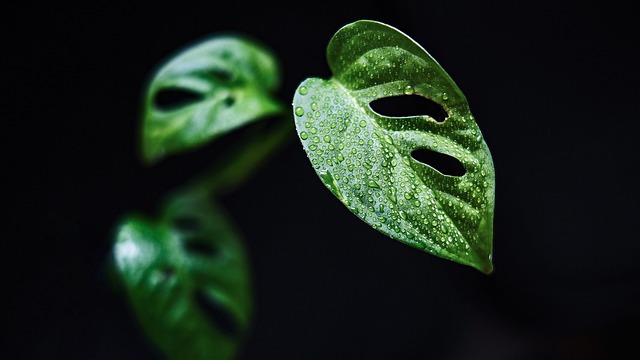
Monstera Thai Constellation is a cultivated variegated variety of Monstera deliciosa featuring striking cream-to-white marbled patterns across dark green foliage. Unlike the common Deliciosa, this cultivar's variegated sectors contain reduced chlorophyll, making the plant more sensitive to light intensity and environmental stress. Native to tropical Central American rainforests, Thai Constellation has become one of the most coveted houseplants due to its stable variegation (unlike the unpredictable Albo variety) and dramatic fenestrated leaves. The white tissue lacks photoprotective pigments, requiring careful light management to prevent photooxidative damage while still providing sufficient illumination to support the reduced photosynthetic capacity.
Care Essentials
Get to Know Your Monstera Thai Constellation
The #1 killer? Overwatering. Let the soil dry between waterings and your Monstera Thai Constellation will thrive.
Light
medium to bright indirect
Most comfortable in medium to bright indirect light. Avoid prolonged direct sun exposure.
💡 Grow lights: Thrives under artificial grow lights (LED or fluorescent, 10-12 hours/day). A great option if your space lacks natural light.
Watering
every 10-14 days
Let the soil dry out significantly between waterings — this plant is very sensitive to overwatering. When in doubt, wait another day.
Humidity & Temperature
Not fussy about humidity. Handles average indoor conditions without issue.
Standard room temperature (60-80°F / 15-27°C) is perfect. Avoid cold drafts and sudden temperature swings.
Soil
Needs well-draining soil — add perlite or orchid bark to a standard potting mix. Good drainage is critical to prevent root rot.
Care Requirements
At a Glance
Light
Data pending
Water
Data pending
- Humidity
Ideal temperature: -
Standard Mix
Growth rate:
The #1 Mistake
Watering issues account for 50% of Monstera Thai Constellation problems in our database (2 of 4 documented cases). Most failures trace back to watering on a schedule rather than checking soil moisture.
Expert Advice
Tips & Tricks
White variegation contains zero chlorophyll—direct sun causes photooxidative burns. Position 3-5 feet from windows or use sheer curtains; target 5000-5500 lux maximum
Water droplets act as magnifying lenses on white tissue. Never mist leaves; use humidity trays or humidifiers instead
Tissue-cultured imports need 30-day humidity dome quarantine. Maintain 80-90% humidity initially, reducing by 10% every 3-4 days
Root rot in LECA is hypoxic suffocation, not fungal. Keep water below root line, use air stones, and maintain dissolved oxygen above 6mg/L
Post-shipping root rot develops in 3-7 days. Unpot immediately, rinse all medium, trim mushy roots, and sterilize with hydrogen peroxide
Match pot size to root ball—excess soil causes stalled growth as plant prioritizes root filling over leaf expansion
Yellow bottom leaf over 2+ months = natural senescence; multiple rapid yellowing = root rot. Check soil moisture before acting
New leaf damage indicates petiole constriction 2-4 weeks prior. Use clear pots to monitor root circling and avoid mechanical restrictions
General Care Philosophy
"Thai Constellation requires a balance between adequate light for its reduced chlorophyll area and protection for its vulnerable white tissue. As an aroid, it needs chunky, well-draining soil and careful watering to prevent root rot. The plant is particularly sensitive to tissue culture shock upon purchase and requires a 14-day humidity quarantine. Water roots developed in LECA are vulnerable to oxygen deprivation—keep water levels low and aerated. Unlike green Monsteras, variegated forms need 60-80% humidity year-round to support stressed tissue and maintain leaf integrity."
Go Deeper
Monstera Mastery Pack
The complete protocol: advanced care, seasonal calendars, and rescue modules. Everything on this page, plus video walkthroughs.
Start Here
Most Common Problems
Based on 4 analyzed cases — these are the issues you're most likely to encounter
Don't see your symptom? Search all 4 topics below, or run the Diagnostic.
Why are my Monstera Thai Constellation leaves turning yellow?
Monstera deliciosa 'Thai Constellation' yellowing leaves result from two...
Why does my Monstera Thai Constellation have root rot?
In Thai Constellation roots, the outer 'sheath' can naturally loosen and slip...
Why is my Monstera Thai Constellation wilting?
For Monstera deliciosa (parent species of 'Thai Constellation') the published...
Why is my Monstera Thai Constellation losing its variegation?
Variegated chimeric cultivars of Monstera deliciosa such as 'Thai...
Which of the 7 Killers
is threatening your plants?
We use Plant Grail problem records — root rot, mites, light, humidity — to rank which failures show up most. Answer 5 questions and we'll tell you which ones match your setup.
Skip the quiz — get The 7 Killers course ($19) →Question 1 of 5
How do you decide when to water your plants?
Question 2 of 5
Where do most of your plants live?
Question 3 of 5
What's your home environment like?
Question 4 of 5
Have you lost a plant in the last 6 months?
Question 5 of 5
How often do you check your plants for pests?
Your diagnosis is ready
We've identified your top 2 risk killers. Enter your email to see the full breakdown and your personalized rescue protocol.
Your plants are most at risk from:

The 7 Killers mini-course covers mechanism, rescue protocol, and prevention for the failure classes that show up most in Grail. 7 lessons. $19.
Get The 7 Killers — $19 →Get the Plant Mortality Checklist
Root rot is the largest named failure class in Plant Grail. Free PDF of the failure map and what to check first.
Your checklist is ready!
We also sent it to your inbox. Check your email for the full download.
Open the ChecklistFree. No spam. Unsubscribe anytime.
Verified Data
All Diagnoses
4 topics from 4 Grail records. Expand any topic to see the protocol.
Symptoms (2 topics · 2 cases)
Why is my Monstera Thai Constellation wilting?
For Monstera deliciosa (parent species of 'Thai Constellation') the published care sheet warns that if you let the potting mix dry out completely past the top half the plant reaches a point where the petioles and leaves can no longer hold turgor and the whole vine starts drooping; the same chapter distinguishes this dryness droop from the wilt caused by saturated soil and active root rot
80%
Why is my Monstera Thai Constellation wilting?
For Monstera deliciosa (parent species of 'Thai Constellation') the published care sheet warns that if you let the potting mix dry out completely past the top half the plant reaches a point where the petioles and leaves can no longer hold turgor and the whole vine starts drooping; the same chapter distinguishes this dryness droop from the wilt caused by saturated soil and active root rot
Cause
For Monstera deliciosa (parent species of 'Thai Constellation') the published care sheet warns that if you let the potting mix dry out completely past the top half the plant reaches a point where the petioles and leaves can no longer hold turgor and the whole vine starts drooping; the same chapter distinguishes this dryness droop from the wilt caused by saturated soil and active root rot.
Solutions
- Feel the top inch and the top half of the potting mix with your finger or a chopstick; if it reads bone dry, take the plant to the sink and bottom- or top-water until water runs freely from the drainage holes.
- After a thorough soak the leaves should firm up within several hours; if they stay slack after 24 hours, unpot and check for root rot because saturated mix and rotted roots produce the same drooping symptom from the opposite cause.
- Reset a routine that lets the surface dry an inch but never lets the whole pot go fully dry, and rotate the plant weekly so one side is not drying out faster than the other.
Prevention
Use a chunky aroid mix with bark, perlite and peat so water moves through quickly, water when the top half of the mix is approaching dry, and never leave the pot sitting in standing water in the saucer.
Why are my Monstera Thai Constellation leaves turning yellow?
Monstera deliciosa 'Thai Constellation' yellowing leaves result from two distinct physiological pathways: (1) Overwatering-induced root hypoxia where saturated soil (pore spaces 100% water-filled for >24hrs) creates anaerobic conditions favoriting Pythium and Fusarium spp
87%
Why are my Monstera Thai Constellation leaves turning yellow?
Monstera deliciosa 'Thai Constellation' yellowing leaves result from two distinct physiological pathways: (1) Overwatering-induced root hypoxia where saturated soil (pore spaces 100% water-filled for >24hrs) creates anaerobic conditions favoriting Pythium and Fusarium spp
Cause
Monstera deliciosa 'Thai Constellation' yellowing leaves result from two distinct physiological pathways: (1) Overwatering-induced root hypoxia where saturated soil (pore spaces 100% water-filled for >24hrs) creates anaerobic conditions favoriting Pythium and Fusarium spp., causing root rot that manifests as yellowing starting at lower leaves and progressing upward with mushy black roots; (2) Natural senescence where the oldest juvenile leaf (typically smallest, lowest on the plant) yellows and drops as the plant redirects resources to new growth and high-variegation leaves, a slow process taking 2+ months in Thai Constellation vs faster-drops in non-variegated Monsteras due to the tissue-cultured chimeric variegation requiring more energy to maintain.
Solutions
- Check soil moisture: insert finger 2-3 inches deep; if wet, withhold watering and empty any reservoir.
- Inspect roots by gently removing from pot: healthy roots are firm and white; rotted roots are black, mushy, and emit foul odor.
- If root rot confirmed, trim all black/mushy roots with sterilized scissors, cutting 1/4 inch into healthy tissue; disinfect remaining roots with 1:4 hydrogen peroxide solution for 30 seconds.
- Repot in fresh chunky aroid mix in clear pot with drainage holes; ensure pot is only 1-2 inches larger than root ball.
- Water only when top 2 inches are dry; bottom-water to avoid leaf saturation; use terracotta pots to wick excess moisture.
- If yellowing is isolated to single oldest leaf with healthy roots and no other symptoms, this is natural senescence — remove yellow leaf at base with sterile shears to redirect energy.
Prevention
Water only when top 2-3 inches of soil reach field capacity; use chunky aroid mix (30% perlite, 30% orchid bark, 40% potting mix) ensuring 30%+ air porosity; use clear pots to monitor root health; maintain 60-80% humidity with good air circulation; avoid self-watering pots without plant-specific calibration as they cause chronic over-saturation in Thai Constellation's epiphytic roots.
Diseases (1 topics · 1 cases)
Why does my Monstera Thai Constellation have root rot?
In Thai Constellation roots, the outer 'sheath' can naturally loosen and slip off when tugged, especially after shipping or in high-moisture environments
87%
Why does my Monstera Thai Constellation have root rot?
In Thai Constellation roots, the outer 'sheath' can naturally loosen and slip off when tugged, especially after shipping or in high-moisture environments
Cause
In Thai Constellation roots, the outer 'sheath' can naturally loosen and slip off when tugged, especially after shipping or in high-moisture environments. This is often normal senescence and does not necessarily indicate active root rot if the inner root core remains firm and white.
Solutions
- Perform the 'gentle tug' test: if only the outer skin slips off but the core is firm, do not panic
- If the entire root is mushy, black, and smelly, it is active rot and must be trimmed
- Rinse the root system to see the healthy white/firm cores underneath the slipping sheaths
- Acclimate the plant in semi-dry conditions (like sphagnum moss) to allow roots to stabilize
Prevention
Avoid unnecessary root disturbance; use clear pots to monitor root color and development without manual tugging.
Other Topics (1 topics · 1 cases)
Why is my Monstera Thai Constellation losing its variegation?
Variegated chimeric cultivars of Monstera deliciosa such as 'Thai Constellation' are genetically unstable on the sectoral variegation pattern, so two failure modes are documented in the trade literature: a vine can revert and push fully green leaves that lack the cream sectors, or the opposite can happen and a vine pushes fully white leaves that contain no chlorophyll at all and cannot sustain the plant on their own
80%
Why is my Monstera Thai Constellation losing its variegation?
Variegated chimeric cultivars of Monstera deliciosa such as 'Thai Constellation' are genetically unstable on the sectoral variegation pattern, so two failure modes are documented in the trade literature: a vine can revert and push fully green leaves that lack the cream sectors, or the opposite can happen and a vine pushes fully white leaves that contain no chlorophyll at all and cannot sustain the plant on their own
Cause
Variegated chimeric cultivars of Monstera deliciosa such as 'Thai Constellation' are genetically unstable on the sectoral variegation pattern, so two failure modes are documented in the trade literature: a vine can revert and push fully green leaves that lack the cream sectors, or the opposite can happen and a vine pushes fully white leaves that contain no chlorophyll at all and cannot sustain the plant on their own.
Solutions
- Inspect the newest unfurling leaf: a balanced cream-and-green sectoral pattern is the target; an entirely green leaf means the vine is reverting, an entirely white or cream leaf means the chimeric meristem has over-shifted.
- If a green revert appears, trace the vine back from the tip and cut just above the last node that produced a properly sectored leaf so new growth resumes from stable chimeric tissue.
- If an all-white leaf appears, prune it off at the petiole with sterilized shears because it cannot photosynthesize and will drain the plant until it collapses.
Prevention
Provide bright indirect light so the plant can support both green and white sectors; remove fully green or fully white growth promptly to redirect the vine back toward balanced variegation rather than letting one sector dominate the meristem.
Common Questions
Frequently Asked Questions
Why does my monstera thai constellation have Yellow leaves?
Cause: Monstera deliciosa 'Thai Constellation' yellowing leaves result from two distinct physiological pathways: (1) Overwatering-induced root hypoxia where saturated soil (pore spaces 100% water-filled for >24hrs) creates anaerobic conditions favoriting Pythium and Fusarium spp., causing root rot that manifests as yellowing starting at lower leaves and progressing upward with mushy black roots; (2) Natural senescence where the oldest juvenile leaf (typically smallest, lowest on the plant) yellows and drops as the plant redirects resources to new growth and high-variegation leaves, a slow process taking 2+ months in Thai Constellation vs faster-drops in non-variegated Monsteras due to the tissue-cultured chimeric variegation requiring more energy to maintain.
Solution: Check soil moisture: insert finger 2-3 inches deep; if wet, withhold watering and empty any reservoir.
Prevention: Water only when top 2-3 inches of soil reach field capacity; use chunky aroid mix (30% perlite, 30% orchid bark, 40% potting mix) ensuring 30%+ air porosity; use clear pots to monitor root health; maintain 60-80% humidity with good air circulation; avoid self-watering pots without plant-specific calibration as they cause chronic over-saturation in Thai Constellation's epiphytic roots.
87% confidence · View full protocol →
Why does my monstera thai constellation have Root rot?
Cause: In Thai Constellation roots, the outer 'sheath' can naturally loosen and slip off when tugged, especially after shipping or in high-moisture environments. This is often normal senescence and does not necessarily indicate active root rot if the inner root core remains firm and white.
Solution: Perform the 'gentle tug' test: if only the outer skin slips off but the core is firm, do not panic
Prevention: Avoid unnecessary root disturbance; use clear pots to monitor root color and development without manual tugging.
87% confidence · View full protocol →
Why does my monstera thai constellation have Drooping?
Cause: For Monstera deliciosa (parent species of 'Thai Constellation') the published care sheet warns that if you let the potting mix dry out completely past the top half the plant reaches a point where the petioles and leaves can no longer hold turgor and the whole vine starts drooping; the same chapter distinguishes this dryness droop from the wilt caused by saturated soil and active root rot.
Solution: Feel the top inch and the top half of the potting mix with your finger or a chopstick; if it reads bone dry, take the plant to the sink and bottom- or top-water until water runs freely from the drainage holes.
Prevention: Use a chunky aroid mix with bark, perlite and peat so water moves through quickly, water when the top half of the mix is approaching dry, and never leave the pot sitting in standing water in the saucer.
80% confidence · View full protocol →
Why does my monstera thai constellation have Variegation loss?
Cause: Variegated chimeric cultivars of Monstera deliciosa such as 'Thai Constellation' are genetically unstable on the sectoral variegation pattern, so two failure modes are documented in the trade literature: a vine can revert and push fully green leaves that lack the cream sectors, or the opposite can happen and a vine pushes fully white leaves that contain no chlorophyll at all and cannot sustain the plant on their own.
Solution: Inspect the newest unfurling leaf: a balanced cream-and-green sectoral pattern is the target; an entirely green leaf means the vine is reverting, an entirely white or cream leaf means the chimeric meristem has over-shifted.
Prevention: Provide bright indirect light so the plant can support both green and white sectors; remove fully green or fully white growth promptly to redirect the vine back toward balanced variegation rather than letting one sector dominate the meristem.
80% confidence · View full protocol →
Common Questions
Frequently Asked About Monstera Thai Constellation
Are Monstera Thai Constellation easy to care for?
Monstera Thai Constellation are rated as "intermediate" difficulty. They require experienced care and attention to specific environmental conditions.
What problems can Monstera Thai Constellation get?
Plant Grail records 4 Monstera Thai Constellation problems, including pests, watering stress, and environmental damage, each with a fix.
Master This Plant
Want the Complete Protocol?
Get the Monstera Mastery Pack with video walkthroughs, seasonal calendars, and advanced rescue techniques not covered in the free guides.