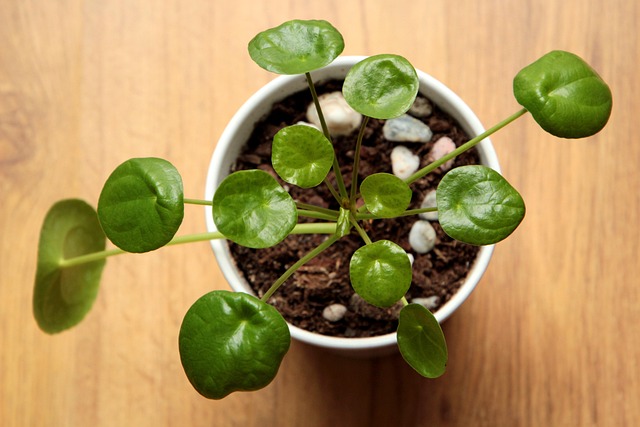
pilea peperomioides
Pilea peperomioides
Also known as: Chinese Money Plant, UFO Plant, Pancake Plant, Missionary Plant
Evidence-based care guide for Pilea Peperomioides (Pilea peperomioides). Covers symptom diagnosis, disease treatment, propagation methods and watering. Our analysis draws from 26 verified community cases with an average confidence score of 83%. Each protocol is synthesized from real rescue outcomes, not generic advice.
Care Essentials
Get to Know Your Pilea Peperomioides
Light is everything for this plant. Get the placement right and everything else falls into place.
Light
bright indirect
Wants bright, indirect light — sensitive to both extremes. Too much direct sun causes burns, too little causes stretching.
💡 Grow lights: Thrives under artificial grow lights (LED or fluorescent, 10-12 hours/day). A great option if your space lacks natural light.
Watering
every 7-10 days
Water when the top 1-2 inches of soil feel dry. Adjust with the seasons — less in winter, more in summer.
Humidity & Temperature
Loves higher humidity (60%+). If your air is dry, group it with other plants, use a pebble tray, or run a humidifier nearby.
Sensitive to cold — keep above 55°F (13°C). Avoid placing near drafty windows or exterior doors in winter.
Soil
Needs well-draining soil — add perlite or orchid bark to a standard potting mix. Good drainage is critical to prevent root rot.
Care Requirements
At a Glance
Care Profile in Development
While our detailed care profile is being compiled, you can find specific care guidance in the 2 care-related diagnoses below — including watering schedules, light requirements, and propagation methods from real-world cases.
Start Here
Most Common Problems
Based on 26 analyzed cases — these are the issues you're most likely to encounter
Don't see your symptom? Search all 18 topics below, or run the Diagnostic.
Why are my Pilea Peperomioides leaves curling?
Photoprotective response to excessive PAR (Photosynthetically Active Radiation)...
What are these brown spots on my Pilea Peperomioides?
Direct sunlight exposure. Pilea peperomioides has thin, peltate leaves with an...
Pilea Peperomioides: No New Growth
Absence of meristematic tissue. Pilea peperomioides leaves can grow...
Why are my Pilea Peperomioides leaves turning yellow?
Natural aging process. Pilea peperomioides has a monopodial growth habit where...
Pilea Peperomioides: Dropping Leaves
Peat-based soils can become hydrophobic (water-repellent) when allowed to dry...
Which of the 7 Killers
is threatening your plants?
We analyzed 1,616 documented plant deaths to identify the 7 causes behind 78% of all losses. Answer 5 questions — we'll tell you exactly which ones apply to your setup.
Skip the quiz — get The 7 Killers course ($19) →Question 1 of 5
How do you decide when to water your plants?
Question 2 of 5
Where do most of your plants live?
Question 3 of 5
What's your home environment like?
Question 4 of 5
Have you lost a plant in the last 6 months?
Question 5 of 5
How often do you check your plants for pests?
Your diagnosis is ready
We've identified your top 2 risk killers. Enter your email to see the full breakdown and your personalized rescue protocol.
Your plants are most at risk from:
The 7 Killers mini-course covers every one of these in depth — mechanism, rescue protocol, prevention. 1,616 cases. 7 lessons. $19.
Get The 7 Killers — $19 →Get the Plant Mortality Checklist
The 7 killers behind 78% of houseplant deaths — and the exact fix for each. Free PDF based on 1,616 documented cases.
Your checklist is ready!
We also sent it to your inbox. Check your email for the full download.
Open the ChecklistFree. No spam. Unsubscribe anytime.
Verified Data
All Diagnoses
18 topics consolidated from 26 documented cases. Expand any topic to see all protocols.
Symptoms (4 topics · 7 cases)
What are these brown spots on my Pilea Peperomioides?
Direct sunlight exposure
3 protocols
82–90%
What are these brown spots on my Pilea Peperomioides?
Direct sunlight exposure
Protocol 1: brown spots · 90% confidence
Cause
Direct sunlight exposure. Pilea peperomioides has thin, peltate leaves with an underdeveloped cuticle that cannot handle the thermal load of direct UV rays, leading to rapid cell death (necrosis) appearing as black or brown spots.
Solutions
- Move the plant immediately to a location with bright indirect light (e.g., 2-3 feet away from a window or behind a sheer curtain).
- Trim severely blackened leaves to stop the spread of opportunistic fungi in dead tissue.
- Monitor new growth; if it comes in healthy, the location is correct.
Prevention
Avoid placing Pileas in south-facing windows without protection. Aim for 2000-5000 lux of indirect light.
Protocol 2: brown spots · 85% confidence
Cause
Accumulation of chlorine, fluoride, and salts from hard tap water. Pileas exhibit "guttation" through pores on the leaf undersides; when the water evaporates, it leaves behind mineral crusts (white dots) that can eventually burn the tissue, causing brown spots and tips.
Solutions
- Switch to distilled water, rainwater, or a high-quality filter (ZeroWater or Reverse Osmosis).
- Flush the soil every 3 months by pouring distilled water through the pot until it runs clear to remove salt buildup.
- Avoid using Epsom salts or fertilizers unless the plant is confirmed to have a deficiency, as these increase salt load.
Prevention
Use only low-mineral water from day one. If the runoff water looks yellow or "pee-colored", flush immediately.
Protocol 3: brown spots · 82% confidence
Cause
Water droplets sitting on the peltate leaves for extended periods. This causes localized edema or provides a breeding ground for bacterial/fungal pathogens, leading to irregular brown spots.
Solutions
- Stop misting Pilea foliage entirely; they do not require it and it increases infection risk.
- Switch to bottom-watering to keep the crown and leaves dry.
- Ensure good air circulation around the plant to help any accidental moisture evaporate quickly.
Prevention
Water at the soil level only. Use a long-necked watering can to reach under the leaf canopy.
Pilea Peperomioides: Browning Leaves
Pilea peperomioides leaf browning occurs via multiple pathways: (1) Edema—waterlogged roots in heavy soil cause cellular rupture and necrotic spots; (2) Salt/fertilizer burn—accumulated minerals at leaf margins cause tip necrosis; (3) Low humidity—transpiration exceeds water uptake causing marginal desiccation; (4) Cold drafts—sudden temperature drops damage vascular tissue
65%
Pilea Peperomioides: Browning Leaves
Pilea peperomioides leaf browning occurs via multiple pathways: (1) Edema—waterlogged roots in heavy soil cause cellular rupture and necrotic spots; (2) Salt/fertilizer burn—accumulated minerals at leaf margins cause tip necrosis; (3) Low humidity—transpiration exceeds water uptake causing marginal desiccation; (4) Cold drafts—sudden temperature drops damage vascular tissue
Cause
Pilea peperomioides leaf browning occurs via multiple pathways: (1) Edema—waterlogged roots in heavy soil cause cellular rupture and necrotic spots; (2) Salt/fertilizer burn—accumulated minerals at leaf margins cause tip necrosis; (3) Low humidity—transpiration exceeds water uptake causing marginal desiccation; (4) Cold drafts—sudden temperature drops damage vascular tissue. The semi-succulent CAM physiology (PMID 33287950) makes leaves prone to edema when soil remains saturated for 48+ hours.
Solutions
- Diagnose pattern: Brown spots center/edges = edema/overwatering; tip burn = fertilizer/salt; entire margin = humidity/draft
- For edema: Unpot, inspect roots—trim any black/mushy tissue; repot in 50% perlite mix; reduce watering frequency
- For salt burn: Flush soil with distilled water (3x pot volume); allow to drain completely; reduce fertilizer to 1/4 strength
- For humidity issues: Add pebble tray or humidifier; group plants to create microclimate; avoid misting (causes lens burn)
- For cold damage: Relocate to stable 65-75°F location; trim damaged leaves to redirect energy to new growth
Prevention
Use terracotta pots with drainage holes; water only when top 2 inches dry (7-10 day intervals). Flush soil monthly to prevent salt accumulation. Maintain 50%+ humidity. Keep away from AC vents, radiators, and cold window drafts (minimum 65°F).
Why is my Pilea Peperomioides wilting?
Mechanical disturbance of the sensitive root system during repotting
80%
Why is my Pilea Peperomioides wilting?
Mechanical disturbance of the sensitive root system during repotting
Cause
Mechanical disturbance of the sensitive root system during repotting. Pileas are highly "dramatic" and can lose turgor immediately after being moved, especially if roots were rinsed or the plant was exposed to direct sun during the process.
Solutions
- Be patient�recovery from transplant shock can take 2-4 weeks.
- Avoid watering more to "fix" the droop; if the soil is already moist, extra water will cause rot.
- Keep the plant in a stable spot with bright indirect light; avoid moving it around.
- Maintain high humidity (50-60%) to help the leaves recover water pressure.
Prevention
Minimize root disturbance by sliding the plant gently out of its old pot. Avoid repotting during extreme weather or when the plant is already stressed. Water the plant 1-2 days before repotting.
Why are my Pilea Peperomioides leaves turning yellow?
Natural aging process
2 protocols
85–95%
Why are my Pilea Peperomioides leaves turning yellow?
Natural aging process
Protocol 1: yellow leaves · 95% confidence
Cause
Natural aging process. Pilea peperomioides has a monopodial growth habit where it continuously produces new leaves from the crown while shedding the oldest leaves at the base to form its characteristic trunk. This is often accelerated when the plant is producing several pups (offsets).
Solutions
- Check the crown: if new leaves are coming in firm and green, the lower yellowing is normal.
- Gently tug the yellow leaf; if it detaches easily, the plant has already sealed the wound.
- Maintain stable care and avoid changing variables in response to normal aging drop.
Prevention
Expect 1-2 lower leaves to yellow and drop per month during active growth. This is a sign of a healthy, maturing plant, not a care error.
Protocol 2: yellow leaves · 85% confidence
Cause
Nitrogen mobility. When the soil is depleted of nitrogen, the plant scavenges the element from older foliage to support new apical growth and pups. This results in older leaves turning yellow while the veins remain green (interveinal chlorosis).
Solutions
- Flush the soil with plain water to remove any salt buildup that might be causing "nutrient lockout".
- Apply a balanced liquid fertilizer (NPK 10-10-10 or 20-20-20) diluted to 25-50% strength.
- Repeat fertilization every 2-4 weeks during the spring and summer growing season.
Prevention
Implement a consistent seasonal fertilization schedule. Use a chunky soil mix that allows for regular flushing of excess salts.
Diseases (2 topics · 2 cases)
Why does my Pilea Peperomioides have root rot?
Pilea peperomioides is particularly susceptible to root rot due to its succulent-like root system that requires oxygen-rich, well-draining conditions
88%
Why does my Pilea Peperomioides have root rot?
Pilea peperomioides is particularly susceptible to root rot due to its succulent-like root system that requires oxygen-rich, well-draining conditions
Cause
Pilea peperomioides is particularly susceptible to root rot due to its succulent-like root system that requires oxygen-rich, well-draining conditions. Root rot develops when soil remains wet for extended periods—caused by oversized pots, blocked drainage holes, or watering too frequently. Early-stage symptoms include dark, friable roots that separate easily without strong odor or mushiness (hypoxic stress before fungal infection). Advanced rot presents as black, mushy roots with foul smell, accompanied by yellowing leaves, wilting, and petiole collapse.
Solutions
- Unpot plant gently and rinse roots under lukewarm water to assess damage
- Trim all dark brown, mushy, or foul-smelling roots with sterilized scissors back to firm white tissue
- Soak remaining healthy roots in 3% hydrogen peroxide solution (1:4 dilution) for 10-15 minutes to disinfect
- Repot in fresh, sterile, well-draining mix (50% potting soil, 30% perlite, 20% orchid bark) in a clean pot with open drainage holes
- Withhold water for 1-2 weeks to allow roots to heal; resume watering only when top 2 inches of soil are completely dry
Prevention
Use terracotta pots with drainage holes to promote soil drying; water only when top 2-3 inches of soil are bone dry; avoid oversized pots that retain excess moisture; check drainage hole patency regularly; maintain bright indirect light to increase transpiration and soil drying
Pilea Peperomioides: Symmetrical Growth Rotation
Pilea peperomioides exhibits negative phototropism and photoelastic growth—leaves actively bend toward light sources within 24-48 hours
70%
Pilea Peperomioides: Symmetrical Growth Rotation
Pilea peperomioides exhibits negative phototropism and photoelastic growth—leaves actively bend toward light sources within 24-48 hours
Cause
Pilea peperomioides exhibits negative phototropism and photoelastic growth—leaves actively bend toward light sources within 24-48 hours. The petiole's torsional modulus allows 15-30° rotation daily. Without intervention, this creates asymmetric 'leggy' form with all leaves facing one direction and bare stems on the shaded side. The peltate leaf structure (PMID 34893822) maximizes light capture efficiency but requires frequent reorientation to maintain radial symmetry.
Solutions
- Rotate 90° every 3-4 days: Mark pot with cardinal directions (N, E, S, W) to track rotation schedule
- Symmetry restoration: For already-leaning plants, rotate toward the window—leaves will reorient within 7-10 days
- Prune asymmetrically: Remove severely etiolated stems facing away from light to encourage bushier regrowth
- Mirror method: Place reflective surface behind plant to provide back-fill light and reduce rotation necessity
- Monitor new growth: Correctly rotated plants produce radially symmetrical rosettes with 360° leaf coverage
Prevention
Implement 90° rotation protocol: Turn pot 90° clockwise every 3-4 days to distribute light exposure evenly around the plant's circumference. This mimics the multi-directional diffuse light of its native Chinese montane understory habitat.
Pests (1 topics · 1 cases)
What pests are on my Pilea Peperomioides?
Pilea peperomioides is susceptible to common houseplant pests, particularly spider mites and mealybugs
82%
What pests are on my Pilea Peperomioides?
Pilea peperomioides is susceptible to common houseplant pests, particularly spider mites and mealybugs
Cause
Pilea peperomioides is susceptible to common houseplant pests, particularly spider mites and mealybugs. Spider mites thrive in the dry air conditions that Pilea tolerates, feeding on leaf sap and causing stippling. Mealybugs colonize leaf joints and the crown area. The centralized petiole structure (PMID 34893822) creates protected crevices where pests can establish populations. Both pests stress the plant by extracting sap, reducing photosynthetic capacity and compromising the lamina structure.
Solutions
- Inspect weekly: check leaf undersides, stem joints, and crown for webbing or cottony masses
- Isolate infested plant immediately to prevent spread
- For spider mites: increase humidity dramatically (shower plant), apply neem oil or insecticidal soap every 5-7 days for 3-4 weeks
- For mealybugs: dab with 70% alcohol on cotton swabs for small infestations; use systemic insecticide for severe cases
- Treat all nearby plants preventatively as pests spread rapidly
- Continue monitoring for 1-2 months as eggs hatch
- For heavy infestations: consider discarding plant to protect collection
Prevention
Quarantine new plants for 2-3 weeks. Maintain 45-55% humidity to deter spider mites. Inspect regularly, especially new growth and leaf joints. Wipe leaves monthly with damp cloth. Avoid over-fertilizing which attracts pests.
Watering Issues (2 topics · 2 cases)
Is my Pilea Peperomioides overwatered?
Overwatering Pilea peperomioides is not about the volume of water given, but the frequency
88%
Is my Pilea Peperomioides overwatered?
Overwatering Pilea peperomioides is not about the volume of water given, but the frequency
Cause
Overwatering Pilea peperomioides is not about the volume of water given, but the frequency. This semi-succulent plant stores water in its fleshy leaves and rhizomatous roots, allowing it to tolerate dry conditions. True overwatering occurs when soil stays wet for extended periods, depriving roots of oxygen and creating anaerobic conditions. Pileas prefer a 'soak and dry' cycle—thorough watering followed by complete soil drying. Unlike desert succulents, Pileas can handle moisture but require fast-draining soil and appropriate drying time.
Solutions
- Understand that overwatering = frequency, not volume—thorough watering is beneficial if soil drains properly
- Allow top 2-3 inches of soil to dry completely between waterings; use finger test or moisture meter
- Use well-draining soil mix with 30-50% perlite, pumice, or orchid bark to prevent water retention
- Ensure pot has drainage holes; avoid decorative pots without drainage or self-watering systems
- In winter, extend dry periods to 10-14 days as growth slows and evaporation decreases
- If soil is accidentally saturated: drain thoroughly, wrap root ball in paper towels to wick moisture, do not water again until soil is bone dry
Prevention
Water only when soil is completely dry throughout the pot (not just surface). Use pots with drainage holes. Bottom-water occasionally to encourage deep rooting. Adjust frequency seasonally—less in winter, more in summer. Maintain bright indirect light to increase transpiration and soil drying rate.
What is the best soil mix for Pilea Peperomioides?
Oxygen deprivation in the root zone caused by waterlogged soil
85%
What is the best soil mix for Pilea Peperomioides?
Oxygen deprivation in the root zone caused by waterlogged soil
Cause
Oxygen deprivation in the root zone caused by waterlogged soil. Often triggered by oversized pots, dense potting mixes (peat-heavy), or inaccurate moisture meter readings that lead to chronic overwatering.
Solutions
- Unpot and inspect roots for mushy, black, or smelly sections; prune back to healthy tissue.
- Repot into a pot only 1-2 inches larger than the root ball with multiple drainage holes.
- Use a chunky "aroid-style" mix: 50% potting soil, 30% perlite, 20% orchid bark.
- Allow the top 2-3 inches of soil to dry completely before watering again.
- Stop leaving moisture meters in the soil; use the finger test or pot weight method.
Prevention
Use breathable terracotta pots and high-drainage soil. Avoid the temptation to "up-pot" into large decorative containers before the root system is ready.
Growth & Structure (1 topics · 1 cases)
Why is my Pilea Peperomioides growing leggy?
Pilea peperomioides develops leggy, stretched growth with increased internodal spacing when light intensity falls below optimal levels (typically below 200-400 foot-candles)
80%
Why is my Pilea Peperomioides growing leggy?
Pilea peperomioides develops leggy, stretched growth with increased internodal spacing when light intensity falls below optimal levels (typically below 200-400 foot-candles)
Cause
Pilea peperomioides develops leggy, stretched growth with increased internodal spacing when light intensity falls below optimal levels (typically below 200-400 foot-candles). The plant exhibits phototropism - growing toward light sources - and in low light conditions, the stem elongates excessively as the plant attempts to reach more photons for photosynthesis. Leaf size decreases and petioles become longer and thinner. The biomechanical petiole structure (PMID 34893822) cannot maintain proper leaf positioning when etiolated, leading to floppy, weak growth.
Solutions
- Move plant to brighter indirect light location - east or west-facing windows ideal
- Rotate pot 90 degrees weekly to encourage even, compact growth
- If etiolation is severe: prune back to desired height using sterile shears
- Root stem cuttings from pruned sections to propagate compact new plants
- Supplement with full-spectrum LED grow light if natural light is inadequate (12-14 hours daily)
- New growth will be more compact; old leggy stems won't revert - consider replacement
Prevention
Provide bright indirect light for 6-8 hours daily. Avoid deep shade or dark corners. Maintain consistent light exposure rather than frequent location changes. Supplemental lighting prevents etiolation in north-facing rooms or winter months.
Propagation (1 topics · 2 cases)
How do I propagate my Pilea Peperomioides?
Pilea peperomioides naturally produces vegetative offsets (pups) from basal meristem tissue as a survival strategy
2 protocols
72–85%
How do I propagate my Pilea Peperomioides?
Pilea peperomioides naturally produces vegetative offsets (pups) from basal meristem tissue as a survival strategy
Protocol 1: propagation · 85% confidence
Cause
Pilea peperomioides naturally produces vegetative offsets (pups) from basal meristem tissue as a survival strategy. These pups emerge from the mother plant's root crown and initially share the root system. The species' biomechanical leaf unfolding mechanism (PMID 38621389) indicates optimal propagation timing correlates with active growth phases when cellular division rates are highest in basal tissues.
Solutions
- Wait until pups have 3-4 leaves and reach 2-3 inches tall for best success rate
- Water plant 1-2 days before separation to soften soil and reduce root damage
- Gently unpot and locate where pup connects to mother rhizome
- Separate with clean knife or by gently pulling - some root attachment is acceptable
- Let cut surface callus for 24-48 hours before potting to prevent rot
- Plant in small pot (3-4 inch) with well-draining mix; keep soil lightly moist
- Root establishment typically occurs within 3-4 weeks
Prevention
Allow pups to develop sufficient size before separation - premature removal reduces survival rates. Maintain mother plant health with adequate light and consistent watering to encourage pup production. Repotting every 12-18 months stimulates basal growth and pup formation.
Protocol 2: pups propagation · 72% confidence
Cause
Pilea peperomioides produces basal offsets ('pups') via axillary bud proliferation at the rhizome crown. These genetically identical clones emerge when the mother plant reaches maturity (8-12 months) and has sufficient energy reserves. Pups develop their own rudimentary root systems while attached, allowing independent survival once separated. The plant's CAM photosynthesis (PMID 33287950) enables efficient energy storage for pup production even under suboptimal conditions.
Solutions
- Wait until pups reach 2-3 inches tall with 4-6 visible leaves and visible root nubs at the base
- Gently unpot mother plant and locate pup attachment point at rhizome crown—do not pull pups directly from soil
- Sterilize blade with 70% alcohol; sever pup horizontally where stem meets mother rhizome, keeping pup roots intact
- Plant pup in 3-4 inch pot with well-draining mix (50% perlite); root ball should sit 1 inch below rim
- Water lightly to settle soil; maintain 70% humidity for 2 weeks to reduce transplant shock
- New growth indicates successful establishment—typically 3-4 weeks
Prevention
Maintain mother plant in bright indirect light (1500-3000 lux) with 50-60% humidity to support vigorous pup production. Avoid over-fertilizing—excess nitrogen inhibits pup formation. Allow plant to become moderately root-bound (roots circling 60-70% of pot) as crowding stress triggers reproductive offsetting.
Other Topics (7 topics · 11 cases)
Why are my Pilea Peperomioides leaves curling?
Photoprotective response to excessive PAR (Photosynthetically Active Radiation) levels
3 protocols
85–90%
Why are my Pilea Peperomioides leaves curling?
Photoprotective response to excessive PAR (Photosynthetically Active Radiation) levels
Protocol 1: curling leaves · 90% confidence
Cause
Photoprotective response to excessive PAR (Photosynthetically Active Radiation) levels. The plant cups its peltate leaves downward to decrease the angle of incidence of direct sunlight, minimizing thermal stress and stomatal transpiration.
Solutions
- Move the plant 3-5 feet away from south or west-facing windows.
- Ensure the plant only receives bright indirect light or filtered morning sun.
- Check leaf undersides for heat-induced edema (small bumps) which often accompanies sun stress.
Prevention
Use a light meter to ensure levels stay between 2000-5000 lux. If direct sun is unavoidable, use a sheer curtain to diffuse the rays.
Protocol 2: curling leaves · 88% confidence
Cause
Typically triggered by overwatering or poor soil aeration. When roots are oxygen-deprived, the plant cannot properly regulate turgor pressure, leading to "epinasty" (curling) often accompanied by light-colored new growth or yellowing.
Solutions
- Immediately stop watering and allow the root ball to dry out.
- Check the soil: if it is dense or peat-heavy, repot into a mix with at least 30% perlite.
- Verify the pot has drainage; if using a self-watering pot, discontinue its use until the plant recovers.
Prevention
Water only when the top 50-75% of the soil volume is dry. Use breathable unglazed terracotta pots to help soil dry out between intervals.
Protocol 3: curling leaves · 85% confidence
Cause
Dehydration. Pilea peperomioides stores water in its succulent stems and leaves. When reserves are depleted, the leaves lose internal pressure, become soft and "bendable", and curl inward to conserve remaining moisture.
Solutions
- Perform the "turgor test": if leaves feel like soft leather instead of firm plastic, water immediately.
- Give the plant a thorough deep soak (ideally bottom-watering) until the soil is fully saturated.
- Leaves should "perk up" and flatten within 24-48 hours after rehydration.
Prevention
Do not wait for the plant to wilt dramatically. Water as soon as the soil is nearly dry but while leaves still have some firmness.
Pilea Peperomioides: Dropping Leaves
Peat-based soils can become hydrophobic (water-repellent) when allowed to dry out completely
2 protocols
88–90%
Pilea Peperomioides: Dropping Leaves
Peat-based soils can become hydrophobic (water-repellent) when allowed to dry out completely
Protocol 1: dropping leaves · 90% confidence
Cause
Peat-based soils can become hydrophobic (water-repellent) when allowed to dry out completely. This is common in newly shipped plants or neglected specimens. Water appears to drain through the pot but is actually bypassing the root ball entirely.
Solutions
- Perform a "soak test": if the pot feels light even after watering, the soil is hydrophobic.
- Bottom-water by placing the pot in a bowl with 1-2 inches of water for 20-30 minutes.
- Ensure the root ball becomes heavy and the top soil feels moist to the touch.
- Once rehydrated, resume regular top-watering but don"t allow the soil to go bone-dry again.
Prevention
Mix 20-30% perlite or pumice into the soil to prevent total compaction. Never let peat-heavy soil stay dry for more than a few days.
Protocol 2: dropping leaves · 88% confidence
Cause
Reduced light intensity and shorter days (especially in winter) trigger a resource reallocation. The plant prioritizes apical growth and sheds lower leaves that are no longer energetically "profitable" due to self-shading or insufficient ambient light.
Solutions
- Provide 12-14 hours of supplemental full-spectrum grow light during winter months.
- Move the plant closer to a bright east or west-facing window (ensure no cold drafts).
- Rotate the plant 90 degrees every week to ensure even light distribution to all leaves.
- If the plant becomes too "leggy" (long bare stem), consider "beheading" and propagating the top rosette.
Prevention
Maintain consistent light levels above 1000-2000 foot-candles. Use a light meter app to verify intensity in the plant"s location.
Why are my Pilea Peperomioides leaves curling?
Pilea peperomioides leaves curl upward (cupping) due to differential cell elongation in response to light intensity gradients
68%
Why are my Pilea Peperomioides leaves curling?
Pilea peperomioides leaves curl upward (cupping) due to differential cell elongation in response to light intensity gradients
Cause
Pilea peperomioides leaves curl upward (cupping) due to differential cell elongation in response to light intensity gradients. The peltate leaf structure—where petiole attaches to center of leaf blade—creates unique biomechanical constraints (PMID 34893822). In low light, auxin redistribution triggers adaxial (upper) surface cell expansion, causing the leaf to cup upward to capture more photons. Direct sunlight causes photoinhibition and rapid transpiration, triggering similar curling as a protective response.
Solutions
- Diagnose cause: Gradual cupping = low light; sudden cupping with crispy edges = sun stress
- For low-light cupping: Relocate to brighter location—east-facing window or 2-3 feet from filtered west window
- For sun stress: Move immediately to indirect light; trim any crispy/bleached leaf sections with sterile scissors
- Normalize humidity: Increase to 60%+ via pebble tray or humidifier to reduce water loss stress
- Patience: Corrected leaves will not flatten—monitor new growth for flat, round form within 2-3 weeks
Prevention
Maintain consistent bright indirect light (2000-3500 lux) without direct sun exposure. Rotate plant 90° weekly to ensure even light distribution across all leaves. Maintain 50-60% humidity to reduce transpiration stress. Position 3-5 feet from south-facing windows with sheer curtain filtration.
Why are my Pilea Peperomioides leaves curling?
Pilea peperomioides leaves curl as a biomechanical stress response when lamina turgor pressure becomes uneven
81%
Why are my Pilea Peperomioides leaves curling?
Pilea peperomioides leaves curl as a biomechanical stress response when lamina turgor pressure becomes uneven
Cause
Pilea peperomioides leaves curl as a biomechanical stress response when lamina turgor pressure becomes uneven. Research on lamina biomechanics (PMID 38621389) shows that thickness and stiffness changes in the lamina directly affect leaf morphology. Curling typically indicates either underwatering (leaves curl inward to reduce surface area and transpiration), low humidity causing differential moisture loss across the lamina, or cold draft exposure affecting cellular turgor. The peltate structure with small non-prominent venation (PMID 38621389) means the leaf relies heavily on uniform turgor to maintain flat shape.
Solutions
- Check soil moisture first - if dry, water thoroughly and increase ambient humidity
- If soil is adequately moist: check for cold drafts or heat sources causing rapid transpiration
- Increase humidity to 50-60% using pebble tray or humidifier
- Move away from air conditioning vents, heaters, or drafty windows
- For severe curling: mist leaves twice daily until they begin to unfurl
- Be patient - recovery can take 5-10 days as cells rehydrate evenly
Prevention
Maintain consistent soil moisture - avoid both drought stress and overwatering. Keep humidity above 45%. Position away from HVAC vents and cold windows during winter. The uniform lamina stiffness characteristic of Pilea peperomioides requires stable environmental conditions to maintain flat leaf presentation.
Why is my Pilea Peperomioides dropping leaves?
Pilea peperomioides drops leaves as a stress response to sudden environmental changes or improper care
80%
Why is my Pilea Peperomioides dropping leaves?
Pilea peperomioides drops leaves as a stress response to sudden environmental changes or improper care
Cause
Pilea peperomioides drops leaves as a stress response to sudden environmental changes or improper care. The biomechanical leaf structure (PMID 38621389) shows that once a leaf's turgor and structural integrity are compromised, abscission (shedding) occurs to conserve resources. Common triggers include: temperature fluctuations below 55°F or above 85°F, transplant shock after repotting, underwatering to the point of permanent wilting, or relocation to dramatically different light conditions. Lower leaves naturally yellow and drop as part of aging, but rapid leaf loss indicates stress.
Solutions
- Identify trigger: recent repotting, temperature change, location change, or watering issue?
- If recently moved: maintain consistent conditions and wait 2-4 weeks for acclimation
- If underwatered: water thoroughly and increase humidity; remove already-detached leaves
- If temperature-related: move to stable 65-75°F environment away from drafts
- Remove yellowing leaves at base to redirect energy to healthy foliage
- If lower leaves only: this is normal aging - remove when fully dry
- Avoid fertilizing during stress recovery
Prevention
Maintain stable conditions. Avoid frequent relocation. Water consistently when top 2 inches are dry. Keep temperatures between 65-80°F. Handle gently during repotting. The peltate leaf structure is sensitive to mechanical damage during moves.
Pilea Peperomioides: No New Growth
Absence of meristematic tissue
2 protocols
90–95%
Pilea Peperomioides: No New Growth
Absence of meristematic tissue
Protocol 1: no new growth · 95% confidence
Cause
Absence of meristematic tissue. Pilea peperomioides leaves can grow "adventitious roots" from the petiole, but they do not possess the necessary axillary buds (nodes) to generate a new stem or shoot system. These are commonly called "zombie leaves"�they remain green and alive but will never become a full plant.
Solutions
- Verify if your cutting includes a small piece of the main stem (the "trunk"); if not, it will not progress.
- Discard leaf-only cuttings and take a new cutting that includes a 1-2 inch section of stem with at least one node.
- Propagate stem cuttings in water or moist perlite; new rosettes should emerge within 3-6 weeks.
Prevention
Educate on Pilea anatomy: look for the brown, woody stem tissue when taking cuttings. Leaf-only propagation is a common beginner myth for this species.
Protocol 2: no new growth · 90% confidence
Cause
Energy reallocation to root expansion. Pilea peperomioides prioritizes establishing a dense root network within its soil volume before allocating resources to shoot apical meristems (new leaves). In a pot that is too large, the plant may "stall" for 6-12 months while roots try to fill the space.
Solutions
- Repot the plant into a smaller "snug" container, ideally only 1 inch wider than the current root mass.
- Use a high-porosity mix (50% perlite) to encourage faster root colonization.
- Provide bright indirect light (2000-5000 lux) to boost the overall energy budget for growth.
Prevention
Never up-pot a Pilea by more than one standard pot size at a time. They thrive when slightly root-bound.
Pilea Peperomioides: No Pups
Pilea peperomioides produces pups from basal meristem tissue as a reproductive strategy
77%
Pilea Peperomioides: No Pups
Pilea peperomioides produces pups from basal meristem tissue as a reproductive strategy
Cause
Pilea peperomioides produces pups from basal meristem tissue as a reproductive strategy. Failure to produce offsets typically results from one of three factors: (1) Juvenile plant - specimens under 12-18 months old may not have developed sufficient root crown maturity; (2) Insufficient light - low light reduces photosynthesis and energy allocation to vegetative reproduction; (3) Overpotting - excessive soil volume relative to root mass creates unstable moisture conditions that suppress basal growth stimulation. The species' natural growth cycle (PMID 38621389) indicates pup production correlates with active growth phases.
Solutions
- Ensure plant receives bright indirect light for 6+ hours daily
- Allow plant to become slightly root-bound - tight conditions stimulate pup production
- Avoid oversized pots - use pot only 1-2 inches larger than root ball
- Fertilize lightly with balanced liquid fertilizer (half strength) monthly during spring/summer
- Be patient - mature plants may take 12-18 months before producing first pups
- If still no pups after 2 years: check root health and consider propagation from stem cutting instead
Prevention
Provide optimal growing conditions from the start: adequate light, appropriate pot size, and consistent care. Young plants naturally take time to mature. Avoid overpotting which delays the root-bound state that triggers pup production. Maintain plant health to support reproductive energy allocation.
Further Reading
Related Articles
Common Questions
Frequently Asked Questions
Why does my pilea peperomioides have Curling leaves?
Cause: Photoprotective response to excessive PAR (Photosynthetically Active Radiation) levels. The plant cups its peltate leaves downward to decrease the angle of incidence of direct sunlight, minimizing thermal stress and stomatal transpiration.
Solution: Move the plant 3-5 feet away from south or west-facing windows.
Prevention: Use a light meter to ensure levels stay between 2000-5000 lux. If direct sun is unavoidable, use a sheer curtain to diffuse the rays.
90% confidence · View full protocol →
Why does my pilea peperomioides have Brown spots?
Cause: Direct sunlight exposure. Pilea peperomioides has thin, peltate leaves with an underdeveloped cuticle that cannot handle the thermal load of direct UV rays, leading to rapid cell death (necrosis) appearing as black or brown spots.
Solution: Move the plant immediately to a location with bright indirect light (e.g., 2-3 feet away from a window or behind a sheer curtain).
Prevention: Avoid placing Pileas in south-facing windows without protection. Aim for 2000-5000 lux of indirect light.
90% confidence · View full protocol →
Why does my pilea peperomioides have No new growth?
Cause: Absence of meristematic tissue. Pilea peperomioides leaves can grow "adventitious roots" from the petiole, but they do not possess the necessary axillary buds (nodes) to generate a new stem or shoot system. These are commonly called "zombie leaves"�they remain green and alive but will never become a full plant.
Solution: Verify if your cutting includes a small piece of the main stem (the "trunk"); if not, it will not progress.
Prevention: Educate on Pilea anatomy: look for the brown, woody stem tissue when taking cuttings. Leaf-only propagation is a common beginner myth for this species.
95% confidence · View full protocol →
Why does my pilea peperomioides have Yellow leaves?
Cause: Natural aging process. Pilea peperomioides has a monopodial growth habit where it continuously produces new leaves from the crown while shedding the oldest leaves at the base to form its characteristic trunk. This is often accelerated when the plant is producing several pups (offsets).
Solution: Check the crown: if new leaves are coming in firm and green, the lower yellowing is normal.
Prevention: Expect 1-2 lower leaves to yellow and drop per month during active growth. This is a sign of a healthy, maturing plant, not a care error.
95% confidence · View full protocol →
Why does my pilea peperomioides have Dropping leaves?
Cause: Peat-based soils can become hydrophobic (water-repellent) when allowed to dry out completely. This is common in newly shipped plants or neglected specimens. Water appears to drain through the pot but is actually bypassing the root ball entirely.
Solution: Perform a "soak test": if the pot feels light even after watering, the soil is hydrophobic.
Prevention: Mix 20-30% perlite or pumice into the soil to prevent total compaction. Never let peat-heavy soil stay dry for more than a few days.
90% confidence · View full protocol →
Common Questions
Frequently Asked About Pilea Peperomioides
What problems can Pilea Peperomioides get?
Our database contains 26 documented Pilea Peperomioides cases covering 18 distinct topics, including diseases, pest identification, environmental stress, propagation, and advanced care protocols — each with verified solutions.
Structured Learning
Ready to Go Deeper?
Explore our Mastery Packs for structured, video-based learning with step-by-step protocols from 20,000+ analyzed plant cases.
Browse All Courses →