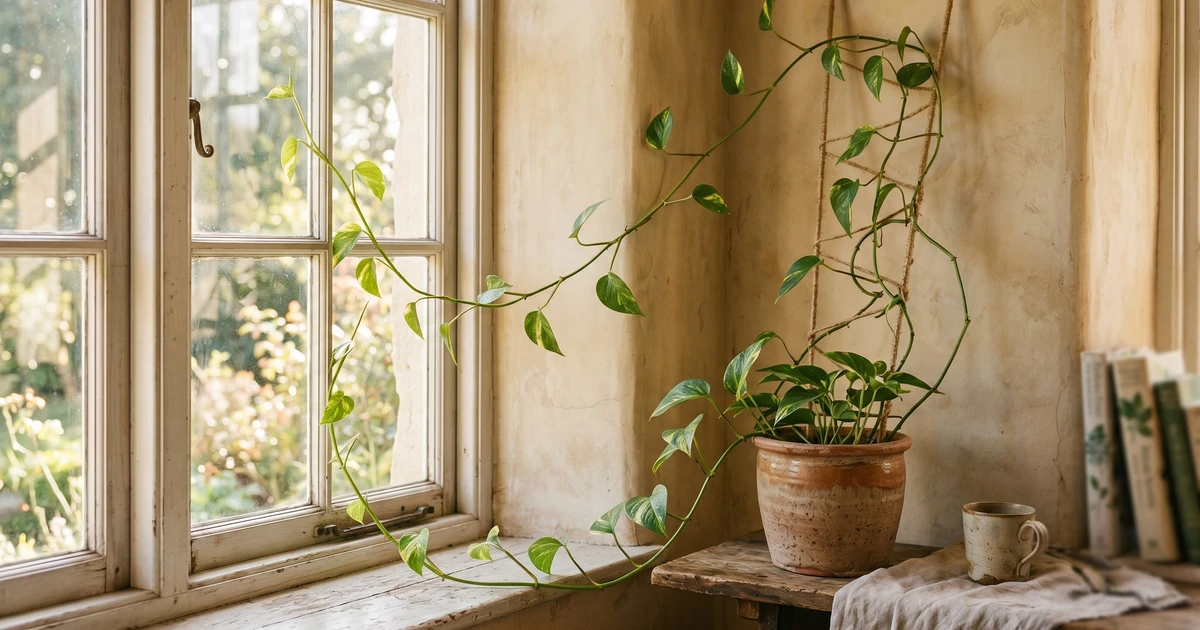
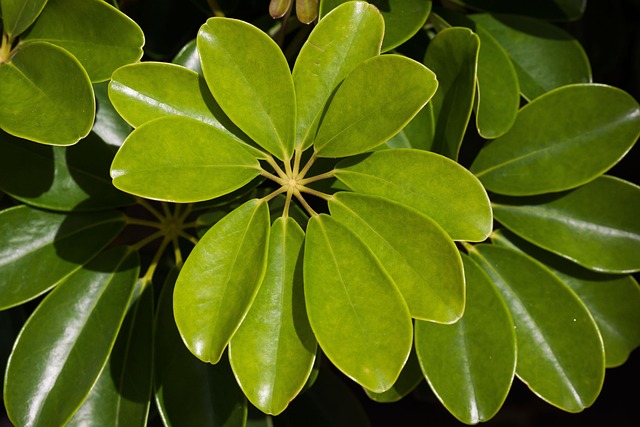
schefflera arboricola
Evidence-based care guide for Schefflera Arboricola (). Covers disease treatment, symptom diagnosis and pest control. Our analysis draws from 5 verified community cases with an average confidence score of 80%. Each protocol is synthesized from real rescue outcomes, not generic advice.
Care Essentials
Get to Know Your Schefflera Arboricola
The #1 killer? Overwatering. Let the soil dry between waterings and your Schefflera Arboricola will thrive.
Light
medium to bright indirect
Most comfortable in medium to bright indirect light. Avoid prolonged direct sun exposure.
💡 Grow lights: Thrives under artificial grow lights (LED or fluorescent, 10-12 hours/day). A great option if your space lacks natural light.
Watering
every 10-14 days
Let the soil dry out significantly between waterings — this plant is very sensitive to overwatering. When in doubt, wait another day.
Humidity & Temperature
Appreciates some humidity but adapts to average home conditions. Brown tips in winter? Your air might be too dry — a light misting helps.
Standard room temperature (60-80°F / 15-27°C) is perfect. Avoid cold drafts and sudden temperature swings.
Soil
Standard well-draining potting mix works well. Add perlite for extra drainage if you tend to overwater.
Care Requirements
At a Glance
Care Profile in Development
While our detailed care profile is being compiled, you can find specific care guidance in the 0 care-related diagnoses below — including watering schedules, light requirements, and propagation methods from real-world cases.
Start Here
Most Common Problems
Based on 5 analyzed cases — these are the issues you're most likely to encounter
Don't see your symptom? Search all 4 topics below, or run the Diagnostic.
Why does my Schefflera Arboricola have spider mites?
Infestation by Tetranychus urticae (Spider Mites) which thrive in dry, dusty,...
Schefflera Arboricola: Dropping Leaves
Stress-induced abscission (leaf drop) triggered by environmental shifts such as...
Why does my Schefflera Arboricola have scale insects?
Infestation by the pyriform or heart-shaped scale Protopulvinaria pyriformis...
Why are my Schefflera Arboricola leaves turning yellow?
Lower, older leaflets of dwarf schefflera (S. arboricola) turn yellow and...
Which of the 7 Killers
is threatening your plants?
We use Plant Grail problem records — root rot, mites, light, humidity — to rank which failures show up most. Answer 5 questions and we'll tell you which ones match your setup.
Skip the quiz — get The 7 Killers course ($19) →Question 1 of 5
How do you decide when to water your plants?
Question 2 of 5
Where do most of your plants live?
Question 3 of 5
What's your home environment like?
Question 4 of 5
Have you lost a plant in the last 6 months?
Question 5 of 5
How often do you check your plants for pests?
Your diagnosis is ready
We've identified your top 2 risk killers. Enter your email to see the full breakdown and your personalized rescue protocol.
Your plants are most at risk from:

The 7 Killers mini-course covers mechanism, rescue protocol, and prevention for the failure classes that show up most in Grail. 7 lessons. $19.
Get The 7 Killers — $19 →Get the Plant Mortality Checklist
Root rot is the largest named failure class in Plant Grail. Free PDF of the failure map and what to check first.
Your checklist is ready!
We also sent it to your inbox. Check your email for the full download.
Open the ChecklistFree. No spam. Unsubscribe anytime.
Verified Data
All Diagnoses
4 topics from 5 Grail records. Expand any topic to see the protocol.
Symptoms (1 topics · 1 cases)
Why are my Schefflera Arboricola leaves turning yellow?
Lower, older leaflets of dwarf schefflera (S
80%
Why are my Schefflera Arboricola leaves turning yellow?
Lower, older leaflets of dwarf schefflera (S
Cause
Lower, older leaflets of dwarf schefflera (S. arboricola) turn yellow and abscise when the root zone stays saturated for too long, since scheffleras 'do not like being moved about' and are especially sensitive to chronically wet soil; the Complete Houseplant Survival Manual lists 'Older leaves turn yellow and drop off' as the overwatering symptom in its S. arboricola troubleshooting entry.
Solutions
- Check the top of the soil with your finger before each watering and do not water again until the top inch has become nearly dry, as specified in the S. arboricola care notes.
- Confirm the pot has free drainage and unblock any drainage holes that have become plugged, then repot into a peat-based mix that includes perlite so the roots get the air they need.
- Move the plant to a brighter spot if variegation is fading or stems are getting leggy at the same time, because dim light combined with wet soil makes the yellowing worse.
Prevention
Allow the top inch of soil to become nearly dry between waterings year-round, keep the plant out of cold drafts and away from blasts of hot air from heating vents (both of which push stressed S. arboricola into shedding yellowing leaves), and raise ambient humidity in winter with a humidifier nearby to slow transpiration shock.
Pests (2 topics · 2 cases)
Why does my Schefflera Arboricola have scale insects?
Infestation by the pyriform or heart-shaped scale Protopulvinaria pyriformis (Cockerell) (Hemiptera: Coccidae), a sap-sucking soft scale found throughout the Palearctic region, equatorial and subequatorial Africa, the Middle East, North and South America
80%
Why does my Schefflera Arboricola have scale insects?
Infestation by the pyriform or heart-shaped scale Protopulvinaria pyriformis (Cockerell) (Hemiptera: Coccidae), a sap-sucking soft scale found throughout the Palearctic region, equatorial and subequatorial Africa, the Middle East, North and South America
Cause
Infestation by the pyriform or heart-shaped scale Protopulvinaria pyriformis (Cockerell) (Hemiptera: Coccidae), a sap-sucking soft scale found throughout the Palearctic region, equatorial and subequatorial Africa, the Middle East, North and South America. Documented on Schefflera in Egypt, where heavy infestations cause sap withdrawal, host deterioration, excessive honeydew production, and black sooty mould covering the leaves.
Solutions
- Spray Malathion at 2ml/L (the recommended dose) on infested plants until the leaves are saturated; in field trials this gave the greatest reduction in pyriform scale on Schefflera arboricola (95.37% in the 2021 season and 95.83% in the 2022 season).
- As a botanical alternative, spray Aloe vera leaf extract (AVLE) at 100% concentration on the leaves; this reduced pyriform scale by 68.6% in 2021 and 71.47% in 2022 and can serve as a bio-insecticide.
- Quarantine the infested Schefflera arboricola away from healthy houseplants and prune away the most heavily sooty-mould-covered leaves before treatment so the spray contacts the scale insects directly.
Prevention
Inspect Schefflera arboricola foliage regularly (the underside of the leaflets and along the leafstalks) for the small pyriform scale bodies and early sooty mould; isolate any new plant for at least two weeks before placing it near other Araliaceae, and avoid water stress, since weak plants show the worst scale build-up in the Egyptian field study.
Why does my Schefflera Arboricola have spider mites?
Infestation by Tetranychus urticae (Spider Mites) which thrive in dry, dusty, low-humidity indoor environments
90%
Why does my Schefflera Arboricola have spider mites?
Infestation by Tetranychus urticae (Spider Mites) which thrive in dry, dusty, low-humidity indoor environments
Cause
Infestation by Tetranychus urticae (Spider Mites) which thrive in dry, dusty, low-humidity indoor environments. Pests feed on leaf sap, causing stippled browning, yellowing, and eventually mass leaf drop.
Solutions
- Quarantine the plant immediately and rinse thoroughly under strong water spray to dislodge mites.
- Wipe leaves and stems with 70% rubbing alcohol or insecticidal soap, focusing on undersides.
- Apply neem oil spray weekly for 3-4 weeks to break the mite life cycle.
- Increase ambient humidity to 50-60% to deter mite reproduction.
Prevention
Perform weekly underside inspections using 10x magnification. Wipe leaves monthly with a damp cloth to remove dust. Maintain consistent humidity above 40%.
Other Topics (1 topics · 1 cases)
Schefflera Arboricola: Dropping Leaves
Stress-induced abscission (leaf drop) triggered by environmental shifts such as reduced winter light intensity, lower humidity (<40%), or transplant shock
81%
Schefflera Arboricola: Dropping Leaves
Stress-induced abscission (leaf drop) triggered by environmental shifts such as reduced winter light intensity, lower humidity (<40%), or transplant shock
Cause
Stress-induced abscission (leaf drop) triggered by environmental shifts such as reduced winter light intensity, lower humidity (<40%), or transplant shock. Older plants may drop leaves when severely root-bound, as the root system fails to support the canopy.
Solutions
- Inspect for root-bound conditions: If roots are circling, repot into a container 2-4 inches larger with fresh well-draining soil.
- Boost humidity to 50-60% via humidifier or pebble tray to reduce transpiration stress.
- Ensure bright indirect light (1000-2000 lux); use grow lights in winter if natural light is insufficient.
- Maintain stable temperatures (18-24�C) and avoid drafts from AC or heaters.
Prevention
Acclimate new plants gradually over 2-4 weeks. Repot every 3-5 years. In northern climates, reduce watering frequency by 30-50% during winter to match slower growth.
Common Questions
Frequently Asked Questions
Why does my schefflera arboricola have Spider mites?
Cause: Infestation by Tetranychus urticae (Spider Mites) which thrive in dry, dusty, low-humidity indoor environments. Pests feed on leaf sap, causing stippled browning, yellowing, and eventually mass leaf drop.
Solution: Quarantine the plant immediately and rinse thoroughly under strong water spray to dislodge mites.
Prevention: Perform weekly underside inspections using 10x magnification. Wipe leaves monthly with a damp cloth to remove dust. Maintain consistent humidity above 40%.
90% confidence · View full protocol →
Why does my schefflera arboricola have Dropping leaves?
Cause: Stress-induced abscission (leaf drop) triggered by environmental shifts such as reduced winter light intensity, lower humidity (<40%), or transplant shock. Older plants may drop leaves when severely root-bound, as the root system fails to support the canopy.
Solution: Inspect for root-bound conditions: If roots are circling, repot into a container 2-4 inches larger with fresh well-draining soil.
Prevention: Acclimate new plants gradually over 2-4 weeks. Repot every 3-5 years. In northern climates, reduce watering frequency by 30-50% during winter to match slower growth.
81% confidence · View full protocol →
Why does my schefflera arboricola have Scale?
Cause: Infestation by the pyriform or heart-shaped scale Protopulvinaria pyriformis (Cockerell) (Hemiptera: Coccidae), a sap-sucking soft scale found throughout the Palearctic region, equatorial and subequatorial Africa, the Middle East, North and South America. Documented on Schefflera in Egypt, where heavy infestations cause sap withdrawal, host deterioration, excessive honeydew production, and black sooty mould covering the leaves.
Solution: Spray Malathion at 2ml/L (the recommended dose) on infested plants until the leaves are saturated; in field trials this gave the greatest reduction in pyriform scale on Schefflera arboricola (95.37% in the 2021 season and 95.83% in the 2022 season).
Prevention: Inspect Schefflera arboricola foliage regularly (the underside of the leaflets and along the leafstalks) for the small pyriform scale bodies and early sooty mould; isolate any new plant for at least two weeks before placing it near other Araliaceae, and avoid water stress, since weak plants show the worst scale build-up in the Egyptian field study.
80% confidence · View full protocol →
Why does my schefflera arboricola have Yellow leaves?
Cause: Lower, older leaflets of dwarf schefflera (S. arboricola) turn yellow and abscise when the root zone stays saturated for too long, since scheffleras 'do not like being moved about' and are especially sensitive to chronically wet soil; the Complete Houseplant Survival Manual lists 'Older leaves turn yellow and drop off' as the overwatering symptom in its S. arboricola troubleshooting entry.
Solution: Check the top of the soil with your finger before each watering and do not water again until the top inch has become nearly dry, as specified in the S. arboricola care notes.
Prevention: Allow the top inch of soil to become nearly dry between waterings year-round, keep the plant out of cold drafts and away from blasts of hot air from heating vents (both of which push stressed S. arboricola into shedding yellowing leaves), and raise ambient humidity in winter with a humidifier nearby to slow transpiration shock.
80% confidence · View full protocol →
Common Questions
Frequently Asked About Schefflera Arboricola
What problems can Schefflera Arboricola get?
Plant Grail records 5 Schefflera Arboricola problems, including pests, watering stress, and environmental damage, each with a fix.
Structured Learning
Ready to Go Deeper?
Explore our Mastery Packs for structured, video-based learning with step-by-step protocols from 4,272 analyzed plant cases.
Browse All Courses →