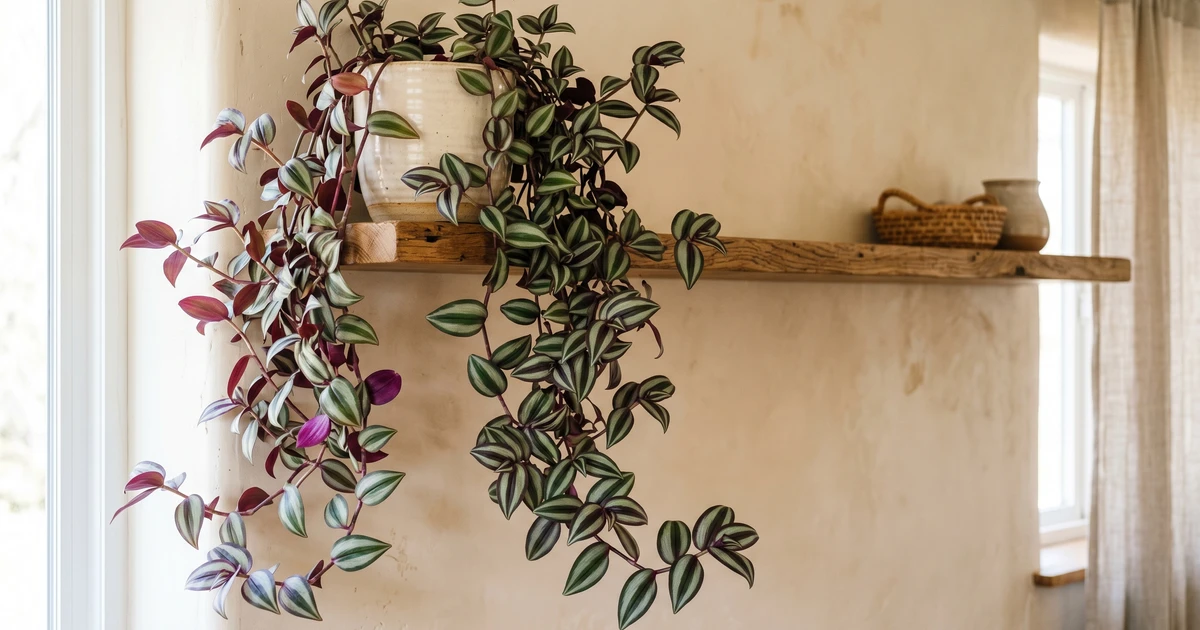
scindapsus treubii
Scindapsus treubii
Evidence-based care guide for Scindapsus Treubii (Scindapsus treubii). Covers disease treatment and symptom diagnosis. Our analysis draws from 5 verified community cases with an average confidence score of 75%. Each protocol is synthesized from real rescue outcomes, not generic advice.
Care Essentials
Get to Know Your Scindapsus Treubii
The #1 killer? Overwatering. Let the soil dry between waterings and your Scindapsus Treubii will thrive.
Light
medium to bright indirect
Most comfortable in medium to bright indirect light. Avoid prolonged direct sun exposure.
💡 Grow lights: Thrives under artificial grow lights (LED or fluorescent, 10-12 hours/day). A great option if your space lacks natural light.
Watering
every 10-14 days
Let the soil dry out significantly between waterings — this plant is very sensitive to overwatering. When in doubt, wait another day.
Humidity & Temperature
Appreciates some humidity but adapts to average home conditions. Brown tips in winter? Your air might be too dry — a light misting helps.
Standard room temperature (60-80°F / 15-27°C) is perfect. Avoid cold drafts and sudden temperature swings.
Soil
Needs well-draining soil — add perlite or orchid bark to a standard potting mix. Good drainage is critical to prevent root rot.
Care Requirements
At a Glance
Care Profile in Development
While our detailed care profile is being compiled, you can find specific care guidance in the 0 care-related diagnoses below — including watering schedules, light requirements, and propagation methods from real-world cases.
Start Here
Most Common Problems
Based on 5 analyzed cases — these are the issues you're most likely to encounter
Don't see your symptom? Search all 3 topics below, or run the Diagnostic.
What disease does my Scindapsus Treubii have?
Fungal issues in Scindapsus treubii emerge from persistently moist soil...
Why are my Scindapsus Treubii leaves turning yellow?
Yellowing leaf tips on Scindapsus treubii indicate overwatering-induced root...
Why does my Scindapsus Treubii have root rot?
Scindapsus treubii is notoriously slow to establish and highly sensitive to...
Which of the 7 Killers
is threatening your plants?
We analyzed 1,616 documented plant deaths to identify the 7 causes behind 78% of all losses. Answer 5 questions — we'll tell you exactly which ones apply to your setup.
Skip the quiz — get The 7 Killers course ($19) →Question 1 of 5
How do you decide when to water your plants?
Question 2 of 5
Where do most of your plants live?
Question 3 of 5
What's your home environment like?
Question 4 of 5
Have you lost a plant in the last 6 months?
Question 5 of 5
How often do you check your plants for pests?
Your diagnosis is ready
We've identified your top 2 risk killers. Enter your email to see the full breakdown and your personalized rescue protocol.
Your plants are most at risk from:

The 7 Killers mini-course covers every one of these in depth — mechanism, rescue protocol, prevention. 1,616 cases. 7 lessons. $19.
Get The 7 Killers — $19 →Get the Plant Mortality Checklist
The 7 killers behind 78% of houseplant deaths — and the exact fix for each. Free PDF based on 1,616 documented cases.
Your checklist is ready!
We also sent it to your inbox. Check your email for the full download.
Open the ChecklistFree. No spam. Unsubscribe anytime.
Verified Data
All Diagnoses
3 topics consolidated from 5 documented cases. Expand any topic to see all protocols.
Symptoms (1 topics · 1 cases)
Why are my Scindapsus Treubii leaves turning yellow?
Yellowing leaf tips on Scindapsus treubii indicate overwatering-induced root oxygen deprivation rather than underwatering or nutrient deficiency
82%
Why are my Scindapsus Treubii leaves turning yellow?
Yellowing leaf tips on Scindapsus treubii indicate overwatering-induced root oxygen deprivation rather than underwatering or nutrient deficiency
Cause
Yellowing leaf tips on Scindapsus treubii indicate overwatering-induced root oxygen deprivation rather than underwatering or nutrient deficiency. The epiphytic root system adapted to rapid drainage in tree canopy environments cannot tolerate prolonged soil saturation. When soil remains moist for extended periods, anaerobic conditions develop around roots, triggering early-stage root stress that manifests as localized tip necrosis. This differs from underwatering (which causes crispy, uniform edge browning) and nutrient issues (which cause uniform yellowing across leaf surface).
Solutions
- Soil dryness check: Insert finger 2-3 inches deep into soil—only water when completely dry at this depth
- Root inspection: Gently unpot plant and examine roots for early-stage rot (black/mushy roots require trimming with sterilized shears)
- Repotting protocol: If root damage found, repot in fresh chunky aroid mix (50% potting soil, 30% perlite, 20% orchid bark) with drainage holes
- Watering adjustment: Transition to 7-14 day watering intervals indoors, allowing pot to become lightweight before rewatering
- Bottom-watering: Use bottom-watering technique to avoid wetting foliage and crown while ensuring thorough soil hydration
Prevention
Water only when top 2-3 inches of soil are completely dry. Use well-draining chunky aroid mix with 30-50% perlite or bark. Ensure pot has drainage holes and avoid oversized pots that retain excess moisture. Maintain 40-60% humidity and bright indirect light (2000-5000 lux) to support transpiration without creating waterlogged conditions.
Diseases (2 topics · 4 cases)
What disease does my Scindapsus Treubii have?
Fungal issues in Scindapsus treubii emerge from persistently moist soil conditions that favor opportunistic pathogens
3 protocols
57–85%
What disease does my Scindapsus Treubii have?
Fungal issues in Scindapsus treubii emerge from persistently moist soil conditions that favor opportunistic pathogens
Protocol 1: fungal infection · 85% confidence
Cause
Fungal issues in Scindapsus treubii emerge from persistently moist soil conditions that favor opportunistic pathogens. Saprophytic fungi (mushrooms) fruiting from soil indicate high organic matter and moisture but are harmless decomposers—distinguishable from pathogenic infections like powdery mildew or soil-borne Pythium/Fusarium that threaten plant health. The epiphytic root system requires rapid drainage; waterlogged soil creates anaerobic conditions where pathogenic fungi thrive while beneficial microbial balance is disrupted.
Solutions
- Inspect and remove visible fungal growth with sterilized tools; trim affected leaves at the base to redirect energy
- Repot immediately in fresh sterile well-draining mix (50% potting soil, 30% perlite, 20% orchid bark) with drainage holes
- Water only when leaves curl downward or top 2-3 inches of soil are completely dry—use finger test for confirmation
- Increase airflow with a small fan and maintain 40-60% humidity to dry soil surface quickly after watering
- Apply organic fungicide like neem oil (diluted according to label) weekly for 2-3 weeks if infection persists
- Quarantine affected plant 2-3 feet from others until recovery to prevent spore spread
Prevention
Water only when leaves begin to curl downward—a reliable drought signal in Scindapsus. Use well-draining chunky aroid mix (50% potting soil, 30% perlite, 20% orchid bark). Ensure pots have drainage holes and provide 12-14 hours bright indirect light (2000-5000 lux) to promote healthy transpiration. Maintain 40-60% humidity with good airflow to prevent moisture accumulation on foliage and soil surface.
Protocol 2: fungal infection · 71% confidence
Cause
Scindapsus treubii (Moonlight/Dark Form) has slow transpiration rates. Fungal issues are often secondary to edema (cell burst from overwatering) or root rot. Pathogens thrive in the humid, stagnant air typical for rare aroid cabinets.
Solutions
- Improve airflow immediately using a small oscillating fan.
- Treat affected leaves with a sulfur-based fungicide or neem oil spray weekly.
- Switch to a highly porous substrate: 40% orchid bark, 30% perlite, 30% potting soil.
- Prune heavily spotted leaves with sterile shears to prevent spore spread.
- Use terracotta pots to assist in soil drying between waterings.
Prevention
Water only when the plant is 75% dry. Never mist the leaves; use a humidifier for ambient moisture instead. Clean leaves monthly with a diluted lemon juice or alcohol wipe to remove dust/spores.
Protocol 3: fungal infection · 57% confidence
Cause
Scindapsus treubii (especially Moonlight and Dark Form) is highly susceptible to fungal pathogens and root rot precursors when grown in dense, moisture-retentive soil. Its slow growth rate means it transpires less than Scindapsus pictus, making it easier to overwater. Soil surface fungus (white fuzz or mushrooms) is a common indicator of anaerobic conditions that precede systemic infection.
Solutions
- Improve drainage: Repot in a mix of at least 40% perlite or pumice with orchid bark and coco coir.
- Bottom water only: Keep the foliage dry to prevent opportunistic leaf spot fungi.
- Use antifungal top-dressings: A thin layer of cinnamon or horticultural sand can discourage surface mold.
- Increase airflow: Use a small fan to ensure soil surface dries within 48 hours of watering.
- Quarantine new cuttings: Treubii is often sold as poorly rooted cuttings; verify root health before placing in high humidity.
Prevention
Water only when the plant shows visible softness or the top 75% of soil is dry. Use terracotta pots to facilitate even drying.
Why does my Scindapsus Treubii have root rot?
Scindapsus treubii is notoriously slow to establish and highly sensitive to waterlogged substrates
79%
Why does my Scindapsus Treubii have root rot?
Scindapsus treubii is notoriously slow to establish and highly sensitive to waterlogged substrates
Cause
Scindapsus treubii is notoriously slow to establish and highly sensitive to waterlogged substrates. The primary vector for rot is the water-to-soil transition after propagation, where water roots fail to adapt to low-oxygen soil. Secondary vectors include physical trauma (falls) that breaks the vascular connection at the stem-root junction, and warm, stagnant propagation water (>24°C) which promotes bacterial bloom.
Solutions
- Confirm rot by texture: if roots are black but FIRM, it is normal tannin pigmentation. If they slough off with a gentle pull, it is rot.
- Trim all rotted roots and stem sections. Soak the remaining healthy nodes in a 3% hydrogen peroxide solution (1 part H2O2 to 4 parts water) for 10 minutes.
- Allow the cutting/plant to air-dry (callus) for 2-4 hours before placing in a new medium.
- Instead of straight water propagation, use moist perlite or LECA to provide higher oxygen to developing roots.
- When transitioning to soil, use a 70% inorganic mix (bark/pumice/perlite) and keep humidity at 80% to reduce root load.
Prevention
Never move a Scindapsus treubii cutting to soil until roots are at least 3 inches long and have secondary branches. Maintain propagation water below 22°C using a cool, dark glass jar. Secure vines to prevent 'fall trauma' which causes localized junction rot.
Common Questions
Frequently Asked Questions
Why does my scindapsus treubii have Fungal infection?
Cause: Fungal issues in Scindapsus treubii emerge from persistently moist soil conditions that favor opportunistic pathogens. Saprophytic fungi (mushrooms) fruiting from soil indicate high organic matter and moisture but are harmless decomposers—distinguishable from pathogenic infections like powdery mildew or soil-borne Pythium/Fusarium that threaten plant health. The epiphytic root system requires rapid drainage; waterlogged soil creates anaerobic conditions where pathogenic fungi thrive while beneficial microbial balance is disrupted.
Solution: Inspect and remove visible fungal growth with sterilized tools; trim affected leaves at the base to redirect energy
Prevention: Water only when leaves begin to curl downward—a reliable drought signal in Scindapsus. Use well-draining chunky aroid mix (50% potting soil, 30% perlite, 20% orchid bark). Ensure pots have drainage holes and provide 12-14 hours bright indirect light (2000-5000 lux) to promote healthy transpiration. Maintain 40-60% humidity with good airflow to prevent moisture accumulation on foliage and soil surface.
85% confidence · View full protocol →
Why does my scindapsus treubii have Yellow leaves?
Cause: Yellowing leaf tips on Scindapsus treubii indicate overwatering-induced root oxygen deprivation rather than underwatering or nutrient deficiency. The epiphytic root system adapted to rapid drainage in tree canopy environments cannot tolerate prolonged soil saturation. When soil remains moist for extended periods, anaerobic conditions develop around roots, triggering early-stage root stress that manifests as localized tip necrosis. This differs from underwatering (which causes crispy, uniform edge browning) and nutrient issues (which cause uniform yellowing across leaf surface).
Solution: Soil dryness check: Insert finger 2-3 inches deep into soil—only water when completely dry at this depth
Prevention: Water only when top 2-3 inches of soil are completely dry. Use well-draining chunky aroid mix with 30-50% perlite or bark. Ensure pot has drainage holes and avoid oversized pots that retain excess moisture. Maintain 40-60% humidity and bright indirect light (2000-5000 lux) to support transpiration without creating waterlogged conditions.
82% confidence · View full protocol →
Why does my scindapsus treubii have Root rot?
Cause: Scindapsus treubii is notoriously slow to establish and highly sensitive to waterlogged substrates. The primary vector for rot is the water-to-soil transition after propagation, where water roots fail to adapt to low-oxygen soil. Secondary vectors include physical trauma (falls) that breaks the vascular connection at the stem-root junction, and warm, stagnant propagation water (>24°C) which promotes bacterial bloom.
Solution: Confirm rot by texture: if roots are black but FIRM, it is normal tannin pigmentation. If they slough off with a gentle pull, it is rot.
Prevention: Never move a Scindapsus treubii cutting to soil until roots are at least 3 inches long and have secondary branches. Maintain propagation water below 22°C using a cool, dark glass jar. Secure vines to prevent 'fall trauma' which causes localized junction rot.
79% confidence · View full protocol →
Common Questions
Frequently Asked About Scindapsus Treubii
What problems can Scindapsus Treubii get?
Our database contains 5 documented Scindapsus Treubii cases covering 3 distinct topics, including diseases, pest identification, environmental stress, propagation, and advanced care protocols — each with verified solutions.
Structured Learning
Ready to Go Deeper?
Explore our Mastery Packs for structured, video-based learning with step-by-step protocols from 20,000+ analyzed plant cases.
Browse All Courses →