syngonium
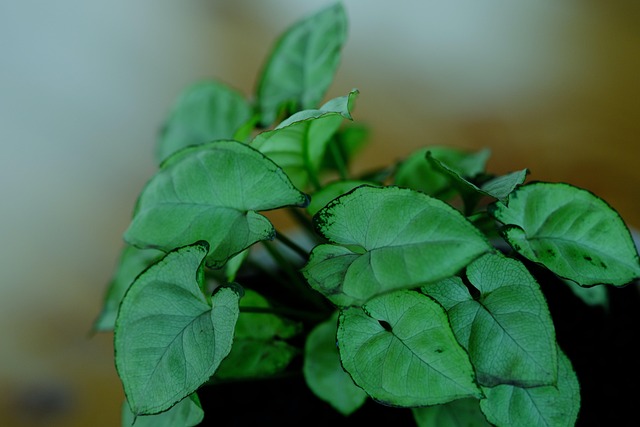
Syngonium podophyllum
Also known as: Arrowhead Plant, Arrowhead Vine
Evidence-based care guide for Syngonium (Syngonium podophyllum). Covers symptom diagnosis. Our analysis draws from 5 verified community cases with an average confidence score of 81%. Each protocol is synthesized from real rescue outcomes, not generic advice.
Care Essentials
Get to Know Your Syngonium
Light is everything for this plant. Get the placement right and everything else falls into place.
Light
bright indirect
Wants bright, indirect light — sensitive to both extremes. Too much direct sun causes burns, too little causes stretching.
💡 Grow lights: Thrives under artificial grow lights (LED or fluorescent, 10-12 hours/day). A great option if your space lacks natural light.
Watering
every 5-7 days
Likes consistently moist (not soggy) soil. Water when the top inch feels dry. Don't let it dry out completely.
Humidity & Temperature
Appreciates some humidity but adapts to average home conditions. Brown tips in winter? Your air might be too dry — a light misting helps.
Standard room temperature (60-80°F / 15-27°C) is perfect. Avoid cold drafts and sudden temperature swings.
Soil
Standard well-draining potting mix works well. Add perlite for extra drainage if you tend to overwater.
Care Requirements
At a Glance
Care Profile in Development
While our detailed care profile is being compiled, you can find specific care guidance in the 0 care-related diagnoses below — including watering schedules, light requirements, and propagation methods from real-world cases.
Start Here
Most Common Problems
Based on 5 analyzed cases — these are the issues you're most likely to encounter
Don't see your symptom? Search all 5 topics below, or run the Diagnostic.
Syngonium: Pot Too Small
Syngoniums are aggressive rooters. When the root mass outpaces soil volume, the...
Why is my Syngonium wilting?
Syngoniums exhibit dramatic drooping from three primary triggers: 1) Severe...
What are these brown spots on my Syngonium?
Sudden exposure to direct sunlight or intense afternoon rays (especially from...
Syngonium: No New Growth
Syngoniums often experience growth stuck periods due to post-propagation root...
Syngonium: Leaf Spot
Pathogenic infections (primarily Xanthomonas bacteria or Anthracnose fungi)...
Which of the 7 Killers
is threatening your plants?
We analyzed 1,616 documented plant deaths to identify the 7 causes behind 78% of all losses. Answer 5 questions — we'll tell you exactly which ones apply to your setup.
Skip the quiz — get The 7 Killers course ($19) →Question 1 of 5
How do you decide when to water your plants?
Question 2 of 5
Where do most of your plants live?
Question 3 of 5
What's your home environment like?
Question 4 of 5
Have you lost a plant in the last 6 months?
Question 5 of 5
How often do you check your plants for pests?
Your diagnosis is ready
We've identified your top 2 risk killers. Enter your email to see the full breakdown and your personalized rescue protocol.
Your plants are most at risk from:

The 7 Killers mini-course covers every one of these in depth — mechanism, rescue protocol, prevention. 1,616 cases. 7 lessons. $19.
Get The 7 Killers — $19 →Get the Plant Mortality Checklist
The 7 killers behind 78% of houseplant deaths — and the exact fix for each. Free PDF based on 1,616 documented cases.
Your checklist is ready!
We also sent it to your inbox. Check your email for the full download.
Open the ChecklistFree. No spam. Unsubscribe anytime.
Verified Data
All Diagnoses
5 topics consolidated from 5 documented cases. Expand any topic to see all protocols.
Symptoms (3 topics · 3 cases)
What are these brown spots on my Syngonium?
Sudden exposure to direct sunlight or intense afternoon rays (especially from west-facing windows) on shade-adapted Syngonium foliage
81%
What are these brown spots on my Syngonium?
Sudden exposure to direct sunlight or intense afternoon rays (especially from west-facing windows) on shade-adapted Syngonium foliage
Cause
Sudden exposure to direct sunlight or intense afternoon rays (especially from west-facing windows) on shade-adapted Syngonium foliage. This triggers phototoxicity, breaking down chlorophyll and causing localized tissue death which manifests as crispy brown spots, often with yellow halos.
Solutions
- Relocate the plant to a spot with bright indirect light (1000-3000 lux).
- Install sheer curtains or blinds to diffuse incoming direct sunlight.
- Prune severely damaged leaves with sterilized shears to redirect energy to new growth.
- Maintain high humidity (60%+) to help the plant recover from light-induced desiccation.
Prevention
Acclimate plants gradually over 14 days when moving to brighter environments. Avoid placing directly in front of west or south-facing windows without diffusion. Use a light meter app to verify light levels stay within the dont-touch-the-leaves range.
Why is my Syngonium wilting?
Syngoniums exhibit dramatic drooping from three primary triggers: 1) Severe thirst (underwatering) leading to rapid turgor loss, 2) Cold water shock stressing the tropical roots, and 3) Transplant shock or rootbound stress where the plant can no longer support its foliage mass
88%
Why is my Syngonium wilting?
Syngoniums exhibit dramatic drooping from three primary triggers: 1) Severe thirst (underwatering) leading to rapid turgor loss, 2) Cold water shock stressing the tropical roots, and 3) Transplant shock or rootbound stress where the plant can no longer support its foliage mass
Cause
Syngoniums exhibit dramatic drooping from three primary triggers: 1) Severe thirst (underwatering) leading to rapid turgor loss, 2) Cold water shock stressing the tropical roots, and 3) Transplant shock or rootbound stress where the plant can no longer support its foliage mass.
Solutions
- Check soil moisture: if bone-dry, bottom-water thoroughly with room-temperature water.
- Ensure water temperature is between 65-80�F (18-27�C) to avoid root thermal shock.
- If recently repotted, provide a humidity dome or cover with a clear plastic bag for 2-3 days to reduce transpiration.
- Provide support: secure leggy vines to a moss pole or trellis.
Prevention
Establish a consistent watering routine based on soil moisture (top 2 inches dry). Maintain 60-80% humidity. Avoid drafts from AC or heating vents. Always let tap water reach room temperature before application.
Syngonium: Leaf Spot
Pathogenic infections (primarily Xanthomonas bacteria or Anthracnose fungi) triggered by prolonged leaf wetness, overhead watering, and high humidity without adequate airflow
63%
Syngonium: Leaf Spot
Pathogenic infections (primarily Xanthomonas bacteria or Anthracnose fungi) triggered by prolonged leaf wetness, overhead watering, and high humidity without adequate airflow
Cause
Pathogenic infections (primarily Xanthomonas bacteria or Anthracnose fungi) triggered by prolonged leaf wetness, overhead watering, and high humidity without adequate airflow. Bacterial spots often feature a yellow halo (chlorotic border), while fungal spots may appear sunken or develop dark fruiting bodies.
Solutions
- Isolate the plant immediately to prevent spread to other aroids.
- Remove and safely discard all leaves showing expanding spots using sterilized shears.
- Apply a copper-based fungicide or broad-spectrum antifungal spray weekly for 2-3 cycles.
- Transition to bottom-watering to ensure foliage remains dry.
Prevention
Ensure consistent airflow with an oscillating fan. Avoid misting leaves if humidity is already above 50%. Space plants to prevent foliage contact. Always use sterilized tools for pruning.
Other Topics (2 topics · 2 cases)
Syngonium: No New Growth
Syngoniums often experience growth stuck periods due to post-propagation root prioritization, insufficient light intensity (especially for variegated types), or being hefty feeders that have exhausted soil nutrients
81%
Syngonium: No New Growth
Syngoniums often experience growth stuck periods due to post-propagation root prioritization, insufficient light intensity (especially for variegated types), or being hefty feeders that have exhausted soil nutrients
Cause
Syngoniums often experience growth stuck periods due to post-propagation root prioritization, insufficient light intensity (especially for variegated types), or being hefty feeders that have exhausted soil nutrients. Seasonal dormancy (October-March) also triggers a complete halt in new leaf production.
Solutions
- Inspect leaf petioles for hidden axillary buds�new growth often emerges there after pruning.
- Boost light levels to 2000-5000 lux (bright indirect) to fuel vining metabolism.
- Apply balanced liquid fertilizer at half-strength every 2 weeks during the growing season.
- Be patient: water-to-soil transplants can take 4-8 weeks to resume top growth.
Prevention
Provide 12-14 hours of bright indirect light year-round to prevent deep dormancy. Maintain 60-80% humidity to support transpiration. Avoid over-potting, as Syngoniums often grow faster when slightly root-bound.
Syngonium: Pot Too Small
Syngoniums are aggressive rooters
91%
Syngonium: Pot Too Small
Syngoniums are aggressive rooters
Cause
Syngoniums are aggressive rooters. When the root mass outpaces soil volume, the plant becomes rootbound, leading to growth stagnation, rapid soil dehydration, and eventual leaf drop. Conversely, overpotting causes waterlogging as the small root system cannot absorb excess moisture.
Solutions
- Inspect roots: if circling the pot or emerging from drainage holes, it is time to size up.
- Choose a pot only 1-2 inches larger than the current root ball.
- Use a chunky, airy aroid mix (perlite, bark, peat) to ensure drainage.
- If pot is too large: downsize immediately to a pot that matches the root mass to prevent rot.
Prevention
Check roots every 6-12 months during the growing season. Maintain bright indirect light to support foliage growth that balances root development. Use nursery pots inside decorative cache pots to monitor moisture and root health more easily.
Common Questions
Frequently Asked Questions
Why does my syngonium have Pot too small?
Cause: Syngoniums are aggressive rooters. When the root mass outpaces soil volume, the plant becomes rootbound, leading to growth stagnation, rapid soil dehydration, and eventual leaf drop. Conversely, overpotting causes waterlogging as the small root system cannot absorb excess moisture.
Solution: Inspect roots: if circling the pot or emerging from drainage holes, it is time to size up.
Prevention: Check roots every 6-12 months during the growing season. Maintain bright indirect light to support foliage growth that balances root development. Use nursery pots inside decorative cache pots to monitor moisture and root health more easily.
91% confidence · View full protocol →
Why does my syngonium have Drooping?
Cause: Syngoniums exhibit dramatic drooping from three primary triggers: 1) Severe thirst (underwatering) leading to rapid turgor loss, 2) Cold water shock stressing the tropical roots, and 3) Transplant shock or rootbound stress where the plant can no longer support its foliage mass.
Solution: Check soil moisture: if bone-dry, bottom-water thoroughly with room-temperature water.
Prevention: Establish a consistent watering routine based on soil moisture (top 2 inches dry). Maintain 60-80% humidity. Avoid drafts from AC or heating vents. Always let tap water reach room temperature before application.
88% confidence · View full protocol →
Why does my syngonium have Brown spots?
Cause: Sudden exposure to direct sunlight or intense afternoon rays (especially from west-facing windows) on shade-adapted Syngonium foliage. This triggers phototoxicity, breaking down chlorophyll and causing localized tissue death which manifests as crispy brown spots, often with yellow halos.
Solution: Relocate the plant to a spot with bright indirect light (1000-3000 lux).
Prevention: Acclimate plants gradually over 14 days when moving to brighter environments. Avoid placing directly in front of west or south-facing windows without diffusion. Use a light meter app to verify light levels stay within the dont-touch-the-leaves range.
81% confidence · View full protocol →
Why does my syngonium have No new growth?
Cause: Syngoniums often experience growth stuck periods due to post-propagation root prioritization, insufficient light intensity (especially for variegated types), or being hefty feeders that have exhausted soil nutrients. Seasonal dormancy (October-March) also triggers a complete halt in new leaf production.
Solution: Inspect leaf petioles for hidden axillary buds�new growth often emerges there after pruning.
Prevention: Provide 12-14 hours of bright indirect light year-round to prevent deep dormancy. Maintain 60-80% humidity to support transpiration. Avoid over-potting, as Syngoniums often grow faster when slightly root-bound.
81% confidence · View full protocol →
Why does my syngonium have Leaf spot?
Cause: Pathogenic infections (primarily Xanthomonas bacteria or Anthracnose fungi) triggered by prolonged leaf wetness, overhead watering, and high humidity without adequate airflow. Bacterial spots often feature a yellow halo (chlorotic border), while fungal spots may appear sunken or develop dark fruiting bodies.
Solution: Isolate the plant immediately to prevent spread to other aroids.
Prevention: Ensure consistent airflow with an oscillating fan. Avoid misting leaves if humidity is already above 50%. Space plants to prevent foliage contact. Always use sterilized tools for pruning.
63% confidence · View full protocol →
Common Questions
Frequently Asked About Syngonium
What problems can Syngonium get?
Our database contains 5 documented Syngonium cases covering 5 distinct topics, including diseases, pest identification, environmental stress, propagation, and advanced care protocols — each with verified solutions.
Structured Learning
Ready to Go Deeper?
Explore our Mastery Packs for structured, video-based learning with step-by-step protocols from 20,000+ analyzed plant cases.
Browse All Courses →