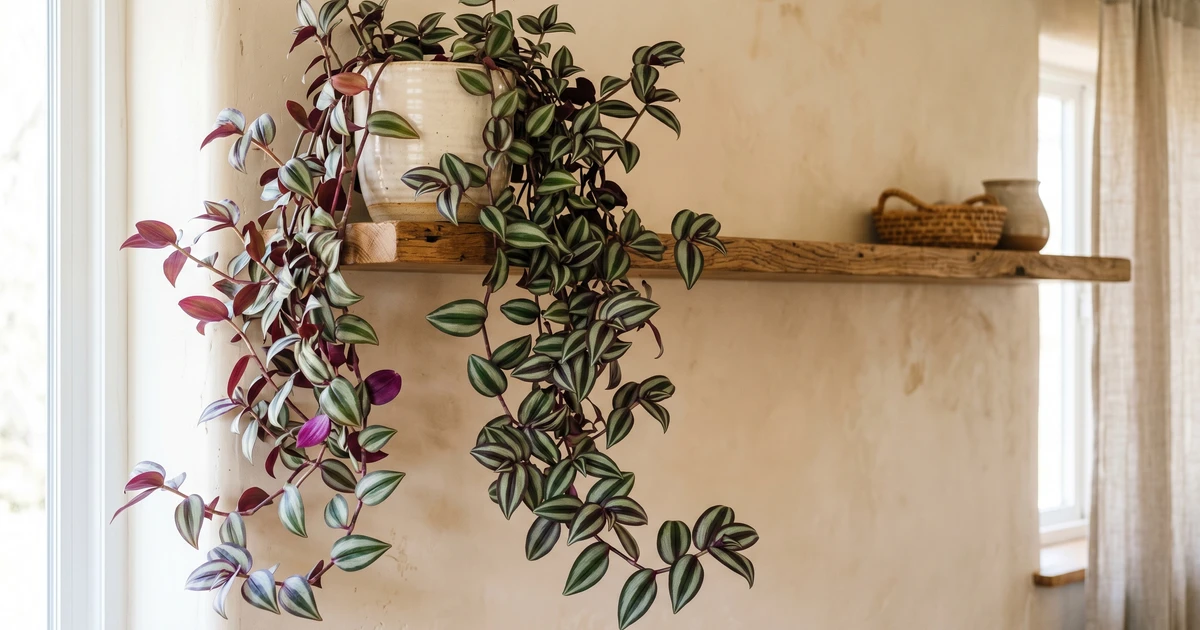
tradescantia nanouk
tradescantia nanouk
Evidence-based care guide for Tradescantia Nanouk (tradescantia nanouk). Covers symptom diagnosis, disease treatment and pest control. Our analysis draws from 3 verified community cases with an average confidence score of 80%. Each protocol is synthesized from real rescue outcomes, not generic advice.
Care Essentials
Get to Know Your Tradescantia Nanouk
The #1 killer? Overwatering. Let the soil dry between waterings and your Tradescantia Nanouk will thrive.
Light
medium to bright indirect
Most comfortable in medium to bright indirect light. Avoid prolonged direct sun exposure.
💡 Grow lights: Thrives under artificial grow lights (LED or fluorescent, 10-12 hours/day). A great option if your space lacks natural light.
Watering
every 10-14 days
Let the soil dry out significantly between waterings — this plant is very sensitive to overwatering. When in doubt, wait another day.
Humidity & Temperature
Appreciates some humidity but adapts to average home conditions. Brown tips in winter? Your air might be too dry — a light misting helps.
Sensitive to cold — keep above 55°F (13°C). Avoid placing near drafty windows or exterior doors in winter.
Soil
Standard well-draining potting mix works well. Add perlite for extra drainage if you tend to overwater.
Care Requirements
At a Glance
Care Profile in Development
While our detailed care profile is being compiled, you can find specific care guidance in the 0 care-related diagnoses below — including watering schedules, light requirements, and propagation methods from real-world cases.
Start Here
Most Common Problems
Based on 3 analyzed cases — these are the issues you're most likely to encounter
Don't see your symptom? Search all 3 topics below, or run the Diagnostic.
Why do my Tradescantia Nanouk leaves have brown tips?
Tradescantia nanouk has thin, partly variegated leaves that lose water from the...
Why does my Tradescantia Nanouk have root rot?
Tradescantia nanouk's semi-succulent stems and shallow, fibrous root system rot...
Why does my Tradescantia Nanouk have aphids?
Tradescantia nanouk pushes out flushes of tender new leaves and stem tips...
Which of the 7 Killers
is threatening your plants?
We use Plant Grail problem records — root rot, mites, light, humidity — to rank which failures show up most. Answer 5 questions and we'll tell you which ones match your setup.
Skip the quiz — get The 7 Killers course ($19) →Question 1 of 5
How do you decide when to water your plants?
Question 2 of 5
Where do most of your plants live?
Question 3 of 5
What's your home environment like?
Question 4 of 5
Have you lost a plant in the last 6 months?
Question 5 of 5
How often do you check your plants for pests?
Your diagnosis is ready
We've identified your top 2 risk killers. Enter your email to see the full breakdown and your personalized rescue protocol.
Your plants are most at risk from:

The 7 Killers mini-course covers mechanism, rescue protocol, and prevention for the failure classes that show up most in Grail. 7 lessons. $19.
Get The 7 Killers — $19 →Get the Plant Mortality Checklist
Root rot is the largest named failure class in Plant Grail. Free PDF of the failure map and what to check first.
Your checklist is ready!
We also sent it to your inbox. Check your email for the full download.
Open the ChecklistFree. No spam. Unsubscribe anytime.
Verified Data
All Diagnoses
3 topics consolidated from 3 documented cases. Expand any topic to see all protocols.
Symptoms (1 topics · 1 cases)
Why do my Tradescantia Nanouk leaves have brown tips?
Tradescantia nanouk has thin, partly variegated leaves that lose water from the leaf edges faster than the roots can replace it whenever indoor humidity is low or watering is inconsistent, so the tip tissue desiccates and dies back first as a brown, papery margin before the rest of the leaf shows stress
80%
Why do my Tradescantia Nanouk leaves have brown tips?
Tradescantia nanouk has thin, partly variegated leaves that lose water from the leaf edges faster than the roots can replace it whenever indoor humidity is low or watering is inconsistent, so the tip tissue desiccates and dies back first as a brown, papery margin before the rest of the leaf shows stress
Cause
Tradescantia nanouk has thin, partly variegated leaves that lose water from the leaf edges faster than the roots can replace it whenever indoor humidity is low or watering is inconsistent, so the tip tissue desiccates and dies back first as a brown, papery margin before the rest of the leaf shows stress. The standard reference for this symptom names low humidity and insufficient water as the two causes that drive the browning to start at the very tip and then creep back along the edge.
Solutions
- Move the plant away from heating vents, cold drafts, and windows that catch hot afternoon sun, and group it with other houseplants or set the pot on a tray of pebbles above standing water to lift the ambient humidity around the foliage.
- Water thoroughly only when the top layer of the potting medium is dry to the touch, then let the excess drain so the roots are never left sitting in soggy soil, and trim each browned tip back to healthy green tissue with clean scissors so the damage stops spreading.
Prevention
Keep the plant in bright, indirect light, maintain steady room humidity rather than letting the air swing bone-dry, water on a consistent rhythm that lets the medium dry slightly between drinks, and pinch back leggy stems so new, vigorous growth replaces any leaves that have already browned at the tips.
Diseases (1 topics · 1 cases)
Why does my Tradescantia Nanouk have root rot?
Tradescantia nanouk's semi-succulent stems and shallow, fibrous root system rot quickly when the potting medium stays saturated, especially during the cooler months when the plant is barely drinking and cold soil drains slowly
80%
Why does my Tradescantia Nanouk have root rot?
Tradescantia nanouk's semi-succulent stems and shallow, fibrous root system rot quickly when the potting medium stays saturated, especially during the cooler months when the plant is barely drinking and cold soil drains slowly
Cause
Tradescantia nanouk's semi-succulent stems and shallow, fibrous root system rot quickly when the potting medium stays saturated, especially during the cooler months when the plant is barely drinking and cold soil drains slowly. The genus is widely flagged for being especially prone to root rot whenever the medium is allowed to become too wet, and overwatering is the single most common killer of container plants across the board.
Solutions
- Slide the rootball out of the pot, shake off the soggy medium, and use clean scissors to cut away every brown, mushy root until only firm white or pale tan tissue remains, then dust the cut roots with a little cinnamon or a labeled fungicide before repotting.
- Re-pot into a clean container with multiple drainage holes using a fresh, well-drained organic potting mix, water once lightly to settle the medium, and hold off on fertilizing until you see new growth so the recovering roots are not pushed.
Prevention
Use a pot that drains freely and a loose, peat-and-perlite-rich mix, water only when the top of the medium is dry to the touch, empty any cache pot or saucer of standing water after every drink, keep the plant in bright indirect light so the medium dries at a healthy rate, and reduce watering sharply through the short-day winter months when growth slows.
Pests (1 topics · 1 cases)
Why does my Tradescantia Nanouk have aphids?
Tradescantia nanouk pushes out flushes of tender new leaves and stem tips through the growing season, and those soft, nitrogen-rich tissues are exactly where aphids settle, pierce, and feed
80%
Why does my Tradescantia Nanouk have aphids?
Tradescantia nanouk pushes out flushes of tender new leaves and stem tips through the growing season, and those soft, nitrogen-rich tissues are exactly where aphids settle, pierce, and feed
Cause
Tradescantia nanouk pushes out flushes of tender new leaves and stem tips through the growing season, and those soft, nitrogen-rich tissues are exactly where aphids settle, pierce, and feed. The genus is repeatedly listed as aphid-susceptible in houseplant references, and stressed plants that are also battling cold, wet roots tend to attract the heaviest infestations on the newest growth.
Solutions
- Rinse the entire plant under a gentle stream of tepid water in the sink or shower, paying special attention to the undersides of the leaves and the growing tips where aphid colonies cluster, then follow up with a spray of insecticidal soap or a labeled neem-oil solution once the foliage has drained.
- After rinsing and spraying, isolate the plant from nearby houseplants for at least a couple of weeks, inspect new growth every few days for returning green or black aphids, and crush any small colonies by hand or dab them off with a cotton swab dipped in diluted rubbing alcohol.
Prevention
Inspect new growth regularly during the spring and summer flush, keep the plant well-fed but not over-fertilized with nitrogen, avoid overhead overcrowding so air moves freely through the foliage, encourage beneficial predators by giving the plant a summer outdoors on a shaded porch, and quarantine any new houseplants for a couple of weeks before they share a window with the Tradescantia.
Common Questions
Frequently Asked Questions
Why does my tradescantia nanouk have Brown tips?
Cause: Tradescantia nanouk has thin, partly variegated leaves that lose water from the leaf edges faster than the roots can replace it whenever indoor humidity is low or watering is inconsistent, so the tip tissue desiccates and dies back first as a brown, papery margin before the rest of the leaf shows stress. The standard reference for this symptom names low humidity and insufficient water as the two causes that drive the browning to start at the very tip and then creep back along the edge.
Solution: Move the plant away from heating vents, cold drafts, and windows that catch hot afternoon sun, and group it with other houseplants or set the pot on a tray of pebbles above standing water to lift the ambient humidity around the foliage.
Prevention: Keep the plant in bright, indirect light, maintain steady room humidity rather than letting the air swing bone-dry, water on a consistent rhythm that lets the medium dry slightly between drinks, and pinch back leggy stems so new, vigorous growth replaces any leaves that have already browned at the tips.
80% confidence · View full protocol →
Why does my tradescantia nanouk have Root rot?
Cause: Tradescantia nanouk's semi-succulent stems and shallow, fibrous root system rot quickly when the potting medium stays saturated, especially during the cooler months when the plant is barely drinking and cold soil drains slowly. The genus is widely flagged for being especially prone to root rot whenever the medium is allowed to become too wet, and overwatering is the single most common killer of container plants across the board.
Solution: Slide the rootball out of the pot, shake off the soggy medium, and use clean scissors to cut away every brown, mushy root until only firm white or pale tan tissue remains, then dust the cut roots with a little cinnamon or a labeled fungicide before repotting.
Prevention: Use a pot that drains freely and a loose, peat-and-perlite-rich mix, water only when the top of the medium is dry to the touch, empty any cache pot or saucer of standing water after every drink, keep the plant in bright indirect light so the medium dries at a healthy rate, and reduce watering sharply through the short-day winter months when growth slows.
80% confidence · View full protocol →
Why does my tradescantia nanouk have Aphids?
Cause: Tradescantia nanouk pushes out flushes of tender new leaves and stem tips through the growing season, and those soft, nitrogen-rich tissues are exactly where aphids settle, pierce, and feed. The genus is repeatedly listed as aphid-susceptible in houseplant references, and stressed plants that are also battling cold, wet roots tend to attract the heaviest infestations on the newest growth.
Solution: Rinse the entire plant under a gentle stream of tepid water in the sink or shower, paying special attention to the undersides of the leaves and the growing tips where aphid colonies cluster, then follow up with a spray of insecticidal soap or a labeled neem-oil solution once the foliage has drained.
Prevention: Inspect new growth regularly during the spring and summer flush, keep the plant well-fed but not over-fertilized with nitrogen, avoid overhead overcrowding so air moves freely through the foliage, encourage beneficial predators by giving the plant a summer outdoors on a shaded porch, and quarantine any new houseplants for a couple of weeks before they share a window with the Tradescantia.
80% confidence · View full protocol →
Common Questions
Frequently Asked About Tradescantia Nanouk
What problems can Tradescantia Nanouk get?
Our database contains 3 documented Tradescantia Nanouk cases covering 3 distinct topics, including diseases, pest identification, environmental stress, propagation, and advanced care protocols — each with verified solutions.
Structured Learning
Ready to Go Deeper?
Explore our Mastery Packs for structured, video-based learning with step-by-step protocols from 20,000+ analyzed plant cases.
Browse All Courses →