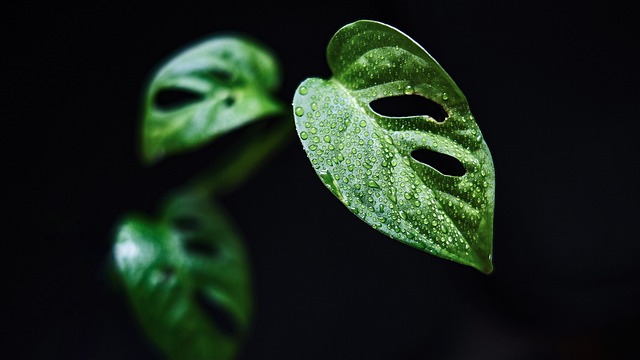
variegated monstera
Monstera deliciosa 'Albo Variegata'
Evidence-based care guide for Variegated Monstera (Monstera deliciosa 'Albo Variegata'). Covers propagation methods and lighting. Our analysis draws from 11 verified community cases with an average confidence score of 89%. Each protocol is synthesized from real rescue outcomes, not generic advice.
Care Essentials
Get to Know Your Variegated Monstera
Light is everything for this plant. Get the placement right and everything else falls into place.
Light
medium to bright indirect
Tolerates lower light but grows best in medium to bright indirect light. Can get leggy without enough light.
💡 Grow lights: Thrives under artificial grow lights (LED or fluorescent, 10-12 hours/day). A great option if your space lacks natural light.
Watering
every 5-7 days
Likes consistently moist (not soggy) soil. Water when the top inch feels dry. Don't let it dry out completely.
Humidity & Temperature
Loves higher humidity (60%+). If your air is dry, group it with other plants, use a pebble tray, or run a humidifier nearby.
Standard room temperature (60-80°F / 15-27°C) is perfect. Avoid cold drafts and sudden temperature swings.
Soil
Standard well-draining potting mix works well. Add perlite for extra drainage if you tend to overwater.
Care Requirements
At a Glance
Care Profile in Development
While our detailed care profile is being compiled, you can find specific care guidance in the 3 care-related diagnoses below — including watering schedules, light requirements, and propagation methods from real-world cases.
Start Here
Most Common Problems
Based on 11 analyzed cases — these are the issues you're most likely to encounter
Don't see your symptom? Search all 8 topics below, or run the Diagnostic.
Hydrogen Peroxide Drench: How to Use for Variegated Monstera
Underwatering is the root cause, evidenced by very dry soil causing mature leaf...
Variegated Monstera: Root Surgery
Underwatering is the root cause, evidenced by very dry soil causing mature leaf...
How do I propagate my Variegated Monstera?
Potential reversion to solid green in tissue-cultured Thai Constellation...
How much light does my Variegated Monstera need?
Potential reversion to solid green in tissue-cultured Thai Constellation...
Variegated Monstera: Reverting To Green
Chimeric variegation is an unstable mutation where chlorophyll-deficient cells...
Which of the 7 Killers
is threatening your plants?
We analyzed 1,616 documented plant deaths to identify the 7 causes behind 78% of all losses. Answer 5 questions — we'll tell you exactly which ones apply to your setup.
Skip the quiz — get The 7 Killers course ($19) →Question 1 of 5
How do you decide when to water your plants?
Question 2 of 5
Where do most of your plants live?
Question 3 of 5
What's your home environment like?
Question 4 of 5
Have you lost a plant in the last 6 months?
Question 5 of 5
How often do you check your plants for pests?
Your diagnosis is ready
We've identified your top 2 risk killers. Enter your email to see the full breakdown and your personalized rescue protocol.
Your plants are most at risk from:
The 7 Killers mini-course covers every one of these in depth — mechanism, rescue protocol, prevention. 1,616 cases. 7 lessons. $19.
Get The 7 Killers — $19 →Get the Plant Mortality Checklist
The 7 killers behind 78% of houseplant deaths — and the exact fix for each. Free PDF based on 1,616 documented cases.
Your checklist is ready!
We also sent it to your inbox. Check your email for the full download.
Open the ChecklistFree. No spam. Unsubscribe anytime.
Verified Data
All Diagnoses
8 topics consolidated from 11 documented cases. Expand any topic to see all protocols.
Propagation (1 topics · 2 cases)
How do I propagate my Variegated Monstera?
Potential reversion to solid green in tissue-cultured Thai Constellation Monstera due to insufficient light; white variegated sectors lack chlorophyll and cannot photosynthesize efficiently, requiring brighter conditions to outcompete green tissues and maintain variegation stability
2 protocols
87–90%
How do I propagate my Variegated Monstera?
Potential reversion to solid green in tissue-cultured Thai Constellation Monstera due to insufficient light; white variegated sectors lack chlorophyll and cannot photosynthesize efficiently, requiring brighter conditions to outcompete green tissues and maintain variegation stability
Protocol 1: sphagnum moss propagation · 90% confidence
Cause
Potential reversion to solid green in tissue-cultured Thai Constellation Monstera due to insufficient light; white variegated sectors lack chlorophyll and cannot photosynthesize efficiently, requiring brighter conditions to outcompete green tissues and maintain variegation stability.
Solutions
- Position in bright indirect light (extra intensity over non-variegated but avoid hot afternoon direct sun to prevent burn).
- Water only after soil fully dries out; reduce frequency in winter when growth slows.
- Use highly airy, well-draining soil mix with ≥50% perlite and bark to prevent root rot.
- Maintain humidity ≥50%, ideally 55-60% via humidifier or pebble tray.
Prevention
Sustain consistent bright indirect light (e.g., east-facing window or grow lights at 2000-5000 lux) and stable high humidity year-round to favor variegated tissue growth and suppress green reversion.
Protocol 2: propagation · 87% confidence
Cause
Propagation from variegated plants requires careful selection of cutting material. Because variegation is often chimeric (a mix of genetically different cells), cuttings taken from all-green sections will produce entirely green offspring. Cuttings from balanced green/white sectors have the best chance of maintaining variegation. The genetic instability means even properly selected cuttings may produce varying degrees of variegation in offspring.
Solutions
- Select stems with balanced variegation: Look for green and white/pink sectors on the same stem
- Cut 4-6 inch sections with 2-3 nodes, ensuring at least one node shows variegation
- Root in appropriate medium: Use sphagnum moss for tropical aroids, water for pothos, perlite for succulents
- Maintain high humidity (70-90%) during rooting to reduce stress that can trigger reversion
- Monitor new growth: If first 2-3 leaves emerge all-green, the cutting may have reverted - consider re-propagating from more variegated material
- For high-value plants (Thai Constellation, Pink Princess): Consider air layering mature variegated sections rather than stem cuttings to preserve genetics
Prevention
Always select cuttings with visible variegation on the stem and at least one variegated leaf. Avoid taking cuttings from all-green sections even if they look healthy. Take multiple cuttings to increase odds of stable variegation in offspring.
Care Methods (3 topics · 5 cases)
Care Differences: Variegated Monstera Guide
Variegated tissue lacks chlorophyll and protective pigments, making it more susceptible to environmental stress than green tissue
88%
Care Differences: Variegated Monstera Guide
Variegated tissue lacks chlorophyll and protective pigments, making it more susceptible to environmental stress than green tissue
Cause
Variegated tissue lacks chlorophyll and protective pigments, making it more susceptible to environmental stress than green tissue. White and pink sectors cannot regulate water loss effectively and are more prone to dehydration, mechanical damage, and browning. Scientific evidence shows that under excess excitation energy (high light + low humidity), variegated plants experience photooxidative stress that manifests as brown crispy edges on variegated sections while green sections remain healthy.
Solutions
- Increase ambient humidity: Run humidifier near plants, target 60-80% relative humidity
- Use pebble trays or humidity trays beneath pots (without letting pots sit in water)
- Group multiple plants together to create localized humidity zone through collective transpiration
- Avoid misting leaves directly - water droplets act as magnifying lenses and burn variegated tissue
- Monitor variegated sections specifically: They will show stress (browning, crisping) before green sections
- Maintain consistent temperatures: Avoid drafts, heating vents, and cold windows that stress variegated tissue
Prevention
Maintain 60-80% humidity year-round for tropical variegated plants. Use humidifiers rather than misting (water droplets can cause lens burn on variegated tissue). Group plants to create humidity microclimates. Avoid placing near heating/cooling vents that create dry air currents.
Hydrogen Peroxide Drench: How to Use for Variegated Monstera
Underwatering is the root cause, evidenced by very dry soil causing mature leaf drooping and tip curling; user's rigid bi-weekly schedule ignores plant needs, while daily misting fails to raise ambient humidity effectively and risks leaf stress, disease, or pests—conflicting with user's humidity suspicion
2 protocols
90–90%
Hydrogen Peroxide Drench: How to Use for Variegated Monstera
Underwatering is the root cause, evidenced by very dry soil causing mature leaf drooping and tip curling; user's rigid bi-weekly schedule ignores plant needs, while daily misting fails to raise ambient humidity effectively and risks leaf stress, disease, or pests—conflicting with user's humidity suspicion
Protocol 1: hydrogen peroxide drench · 90% confidence
Cause
Underwatering is the root cause, evidenced by very dry soil causing mature leaf drooping and tip curling; user's rigid bi-weekly schedule ignores plant needs, while daily misting fails to raise ambient humidity effectively and risks leaf stress, disease, or pests—conflicting with user's humidity suspicion.
Solutions
- Check soil moisture by inserting finger 1-2 inches deep; water thoroughly when top inch is dry, ensuring excess drains.
- Cease daily misting to prevent prolonged leaf wetness and associated risks.
- Introduce ambient humidity via pebble tray, grouping plants, or humidifier if environment is very dry (<40% RH).
- Monitor for recovery over 1-2 weeks, adjusting based on light/seasonal factors.
Prevention
Adopt moisture-meter or finger-test routine over schedules; maintain 50-70% RH via passive methods; ensure bright indirect light and good airflow to support Monstera's epiphytic roots avoiding waterlogged conditions.
Protocol 2: hydrogen peroxide drench · 90% confidence
Cause
Potential reversion to solid green in tissue-cultured Thai Constellation Monstera due to insufficient light; white variegated sectors lack chlorophyll and cannot photosynthesize efficiently, requiring brighter conditions to outcompete green tissues and maintain variegation stability.
Solutions
- Position in bright indirect light (extra intensity over non-variegated but avoid hot afternoon direct sun to prevent burn).
- Water only after soil fully dries out; reduce frequency in winter when growth slows.
- Use highly airy, well-draining soil mix with ≥50% perlite and bark to prevent root rot.
- Maintain humidity ≥50%, ideally 55-60% via humidifier or pebble tray.
Prevention
Sustain consistent bright indirect light (e.g., east-facing window or grow lights at 2000-5000 lux) and stable high humidity year-round to favor variegated tissue growth and suppress green reversion.
Variegated Monstera: Root Surgery
Underwatering is the root cause, evidenced by very dry soil causing mature leaf drooping and tip curling; user's rigid bi-weekly schedule ignores plant needs, while daily misting fails to raise ambient humidity effectively and risks leaf stress, disease, or pests—conflicting with user's humidity suspicion
2 protocols
90–90%
Variegated Monstera: Root Surgery
Underwatering is the root cause, evidenced by very dry soil causing mature leaf drooping and tip curling; user's rigid bi-weekly schedule ignores plant needs, while daily misting fails to raise ambient humidity effectively and risks leaf stress, disease, or pests—conflicting with user's humidity suspicion
Protocol 1: root surgery · 90% confidence
Cause
Underwatering is the root cause, evidenced by very dry soil causing mature leaf drooping and tip curling; user's rigid bi-weekly schedule ignores plant needs, while daily misting fails to raise ambient humidity effectively and risks leaf stress, disease, or pests—conflicting with user's humidity suspicion.
Solutions
- Check soil moisture by inserting finger 1-2 inches deep; water thoroughly when top inch is dry, ensuring excess drains.
- Cease daily misting to prevent prolonged leaf wetness and associated risks.
- Introduce ambient humidity via pebble tray, grouping plants, or humidifier if environment is very dry (<40% RH).
- Monitor for recovery over 1-2 weeks, adjusting based on light/seasonal factors.
Prevention
Adopt moisture-meter or finger-test routine over schedules; maintain 50-70% RH via passive methods; ensure bright indirect light and good airflow to support Monstera's epiphytic roots avoiding waterlogged conditions.
Protocol 2: root surgery · 90% confidence
Cause
Potential reversion to solid green in tissue-cultured Thai Constellation Monstera due to insufficient light; white variegated sectors lack chlorophyll and cannot photosynthesize efficiently, requiring brighter conditions to outcompete green tissues and maintain variegation stability.
Solutions
- Position in bright indirect light (extra intensity over non-variegated but avoid hot afternoon direct sun to prevent burn).
- Water only after soil fully dries out; reduce frequency in winter when growth slows.
- Use highly airy, well-draining soil mix with ≥50% perlite and bark to prevent root rot.
- Maintain humidity ≥50%, ideally 55-60% via humidifier or pebble tray.
Prevention
Sustain consistent bright indirect light (e.g., east-facing window or grow lights at 2000-5000 lux) and stable high humidity year-round to favor variegated tissue growth and suppress green reversion.
Other Topics (4 topics · 4 cases)
Variegated Monstera: Genetic Basis
The molecular basis of variegation involves genetic mutations affecting chloroplast development
87%
Variegated Monstera: Genetic Basis
The molecular basis of variegation involves genetic mutations affecting chloroplast development
Cause
The molecular basis of variegation involves genetic mutations affecting chloroplast development. Studies on Dianella tasmanica reveal that albino sectors exhibit plastomic structural variations causing giant plastomes with deletions of critical photosynthesis genes (psbA, matK, rps16). Clivia miniata var. variegata shows that rpoC2 deletion mutations downregulate 28 chloroplast genes, disrupting chloroplast biogenesis. These genetic changes result in poorly developed chloroplasts lacking thylakoid membranes - explaining why white sectors cannot photosynthesize.
Solutions
- Variegation is genetic: It cannot be induced in all-green plants through care changes
- Tissue culture propagation can produce stable variegated plants, but genetic instability means some reversion is possible
- Chimeric variegation (sectoral) is less stable than pattern variegation - expect more reversion risk
- High-value variegated cultivars (Thai Constellation, Pink Princess) are often tissue-cultured for mass production
- When buying variegated plants: Ask seller if plant is tissue-cultured (often less stable) or naturally variegated
- Genetic stability varies by cultivar: Some variegated plants are more stable than others due to different mutation types
Prevention
Understanding the genetic basis explains why variegation cannot be 'fixed' or induced in all-green plants through fertilizer or light changes alone. Variegation is a stable (but sometimes unstable) genetic mutation that must be propagated vegetatively to preserve.
How much light does my Variegated Monstera need?
Potential reversion to solid green in tissue-cultured Thai Constellation Monstera due to insufficient light; white variegated sectors lack chlorophyll and cannot photosynthesize efficiently, requiring brighter conditions to outcompete green tissues and maintain variegation stability
90%
How much light does my Variegated Monstera need?
Potential reversion to solid green in tissue-cultured Thai Constellation Monstera due to insufficient light; white variegated sectors lack chlorophyll and cannot photosynthesize efficiently, requiring brighter conditions to outcompete green tissues and maintain variegation stability
Cause
Potential reversion to solid green in tissue-cultured Thai Constellation Monstera due to insufficient light; white variegated sectors lack chlorophyll and cannot photosynthesize efficiently, requiring brighter conditions to outcompete green tissues and maintain variegation stability.
Solutions
- Position in bright indirect light (extra intensity over non-variegated but avoid hot afternoon direct sun to prevent burn).
- Water only after soil fully dries out; reduce frequency in winter when growth slows.
- Use highly airy, well-draining soil mix with ≥50% perlite and bark to prevent root rot.
- Maintain humidity ≥50%, ideally 55-60% via humidifier or pebble tray.
Prevention
Sustain consistent bright indirect light (e.g., east-facing window or grow lights at 2000-5000 lux) and stable high humidity year-round to favor variegated tissue growth and suppress green reversion.
How much light does my Variegated Monstera need?
Variegated plants require MORE light than their all-green counterparts because the white/pink/cream sectors contain zero or minimal chlorophyll and cannot photosynthesize
88%
How much light does my Variegated Monstera need?
Variegated plants require MORE light than their all-green counterparts because the white/pink/cream sectors contain zero or minimal chlorophyll and cannot photosynthesize
Cause
Variegated plants require MORE light than their all-green counterparts because the white/pink/cream sectors contain zero or minimal chlorophyll and cannot photosynthesize. The plant must support both photosynthetic (green) and non-photosynthetic (variegated) tissue from the same root system. Scientific studies on Dracaena fragrans show that light green sectors can maintain oxygenic photosynthesis similar to normal tissue, but white/albino sectors lack photosynthetic capacity entirely. Low light causes the plant to prioritize green tissue growth, leading to reversion.
Solutions
- Measure light at plant location: Use phone light meter app or dedicated PAR meter
- Target 2000-5000 lux for shade-tolerant variegated plants (pothos, snake plants)
- Target 5000-8000 lux for tropical aroids (Monstera, Philodendron)
- Use full-spectrum LED grow lights positioned 12-18 inches above foliage if natural light insufficient
- Rotate plants weekly for even light exposure
- Avoid direct sunlight on white/pink sectors - use UV-filtering film on windows if needed
Prevention
Position variegated plants 2-4 feet from east-facing windows or 3-5 feet from south/west windows with sheer curtains. Use light meters to maintain 2000-8000 lux depending on species. Supplement with grow lights during winter months. Never place in dark corners where green varieties might survive.
Variegated Monstera: Reverting To Green
Chimeric variegation is an unstable mutation where chlorophyll-deficient cells (pink, white, cream sectors) lack photosynthetic capability and UV protection
90%
Variegated Monstera: Reverting To Green
Chimeric variegation is an unstable mutation where chlorophyll-deficient cells (pink, white, cream sectors) lack photosynthetic capability and UV protection
Cause
Chimeric variegation is an unstable mutation where chlorophyll-deficient cells (pink, white, cream sectors) lack photosynthetic capability and UV protection. These cells are genetically weaker and prone to die-off and reversion to solid green under suboptimal light conditions. Green cells photosynthesize more efficiently and outcompete variegated sectors when light is insufficient. Scientific evidence from Ficus microcarpa and Clivia miniata var. variegata studies confirms that albino sectors lack stacked thylakoids and have negligible photosynthetic rates.
Solutions
- Gradually increase light exposure to bright indirect (avoid direct sun on variegated tissue). Use grow lights if natural light insufficient.
- Prune solid-green leaves/stems back to nodes with desired variegation to redirect energy to variegated meristems
- Propagate cuttings only from highly variegated sections - avoid propagating all-green growth
- Monitor new growth weekly; adjust light immediately if green sheaths appear on emerging leaves
- For Pink Princess specifically: provide 4-6 hours of direct natural sunlight or high-output grow lights to maintain pink expression
Prevention
Maintain bright indirect light (2000-5000 lux depending on species) to give variegated sectors competitive advantage. Use automated light sensors for consistency. Select propagation material only from highly variegated nodes. Maintain high humidity (60-80%) and stable temperatures (70-85°F) to minimize stress-induced reversion.
Common Questions
Frequently Asked Questions
Why does my variegated monstera have Hydrogen peroxide drench?
Cause: Underwatering is the root cause, evidenced by very dry soil causing mature leaf drooping and tip curling; user's rigid bi-weekly schedule ignores plant needs, while daily misting fails to raise ambient humidity effectively and risks leaf stress, disease, or pests—conflicting with user's humidity suspicion.
Solution: Check soil moisture by inserting finger 1-2 inches deep; water thoroughly when top inch is dry, ensuring excess drains.
Prevention: Adopt moisture-meter or finger-test routine over schedules; maintain 50-70% RH via passive methods; ensure bright indirect light and good airflow to support Monstera's epiphytic roots avoiding waterlogged conditions.
90% confidence · View full protocol →
Why does my variegated monstera have Root surgery?
Cause: Underwatering is the root cause, evidenced by very dry soil causing mature leaf drooping and tip curling; user's rigid bi-weekly schedule ignores plant needs, while daily misting fails to raise ambient humidity effectively and risks leaf stress, disease, or pests—conflicting with user's humidity suspicion.
Solution: Check soil moisture by inserting finger 1-2 inches deep; water thoroughly when top inch is dry, ensuring excess drains.
Prevention: Adopt moisture-meter or finger-test routine over schedules; maintain 50-70% RH via passive methods; ensure bright indirect light and good airflow to support Monstera's epiphytic roots avoiding waterlogged conditions.
90% confidence · View full protocol →
Why does my variegated monstera have Sphagnum moss propagation?
Cause: Potential reversion to solid green in tissue-cultured Thai Constellation Monstera due to insufficient light; white variegated sectors lack chlorophyll and cannot photosynthesize efficiently, requiring brighter conditions to outcompete green tissues and maintain variegation stability.
Solution: Position in bright indirect light (extra intensity over non-variegated but avoid hot afternoon direct sun to prevent burn).
Prevention: Sustain consistent bright indirect light (e.g., east-facing window or grow lights at 2000-5000 lux) and stable high humidity year-round to favor variegated tissue growth and suppress green reversion.
90% confidence · View full protocol →
Why does my variegated monstera have Insufficient light white?
Cause: Potential reversion to solid green in tissue-cultured Thai Constellation Monstera due to insufficient light; white variegated sectors lack chlorophyll and cannot photosynthesize efficiently, requiring brighter conditions to outcompete green tissues and maintain variegation stability.
Solution: Position in bright indirect light (extra intensity over non-variegated but avoid hot afternoon direct sun to prevent burn).
Prevention: Sustain consistent bright indirect light (e.g., east-facing window or grow lights at 2000-5000 lux) and stable high humidity year-round to favor variegated tissue growth and suppress green reversion.
90% confidence · View full protocol →
Why does my variegated monstera have Reverting to green?
Cause: Chimeric variegation is an unstable mutation where chlorophyll-deficient cells (pink, white, cream sectors) lack photosynthetic capability and UV protection. These cells are genetically weaker and prone to die-off and reversion to solid green under suboptimal light conditions. Green cells photosynthesize more efficiently and outcompete variegated sectors when light is insufficient. Scientific evidence from Ficus microcarpa and Clivia miniata var. variegata studies confirms that albino sectors lack stacked thylakoids and have negligible photosynthetic rates.
Solution: Gradually increase light exposure to bright indirect (avoid direct sun on variegated tissue). Use grow lights if natural light insufficient.
Prevention: Maintain bright indirect light (2000-5000 lux depending on species) to give variegated sectors competitive advantage. Use automated light sensors for consistency. Select propagation material only from highly variegated nodes. Maintain high humidity (60-80%) and stable temperatures (70-85°F) to minimize stress-induced reversion.
90% confidence · View full protocol →
Common Questions
Frequently Asked About Variegated Monstera
What problems can Variegated Monstera get?
Our database contains 11 documented Variegated Monstera cases covering 8 distinct topics, including diseases, pest identification, environmental stress, propagation, and advanced care protocols — each with verified solutions.
Structured Learning
Ready to Go Deeper?
Explore our Mastery Packs for structured, video-based learning with step-by-step protocols from 20,000+ analyzed plant cases.
Browse All Courses →