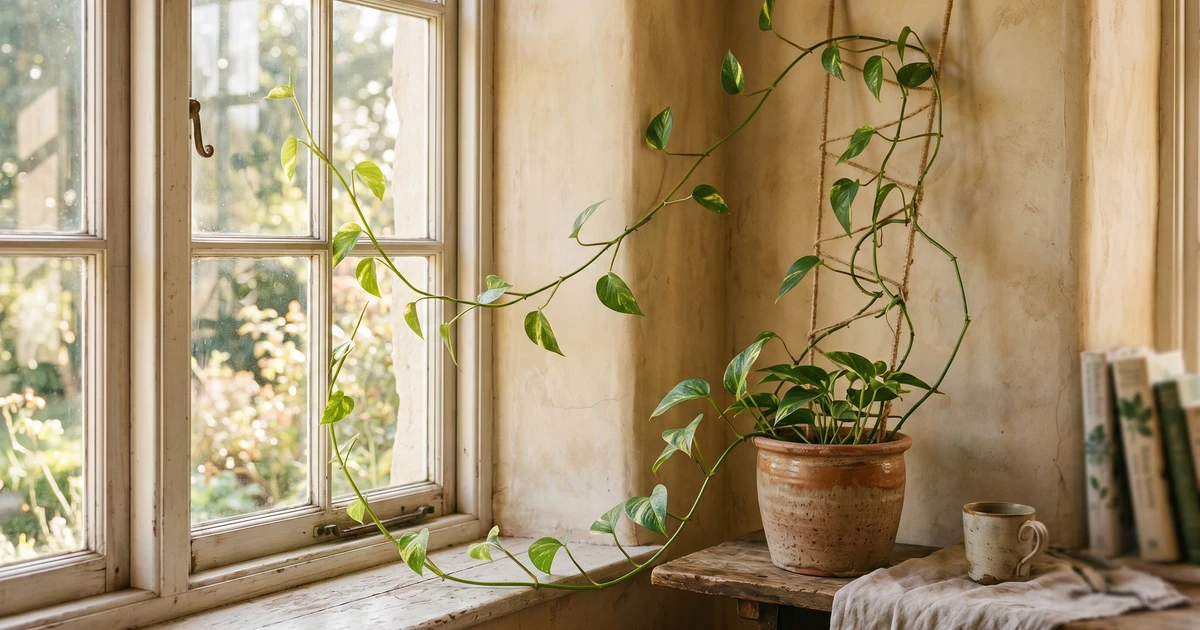
root rot on Bourbon Vanilla
Quick answer
If your Bourbon Vanilla has root rot, the most likely cause is: Vanilla planifolia is a climbing epiphytic orchid whose vine base rots when the potting medium becomes stale or muddy, which signals that the bark has broken down and the roots themselves are rotting. New aerial roots descending from the upper vine then refuse to enter the broken-down mix and run over the rim instead, marking the start of the problem.
Start here:
- 1. Slide the vine out, cut it off about one inch above the rotted base, and discard the rotted base — the lower stem has already turned brown or black and feels mushy.
- 2. Wash and rinse the old pot before reuse, then repot the salvaged vine in a fresh mix of four parts clean fine bark and one part medium or large perlite with great drainage, and tie a tree fern stake into the pot so the descending aerial roots have something to grip.
Why Bourbon Vanilla gets root rot
bourbon vanilla
Vanilla planifolia is a climbing epiphytic orchid whose vine base rots when the potting medium becomes stale or muddy, which signals that the bark has broken down and the roots themselves are rotting. New aerial roots descending from the upper vine then refuse to enter the broken-down mix and run over the rim instead, marking the start of the problem.
How to reverse root rot on Bourbon Vanilla
- 1
Slide the vine out, cut it off about one inch above the rotted base, and discard the rotted base — the lower stem has already turned brown or black and feels mushy.
- 2
Wash and rinse the old pot before reuse, then repot the salvaged vine in a fresh mix of four parts clean fine bark and one part medium or large perlite with great drainage, and tie a tree fern stake into the pot so the descending aerial roots have something to grip.
Keep root rot off this Bourbon Vanilla
Repot before the mix goes stale or muddy, give the vine a regular watering schedule with high humidity, fertilize every new aerial root on the vine as well as the pot roots, and tie descending roots back to the vine so they re-enter the pot instead of trailing over the edge.