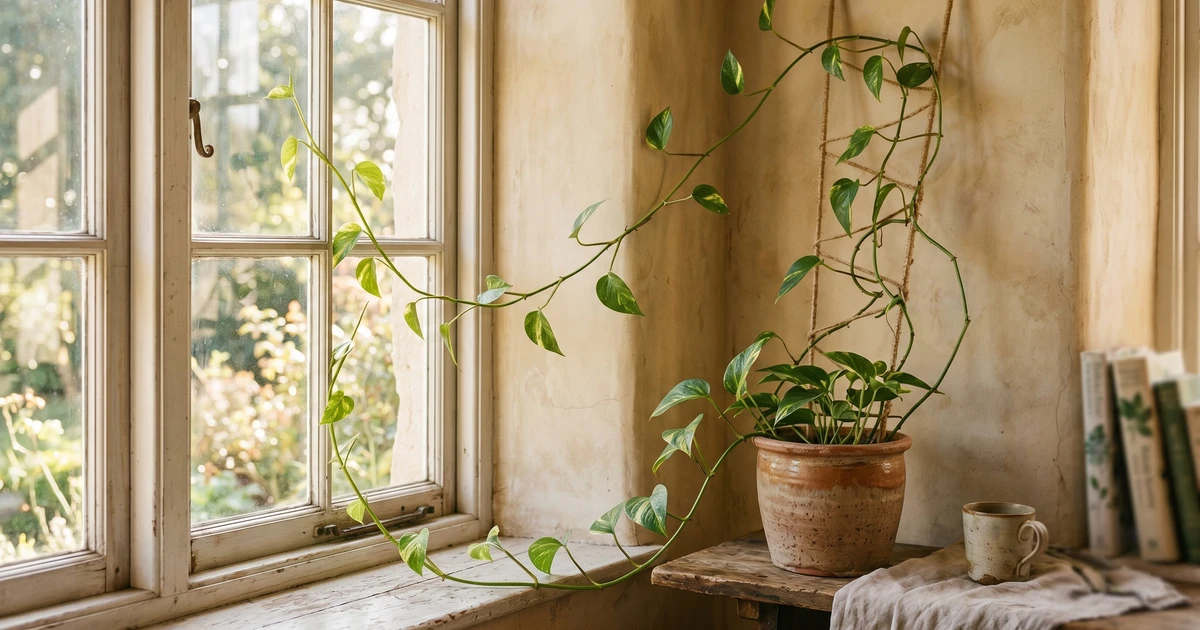
leggy growth on Dieffenbachia
Quick answer
If your Dieffenbachia has leggy growth, the most likely cause is: Dieffenbachia leggy growth results from etiolation due to insufficient light intensity below 150 foot-candles. As a tropical understory plant adapted to dappled sunlight, Dieffenbachia elongates stems and reduces leaf size when light is inadequate, stretching toward available light sources. The apical dominance is strong in this species, suppressing lateral bud development and resulting in sparse, elongated stems with small leaves concentrated at the top.
Start here:
- 1. Relocate to brighter indirect light: East-facing window with sheer curtain is ideal
- 2. Prune leggy stems: Cut 2-3 inches above a node using sterile shears to remove apical dominance
Why Dieffenbachia gets leggy growth
Dieffenbachia spp.
Dieffenbachia leggy growth results from etiolation due to insufficient light intensity below 150 foot-candles. As a tropical understory plant adapted to dappled sunlight, Dieffenbachia elongates stems and reduces leaf size when light is inadequate, stretching toward available light sources. The apical dominance is strong in this species, suppressing lateral bud development and resulting in sparse, elongated stems with small leaves concentrated at the top.
How to reverse leggy growth on Dieffenbachia
- 1
Relocate to brighter indirect light: East-facing window with sheer curtain is ideal
- 2
Prune leggy stems: Cut 2-3 inches above a node using sterile shears to remove apical dominance
- 3
Propagate cuttings: Place 6-inch stem sections with 2+ nodes in moist perlite or sphagnum moss
- 4
Replant rooted cuttings in mother pot to create fuller, bushier appearance
- 5
Install grow lights if natural light is insufficient: LED full-spectrum, 12 inches above canopy for 14 hours daily
Keep leggy growth off this Dieffenbachia
Maintain bright indirect light (300-600 foot-candles) or 12-16 hours under full-spectrum grow lights at 12-inch distance. Rotate plant 90 degrees weekly for even exposure. Prune apical tips every 6 months to encourage branching and bushier growth.