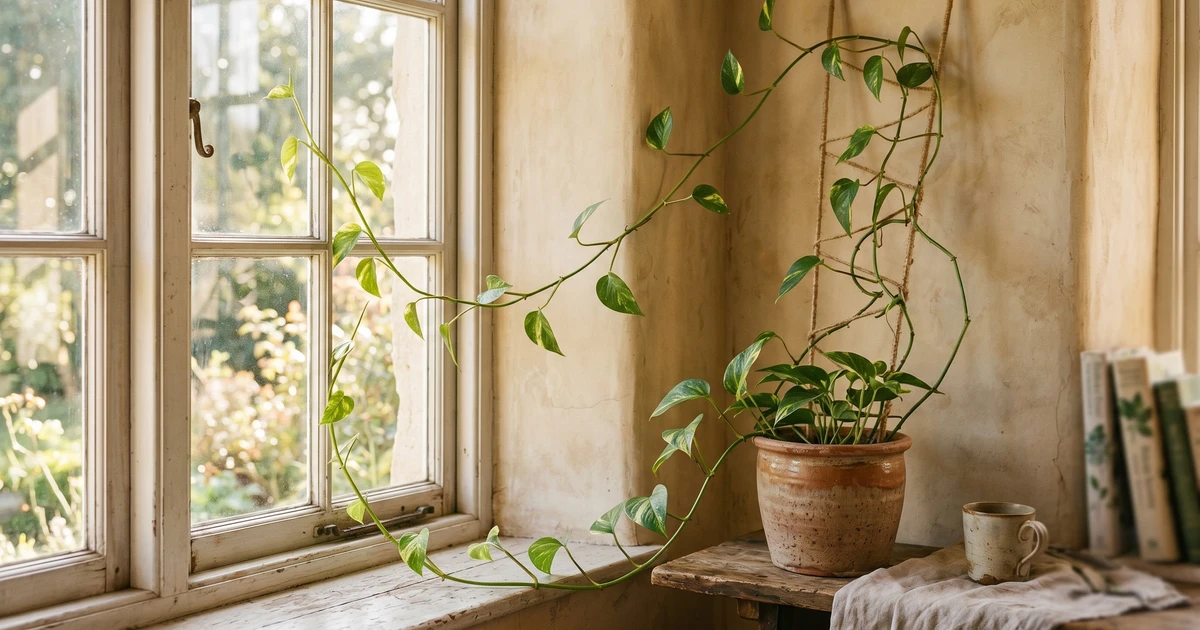
bottom watering pitfalls on Fiddle Leaf Fig
Quick answer
If your Fiddle Leaf Fig has bottom watering pitfalls, the most likely cause is: Bottom-watering alone leaves dissolved salts, mineral ions, and any fertilizer residue to concentrate at the substrate surface where evaporation deposits them. After 2-4 months the top 1-2 inches become a chemically hostile crust that repels subsequent irrigation, while the lower root zone stays perpetually damp, creating anaerobic conditions favourable to Pythium and Phytophthora. Ficus lyrata's epiphytic root system, evolved for quick-draining conditions, is particularly intolerant of this stratified moisture profile; symptomatically growers see persistent surface dryness paired with root rot signals below, an apparently contradictory presentation that delays correct diagnosis.
Start here:
- 1. Alternate bottom-watering with thorough top-watering once a month: pour water slowly across the entire surface until it exits the drainage holes, flushing accumulated salts downward and out of the pot.
- 2. Switch to filtered or rainwater for bottom sessions; mineral-rich tap water drives salt deposition more aggressively than low-TDS water.
Why Fiddle Leaf Fig gets bottom watering pitfalls
Ficus lyrata
Bottom-watering alone leaves dissolved salts, mineral ions, and any fertilizer residue to concentrate at the substrate surface where evaporation deposits them. After 2-4 months the top 1-2 inches become a chemically hostile crust that repels subsequent irrigation, while the lower root zone stays perpetually damp, creating anaerobic conditions favourable to Pythium and Phytophthora. Ficus lyrata's epiphytic root system, evolved for quick-draining conditions, is particularly intolerant of this stratified moisture profile; symptomatically growers see persistent surface dryness paired with root rot signals below, an apparently contradictory presentation that delays correct diagnosis.
How to reverse bottom watering pitfalls on Fiddle Leaf Fig
- 1
Alternate bottom-watering with thorough top-watering once a month: pour water slowly across the entire surface until it exits the drainage holes, flushing accumulated salts downward and out of the pot.
- 2
Switch to filtered or rainwater for bottom sessions; mineral-rich tap water drives salt deposition more aggressively than low-TDS water.
- 3
Scrape off the top 1 inch of crusted substrate quarterly and replace with fresh chunky mix; this removes the salt cap without disturbing deeper roots.
Keep bottom watering pitfalls off this Fiddle Leaf Fig
Use top-watering as the primary irrigation method; reserve bottom-watering for short-term recovery of severely dry plants (no more than 2-3 sessions in a row); flush the substrate monthly regardless of which method is used; choose terracotta over glazed or plastic containers to support natural salt moderation through the porous wall.
Other Fiddle Leaf Fig problems
Go Deeper
This is covered in-depth in the fiddle leaf fig Mastery Pack — structured modules with video walkthroughs, advanced protocols, and rescue timelines.
Get the Mastery Pack — $37 →