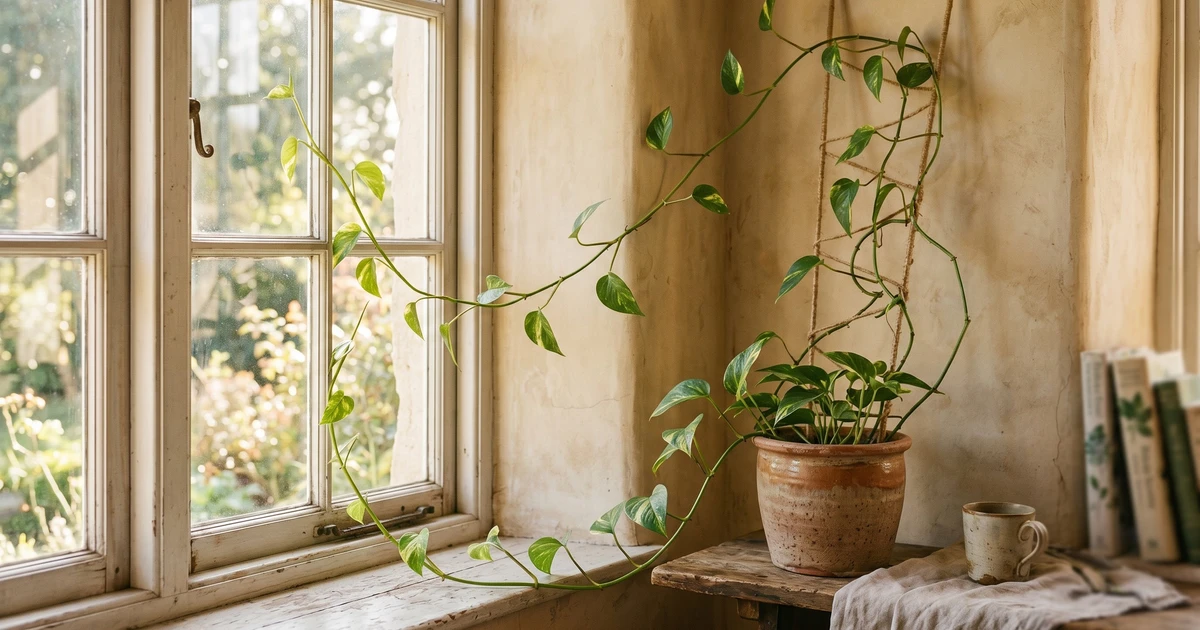
yellow leaves on Syngonium Albo
Quick answer
If your Syngonium Albo has yellow leaves, the most likely cause is: The Syngonium podophyllum (Arrowhead Vine) entry in the cited houseplant encyclopedia states that drying out or overwatering will cause the leaves to yellow, and on the chlorophyll-free white sectors of the 'Albo' form the variegated tissue cannot tolerate the chronic root suffocation that waterlogged soil causes, so yellowing often appears first on the most variegated leaves.
Start here:
- 1. Check soil moisture with the finger test before watering and only water when the surface of the potting mixture has dried out to a depth of about 1 in. (1-3 cm), because houseplants often die because of overwatering.
- 2. Water deeply until excess liquid flows from the drainage hole at the bottom of the container so the rootball is saturated, then let the plant drain and empty any cachepot or saucer within a half hour so the roots never sit in standing water.
Why Syngonium Albo gets yellow leaves
syngonium albo
The Syngonium podophyllum (Arrowhead Vine) entry in the cited houseplant encyclopedia states that drying out or overwatering will cause the leaves to yellow, and on the chlorophyll-free white sectors of the 'Albo' form the variegated tissue cannot tolerate the chronic root suffocation that waterlogged soil causes, so yellowing often appears first on the most variegated leaves.
How to reverse yellow leaves on Syngonium Albo
- 1
Check soil moisture with the finger test before watering and only water when the surface of the potting mixture has dried out to a depth of about 1 in. (1-3 cm), because houseplants often die because of overwatering.
- 2
Water deeply until excess liquid flows from the drainage hole at the bottom of the container so the rootball is saturated, then let the plant drain and empty any cachepot or saucer within a half hour so the roots never sit in standing water.
Keep yellow leaves off this Syngonium Albo
Keep the Syngonium albo potting mixture constantly moist but never waterlogged, mist the foliage frequently with a hand-spray to maintain high humidity, water only when the soil surface dries rather than on a fixed schedule, and maintain temperatures in the 60-75°F (16-24°C) range the species prefers so the white leaf sectors are not pushed into stress.