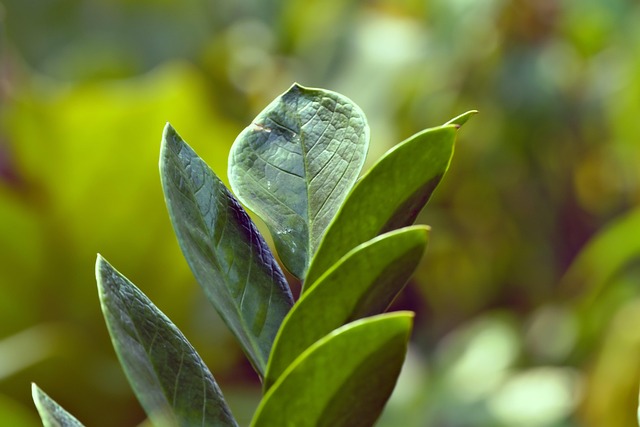
zz plant
Zamioculcas zamiifolia
Also known as: Zanzibar Gem
Stores water in its potato-like rhizomes.
Care Essentials
Get to Know Your Zz Plant
Stores water in its potato-like rhizomes.
Light
low to bright indirect
Tolerates low light exceptionally well.
💡 Grow lights: Does well under standard indoor lighting and grow lights. One of the easiest plants for rooms without natural light.
Watering
every 3-4 weeks
Water every 3-4 weeks. Look for: yellowing leaves if overwatered. thrives on neglect.
Humidity & Temperature
Tolerates 20-50% humidity — not fussy about moisture in the air. Standard home conditions are fine.
Comfortable between 60-85°F. Keep away from cold drafts and heating vents.
Soil
Well-draining mix, adding extra perlite.
Care Requirements
At a Glance
low to bright indirect
Tolerates low light exceptionally well.
Water every 3-4 weeks
Yellowing leaves if overwatered. Thrives on neglect.
20-50% Humidity
Ideal temperature: 60-85F
Well-draining mix, adding extra perlite.
Growth rate: slow
The #1 Mistake
Watering issues account for 18% of Zz Plant problems in our database (5 of 28 documented cases). Most failures trace back to watering on a schedule rather than checking soil moisture.
Go Deeper
ZZ Survival Matrix Pack
The complete protocol: advanced care, seasonal calendars, and rescue modules. Everything on this page, plus video walkthroughs.
Start Here
Most Common Problems
Based on 28 analyzed cases — these are the issues you're most likely to encounter
Don't see your symptom? Search all 20 topics below, or run the Diagnostic.
Why does my Zz Plant have root rot?
Overwatering and poor drainage in moisture-retentive soil (like loam or peat)....
Why is my Zz Plant's stem turning black?
Black stems in Zamioculcas zamiifolia indicate advanced Phytophthora nicotianae...
Zz Plant: No New Growth
ZZ plants prioritize underground rhizome (tuber) and root development before...
Why is my Zz Plant wilting?
When ZZ rhizomes are severely depleted of water, they shrink and lose internal...
Is my Zz Plant overwatered?
Placing a ZZ plant in a pot that is too large for its root system creates a...
Which of the 7 Killers
is threatening your plants?
We analyzed 1,616 documented plant deaths to identify the 7 causes behind 78% of all losses. Answer 5 questions — we'll tell you exactly which ones apply to your setup.
Skip the quiz — get The 7 Killers course ($19) →Question 1 of 5
How do you decide when to water your plants?
Question 2 of 5
Where do most of your plants live?
Question 3 of 5
What's your home environment like?
Question 4 of 5
Have you lost a plant in the last 6 months?
Question 5 of 5
How often do you check your plants for pests?
Your diagnosis is ready
We've identified your top 2 risk killers. Enter your email to see the full breakdown and your personalized rescue protocol.
Your plants are most at risk from:

The 7 Killers mini-course covers every one of these in depth — mechanism, rescue protocol, prevention. 1,616 cases. 7 lessons. $19.
Get The 7 Killers — $19 →Get the Plant Mortality Checklist
The 7 killers behind 78% of houseplant deaths — and the exact fix for each. Free PDF based on 1,616 documented cases.
Your checklist is ready!
We also sent it to your inbox. Check your email for the full download.
Open the ChecklistFree. No spam. Unsubscribe anytime.
Verified Data
All Diagnoses
20 topics consolidated from 28 documented cases. Expand any topic to see all protocols.
Symptoms (2 topics · 4 cases)
What are these brown spots on my Zz Plant?
ZZ plants can accumulate fluorides, chlorine, and salts from tap water in their leaf tissues, leading to brown, crispy edges or spots (necrosis)
2 protocols
89–90%
What are these brown spots on my Zz Plant?
ZZ plants can accumulate fluorides, chlorine, and salts from tap water in their leaf tissues, leading to brown, crispy edges or spots (necrosis)
Protocol 1: brown spots · 90% confidence
Cause
ZZ plants can accumulate fluorides, chlorine, and salts from tap water in their leaf tissues, leading to brown, crispy edges or spots (necrosis). White mineral residue on leaves often accompanies this issue.
Solutions
- Water swap: Switch to distilled, rain, or spring water for 1 month.
- Soil flush: Flush the soil with distilled water to remove salt buildup.
- Wipe leaves: Clean white residue with a damp cloth to allow better respiration.
- Trim edges: Carefully trim brown tips if desired for aesthetics.
Prevention
Use filtered water and avoid over-fertilizing, which contributes to salt buildup in the soil.
Protocol 2: brown spots · 89% confidence
Cause
Brown spots on ZZ plant leaves result from four distinct mechanisms: (1) Edema from overwatering - excess cellular water retention causes translucent/brown blisters, (2) Thrips infestation - microscopic pests (0.5-1mm) rasp leaf tissue creating stippled necrotic spots, often with white rice-shaped larvae visible under magnification, (3) Cold damage - exposure to drafts or temperatures below 60°F (15°C) causes discrete black necrotic spots as tropical cells suffer frost damage, and (4) Mechanical damage/physical abrasion. The thick, waxy cuticle of ZZ leaves makes them resistant to many pests but vulnerable to thrips which hide in leaf axils. Unlike root rot which affects whole stalks, brown spots are typically isolated and cosmetic.
Solutions
- For edema/overwatering spots: Allow soil to dry completely, increase air circulation, reduce watering frequency to 3-4 week intervals
- For suspected thrips: Inspect with magnifying glass under leaves and in leaf axils; treat with insecticidal soap, neem oil, or spinosad every 7-10 days for 3 cycles to kill eggs/nymphs; isolate plant
- For cold damage: Relocate immediately to stable 65-85°F area, prune affected leaves to prevent spread, avoid fertilizing until recovery
- For cosmetic spots only: Leave intact - ZZ leaves don't repair but new growth will be healthy once cause is addressed
- Use sticky traps for early thrips detection; maintain 40-50% humidity (thrips thrive in high humidity >60%)
Prevention
Maintain stable temperatures between 65-85°F (18-29°C) away from windows/drafts. Water only when soil is bone-dry to prevent edema. Inspect leaves weekly with 10x magnification for thrips (white larvae or black adult frass). Use filtered/distilled water to avoid fluoride/chlorine salt buildup that causes tip necrosis. Site away from heating vents and direct sun to prevent physical stress.
Why is my Zz Plant wilting?
When ZZ rhizomes are severely depleted of water, they shrink and lose internal pressure, causing the stalks to droop and feel soft
2 protocols
87–94%
Why is my Zz Plant wilting?
When ZZ rhizomes are severely depleted of water, they shrink and lose internal pressure, causing the stalks to droop and feel soft
Protocol 1: drooping · 94% confidence
Cause
When ZZ rhizomes are severely depleted of water, they shrink and lose internal pressure, causing the stalks to droop and feel soft. This is a survival mechanism where the plant sacrifices stem turgor to protect the core tuber.
Solutions
- Deep soak: Thoroughly water until the entire soil mass is saturated.
- Bottom-water: If soil is hydrophobic, soak the pot for 30 minutes.
- Wait 24-48 hours: Stems should firm up as the rhizome recharges.
- Check roots: Ensure healthy roots are present to actually uptake the water.
Prevention
Water when the rhizomes show slight wrinkling but before the stems lose significant turgidity.
Protocol 2: drooping · 87% confidence
Cause
Drooping leaves in ZZ plants have two opposing causes: (1) Underwatering - when rhizome water reserves deplete, petioles lose turgor pressure and collapse in the signature hinge mechanism (similar to Spathiphyllum), or (2) Root rot - paradoxically, rotting roots cannot uptake water, causing identical wilting despite moist soil. The diagnostic challenge: both present as soft, drooping stems. Key differentiator: underwatered ZZ soil is bone-dry and rhizomes appear shriveled; overwatered ZZ has moist soil and mushy rhizomes. ZZ plants evolved this dramatic drooping as a water-conservation signal in arid East African habitats.
Solutions
- Check soil moisture immediately: Insert finger 2-3 inches deep or use wooden skewer
- If soil is dry: Water thoroughly until excess drains from bottom; expect recovery within 2-4 hours as rhizome rehydrates
- If soil is moist: Unpot and inspect roots/rhizomes for black/mushy rot; if present, treat as root rot emergency
- Check rhizome condition: Shriveled/desiccated = underwatering; mushy/black = root rot
- For underwatering: Resume normal soak-and-dry cycle - no permanent damage occurs
- For suspected rot: Follow root rot protocol immediately - stop watering, unpot, trim rot, repot in dry soil
Prevention
Use finger test or moisture meter to verify soil status before responding to drooping. Maintain 3-4 week watering schedule indoors with bright indirect light. Inspect rhizomes quarterly for firmness. When in doubt, choose underwatering - ZZ plants recover from drought within 24 hours but root rot is often fatal.
Diseases (1 topics · 3 cases)
Why does my Zz Plant have root rot?
Overwatering and poor drainage in moisture-retentive soil (like loam or peat)
3 protocols
90–95%
Why does my Zz Plant have root rot?
Overwatering and poor drainage in moisture-retentive soil (like loam or peat)
Protocol 1: root rot · 95% confidence
Cause
Overwatering and poor drainage in moisture-retentive soil (like loam or peat). ZZ plant rhizomes store water efficiently; prolonged wet conditions lead to anaerobic bacterial/fungal decay, characterized by black, mushy rhizomes and white mycelial growth.
Solutions
- Unpot and inspect: Trim all black, mushy, or foul-smelling roots and rhizome sections with sterilized shears.
- Disinfect: Dip remaining healthy roots/rhizomes in a 1:2 hydrogen peroxide to water solution for 10 minutes.
- Seal cuts: Apply cinnamon or super glue to excised rhizome areas to prevent reinfection.
- Repot: Use a gritty, well-draining mix (50% perlite or pumice) in a pot with drainage holes.
- Withhold water: Do not water for 2 weeks to allow healing.
Prevention
Allow soil to dry 100% through the entire pot before watering. Use terracotta pots and avoid "careful" frequent small sips of water.
Protocol 2: root rot · 92% confidence
Cause
Hollow, papery roots in ZZ plants are caused by extreme under-watering (desiccation) rather than fungal decay. This often occurs when soil becomes hydrophobic, repelling water and leaving rhizomes unable to rehydrate even during watering events.
Solutions
- Trim hollow roots: Remove dead, dry, or papery roots with sterile shears.
- Break hydrophobicity: Bottom-water by soaking the pot in a basin for 30-60 minutes to ensure the soil core is fully saturated.
- Soil amendment: Repot in a mix that includes coco coir or peat to maintain some moisture-wicking capability while remaining gritty.
- Hydration check: Ensure the rhizome (tuber) feels firm after watering.
Prevention
Avoid letting the soil stay bone-dry for more than 4 weeks. Use a wooden skewer to check moisture at the bottom of the pot.
Protocol 3: root rot · 90% confidence
Cause
ZZ plant stalks are highly susceptible to rot when propagated in water without a proper callousing period. The succulent stems enter a dormancy-like state in excess moisture and fail to root, leading to anaerobic bacterial softening at the base.
Solutions
- Excise rot: Cut the stalk 1cm above the squishy brown area with a sterile blade.
- Callous: Allow the cut end to dry in a shaded, ventilated spot for 24-48 hours until a firm skin forms.
- Soil propagation: Move to a dry, gritty soil medium (50% perlite) rather than returning to water.
- Neglect: Withhold water for the first 1-2 weeks in soil.
Prevention
Always callous ZZ cuttings for at least 24 hours. Prefer soil or perlite propagation over water for Zamioculcas species.
Pests (3 topics · 3 cases)
Why does my Zz Plant have fungus gnats?
Fungus gnats are attracted to moist organic matter on the soil surface
88%
Why does my Zz Plant have fungus gnats?
Fungus gnats are attracted to moist organic matter on the soil surface
Cause
Fungus gnats are attracted to moist organic matter on the soil surface. In ZZ plants, their presence is a critical warning sign that the top soil is not drying out fast enough, which precedes root rot.
Solutions
- Drying out: Let the soil dry completely to kill larvae.
- Bottom-water: Stop top-watering to keep the surface soil dry.
- Mosquito Bits: Use BTI (Bacillus thuringiensis israelensis) to kill larvae in the soil.
- Yellow sticky traps: Catch adult gnats to break the lifecycle.
Prevention
Never top-water ZZ plants if fungus gnats are present. Use a gravel or sand top-dress to discourage egg-laying.
Why does my Zz Plant have mealybugs?
Mealybugs are attracted to the sugary sap of ZZ plants and often hide in the tight crevices where stems meet rhizomes or on the undersides of waxy leaflets
84%
Why does my Zz Plant have mealybugs?
Mealybugs are attracted to the sugary sap of ZZ plants and often hide in the tight crevices where stems meet rhizomes or on the undersides of waxy leaflets
Cause
Mealybugs are attracted to the sugary sap of ZZ plants and often hide in the tight crevices where stems meet rhizomes or on the undersides of waxy leaflets. Their cottony residue can be mistaken for mold or dust.
Solutions
- Alcohol swab: Dab individual pests with 70% isopropyl alcohol.
- Root check: If surface treatment fails, check for root mealybugs on the rhizomes; rinse and repot in fresh soil if found.
- Neem oil: Spray a diluted neem oil solution in the evening (avoid light to prevent leaf burn).
Prevention
Regularly wipe leaves with a damp cloth and inspect the base of the stems. Maintain good air circulation.
Why does my Zz Plant have thrips?
Thrips rasp the leaf surface of ZZ plants to drink sap, leaving behind silvery, translucent, or bronzed streaks and tiny black specks of frass
88%
Why does my Zz Plant have thrips?
Thrips rasp the leaf surface of ZZ plants to drink sap, leaving behind silvery, translucent, or bronzed streaks and tiny black specks of frass
Cause
Thrips rasp the leaf surface of ZZ plants to drink sap, leaving behind silvery, translucent, or bronzed streaks and tiny black specks of frass. While ZZ is resilient, thrips can stunt new growth and spread to more sensitive aroids.
Solutions
- Isolate: Move away from other plants immediately.
- Wipe & Spray: Clean leaves with insecticidal soap or use Spinosad (Captain Jack s Dead Bug Brew).
- Systemic: Use systemic granules in the soil for long-term control as thrips lay eggs inside the leaf tissue.
- Repeat: Treat every 7 days for 4 weeks.
Prevention
Quarantine all new plants and maintain moderate humidity, as thrips thrive in the dry air ZZ plants typically inhabit.
Watering Issues (1 topics · 2 cases)
Is my Zz Plant overwatered?
Placing a ZZ plant in a pot that is too large for its root system creates a large volume of soil that remains wet for too long
2 protocols
89–92%
Is my Zz Plant overwatered?
Placing a ZZ plant in a pot that is too large for its root system creates a large volume of soil that remains wet for too long
Protocol 1: overwatering · 92% confidence
Cause
Placing a ZZ plant in a pot that is too large for its root system creates a large volume of soil that remains wet for too long. This perched water table effect starves the shallow ZZ roots of oxygen, leading to rot even if the owner waters infrequently.
Solutions
- Downsize pot: Repot into a container only 1-2 inches wider than the root ball.
- Aerate soil: Use a mix with 50% inorganic material (perlite/pumice) to ensure fast drying.
- Check drainage: Ensure the new pot has multiple drainage holes.
Prevention
Choose pots based on root mass size, not the size of the foliage. Terra cotta is highly recommended for ZZ plants to wick excess moisture.
Protocol 2: overwatering · 89% confidence
Cause
Overwatering in Zamioculcas zamiifolia is fundamentally about frequency, not volume. The ZZ plant's CAM photosynthesis and water-storing rhizomes evolved for 4-6 week drought cycles in East African arid regions. When soil remains moist for 10-14 days, anaerobic conditions develop in the rhizome zone, triggering Phytophthora nicotianae and bacterial pathogens. Unlike most houseplants where overwatering causes gradual decline, ZZ plants tolerate drought so well that owners rarely underwater, instead creating chronic overwatering conditions. The plant shows few early warning signs - yellowing and black spots often appear only after significant rhizome damage has occurred.
Solutions
- Immediately stop all watering and allow soil to dry completely (2-3 weeks minimum)
- Unpot and inspect rhizomes: Trim any black/mushy tissue with sterile blade
- Treat cuts with 3% hydrogen peroxide or cinnamon to seal and sterilize
- Repot in fresh, gritty succulent mix (50% cactus soil, 50% perlite)
- Resume watering only after 2-3 weeks when new growth appears
- Establish new schedule: Water every 3-4 weeks, using finger test or moisture meter to confirm dryness
- Switch to terracotta pot if currently in plastic - the wicking action prevents moisture retention
Prevention
Adopt a strict 'neglect' watering schedule: water every 3-4 weeks minimum indoors, allowing top 2-3 inches of soil to become completely dry. Use terracotta pots which wick moisture through porous walls. Install a soil moisture meter or use the wooden skewer test - water only when probe comes out completely dry. Ensure pot has drainage holes and soil contains 50% perlite/pumice for rapid drainage.
Environment (2 topics · 2 cases)
Is my Zz Plant suffering from cold damage?
Exposure to temperatures below 10C (50F) or cold drafts causes ZZ leaves to turn black and mushy as the water-storing cells rupture
88%
Is my Zz Plant suffering from cold damage?
Exposure to temperatures below 10C (50F) or cold drafts causes ZZ leaves to turn black and mushy as the water-storing cells rupture
Cause
Exposure to temperatures below 10C (50F) or cold drafts causes ZZ leaves to turn black and mushy as the water-storing cells rupture. While leaves may die, the underground rhizomes often survive if they havent frozen.
Solutions
- Pruning: Cut back all blackened, mushy foliage to the base.
- Warming: Move to a stable environment between 18 and 24 Celsius.
- Dry-out: Withhold water until new growth appears from the rhizome, as the plant has no leaves to transpire moisture.
- Patience: New shoots may take 2-4 months to emerge.
Prevention
Keep ZZ plants away from drafty windows, air conditioning vents, and unheated rooms in winter.
Why does my Zz Plant have sunburn?
Sudden exposure to direct sunlight shocks the ZZ plant, causing stress-induced yellowing or crispy brown patches on new growth
90%
Why does my Zz Plant have sunburn?
Sudden exposure to direct sunlight shocks the ZZ plant, causing stress-induced yellowing or crispy brown patches on new growth
Cause
Sudden exposure to direct sunlight shocks the ZZ plant, causing stress-induced yellowing or crispy brown patches on new growth. The plant may redirect energy to rhizomes (bulbs) for survival, mimicking dormancy.
Solutions
- Relocate: Move to bright indirect light immediately.
- Increase humidity: Boost ambient humidity to 50-60% to reduce transpiration stress.
- Watering: Allow the plant to dry slightly but do not let it stay bone-dry while recovering.
- Pruning: Only remove severely yellowed growth if it begins to rot.
Prevention
Acclimate gradually over 2 weeks when changing light conditions. East-facing windows are ideal.
Growth & Structure (1 topics · 1 cases)
Why is my Zz Plant growing leggy?
ZZ plants become leggy (elongated, sparse stems with leaves clustered at the top) when they do not receive enough light
90%
Why is my Zz Plant growing leggy?
ZZ plants become leggy (elongated, sparse stems with leaves clustered at the top) when they do not receive enough light
Cause
ZZ plants become leggy (elongated, sparse stems with leaves clustered at the top) when they do not receive enough light. In low light conditions, stems stretch toward any available light source, creating bare lower stems. This is often misinterpreted as normal growth�users think ZZs are inherently sparse when they are actually light-starved. Unlike succulents that show color changes, ZZs maintain their green color while etiolating, making the problem harder to detect visually.
Solutions
- Move to brighter location: East or west-facing window with bright indirect light
- Rotate plant 90 degrees weekly to promote even growth on all sides
- If stems are severely leggy: Prune back to desired height and propagate cuttings
- Provide supplemental grow lights if natural light is insufficient (2000+ lux)
- Be patient: New growth will emerge compact and full; old leggy stems will not fill in
Prevention
Position ZZs in bright indirect light from the start. The myth that ZZs thrive in low light causes most etiolation problems�they survive in low light but thrive in bright conditions. Use a light meter app to verify 1000-2000 lux at the plant location. Rotate regularly to prevent one-sided growth toward windows.
Propagation (1 topics · 1 cases)
How do I propagate my Zz Plant?
ZZ plant propagation failures stem from the species' slow metabolism and lack of natural wound callousing
86%
How do I propagate my Zz Plant?
ZZ plant propagation failures stem from the species' slow metabolism and lack of natural wound callousing
Cause
ZZ plant propagation failures stem from the species' slow metabolism and lack of natural wound callousing. Unlike many succulents, ZZ rhizomes and stem cuttings do not readily form protective cork layers (suberization), making them vulnerable to bacterial soft rot during the 8-12 week rooting period. Water propagation accelerates this risk - the sugary sap released by cut tissue feeds anaerobic bacteria in stagnant water. Stem cuttings taken from rotting parent plants carry pathogen loads. Leaf propagation is possible but requires 9+ months for root development due to ZZ's CAM metabolism and slow cell division rates.
Solutions
- Select healthy material: Choose firm stems with no yellowing or black spots; avoid propagating from rot-affected plants
- Sterile cutting: Use clean razor blade, cut stem in 3-4 inch sections marking bottom with notch
- Callus period: Lay cuttings on dry paper towel in shade for 48-72 hours until cut surface seals
- Plant in gritty mix: Use 50/50 perlite and coarse sand or succulent soil - never water
- Minimal moisture: Plant 1 inch deep in barely moist (not wet) medium
- Patience: Maintain bright indirect light, 65-75°F; water sparingly only when soil is completely dry
- Timeline: Expect roots in 8-12 weeks for stems, 6-9 months for single leaves
Prevention
Always propagate from healthy, disease-free parent plants. Use soil propagation exclusively - never root ZZ in water. Allow all cuts to callus in dry shade for 48-72 hours before planting. Use sterile, gritty propagation mix (50% perlite, 50% coarse sand). Maintain bright indirect light and stable 65-75°F temperatures. Expect 8-12 weeks for stem cuttings, 6-9 months for leaf cuttings.
Other Topics (9 topics · 12 cases)
Why is my Zz Plant's stem turning black?
Black stems in Zamioculcas zamiifolia indicate advanced Phytophthora nicotianae infection that has progressed from root rot to crown rot (basal petiole rot)
2 protocols
92–93%
Why is my Zz Plant's stem turning black?
Black stems in Zamioculcas zamiifolia indicate advanced Phytophthora nicotianae infection that has progressed from root rot to crown rot (basal petiole rot)
Protocol 1: black stems · 93% confidence
Cause
Black stems in Zamioculcas zamiifolia indicate advanced Phytophthora nicotianae infection that has progressed from root rot to crown rot (basal petiole rot). The pathogen spreads from saturated soil into the rhizome crown, the central growing point where leaf stalks emerge. As the oomycete colonizes vascular tissue, it causes necrosis that appears black and mushy at the stem base. This is distinct from healthy dark green ZZ stems - black rot feels soft and yields to pressure, often accompanied by foul odor. The condition is fatal if untreated as the crown cannot regenerate once fully compromised.
Solutions
- Immediate unpotting: Remove plant to assess full extent of crown damage
- Squeeze test: Healthy stems are firm; mushy/black base indicates crown rot requiring immediate intervention
- Surgical removal: If only some stalks affected, excise rotted stalks at rhizome with sterilized blade, seal cuts with super glue or cinnamon
- If crown partially affected: Trim ALL black tissue from rhizome until firm white tissue exposed, apply hydrogen peroxide treatment
- If crown fully compromised: Take stem cuttings from healthy upper portions, callus 24-48 hours, propagate in fresh soil
- Prevention post-treatment: Repot in fresh sterile mix, withhold water 3 weeks, then maintain strict dry-out protocol
Prevention
Water only when soil is bone-dry (3-4 week intervals). Use terracotta pots with drainage holes and well-draining succulent mix (50% perlite minimum). Inspect rhizomes quarterly by gently unpotting; early rot detection prevents crown invasion. Avoid deep pots that retain moisture at root level.
Protocol 2: black stems · 92% confidence
Cause
ZZ plants naturally develop dark purple or black speckled markings on their stems. These are healthy physiological features, often mistaken for rot. True rot will be mushy and odorous, whereas these spots are firm and part of the skin.
Solutions
- Texture check: If the spot is firm, it is normal. If it is soft or leaking, it is rot.
- Odor check: Normal markings have no smell; rot will have a distinct foul odor.
- Leave alone: No treatment is necessary for these natural markings.
Prevention
Educate new owners on the natural appearance of Zamioculcas stems to prevent unnecessary plant surgery.
Zz Plant: Drought Tolerance
ZZ plant (Zamioculcas zamiifolia) is the only documented CAM (Crassulacean Acid Metabolism) species in the Araceae family
95%
Zz Plant: Drought Tolerance
ZZ plant (Zamioculcas zamiifolia) is the only documented CAM (Crassulacean Acid Metabolism) species in the Araceae family
Cause
ZZ plant (Zamioculcas zamiifolia) is the only documented CAM (Crassulacean Acid Metabolism) species in the Araceae family. Under water stress, dark CO2 uptake increases 7.5-fold, contributing 19% of daily carbon gain. The plant stores water in bulbous rhizomes and thick stalks, enabling survival for 2-4 months without watering in typical indoor conditions.
Solutions
- 1. Water only when soil is completely dry throughout - check via drainage hole or use moisture meter
- 2. Extend watering to every 3-4 weeks minimum; longer in winter (6+ weeks)
- 3. If yellowing occurs: stop watering immediately, inspect rhizomes for rot, repot in well-draining mix if needed
- 4. Use terracotta pots for moisture wicking; avoid decorative cache pots without drainage
Prevention
Adopt 'neglectful' care approach: underwatering is always safer than overwatering for ZZ plants. Ensure well-draining soil (50% potting mix, 50% perlite/pumice). Maintain bright indirect light to balance transpiration with water storage.
Why does my Zz Plant have edema (water spots)?
Translucent or water-soaked brown spots on ZZ leaves occur when the plant takes up water faster than it can transpire it, causing leaf cells to rupture (edema)
87%
Why does my Zz Plant have edema (water spots)?
Translucent or water-soaked brown spots on ZZ leaves occur when the plant takes up water faster than it can transpire it, causing leaf cells to rupture (edema)
Cause
Translucent or water-soaked brown spots on ZZ leaves occur when the plant takes up water faster than it can transpire it, causing leaf cells to rupture (edema). This is common after a heavy watering following a long drought.
Solutions
- Stabilize watering: Avoid flood and famine cycles; water when slightly dry rather than bone-dry if the plant shows edema.
- Airflow: Improve ventilation around the plant to aid transpiration.
- Low light warning: Edema is more common in low light where transpiration is slow.
Prevention
Move to brighter indirect light and ensure soil is well-draining to prevent root pressure buildup.
Why is my Zz Plant losing its variegation?
Insufficient light prevents ZZ Raven from developing its signature black foliage (new growth starts green and needs light to darken) and can cause Chameleon to lose its yellow variegation
2 protocols
87–88%
Why is my Zz Plant losing its variegation?
Insufficient light prevents ZZ Raven from developing its signature black foliage (new growth starts green and needs light to darken) and can cause Chameleon to lose its yellow variegation
Protocol 1: loss of variegation · 88% confidence
Cause
Insufficient light prevents ZZ Raven from developing its signature black foliage (new growth starts green and needs light to darken) and can cause Chameleon to lose its yellow variegation. In low light, these cultivars revert to a standard green appearance.
Solutions
- Increase light: Move to bright indirect light (2000-4000 lux) to promote pigmentation.
- Monitor new growth: Ensure new stalks are receiving enough energy to transition color.
- Avoid direct sun: High light is needed, but direct noon sun can still burn the dark leaves.
Prevention
Do not keep Raven or Chameleon varieties in dark corners; they require more light than the standard green ZZ to maintain their aesthetic.
Protocol 2: loss of variegation · 87% confidence
Cause
Variegated ZZ plants (Zamioculcas zamiifolia 'Variegata') result from unstable chimeric mutations where white/yellow sectors lack chlorophyll-producing cells. Under stress—particularly low light, overwatering, or nutrient imbalance—the plant prioritizes survival by reverting to all-green growth, which photosynthesizes more efficiently. This reversion is permanent in affected tissues and represents the plant's evolutionary optimization over ornamental value.
Solutions
- Maintain high light: Provide 2000-4000 lux bright indirect light to reduce reversion pressure
- Prune green shoots: Remove all-green stems at base immediately to prevent dominant growth takeover
- Propagate variegated sections: Take stem cuttings from highly variegated portions; root in perlite-vermiculite mix
- Stabilize environment: Keep humidity 50-60%; avoid temperature fluctuations below 65°F
- Accept partial reversion: Variegated ZZs naturally produce mixed growth; aim for 50%+ variegation rather than perfect stripes
Prevention
Purchase established specimens with multiple variegated stems; avoid leaf propagation which rarely preserves variegation; maintain consistent bright light and moderate humidity; inspect regularly and prune green reversion promptly.
How much light does my Zz Plant need?
Zamioculcas zamiifolia employs Crassulacean Acid Metabolism (CAM) photosynthesis—an adaptation to arid understory conditions where stomata open at night to minimize transpirational water loss
92%
How much light does my Zz Plant need?
Zamioculcas zamiifolia employs Crassulacean Acid Metabolism (CAM) photosynthesis—an adaptation to arid understory conditions where stomata open at night to minimize transpirational water loss
Cause
Zamioculcas zamiifolia employs Crassulacean Acid Metabolism (CAM) photosynthesis—an adaptation to arid understory conditions where stomata open at night to minimize transpirational water loss. During darkness, CO2 is fixed into malate and stored in vacuoles; during daylight, stomata close and the stored CO2 is released for Calvin cycle carbon fixation. This temporal separation of gas exchange allows survival in extremely low light (50-100 foot-candles / 500-1000 lux) where typical C3 plants would succumb to carbon limitation. The large subterranean rhizomes store starch reserves that buffer the plant during extended low-light periods, enabling survival for months in near-darkness conditions that would kill non-CAM tropicals.
Solutions
- Assess light realistically: Measure with meter; 50-100 fc = survival only, 200-400 fc = healthy growth
- Understand CAM limitations: Low light survival comes at cost of extremely slow growth (1-2 new leaves/year)
- Optimize placement: Move to brighter indirect location if seeking active growth; ZZ tolerates range from 50-1000+ fc
- Supplement strategically: Use full-spectrum LED 10-20W on 12-14 hour timer if no natural windows
- Rotate for even growth: Turn plant 90 degrees weekly to prevent phototropic leaning toward light sources
- Distinguish survival vs thriving: ZZ survives 'black hole' conditions but etiolates and stretches; brighter light produces compact, upright growth
Prevention
While ZZ tolerates extreme low light, optimal growth requires bright indirect light (200-400 foot-candles). Position within 3-6 feet of east/north windows or supplement with low-intensity grow lights. Avoid overwatering—CAM plants have reduced transpiration and require extended dry periods (3-4 weeks between waterings). Use well-draining soil and terracotta pots to prevent rhizome rot from excess moisture retention.
Zz Plant: No New Growth
ZZ plants prioritize underground rhizome (tuber) and root development before producing new top growth
2 protocols
90–94%
Zz Plant: No New Growth
ZZ plants prioritize underground rhizome (tuber) and root development before producing new top growth
Protocol 1: no new growth · 94% confidence
Cause
ZZ plants prioritize underground rhizome (tuber) and root development before producing new top growth. Stem cuttings may take 12-18 months to produce their first new stalk as they focus energy on building drought-resistant storage organs.
Solutions
- Manage expectations: Understand that 6-8 stems/year applies to mature plants, not young cuttings.
- Light boost: Move to bright indirect light (1000-2000 lux) to provide more energy for growth.
- Avoid disturbance: Do not repot or unearth the plant to check for roots frequently, as this resets the establishment phase.
Prevention
Propagate via rhizome division for faster top growth. Ensure consistent bright indirect light to avoid the plant entering a survival-only stagnation mode.
Protocol 2: no new growth · 90% confidence
Cause
ZZ shoots (pups) may emerge and then pause for months if environmental conditions change (shortening days, cooling temperatures, or repotting shock). This episodic growth is a normal survival strategy, especially during fall and winter.
Solutions
- Maintain stable temps: Keep environment above 15�C (60�F) to avoid deep dormancy.
- Patience: Pups typically resume growth in the spring (March-May).
- Light adjustment: Supplemental grow lights can sometimes wake up stalled pups in winter.
Prevention
Avoid repotting during low-light seasons. Track seasonal cycles and accept that growth will slow significantly from October to March.
Zz Plant: Pot Too Small
While many plants suffer when pot-bound, ZZ plants often thrive and produce more pups (new stalks) when their roots and rhizomes feel pressure from the pot walls
90%
Zz Plant: Pot Too Small
While many plants suffer when pot-bound, ZZ plants often thrive and produce more pups (new stalks) when their roots and rhizomes feel pressure from the pot walls
Cause
While many plants suffer when pot-bound, ZZ plants often thrive and produce more pups (new stalks) when their roots and rhizomes feel pressure from the pot walls. This is a survival trigger to expand via new shoots.
Solutions
- Monitor drainage: If water runs straight through without soaking, it is time to repot.
- Upsize sparingly: Only move to a pot 1 inch larger if the plant is deforming its current plastic nursery pot.
- Root check: If rhizomes are visible at the surface, top-dress with fresh soil.
Prevention
Do not repot ZZ plants annually. Every 3-5 years is usually sufficient for mature specimens.
Why is my Zz Plant growing so slowly?
Zamioculcas zamiifolia (ZZ Plant) is unique as the only member of the Araceae family to employ Crassulacean Acid Metabolism (CAM) photosynthesis, confirmed in PMID 21636363
95%
Why is my Zz Plant growing so slowly?
Zamioculcas zamiifolia (ZZ Plant) is unique as the only member of the Araceae family to employ Crassulacean Acid Metabolism (CAM) photosynthesis, confirmed in PMID 21636363
Cause
Zamioculcas zamiifolia (ZZ Plant) is unique as the only member of the Araceae family to employ Crassulacean Acid Metabolism (CAM) photosynthesis, confirmed in PMID 21636363. CAM is an adaptation to arid environments where the plant opens stomata at night to capture CO2 (minimizing daytime water loss), storing carbon as malic acid in vacuoles. During daylight, stomata remain closed while the stored CO2 is released for photosynthesis. This metabolic pathway makes ZZ plants exceptionally drought-tolerant but creates specific care requirements: they cannot process water efficiently in low-light conditions (<50 foot-candles), leading to waterlogging even with infrequent watering. The CAM cycle also explains their slow growth rate - typically 4-6 new leaves per year under optimal conditions.
Solutions
- Measure light levels with a lux meter app or dedicated device - ZZ plants need minimum 50 FC (foot-candles) for CAM photosynthesis to function properly
- If plant shows wrinkled stems despite moist soil: This indicates CAM shutdown from insufficient light, not underwatering - relocate to brighter location
- For optimal CAM performance: Provide 200-500 FC bright indirect light (east/west window 3-5 feet away, or north window with supplemental grow light)
- Water deeply but infrequently (every 3-4 weeks) allowing complete dry-out - CAM plants are adapted to drought pulses, not consistent moisture
- Expect slow growth - 4-6 new leaves annually is normal for CAM plants; rapid growth indicates excessive light/water and stresses the plant
Prevention
Provide bright indirect light (200-500 foot-candles / 2000-5000 lux) to support the energy-intensive CAM cycle. Maintain temperatures 65-85°F (18-29°C) as CAM efficiency drops below 60°F. Allow soil to dry completely between waterings - the CAM-adapted metabolism cannot process excess moisture and will develop root rot in waterlogged conditions. Avoid low-light placement which disrupts the CAM cycle and causes chronic water retention issues.
What is the best soil mix for Zz Plant?
ZZ plants are often kept dry for so long that their peat-based potting soil becomes hydrophobic, repelling water
92%
What is the best soil mix for Zz Plant?
ZZ plants are often kept dry for so long that their peat-based potting soil becomes hydrophobic, repelling water
Cause
ZZ plants are often kept dry for so long that their peat-based potting soil becomes hydrophobic, repelling water. When watered from the top, the water runs down the sides and out the bottom, leaving the root ball bone-dry.
Solutions
- Bottom-watering: Place the pot in a tub of water for 1 hour until the top soil feels moist.
- Chopstick aeration: Gently poke holes in the soil with a chopstick to create channels for water to enter.
- Soil replacement: Replace old peat with a more stable coco-coir based gritty mix.
Prevention
Do not let the soil stay completely bone-dry for more than 4-6 weeks at a time.
Common Questions
Frequently Asked Questions
Why does my zz plant have Root rot?
Cause: Overwatering and poor drainage in moisture-retentive soil (like loam or peat). ZZ plant rhizomes store water efficiently; prolonged wet conditions lead to anaerobic bacterial/fungal decay, characterized by black, mushy rhizomes and white mycelial growth.
Solution: Unpot and inspect: Trim all black, mushy, or foul-smelling roots and rhizome sections with sterilized shears.
Prevention: Allow soil to dry 100% through the entire pot before watering. Use terracotta pots and avoid "careful" frequent small sips of water.
95% confidence · View full protocol →
Why does my zz plant have Black stems?
Cause: Black stems in Zamioculcas zamiifolia indicate advanced Phytophthora nicotianae infection that has progressed from root rot to crown rot (basal petiole rot). The pathogen spreads from saturated soil into the rhizome crown, the central growing point where leaf stalks emerge. As the oomycete colonizes vascular tissue, it causes necrosis that appears black and mushy at the stem base. This is distinct from healthy dark green ZZ stems - black rot feels soft and yields to pressure, often accompanied by foul odor. The condition is fatal if untreated as the crown cannot regenerate once fully compromised.
Solution: Immediate unpotting: Remove plant to assess full extent of crown damage
Prevention: Water only when soil is bone-dry (3-4 week intervals). Use terracotta pots with drainage holes and well-draining succulent mix (50% perlite minimum). Inspect rhizomes quarterly by gently unpotting; early rot detection prevents crown invasion. Avoid deep pots that retain moisture at root level.
93% confidence · View full protocol →
Why does my zz plant have No new growth?
Cause: ZZ plants prioritize underground rhizome (tuber) and root development before producing new top growth. Stem cuttings may take 12-18 months to produce their first new stalk as they focus energy on building drought-resistant storage organs.
Solution: Manage expectations: Understand that 6-8 stems/year applies to mature plants, not young cuttings.
Prevention: Propagate via rhizome division for faster top growth. Ensure consistent bright indirect light to avoid the plant entering a survival-only stagnation mode.
94% confidence · View full protocol →
Why does my zz plant have Drooping?
Cause: When ZZ rhizomes are severely depleted of water, they shrink and lose internal pressure, causing the stalks to droop and feel soft. This is a survival mechanism where the plant sacrifices stem turgor to protect the core tuber.
Solution: Deep soak: Thoroughly water until the entire soil mass is saturated.
Prevention: Water when the rhizomes show slight wrinkling but before the stems lose significant turgidity.
94% confidence · View full protocol →
Why does my zz plant have Overwatering?
Cause: Placing a ZZ plant in a pot that is too large for its root system creates a large volume of soil that remains wet for too long. This perched water table effect starves the shallow ZZ roots of oxygen, leading to rot even if the owner waters infrequently.
Solution: Downsize pot: Repot into a container only 1-2 inches wider than the root ball.
Prevention: Choose pots based on root mass size, not the size of the foliage. Terra cotta is highly recommended for ZZ plants to wick excess moisture.
92% confidence · View full protocol →
Common Questions
Frequently Asked About Zz Plant
Are Zz Plant toxic to cats and dogs?
Yes, Zz Plant are toxic to both cats and dogs. Mildly toxic if ingested.
How fast do Zz Plant grow?
Zz Plant have a slow growth rate under optimal indoor conditions. They can reach 2-3 ft indoors.
How do I propagate Zz Plant?
The primary propagation method for Zz Plant is stem cutting,rhizome division. We have 1 documented propagation protocols covering success rates, failure points, and advanced techniques.
Are Zz Plant easy to care for?
Zz Plant are rated as "beginner" difficulty. They are excellent choices for beginners.
What problems can Zz Plant get?
Our database contains 28 documented Zz Plant cases covering 20 distinct topics, including diseases, pest identification, environmental stress, propagation, and advanced care protocols — each with verified solutions.
Master This Plant
Want the Complete Protocol?
Get the ZZ Survival Matrix Pack with video walkthroughs, seasonal calendars, and advanced rescue techniques not covered in the free guides.