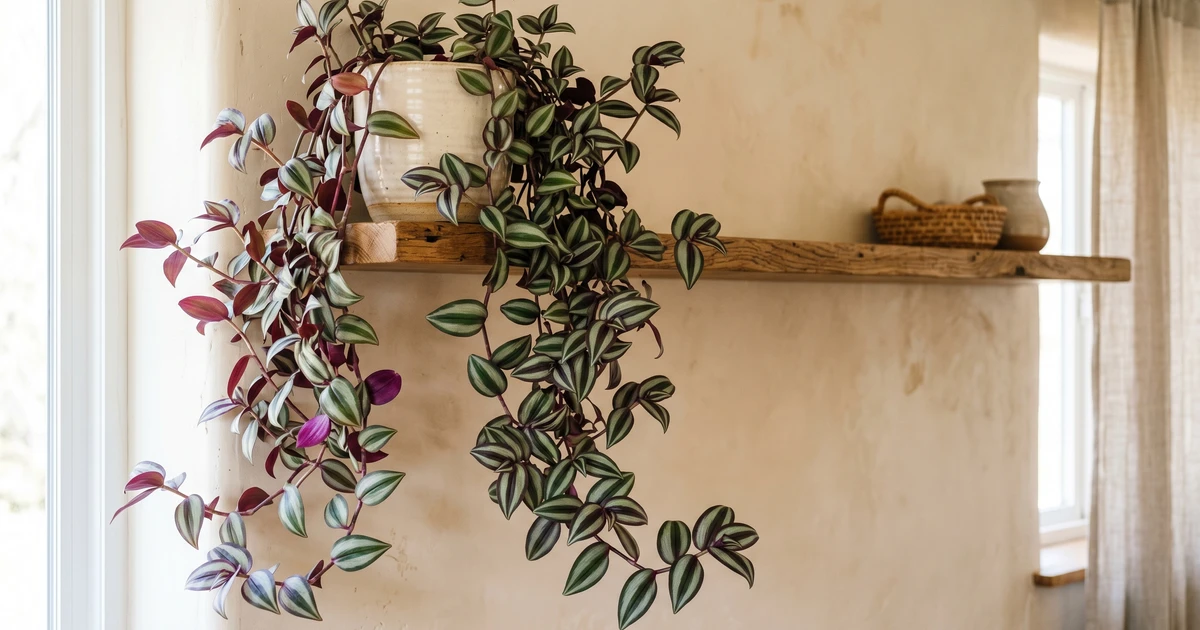
leggy growth from low light and Begonia
Quick answer
If leggy growth from low light is what's going on with your Begonia, the most likely cause is: Etiolation from insufficient light intensity (below 500-1000 lux) triggers shade avoidance syndrome mediated by phytochrome photoreceptors. The plant produces excessive gibberellins causing rapid internode elongation as it stretches toward light sources. Combined with strong apical dominance in begonias, lateral bud development is suppressed, resulting in sparse foliage with elongated, weak stems that cannot support proper leaf development.
Start here:
- 1. Move to brighter indirect light location or install full-spectrum LED grow light
- 2. Prune leggy stems just above leaf nodes to remove apical dominance
Why leggy growth from low light happens to Begonia
Begonia spp.
Etiolation from insufficient light intensity (below 500-1000 lux) triggers shade avoidance syndrome mediated by phytochrome photoreceptors. The plant produces excessive gibberellins causing rapid internode elongation as it stretches toward light sources. Combined with strong apical dominance in begonias, lateral bud development is suppressed, resulting in sparse foliage with elongated, weak stems that cannot support proper leaf development.
How to correct leggy growth from low light on Begonia
- 1
Move to brighter indirect light location or install full-spectrum LED grow light
- 2
Prune leggy stems just above leaf nodes to remove apical dominance
- 3
Propagate pruned sections: cut 4-6 inch stem segments with 2-3 nodes, root in water or moist perlite
- 4
Replant rooted cuttings in same pot to create fuller, bushier plant
- 5
Expect compact new growth within 4-6 weeks after light improvement
Keep leggy growth from low light from repeating on this Begonia
Maintain bright indirect light at 1500-3000 lux. Use grow lights (6000-6500K LED) positioned 12-18 inches above plant for 12-14 hours daily in low-light environments. Rotate plant weekly for even exposure. Prune every 2-3 months to break apical dominance and stimulate branching.