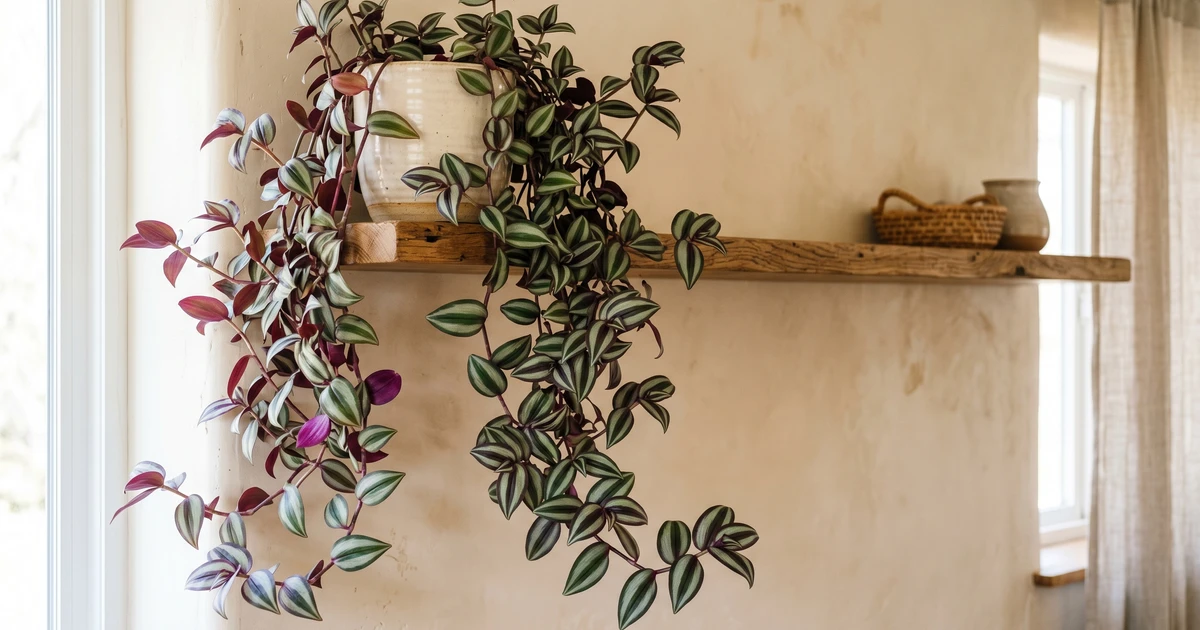
compact growth on Echeveria
Quick answer
If your Echeveria has compact growth, the most likely cause is: Echeveria rosette compactness is driven by light intensity through the phytochrome photoreceptor system — under high light (high red:far-red ratio), Pfr form of phytochrome promotes compact growth with short internodes and tightly packed leaf insertion angles; under low light (low R:FR ratio), Pr form predominates, triggering shade-avoidance response with elongated internodes and open rosette architecture.
Start here:
- 1. Provide direct sun exposure (6+ hours) or supplement with full-spectrum grow lights — more light equals tighter rosettes
- 2. Select south-facing windowsills for Echeveria display — east/west acceptable with longer exposure
Why Echeveria gets compact growth
Echeveria spp.
Echeveria rosette compactness is driven by light intensity through the phytochrome photoreceptor system — under high light (high red:far-red ratio), Pfr form of phytochrome promotes compact growth with short internodes and tightly packed leaf insertion angles; under low light (low R:FR ratio), Pr form predominates, triggering shade-avoidance response with elongated internodes and open rosette architecture.
How to reverse compact growth on Echeveria
- 1
Provide direct sun exposure (6+ hours) or supplement with full-spectrum grow lights — more light equals tighter rosettes
- 2
Select south-facing windowsills for Echeveria display — east/west acceptable with longer exposure
- 3
Use light meters to monitor: readings below 1000 lux indicate insufficient light for compact growth
- 4
Rotate plants weekly 90° to prevent one-sided growth and maintain symmetrical rosette shape
- 5
Reduce ambient temperature to 65-75°F range — cooler nights combined with bright light intensify color and compactness in Echeveria
Keep compact growth off this Echeveria
Maintain high light environment (2000-5000+ lux) with high red:blue light ratio; avoid placing near north-facing windows or in corners with reflected light only; use full-spectrum grow lights with 6500K color temperature.