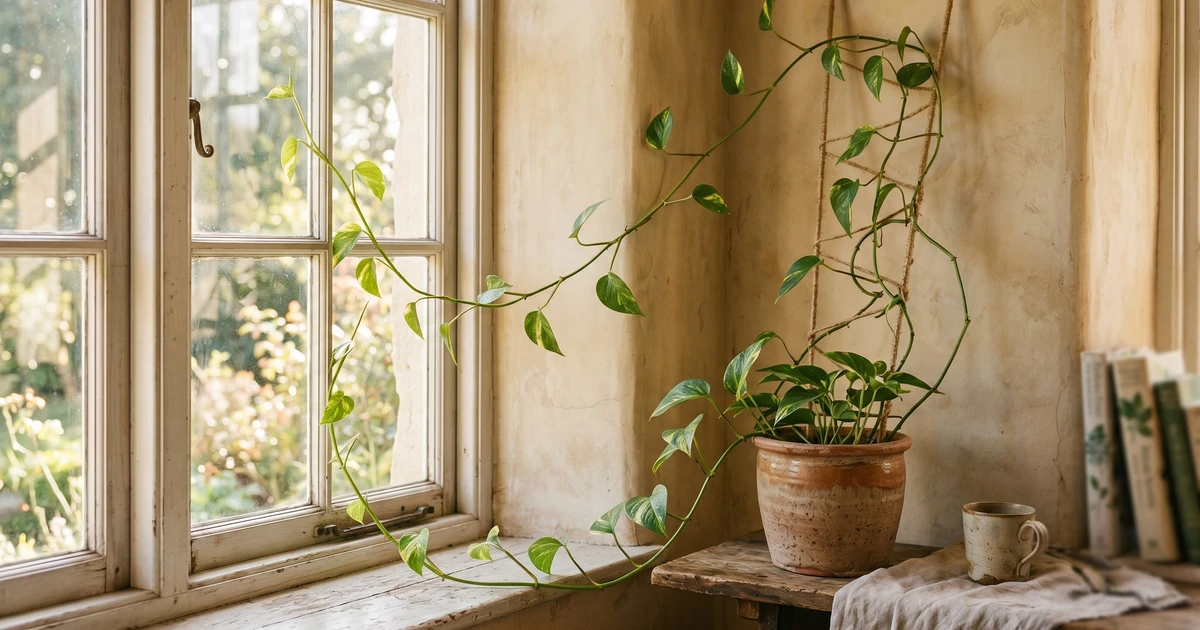
light and English Ivy
Quick answer
If light is what's going on with your English Ivy, the most likely cause is: English ivy exhibits remarkable photosynthetic plasticity, acclimating to light levels from deep shade (50 lux) to full sun (2000+ lux) through structural and biochemical changes. In low light, leaves develop larger surface area, higher chlorophyll content, and thinner cuticles to maximize light capture. In bright light, leaves become smaller, thicker, with reduced chlorophyll and enhanced photoprotective mechanisms (NPQ, PsbS proteins). However, sudden transitions between light levels cause photodamage and leaf scorch.
Start here:
- 1. For low light (north windows, interior rooms): Ivy survives but grows slowly; reduce watering by 30-50% to match decreased photosynthesis
- 2. For bright indirect light (east/west windows): Ideal conditions; water when top 1-2 inches dry; expect vigorous growth
Why light happens to English Ivy
Hedera helix
English ivy exhibits remarkable photosynthetic plasticity, acclimating to light levels from deep shade (50 lux) to full sun (2000+ lux) through structural and biochemical changes. In low light, leaves develop larger surface area, higher chlorophyll content, and thinner cuticles to maximize light capture. In bright light, leaves become smaller, thicker, with reduced chlorophyll and enhanced photoprotective mechanisms (NPQ, PsbS proteins). However, sudden transitions between light levels cause photodamage and leaf scorch.
How to correct light on English Ivy
- 1
For low light (north windows, interior rooms): Ivy survives but grows slowly; reduce watering by 30-50% to match decreased photosynthesis
- 2
For bright indirect light (east/west windows): Ideal conditions; water when top 1-2 inches dry; expect vigorous growth
- 3
For direct sun exposure: Provide 2-3 weeks gradual acclimation starting with 1 hour morning sun daily; watch for leaf scorch
- 4
If etiolation occurs: Move to brighter location gradually; prune leggy stems to encourage bushy regrowth
- 5
If leaf scorch appears: Relocate to indirect light immediately; trim damaged foliage; increase humidity to support recovery
Keep light from repeating on this English Ivy
Acclimate gradually when changing light conditions: move 1-2 feet per week over 3-4 weeks. Use sheer curtains to buffer direct sun. Rotate plant 90° weekly for even exposure. Monitor for etiolation (leggy growth = too little light) or bleaching/crisping = too much light.