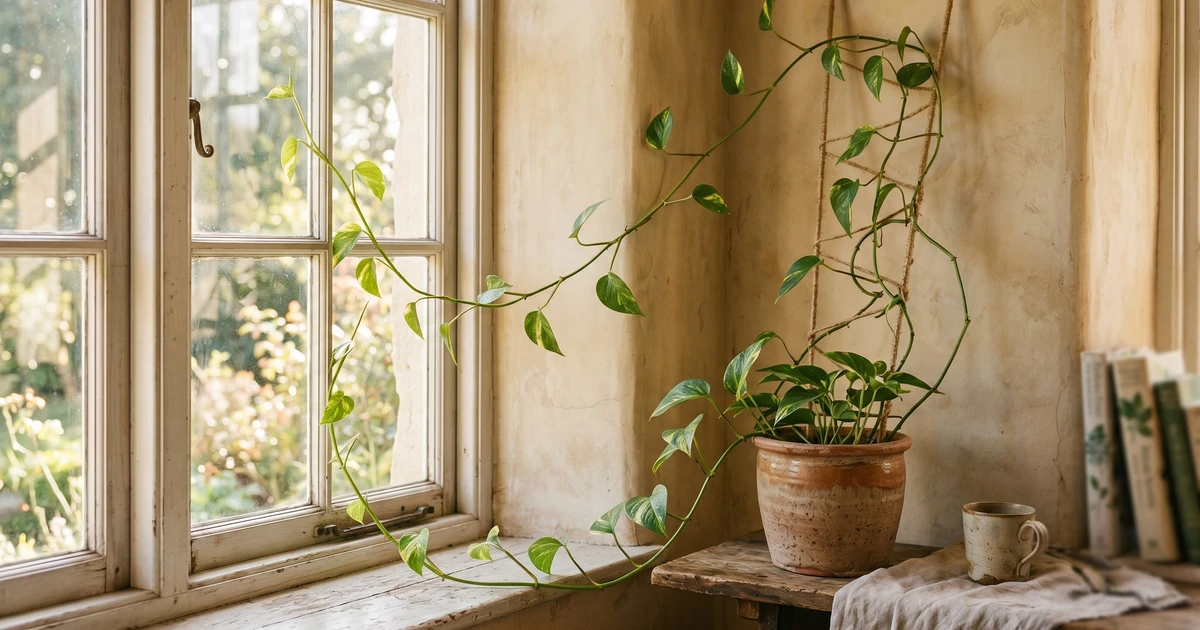
General-Houseplant-Care pot bound
Quick answer
If your General-Houseplant-Care is pot bound, the most likely cause is: Plants become pot-bound when roots circle the interior of the pot, forming a dense mass that cannot absorb water or nutrients effectively. Growth slows, wilting occurs shortly after watering, and roots may emerge from drainage holes. This typically happens 1-3 years after potting depending on plant growth rate.
Start here:
- 1. Check for pot-binding annually by sliding plant out of pot — roots visible on soil surface or circling pot interior indicate need to repot
- 2. Select new pot 1-2 inches larger in diameter — excess soil holds moisture and causes root rot
Why General-Houseplant-Care is pot bound
Plants become pot-bound when roots circle the interior of the pot, forming a dense mass that cannot absorb water or nutrients effectively. Growth slows, wilting occurs shortly after watering, and roots may emerge from drainage holes. This typically happens 1-3 years after potting depending on plant growth rate.
How to help General-Houseplant-Care that is pot bound
- 1
Check for pot-binding annually by sliding plant out of pot — roots visible on soil surface or circling pot interior indicate need to repot
- 2
Select new pot 1-2 inches larger in diameter — excess soil holds moisture and causes root rot
- 3
Water plant 1-2 days before repotting to help root ball hold together
- 4
Slide plant out, gently loosen outer roots with fingers, and trim any that are dead or circling
- 5
Add fresh potting mix to new pot — use well-draining blend (2 parts peat, 1 part perlite, 1 part sand)
- 6
Position plant at same depth as before; top of root ball should be 1 inch below pot rim
- 7
Water thoroughly after repotting and place in shade for 1-2 weeks to recover
Keep this General-Houseplant-Care from ending up pot bound again
Repot every 2-3 years for fast-growing plants, every 3-5 years for slow growers. Use pot feet to elevate containers for better drainage. Do not overpot — moving a small plant into a large pot causes soil moisture problems.