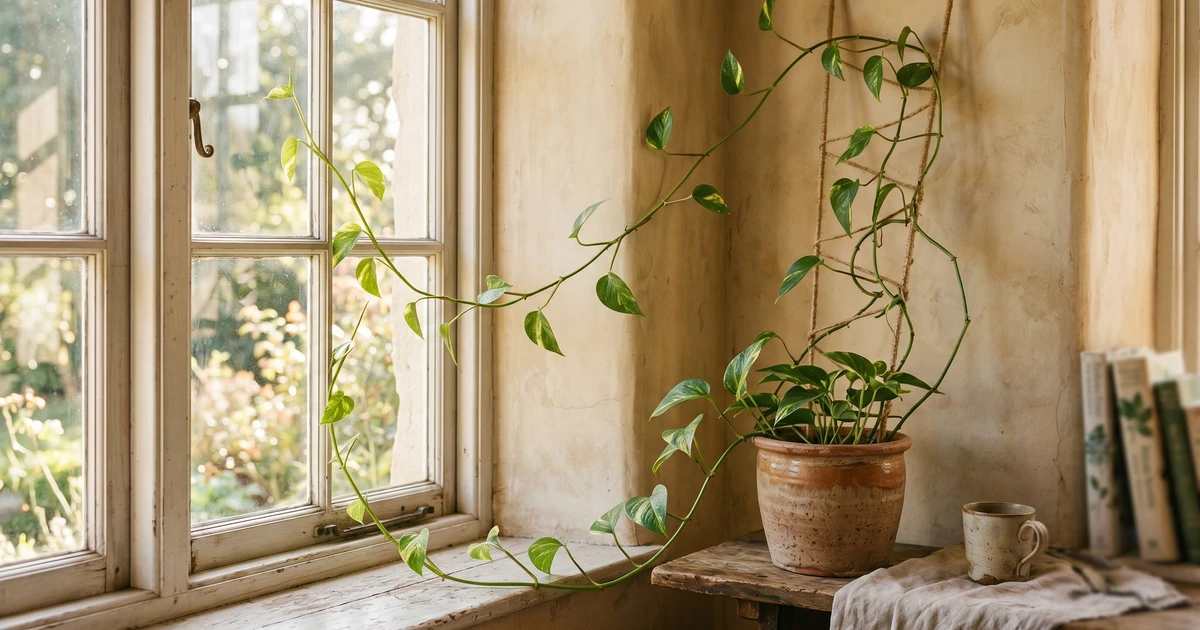
fenestration patterns on Monstera Adansonii
Quick answer
If your Monstera Adansonii has fenestration patterns, the most likely cause is: Fenestration development in Monstera adansonii requires three concurrent factors: plant maturity (12-24 months minimum), bright indirect light (2000-5000 lux for 6-8 hours), and vertical climbing support. Young plants produce solid cordate leaves to maximize photosynthetic surface area in low understory light. Without climbing substrate, plants remain hormonally juvenile regardless of age. Insufficient light (<1000 lux) suppresses auxin-mediated leaf differentiation even in mature specimens.
Start here:
- 1. Increase light exposure: move to bright indirect location (hand shadow test at 12 inches should show defined shadow)
- 2. Install moss pole or trellis to provide climbing substrate
Why Monstera Adansonii gets fenestration patterns
Monstera adansonii
Fenestration development in Monstera adansonii requires three concurrent factors: plant maturity (12-24 months minimum), bright indirect light (2000-5000 lux for 6-8 hours), and vertical climbing support. Young plants produce solid cordate leaves to maximize photosynthetic surface area in low understory light. Without climbing substrate, plants remain hormonally juvenile regardless of age. Insufficient light (<1000 lux) suppresses auxin-mediated leaf differentiation even in mature specimens.
How to reverse fenestration patterns on Monstera Adansonii
- 1
Increase light exposure: move to bright indirect location (hand shadow test at 12 inches should show defined shadow)
- 2
Install moss pole or trellis to provide climbing substrate
- 3
Verify plant age: cuttings from mature plants may produce solid leaves initially; allow 3-4 leaf cycles for maturity expression
- 4
Check light intensity with meter: target 2000-5000 lux
- 5
Avoid deep shade locations; supplement with full-spectrum grow lights if necessary
Keep fenestration patterns off this Monstera Adansonii
Provide bright indirect light 6-8 hours daily from east/west windows or filtered south exposure. Install climbing support when plant reaches 12+ inches. Maintain consistent care for 12-24 months to achieve physiological maturity.